1. Evoy Storm 300
Fastest Electric Outboard 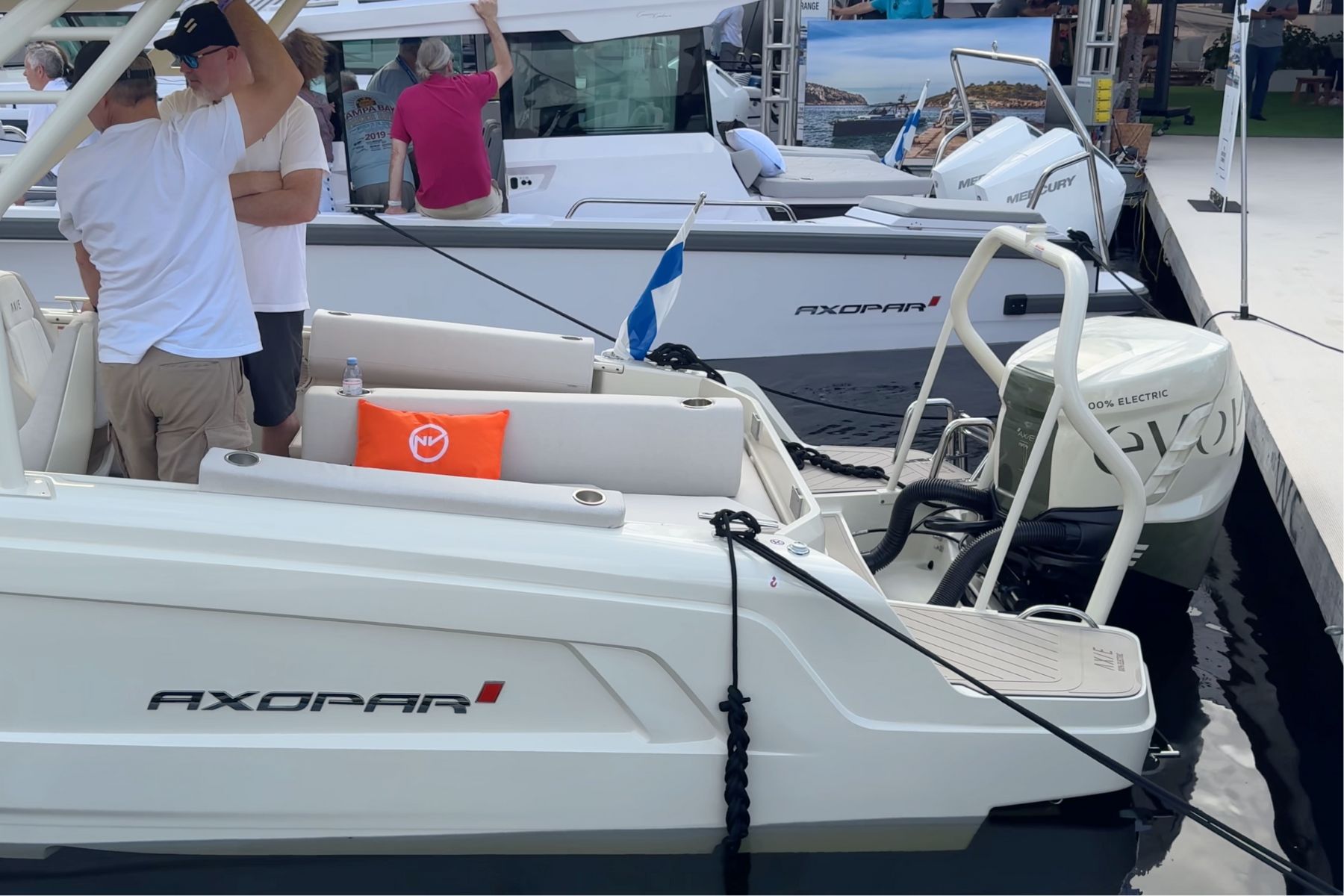
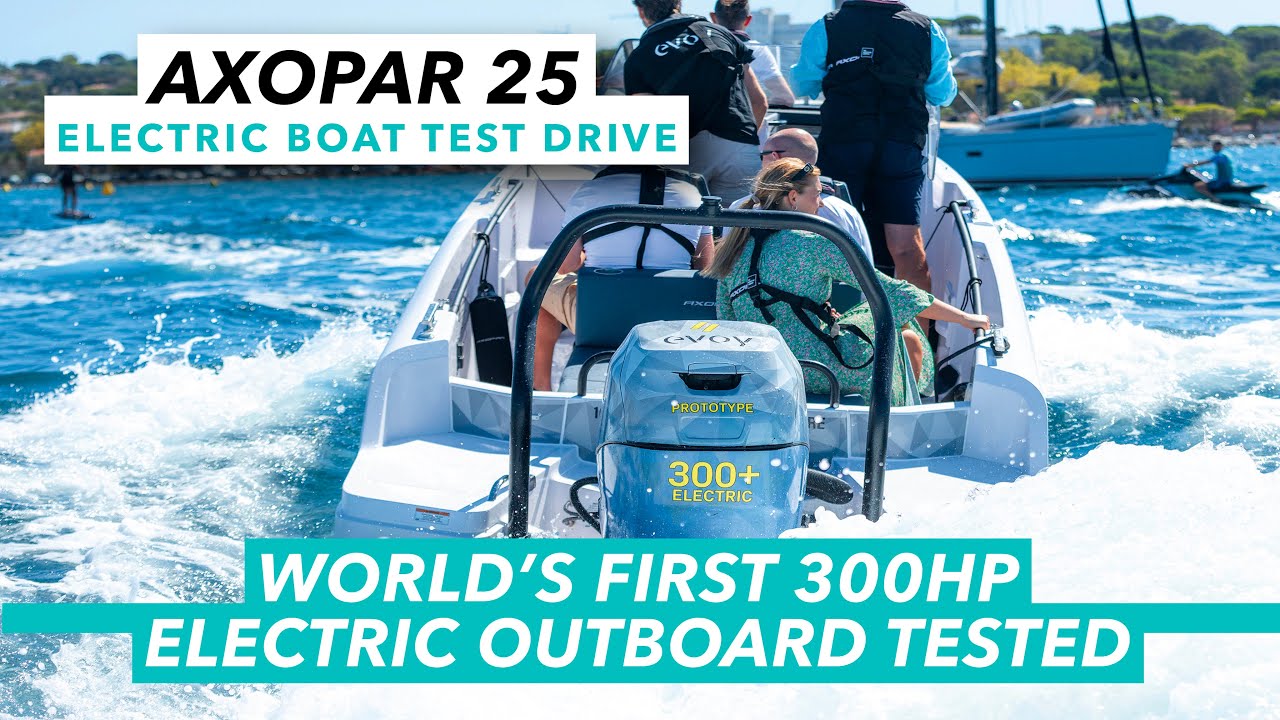
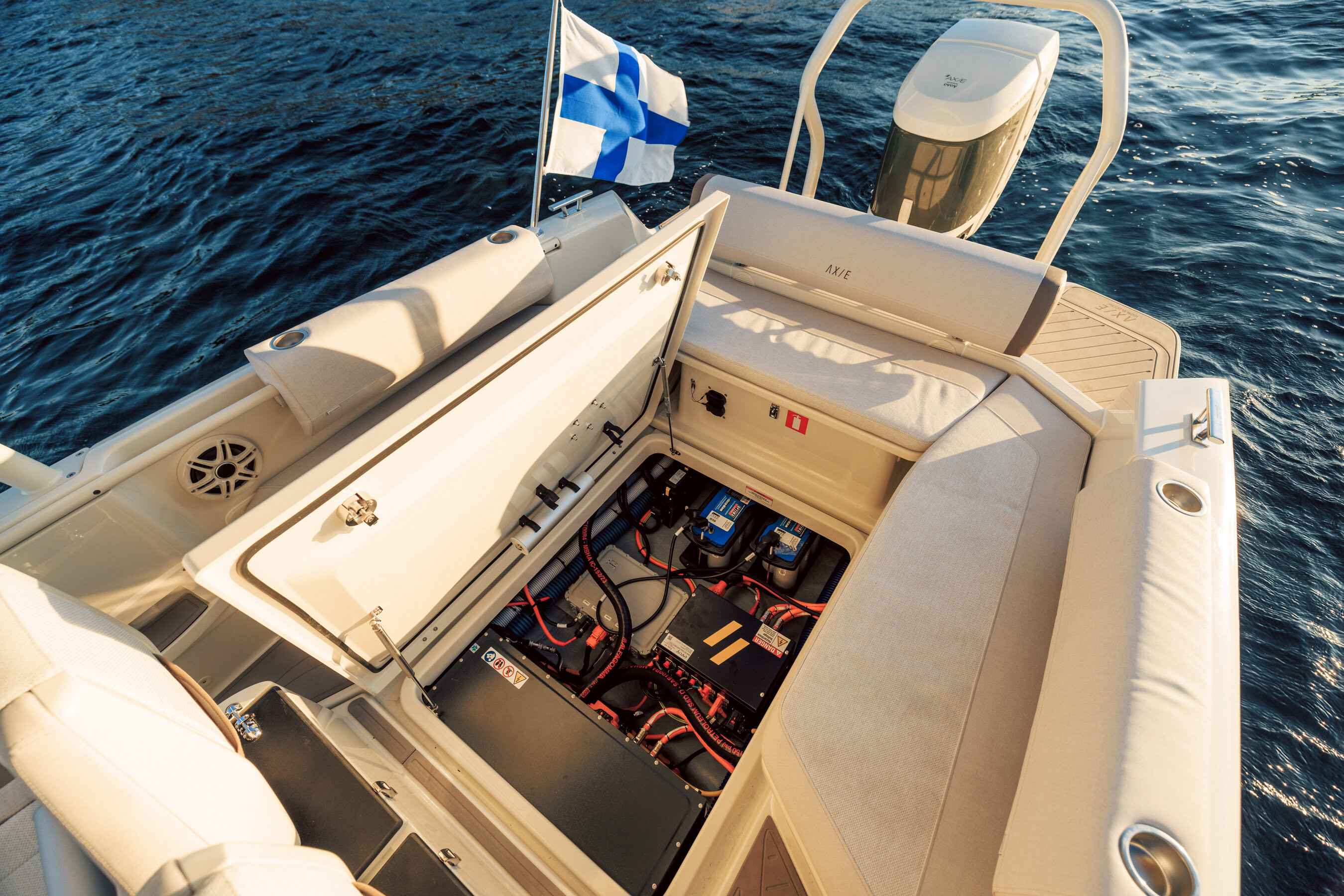
The Evoy Storm is the most powerful electric outboard motor on the market right now. Designed to rival traditional internal combustion engines, the Storm offers an eco-friendly, silent alternative without compromising on power.
The Storm is a 300-horsepower equivalent motor that retails at a premium price point. The required battery packs and accessories add to the initial investment, but the motor delivers impressive performance and range, making it a viable replacement for a traditional gas-powered outboard.
On the AX/E Spyder, the Storm can power to speeds exceeding 50 knots!
2. X-Series by ePropulsion
Planing Capable Power 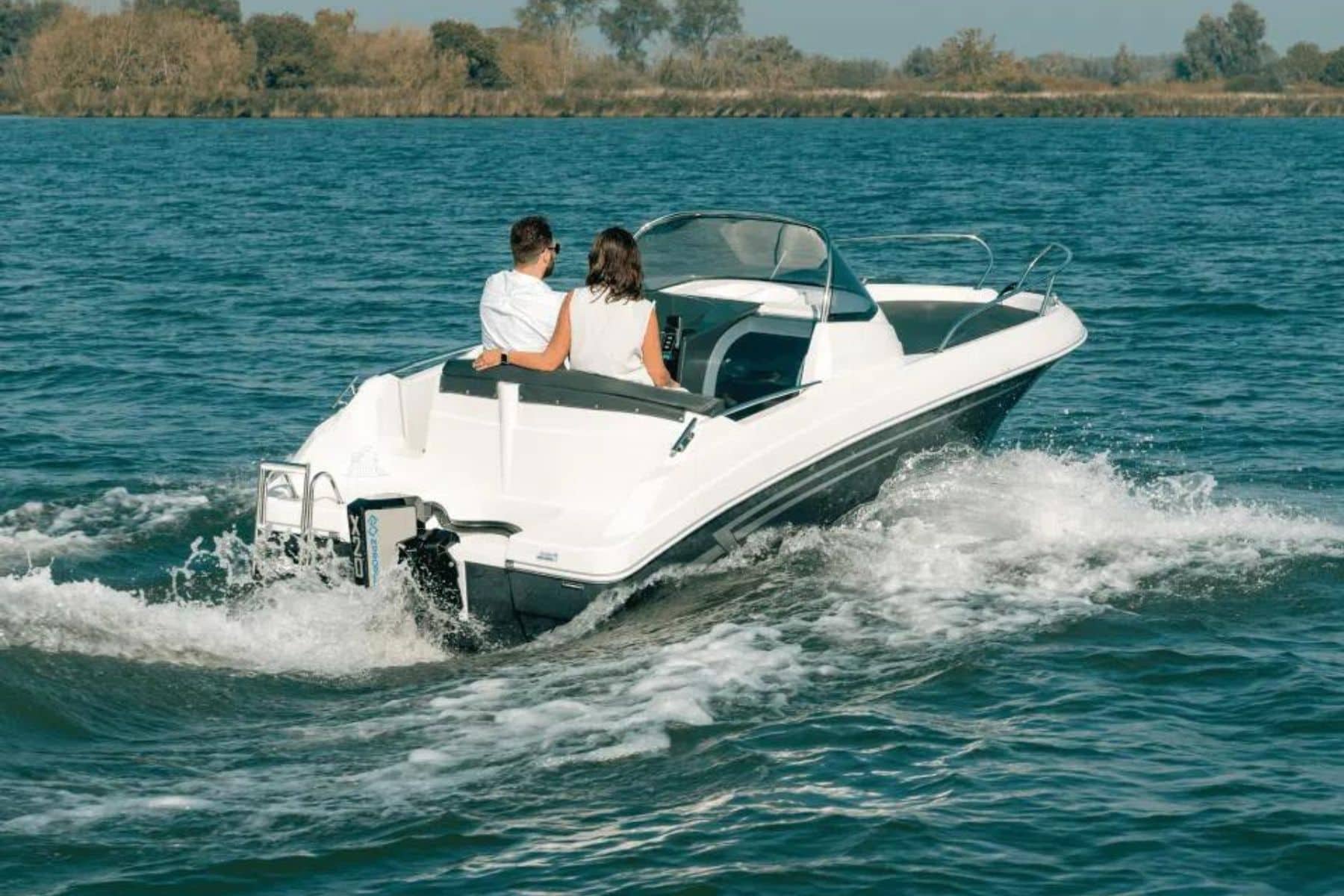
For those needing a little more kick, ePropulsion has launched an all-new series of slim electric outboards ranging from 12 to 40 kilowatts. While the company refrains from putting horsepower equivalents out there, think of these motors as filling the space left by 10 to 40-horsepower outboards. They are powerful enough to get small boats up on a plane or driving a larger boat at displacement speeds.
With 88.2-percent efficiency in the drivetrain, new propeller designs, and a modular battery pack system, these motors will impress anyone looking to go electric.
To power these new outboards, ePropulsion has designed a modular 96-volt battery pack. To get more range or power a larger motor, you simply need to stack multiple packs together. The published range numbers assume that you would have one battery for the X12, two for the X20, and four for the X40.
Things we like
- ✓ Modular system allows you to combine as many battery packs as you like or need
- ✓ High power options up to 40 watts
- ✓ Built-in power steering
- ✓ Narrow, low-profile design clears up space on the transom
- ✓ Cloud and Boating IoT connected apps
- ✓ Tested to last over 5,000 hours
- ✓ Low noise and low vibration design
Things we don't like
- ✗ Expensive (the cheapest options start around $16,000 for the X12 motor and one battery)
- ✗ Heavy—even the smallest motor weighs over 100 pounds (not including the battery)
3. Torqeedo Cruise 6.0
Power to Plane Small Boats 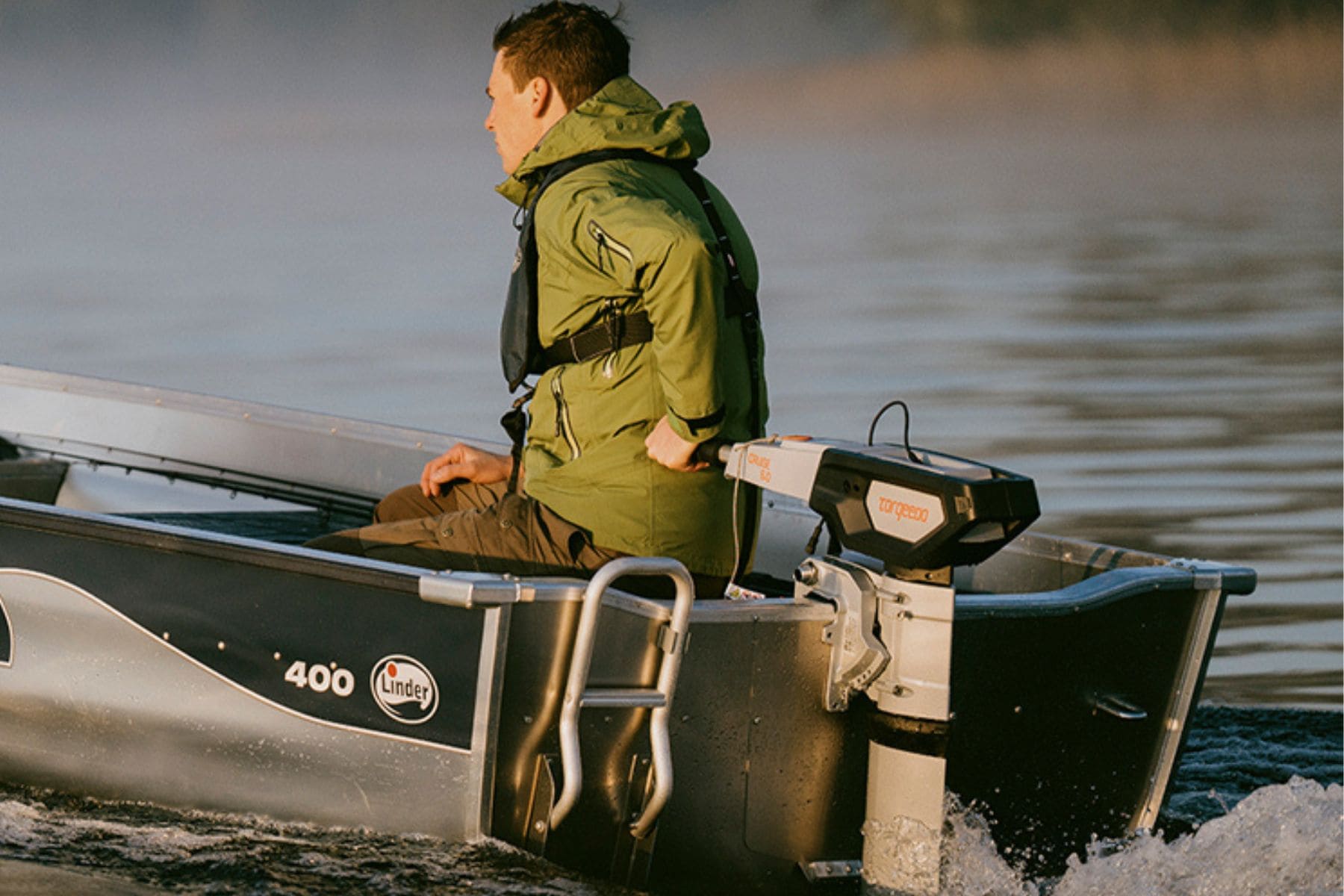
The Cruise 6.0 is a 9.9 horsepower equivalent that will set you back just under $5,000. The 48-volt battery pack is another $5,000, and you’ll need a charger and a few other bits. One battery will give you just under an hour of run-time at full throttle, but luckily, you can stack the batteries to get more capacity and range. Alternatively, you can build your battery bank if you’re handy. Torqeedo sells the cables to connect to the motor.
The Cruise 6.0 is available with tiller steering (T) or remote control (R) or as a fixed-pod model. There are also 6, 20, and 25 horsepower replacements in the Cruise lineup.
Torqeedo also sell battery solutions, giving you a plug-and-play electric outboard for any boat.
Things we like
- ✓ Great option for small planing boats
- ✓ High power and thrust output
- ✓ Small form factor
- ✓ Stackable batteries for more range
Things we don't like
- ✗ Total setup is four or five times the cost of a typical new 9.9-hp gas outboard
4. Rad Propulsion Rad 40
180-Degree Steering! 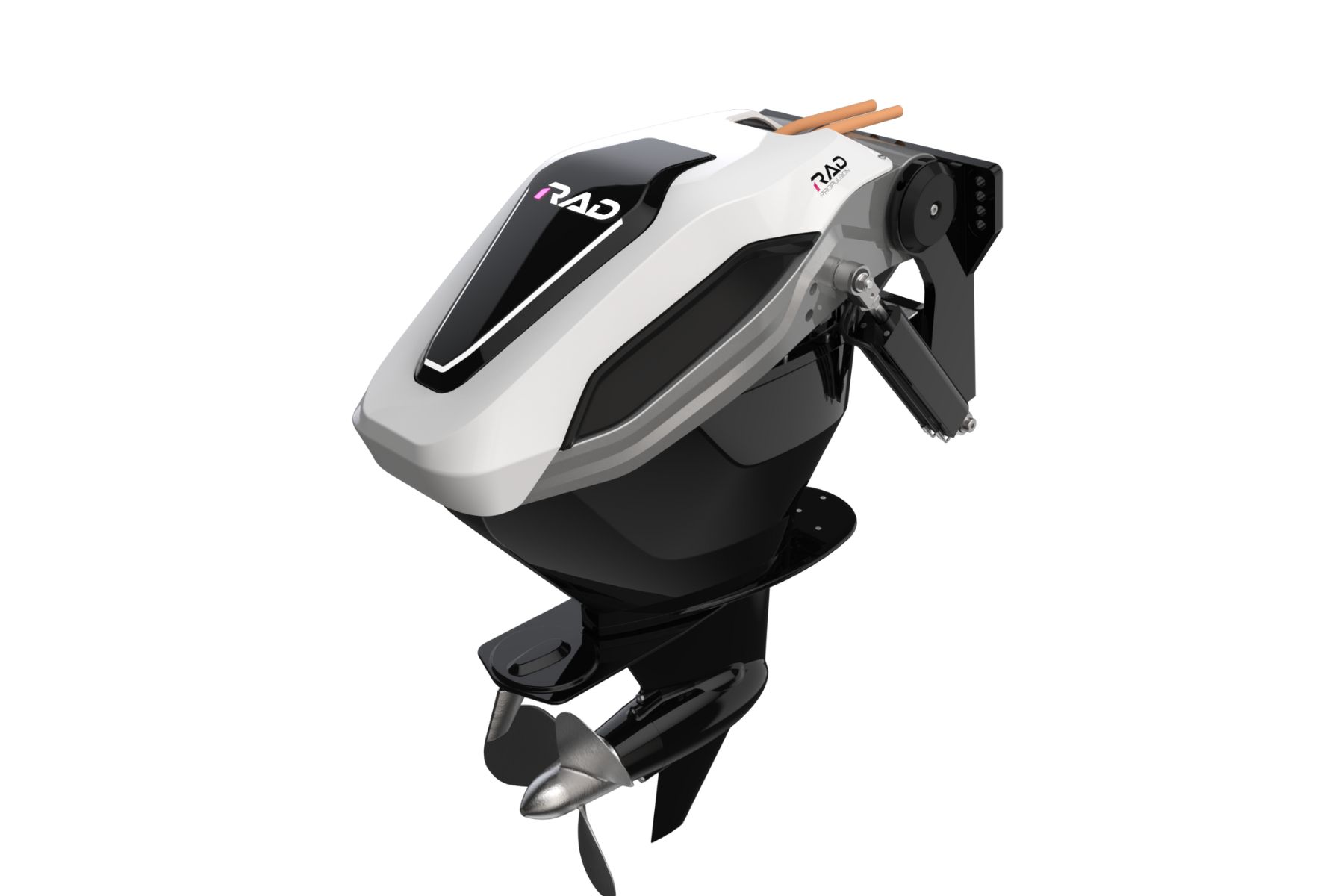
Rad Propulsion is a UK-based startup that has made something very impressive in the Rad 40 electric outboard motor. This is a 55-horsepower-equivalent outboard with a unique low-profile design. Its look reminds one of the new Rotax S150 outboard marketed to provide larger swim platform areas.
The product is still in testing, but Rad expects the outboards to be perfect for power catamarans (using two motors), large RIBs, and motor launches. Rad does not build the battery systems, but they work with suppliers to assemble complete systems.
What’s great about the Rad 40 is the 180-degree swivel system along with the ability to integrate into existing power systems, unlike other options that only interoperate with proprietary batteries.
Things we like
- ✓ Low profile design that's much smaller than other outboards and gives the option for more deck space
- ✓ 180-degree rotating lower unit for steering and maneuverability
- ✓ Fully drive-by-wire via RADBus
- ✓ 40 kw of power can propel boats weighing more than 1.5 tons
- ✓ Relatively lightweight
Things we don't like
- ✗ Extra maintenance of advanced systems
5. Haswing Ultima 3.0
Portable & Interchangeable 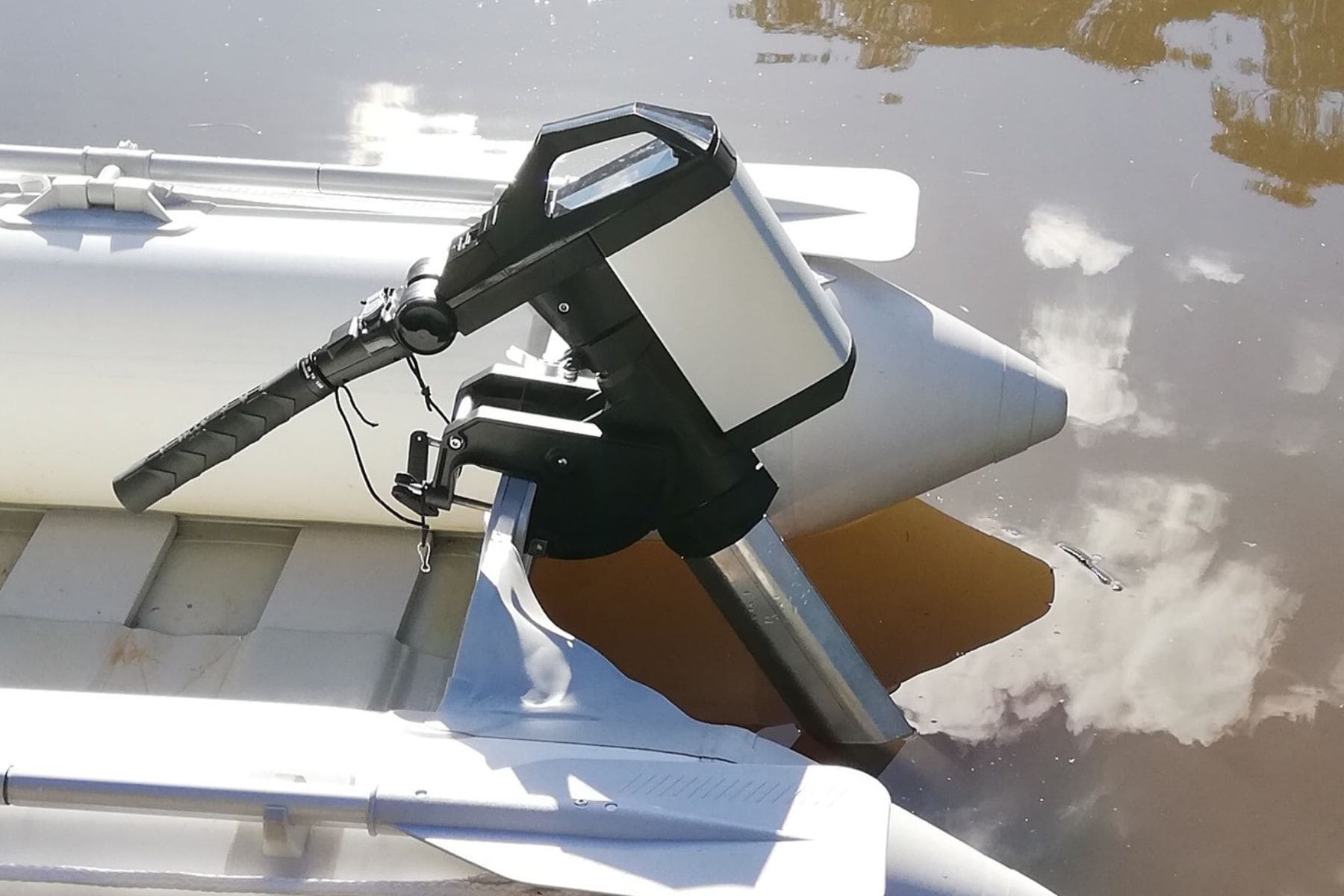
A quiet competitor in the small electric outboard market is the Haswing Ultima 3.0. Like the Torqeedo Travel and ePropulsion Spirit series, this motor is a 3-horsepower-class motor with a built-in battery pack. It’s aimed to power dinghies and small fishing boats, with an emphasis on being portable and easy to set up. The motor can be tilted up to operate in any depth of water.
That adjustability means this motor is ideal for use with different small boats.
The Ultima features a sleeker look than earlier models, with a low-profile vertical battery pack and a telescoping tiller handle. The motor rotates 360 degrees, and the tiller handle folds 180 degrees for easy maneuvering, transport, and storage. Built-in, replaceable anodes make it suitable for fresh or saltwater environments.
Things we like
- ✓ Sleeker design than Torqeedo and ePropulsion motors
- ✓ Lightweight and portable
- ✓ Energy saver mode allows you to operate at 1 hp to extend your range
- ✓ Lightest lithium battery in class
- ✓ Built-in telescopic tiller handle
Things we don't like
- ✗ Currently no distributors in the US
- ✗ Limited details available about waterproofness
6. TEMO 1000
Brilliant Battery Shaft Design 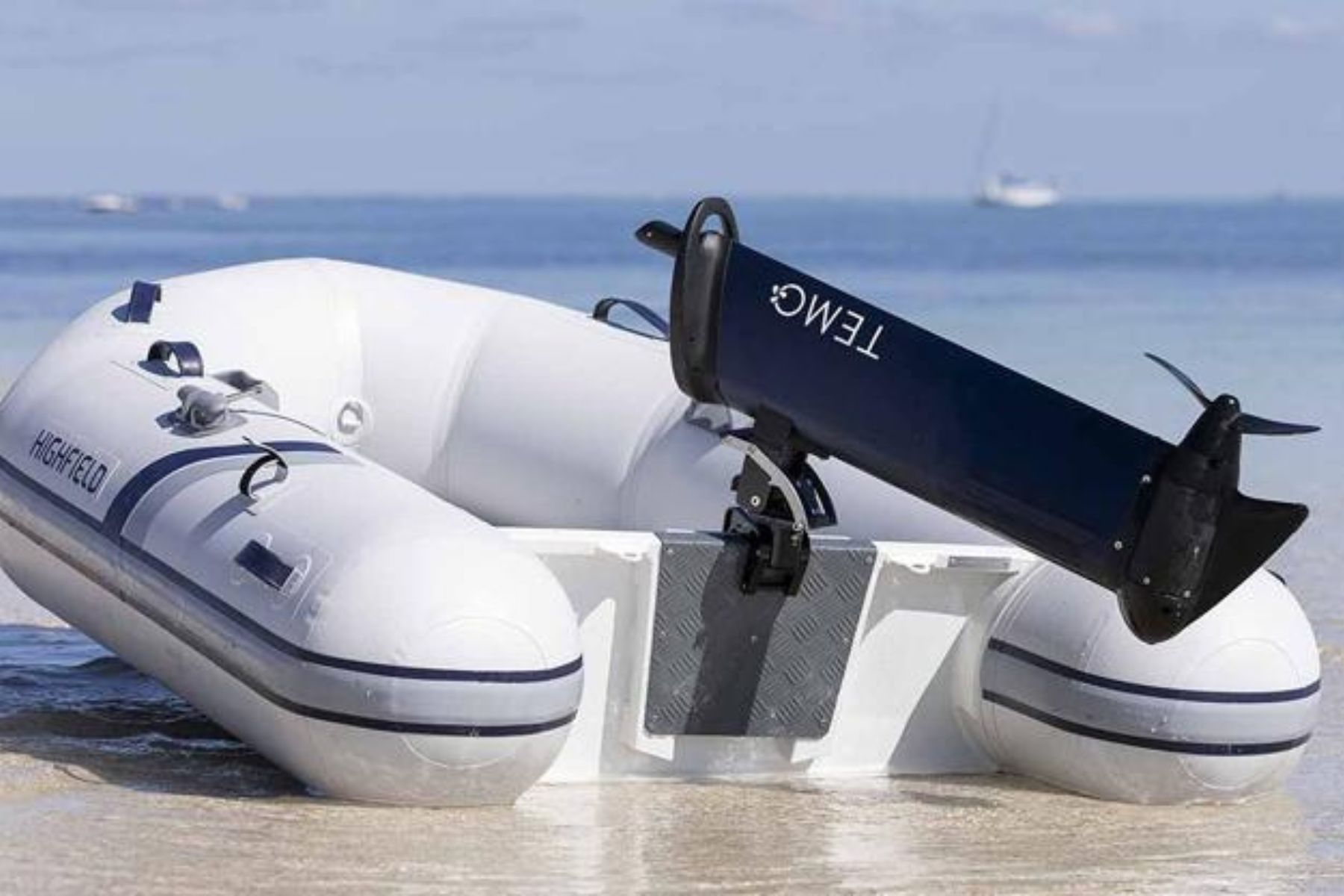
The TEMO 1000 is a 1 kW portable outboard with a low-profile and unique design. It’s an alternative to the Torqeedo Travel, ePropulsion Spirit, and Mercury Avator.
This is very low profile, with just a drive leg. The battery is a 15-pound (7 kg) lithium cartridge that gets inserted into the slim shaft. The tiller gets pulled out of the shaft and lowered down into the normal driving position. If you take your motor on and off your dinghy, or you just need to store it in the smallest place possible, the TEMO 1000 is an attractive design. This motor looks perfect for small boats, maxing out at 1.5 tons. So great for sailboats, especially beach cats and performance trimarans.
Things we like
- ✓ Exceptionally small and lightweight
- ✓ Removable battery
- ✓ Easy to install on the dinghy, easy to store in a boat
- ✓ Retractable tiller
- ✓ Low-profile rotating mounting bracket
- ✓ No electric connections
- ✓ Completely waterproof
Things we don't like
- ✗ Shorter runtime and less range than competitors
7. ePropulsion Spirit 1.0 Evo
Best Micro-Boat Motor 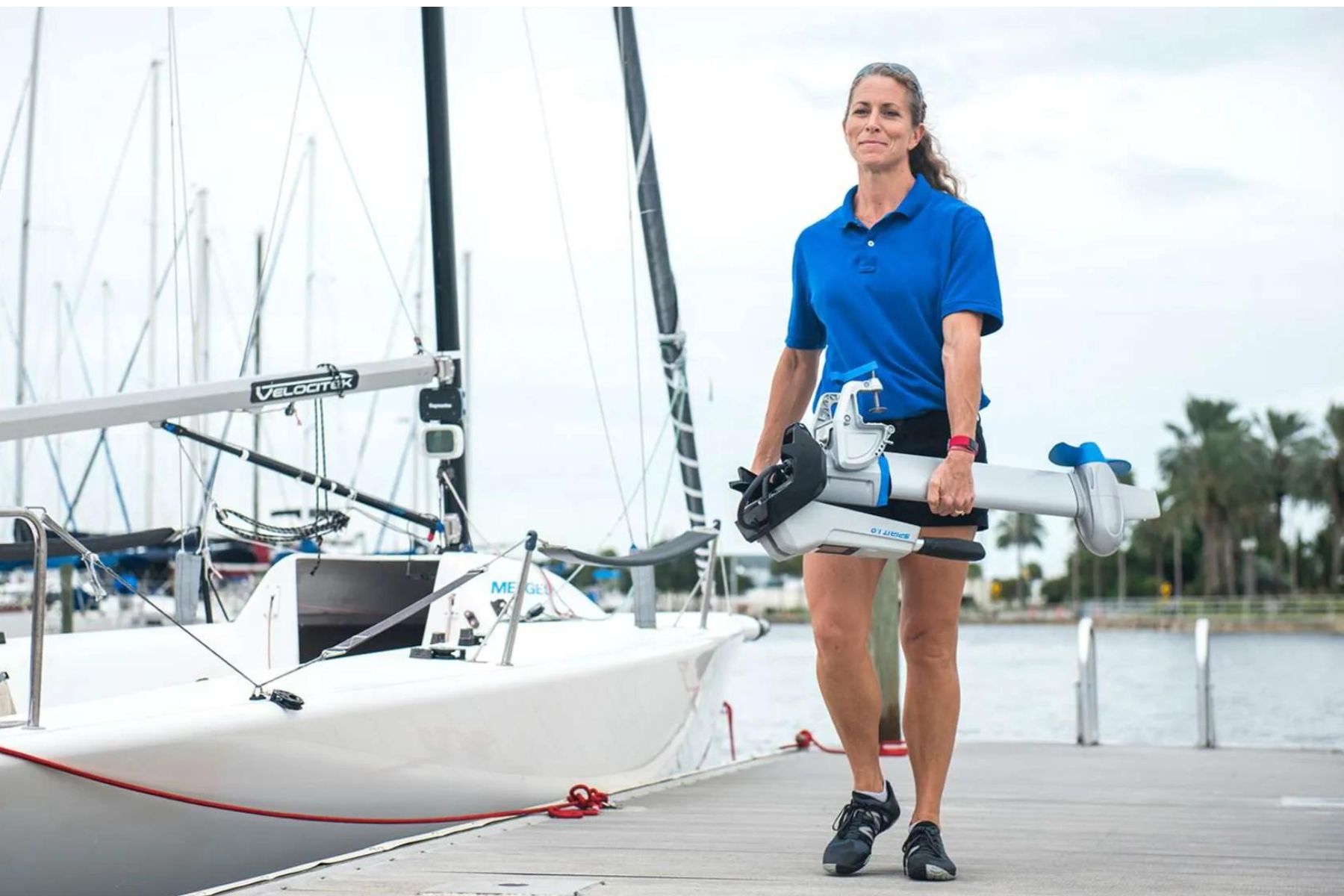
Epropulsion has been competing with Torqeedo for quite a few years now with their 1kW outboard, to the point that there are about the same number of each make out on the water. The two motors are very similar; the Torqeedo Travel 1103C and ePropulsion Spirit 1.0 have similar sizes, performance specs, and designs. It’s hard to recommend one over the other, as they both get good reviews from owners worldwide.
The Spirit Evo electric outboards have one feature that sets them apart, they have built-in hydrogenerative capabilities. If you’re looking for a sailboat motor, the ePropulsion is a no-brainer. Let the prop spin and get some recharging while you’re out sailing. The Evo also has safety wristbands instead of the standard magnetic kill switch. If these two features aren’t important to you, the slightly less expensive Spirit 1.0 Plus is the motor for you.
One other difference between Torqeedo and ePropulsion is the basic design. Where Torqeedo motors break down into three pieces (drive leg, tiller, battery), ePropulsion Spirit outboards only break down into two (drive leg, battery). In other words, the tiller is not removable but folds to make the package easier to store and carry.
Things we like
- ✓ Hydrogeneration capability
- ✓ Wireless safety wrist straps
- ✓ Break-apart design, each component less than 25 pounds for easy carrying
- ✓ Integrated tiller, fewer exposed electrical connections compared to Torqeedo Travel
- ✓ Tiller or remote control options
8. Elco EP-14 Electric Outboard
Affordable Small Boat Option 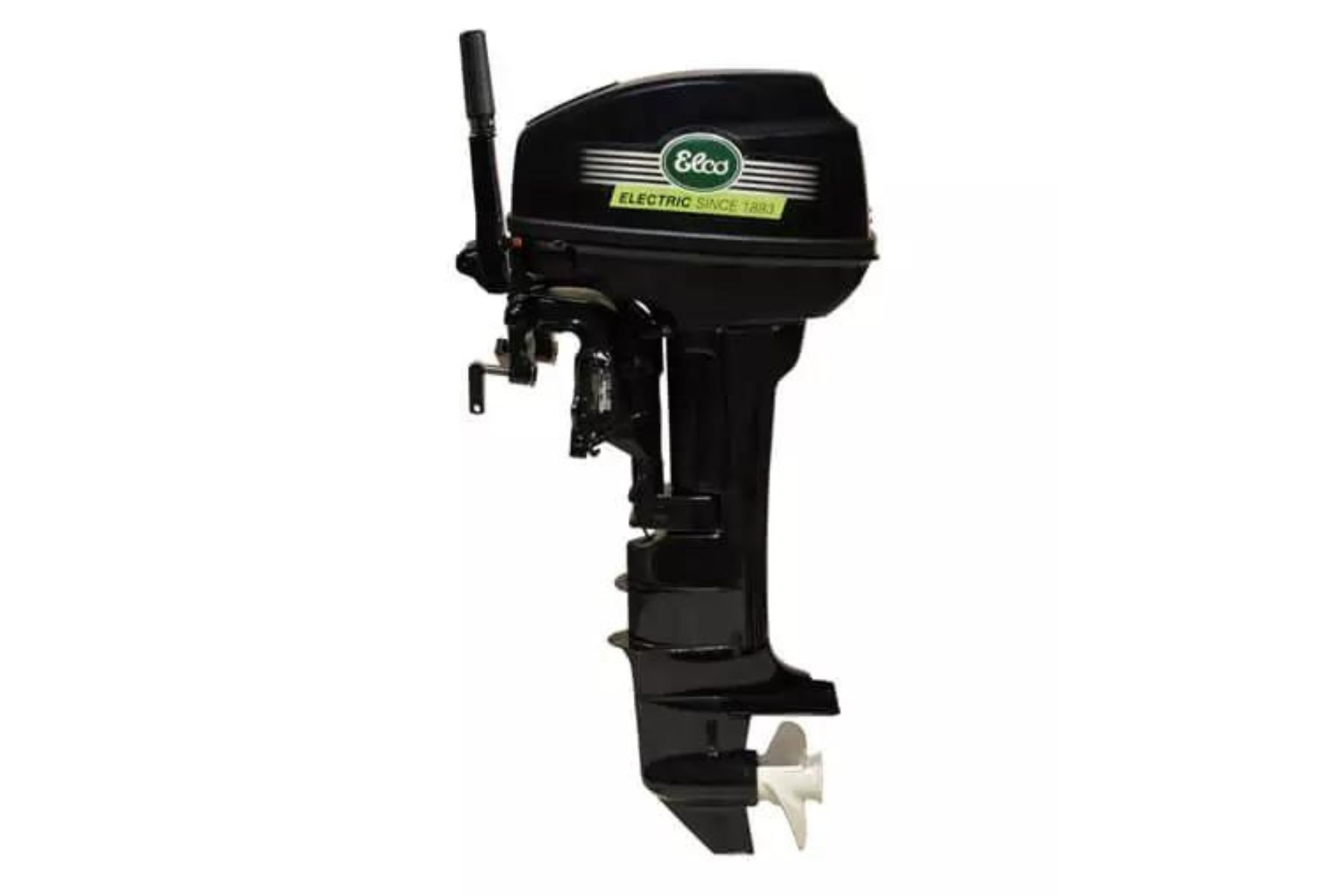
Elco is probably the company you’ve never heard of, yet it has been in the electric boat business for the longest. Long before it was chic, Elco was making electric launches. 2023 marks their 130th year of making electric boats.
Today, the company makes both outboard and inboard electric motor options. They have outboards in every size, from 5 to 50 horsepower. They also have inboard options up to 200 HP!
Elco’s motors aren’t as sexy as some of the new designs. In fact, from the outside, they’re almost indistinguishable from gas outboards, complete with cast aluminum lower units. And, unlike newer companies, they do not make a battery pack or charging solutions.
Things we like
- ✓ Beefy traditional outboard design takes standard parts and props
- ✓ Tiller or remote control options
Things we don't like
- ✗ Complicated install
- ✗ Use of off-the-shelf battery solutions may not be efficient use of space and won't be waterproof
- ✗ Unbranded lithium iron phosphate batteries, unknown quality, origin, BMS
- ✗ Water-cooled means more complicated maintenance
- ✗ Heavy, bulky design
9. Pure Watercraft Pure Outboard
Reliable 50 Horsepower 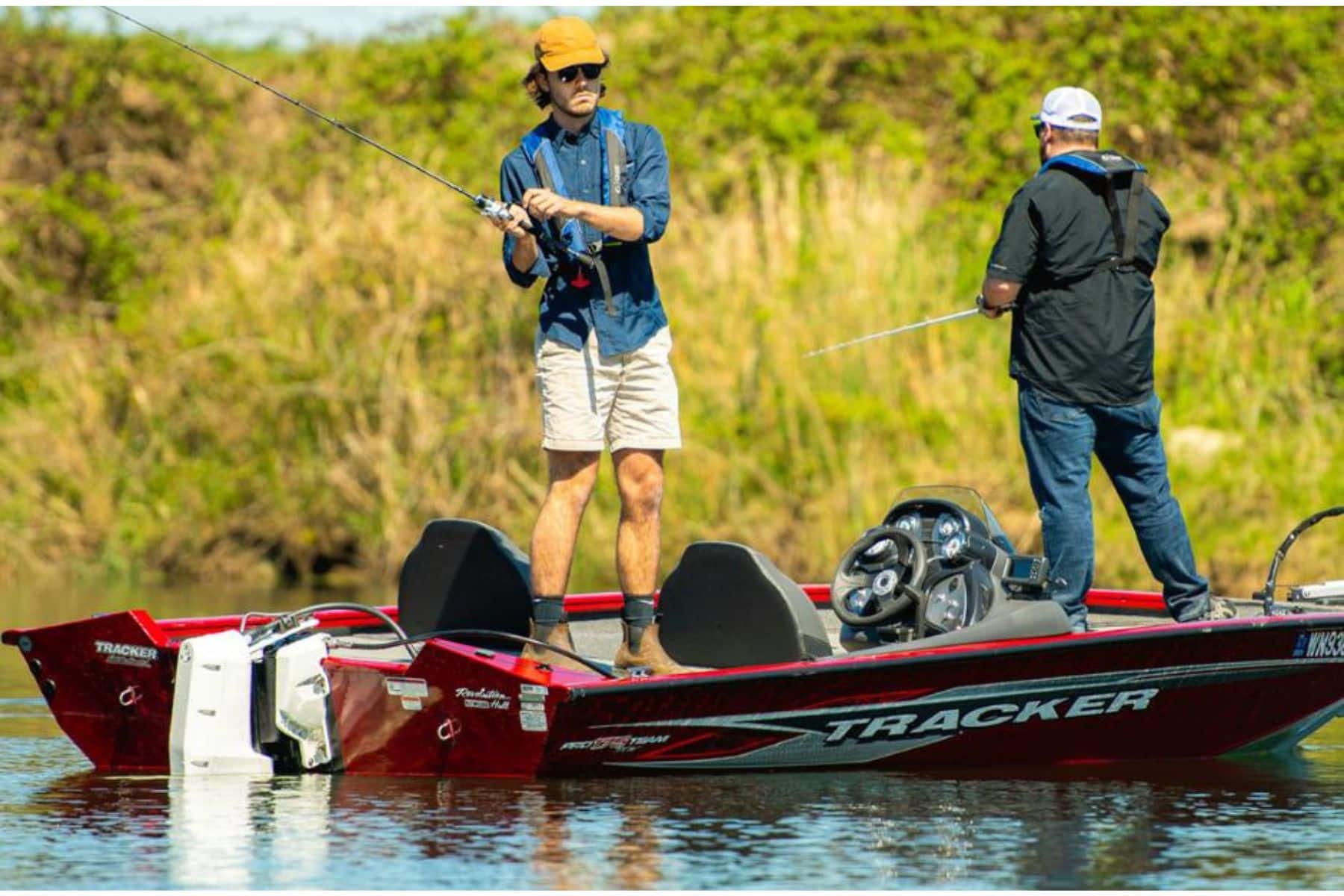
Pure Watercraft is taking the business of making electric outboards and flipping it on its head. The company is making a great powerplant, complete with stackable battery packs, and installing the kit on completed boats and selling them. Pure Watercraft should be on your list if you’re looking for an electric pontoon or RIB.
The very interesting Pure Pontoon demonstrates a proof of concept for these electric motors.
The Pure Outboard is very svelt and low-profile compared to other options. It looks good on the back of any boat, and you can imagine it powering any vessel, from fishing boats to small runabouts. With twins, you’ve got the equivalent of 100 horsepower to play with.
Things we like
- ✓ Full system—outboard, stackable battery packs, charging solutions
- ✓ Sleek design takes up virtually no space on the transom
- ✓ Single or twin power options
- ✓ Appropriate for anything built for 20 to 50 hp
- ✓ Available to pre-order on RIBs and pontoons
- ✓ Completely waterproof
Things we don't like
- ✗ Remote control only, no tiller option for smaller boats
10. Vision E Motion Electric Powertrain 180
Hopes for Big Boat Power 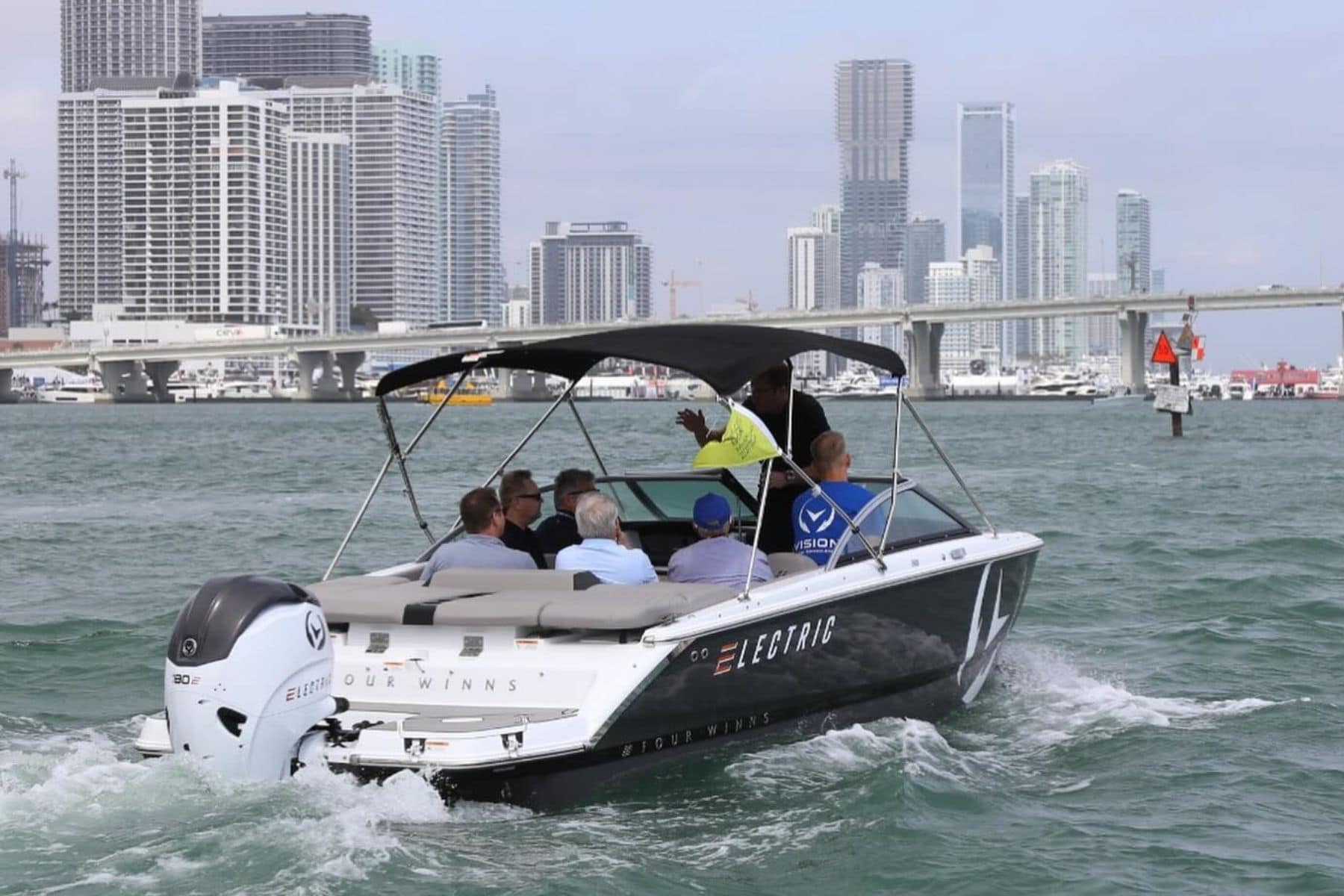
We’re in the early days of electric-powered boats. At the moment, it’s anyone’s guess which companies will be around in five or ten years, or even which technologies will become hits. This is especially true when it comes to high-powered boats. With a motor boat, you are no longer making an electric scooter but a full-fledged electric car.
Vision Marine Technologies is one of those companies whose future looks bright. This startup hails from Quebec, Canada and the company has two product lines: complete electric boats and electric outboards. Their boats are simple launches; most are sold with ePropulsion power packages. Nothing very interesting to report there, unfortunately.
The Vision E Motion electric powertrain, however, looks to have the potential to be a game changer. The system is built to power a 180-horsepower equivalent outboard motor, making it the most powerful electric boat motor yet. The challenge with a package like this is scale, you simply need a very powerful motor to get that much power, and such a powerful motor takes an enormous battery bank. This system is built on a 70 kWh battery bank that achieves overnight recharges with a standard 220-volt, 30-amp marine shore power connection.
Things we like
- ✓ High power that will suit many types of boats
- ✓ System solution includes battery, battery management, and charging solutions
Things we don't like
- ✗ Being sold directly to manufacturers, not available for repower installations
11. Mercury Avator 7.5e
The Electric Mercury Outboard 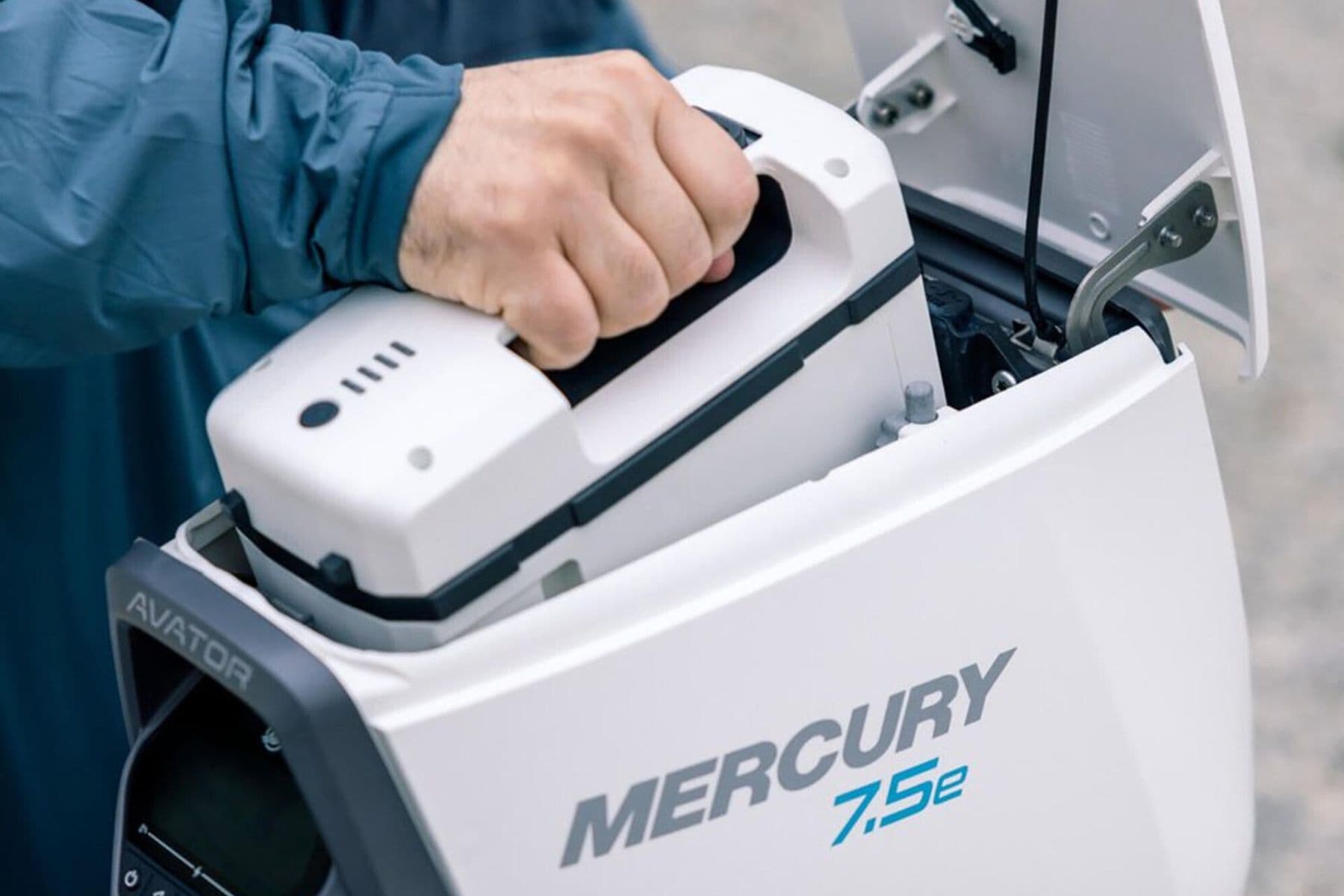
The new Mercury electric outboard, the Avator 7.5e, is a first for the company. Its 3.5-hp equivalent makes it a good choice for slow-moving jon boats, skiffs, dinghies, and perhaps small sailboats. One of the first boats being marketed with this motor is the new Veer V13 microskiff.
The Avator looks slightly different from other 1 kW outboards we’ve seen. It’s got a traditional-looking outboard cowl that is distinctly a Mercury. To get the battery out for charging, you lift the cowl and lift it out. Unlike Torqeedo and ePropulsion, removing the battery does not make the engine smaller or more portable. It does shave down the weight you have to carry, though. You can also remove the transom bracket to shave off a few pounds.
The specs of this Mercury electric outboard look great, especially compared to other 1 kW motors. The really interesting thing, however, is Mercury’s future Avator models. They’re already promised a 20e and 35e, which will be 5 and 9.9 horsepower equivalents.
Things we like
- ✓ Transverse flux motor technology—higher torque and more efficient propulsion than competitors Slick looking design
Things we don't like
- ✗ Bulky design that doesn't break down small for storage
- ✗ Heavier than other 1 kW motors