What defines a pontoon boat
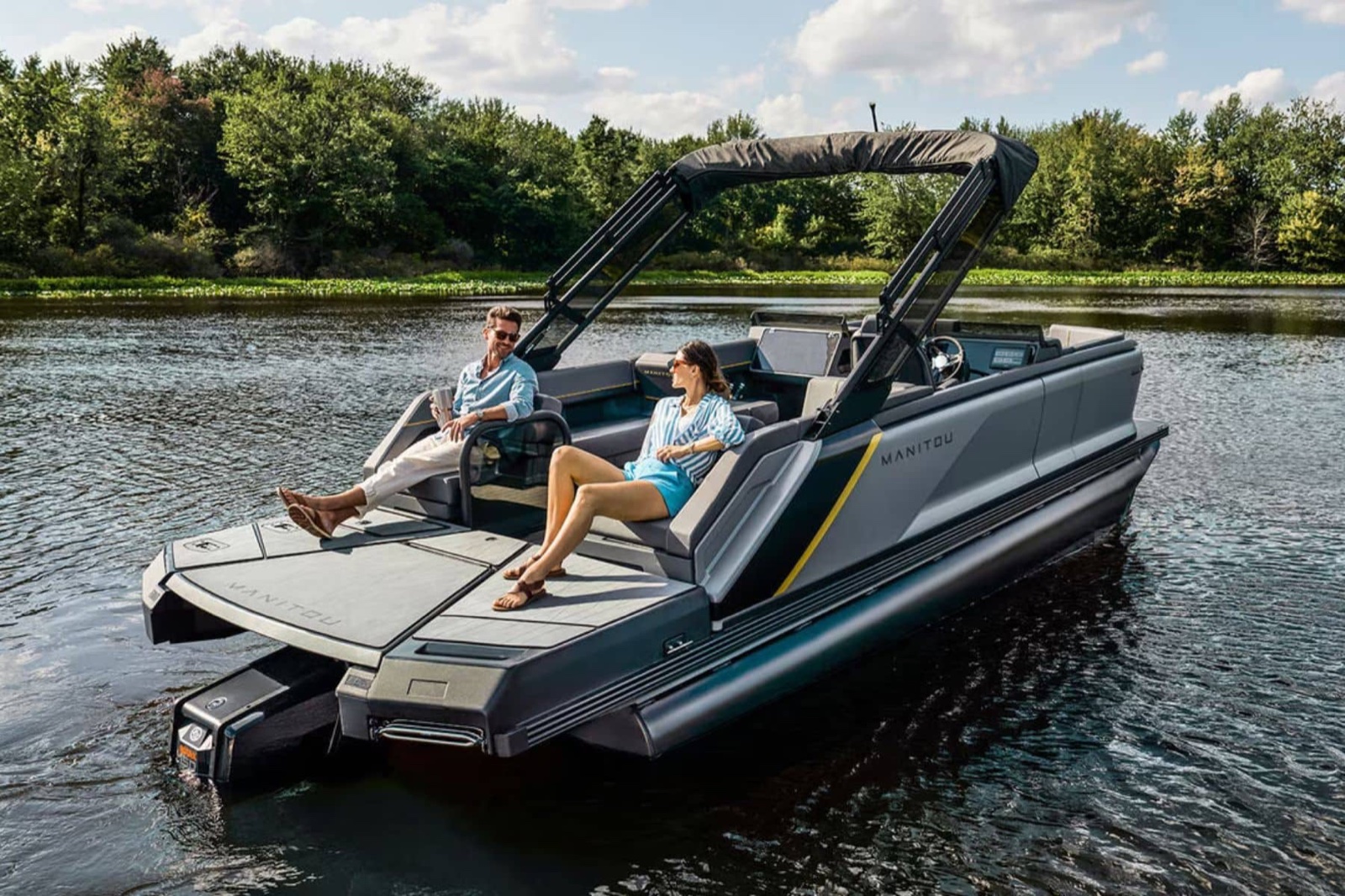
A pontoon boat is a flat-deck platform mounted on two or three aluminum tubes, sized 18 to 28 feet for the recreational market. The hull is the tube setup itself: twin-tube boats are the historic baseline, while tritoons add a center log to carry more horsepower, plane faster, and turn harder. Most modern pontoons run a 90 to 200 horsepower outboard on twin-tube setups and 200 to 400 horsepower on tritoons configured for tow sports. Deck length matters more than waterline because layout drives the buying decision: rear lounger, fishing chairs, swim platform width.
Buyers self-sort by four filters before they read a single review: length, twin or tritoon, intended use including watersports versus pure cruising, and budget tier.
What buyers actually pay
Year-one depreciation on pontoons runs 12 to 18 percent, slightly less than bowriders because the dealer network has fewer aggressive volume players. Five-year depreciation lands at 30 to 40 percent for entry brands like Sun Tracker and 22 to 30 percent for premium builders like Bennington and Manitou. Tritoons hold value 5 to 10 percent better than twin-tube equivalents because the buyer pool keeps growing. The used sweet spot is the 4-to-7-year window where the curve flattens and aluminum tube life still runs another 15 plus years if the boat was washed after saltwater use.
Model-year defects worth screening
Pre-2018 Sun Tracker boats used a wood-cored deck under vinyl flooring; the post-2018 cutover to composite is the screen for any buyer planning long ownership. Bennington tritoons from 2014 to 2016 had an Elliptical tube weld pattern that cracked at the strake on hard-cornering watersports use, surfaced across owner-mechanic forum threads. Mercury 150 four-stroke motors built before 2017 had a powerhead-mount corrosion issue specific to brackish-water storage. Premier "PTX" performance package boats from 2015 to 2018 used an early electric trim system that failed at 200 to 400 hours; the post-2019 redesign solved it.