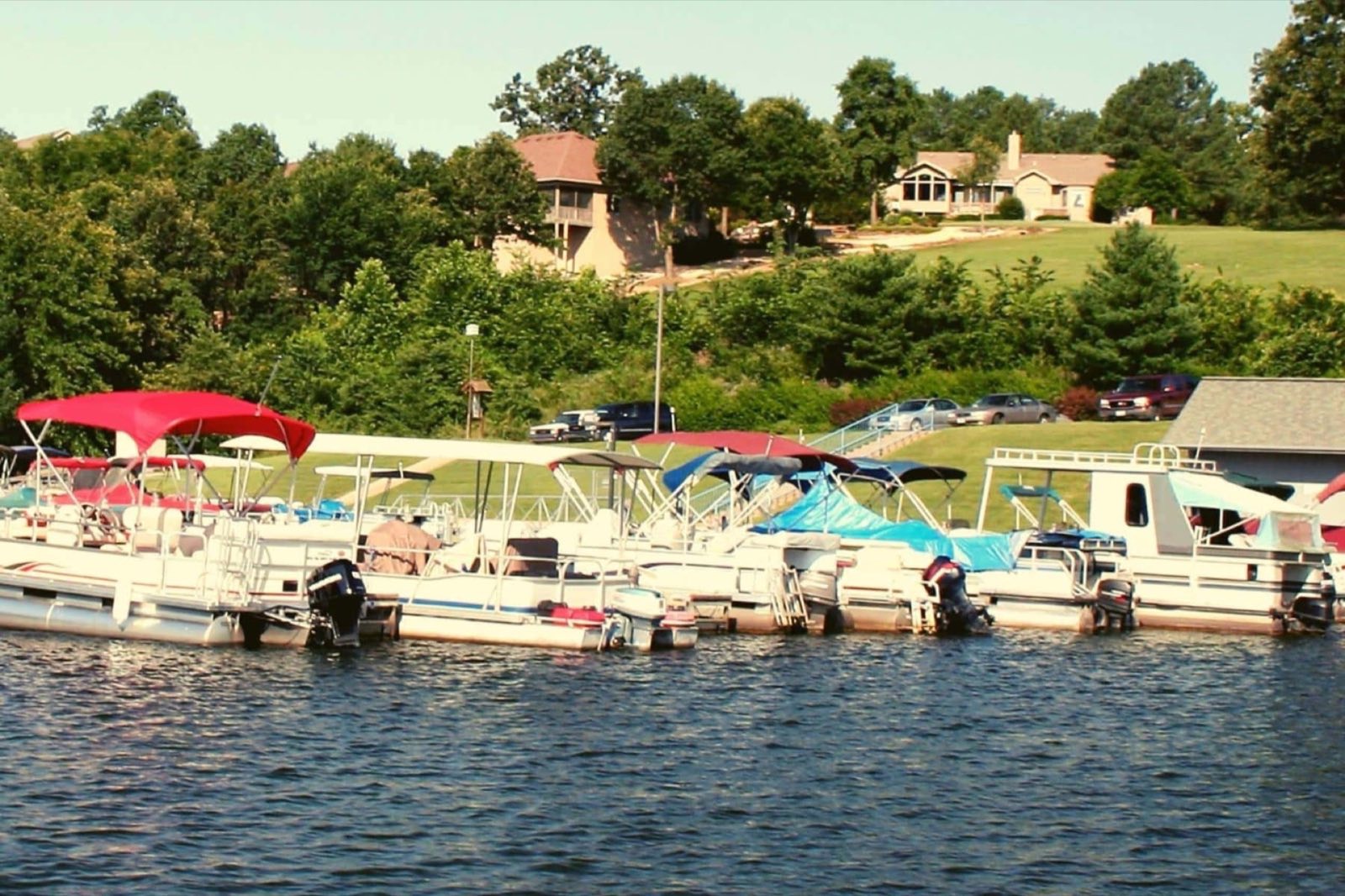
The Crest Classic 220 is a 22-foot 6-inch pontoon at the mid-tier of the segment. Crest Pontoon Boats is based in Owosso, Michigan and sells through a Midwest-and-Southeast dealer network that's narrower than Bennington's but broad enough to cover most family-pontoon use cases. The Classic 220 is the boat for shoppers who want a step up from the value tier without crossing the price wall into a Bennington 22 SSLX or a Premier 250 Grand Majestic.
What is the Crest Classic 220?
The Classic 220 is a 22-foot 6-inch aluminum pontoon with an 8-foot 6-inch beam. Two 25-inch logs as standard, with a tritoon center-tube option that adds a third 25-inch log. Dry weight is roughly 2,540 pounds on the two-tube build, closer to 2,950 on the tritoon. The deck is marine plywood with marine vinyl over it. Fence panels are powder-coated aluminum, not stamped, which is one of the clearest tells separating the Classic 220 from a value-tier boat at the same length.
The layout fits seven people for a day on the water. A forward bow lounge with a filler insert that converts to a sun pad, a stern L-couch that wraps to a port lounge, a captain's helm seat with a flip-up bolster, and a console that holds the Yamaha or Mercury throttle, the steering wheel, and a 7-inch Garmin from 2021 onward as a near-standard option. A bimini covers the helm and the stern. Optional adds are a changing room with a porta-potti, a wet bar with a sink and a small fridge, and an upgraded stereo with a subwoofer.
Engine options are a Yamaha F115 or F150 four-stroke or a Mercury 115 or 150 FourStroke on the two-tube build, or a Yamaha F200 or Mercury 200 on the tritoon. The 150 is the right power for the two-tube setup. Cruise sits at 24 mph and top near 32 on a clean hull. The 200 on the tritoon takes the boat to a 28-mph cruise and 38-mph top, enough to pull a tube cleanly with three adults aboard.
I ran a 2022 Classic 220 with the tritoon package and a Yamaha F200 across Lake Wylie one June afternoon, six adults and two kids aboard. The 28-mph cruise was the working speed where the boat felt right. The bimini up, the stereo on, and the boat ran four hours on the 27-gallon tank before the fuel gauge said it was time to call it. The tritoon center tube made the chop off the channel boat traffic into a non-issue, which a two-tube hull at the same load would have struggled with.
Who is it good for?
Families who want a mid-tier pontoon with real fit and finish are the first profile. The stitched-vinyl furniture, the powder-coated fence panels, and the optional tritoon are the things that separate the Classic 220 from a value-tier boat and bring it close to a Bennington at materially less money. The build holds up after several seasons in a way the value tier doesn't.
Buyers stepping up from a Sun Tracker or a Lowe SS210 are the second profile. The materials gap is the kind of thing you notice on a walkthrough. The closed-cell foam under the cushions, the powder coat on the fence panels, the helm cluster with the Garmin display. None of it is hidden.
Owners who plan to keep the boat six to eight years are the third profile. The build holds up under that ownership window in a way the entry tier doesn't, and the resale price at year six on a clean Classic 220 is a clear tier above a value-tier pontoon at the same age.
Who is it not good for?
Buyers who want the broadest dealer network should look at Bennington instead. Crest's network is concentrated in the Midwest and Southeast. Atlantic-coast, Pacific, and Pacific Northwest buyers pay freight on warranty parts and on the dealer-service relationship.
Entry-tier shoppers should walk past. The Classic 220 sits a clear price wall above the value tier. If your budget is under $45,000 new, the Lowe SS210 or a Sun Tracker at the same length is the right boat.
The third exclusion is buyers who want the upper-tier furniture and the dealer-driven concierge service that Bennington and Premier bring. The Classic 220 is a clear mid-tier boat, not the top of the segment.
Pricing
New 2026 pricing on the Classic 220 with a 150 Yamaha and the two-tube build lands roughly $54,000 to $62,000 at a Crest dealer. Stepping up to the tritoon center tube with a Yamaha F200 and adding the changing room, the wet bar, and the upgraded stereo brings the loaded build to $72,000 to $78,000. Crest dealers run modest seasonal promotions, narrower than Tracker Marine but real.
The used market spans $22,000 at the bottom (older 2016-2018 hulls with deferred service) to $62,000 at the top (current-year demonstrators with a loaded tritoon build). The sweet spot is the 2021-2022 Classic 220 with the 150 Yamaha on the two-tube build or the F200 on the tritoon, landing at $38,000 to $58,000 on a clean hull with under 250 hours. Five-year depreciation runs roughly 32 to 36 percent off MSRP, which is a tier behind Bennington but ahead of the value tier.
What works
- Stitched-vinyl furniture set is a clear step up from the value tier, with closed-cell foam holding shape after several seasons.
- Powder-coated fence panels resist the chip-and-corrode pattern that hits stamped value-tier pontoons.
- Optional tritoon center tube takes the boat to a 200-hp Yamaha or Mercury and gives real tube-pull capability.
- Yamaha F150 or Mercury 150 on the two-tube layout cruises at 24 mph and tops near 32.
- 27-gallon fuel tank holds a real five-hour day at cruise with the 150.
- 7-inch Garmin chartplotter is a near-standard option from 2021 onward.
What doesn't
- Dealer network is narrower than Bennington's, coastal and Pacific Northwest buyers pay freight on parts.
- Resale lags Bennington at the same length by a tier.
- Bimini hardware on 2019-2020 hulls has had owner reports of strut corrosion at the rail joint.
- Tritoon trailer plus boat crosses 4,400 pounds, into full-size truck territory.
- Wiring chase under the helm has had water-intrusion reports on a small share of older hulls.
- Stereo and amplifier package on the base trim is modest. Most owners upgrade aftermarket.
Year-by-year notes
The current Classic 220 hull dates from roughly 2019, with the powder-coated fence panel spec standard from that year forward. The 2020 model added the option of an upgraded Garmin display at the helm. The 2021 model standardized the post-strut-corrosion bimini hardware spec and refreshed the furniture pattern. The 2023 model added USB charging at the helm and the stern lounge. The tritoon center-tube option has been available across the current production. Pre-2019 Classic models are different boats on different deck patterns. Don't confuse them when shopping used.
Cost of ownership
Yamaha or Mercury 150 service intervals follow the standard 100-hour schedule. A 100-hour kit costs $300 to $450 in parts plus $250 to $400 in dealer labor. The 300-hour valve-clearance check at the three-year mark adds labor. Pontoon-specific maintenance is light. Tube cleaning once a year is $200 to $350. Vinyl reconditioning every two years is similar. No bottom paint, no bellows, no sterndrive impeller. The tritoon build adds a third tube to clean but no other recurring lines.
Insurance on a $55,000 hull is $600 to $1,000 a year on an inland lake. A five-year hold on a 2021 Classic 220 with a Yamaha F200 tritoon, bought used at $48,000 with 175 hours, used 60 hours a season on a Carolina lake with trailer storage, lands at $4,200 to $6,200 a year all-in including insurance, fuel, service, and amortized capital cost. The Classic 220 is one of the cheaper mid-tier pontoons in the segment to own over a long hold.
Best year and trim to buy
The 2021-to-2022 Classic 220 with the 150 Yamaha on the two-tube build, or the F200 on the tritoon, is the right buy in 2026. Verify five things pre-purchase. First, the engine service file shows current 100-hour work plus the 300-hour valve check at the right hour mark. Second, the bimini hardware is the post-2021 spec without strut-to-rail corrosion. Third, the wiring chase under the helm tests dry on a hose test. Fourth, the stern lounge upholstery is free of seam stretch and the closed-cell foam underneath has not compressed. Fifth, the fence-panel powder coat is clean at the rivet line. Replacement panels are dealer-only and lead times can stretch into weeks.
Alternatives
The upper-tier cross-shop on furniture and dealer network is the Bennington 22 SSLX, where the price and the resale are both a tier higher. For a value-tier alternative at similar length, the Lowe SS210 is the entry-price option. For a cross-shop on tritoon handling, the Manitou Pontoon Boat V-Toon hull is the closest direct competitor.