Guide to choosing the Best Kayak Cart
When we see images of kayakers paddling on glassy lakes or between weather-beaten islands in remote archipelagos, what’s missing from the picture is how the paddler got there. Getting your kayak on the water can be half the battle, which is why owning a kayak cart should be synonymous with owning a kayak.
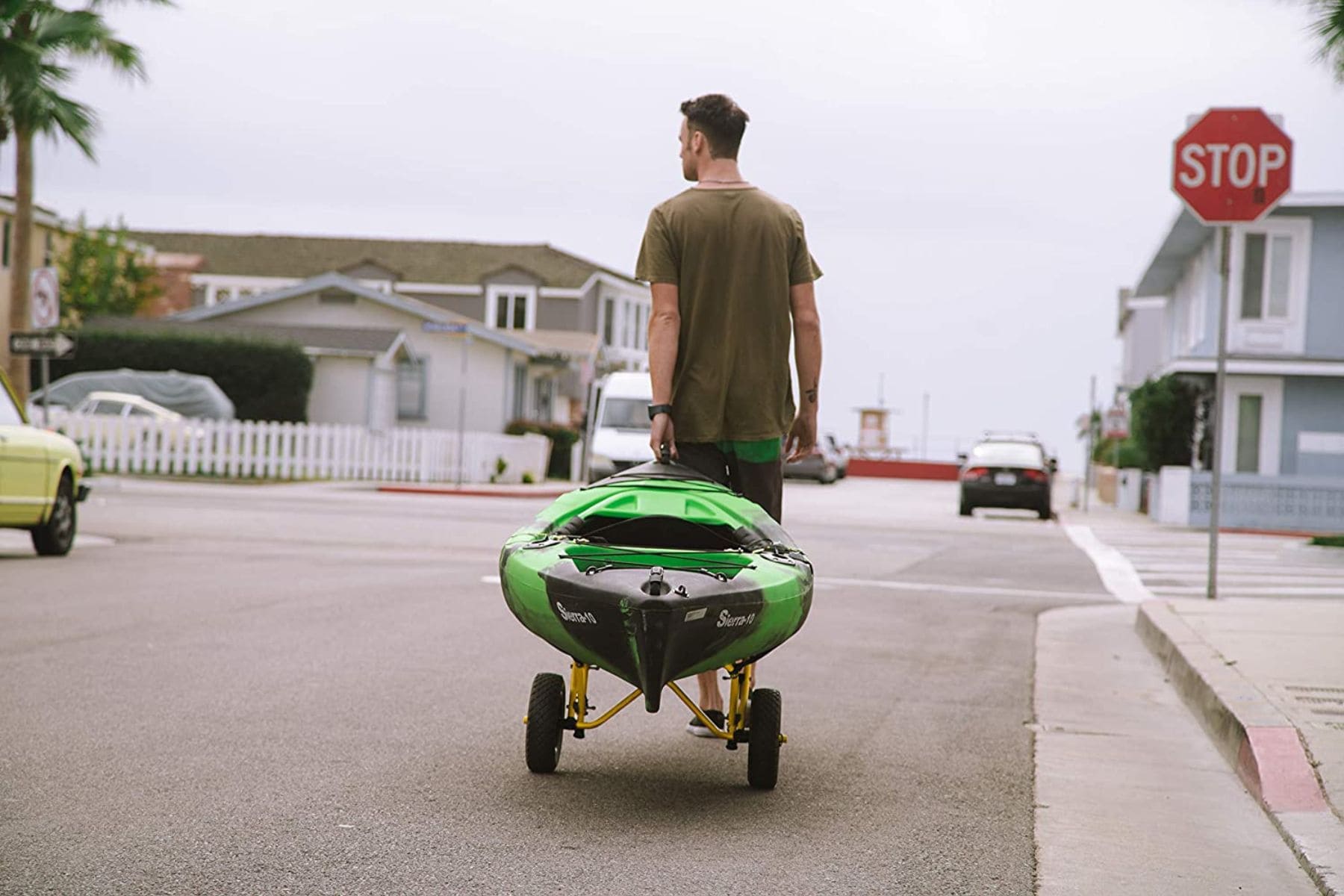
Moving a kayak from the roof of your vehicle to a beach, riverbank, or pebbled shoreline can be daunting, especially if you’re on your own. If your boat is over twenty pounds it’s unlikely you’ll be able to carry it for more than fifty feet. But owning kayak wheels is a game changer because the heavy lifting is taken out of the equation.
There are a number of considerations to take into account when selecting the perfect kayak cart for your kayak:
- Budget
- Width and Style of your kayak
- Weight Capacity
- Collapsibility
- The terrain you’ll be transporting the kayak across
- Weight
- Adjustability
- Durability
- Maintenance
- Material
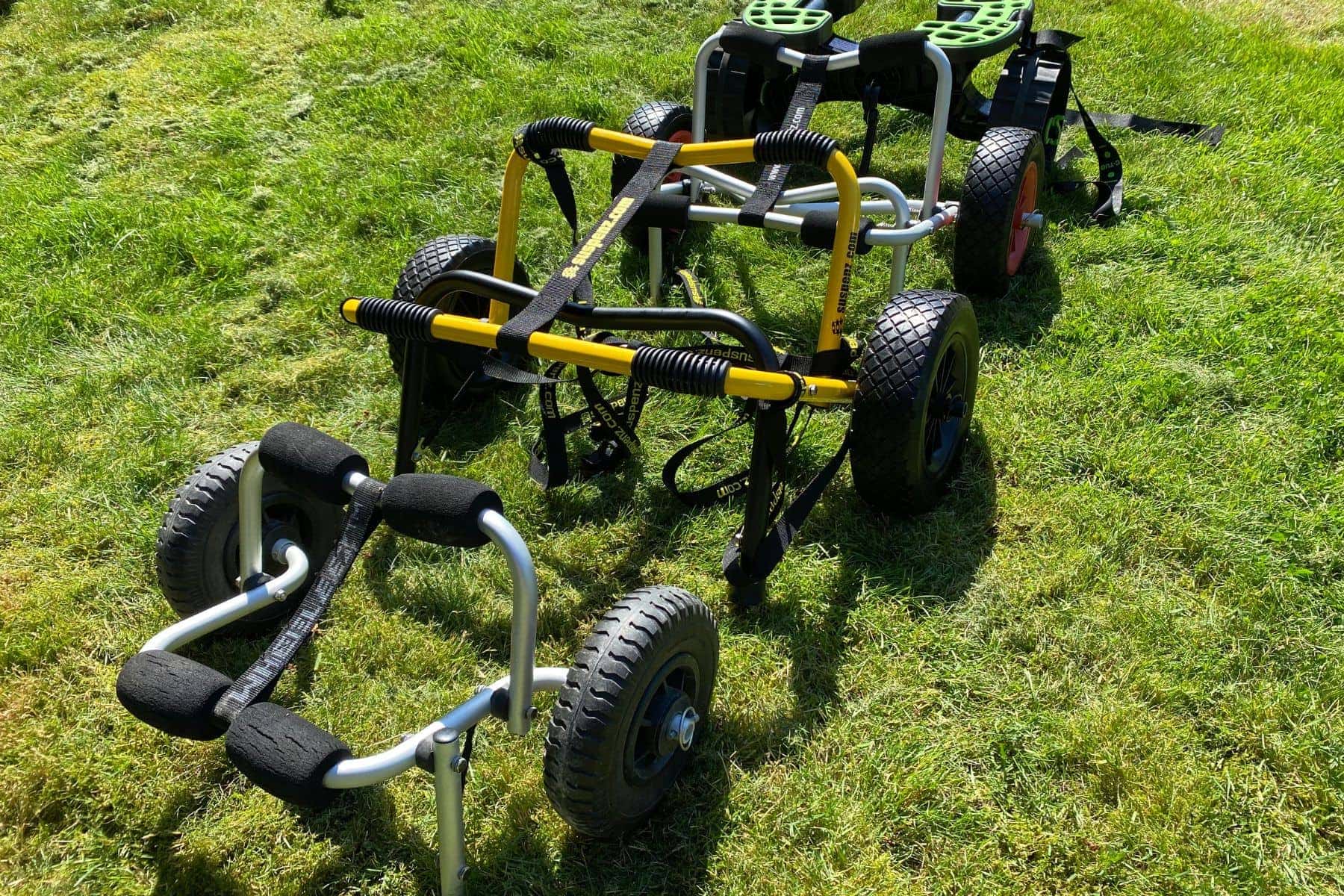
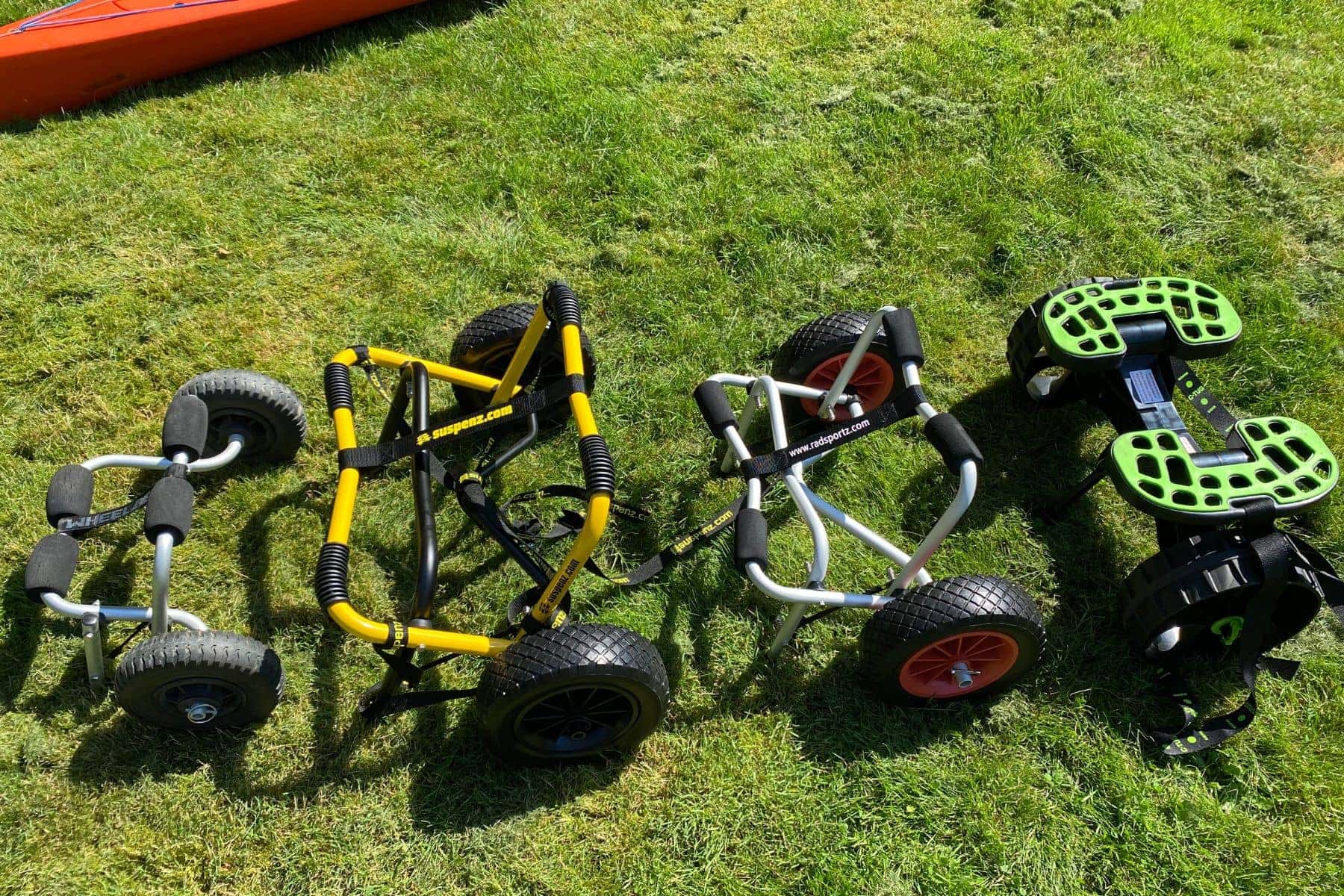
Kayak carts come in all shapes and sizes, but it’s important to understand what differentiates a quality kayak dolly from the more affordable versions.
Budget:
Depending on your requirements, it may not be necessary to pay top dollar for a set of kayak wheels. If you’re simply rolling your boat down a level pathway, sealed road, or across a maintained lawn, cheaper plastic wheels might suffice over more durable and maneuverable rubber tires.
More expensive doesn’t always mean better. Generally, the more you pay, the higher quality the materials will be and the better the construction, giving your kayak cart a longer lifespan.
If money is a factor, you might consider a cart like the Rad Sportz Kayak Cart made with slightly cheaper materials but that rivals its counterparts in performance.
Width and Style of your kayak:
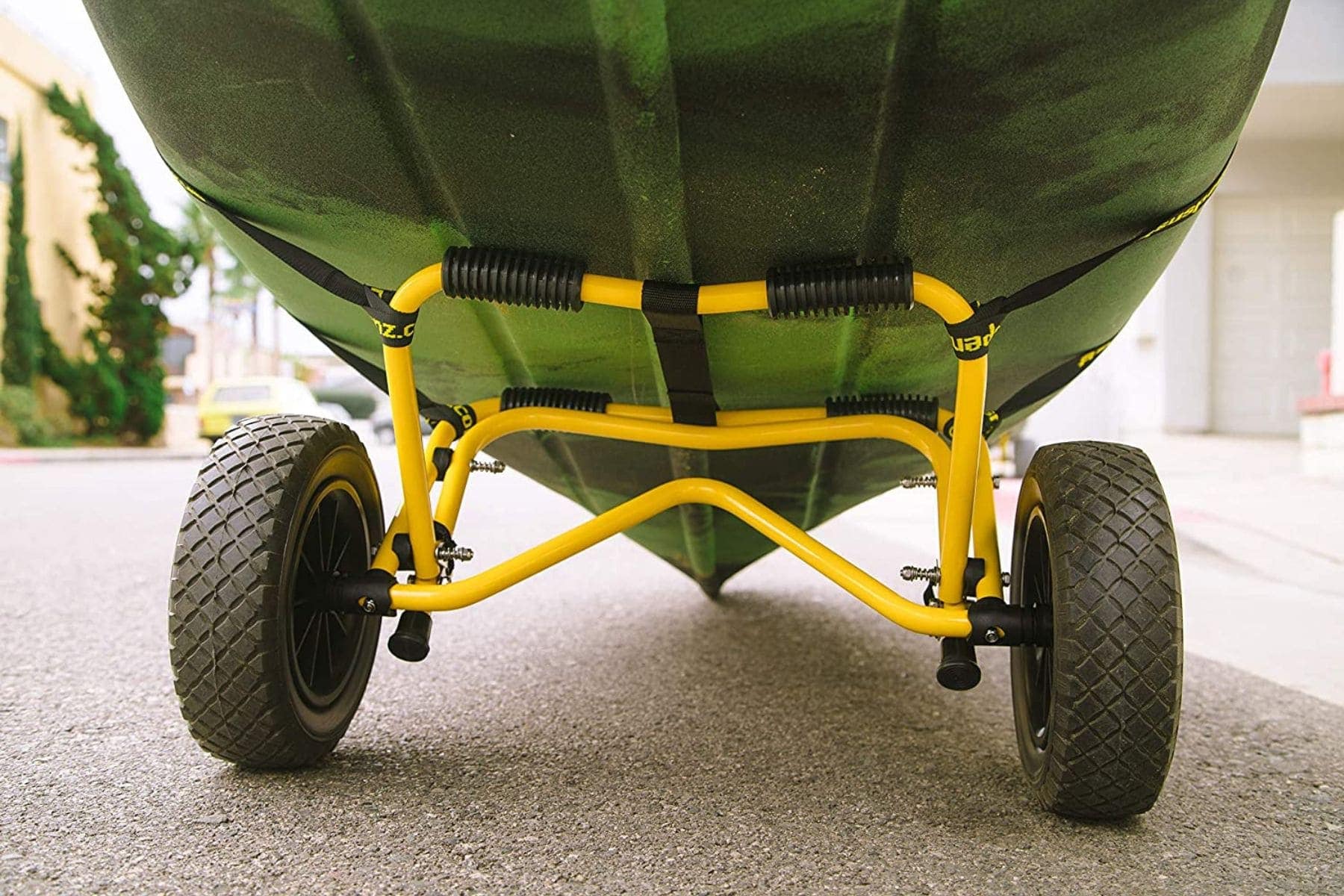
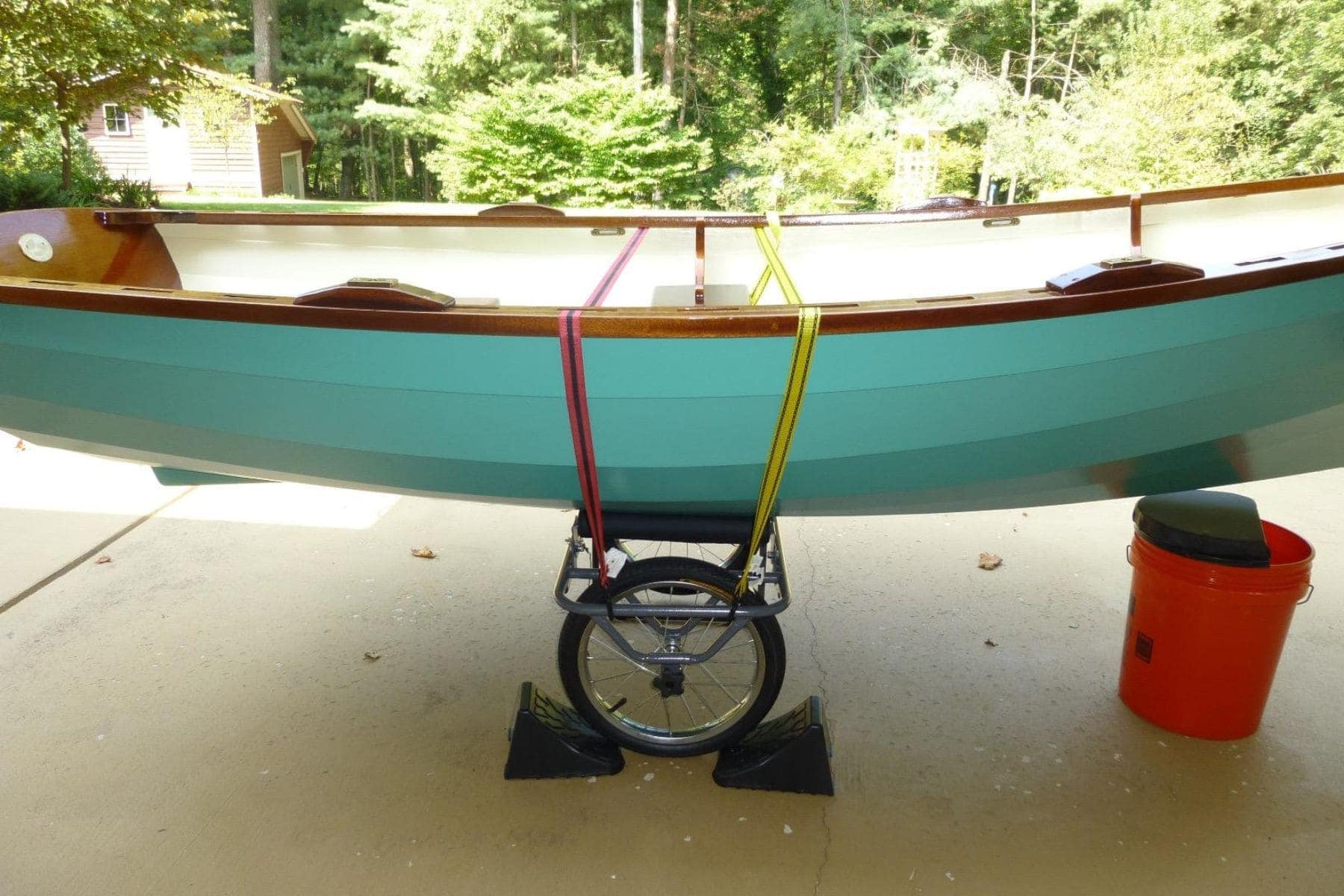
The width and style of your kayak will determine the type of kayak cart you require. If you have a very wide boat, you would need a set of wheels that can accommodate the wide hull of your kayak. Some kayak carts can accommodate canoes as well as Stand Up Paddleboards, and these types of carts should accommodate the wide hull of any kayak.
A sit-on-top kayak with scupper holes designed to drain water out of the boat is best suited to a scupper cart with rods that slide through the scupper holes. Scupper carts can only be used on sit-on-top kayaks with scupper holes, and are useful because they don’t require additional straps to secure the kayak to the cart.
Weight Capacity
The weight capacity, or load, of your kayak cart should be considered when choosing the most appropriate dolly. Larger carts with a more robust aluminum frame will carry more weight than a more compact, lighter frame.
Some kayak camping trips might require portaging a heavily-laden boat. Consider this when choosing a dolly.
In addition to the weight of your kayak, you need to consider how much gear you plan to haul on your trip. Kayak carts are wonderful for transporting an empty kayak from your car to the beach, but they’re even more useful when transporting a fully-loaded boat on a longer expedition.
Packing a Kayak Cart
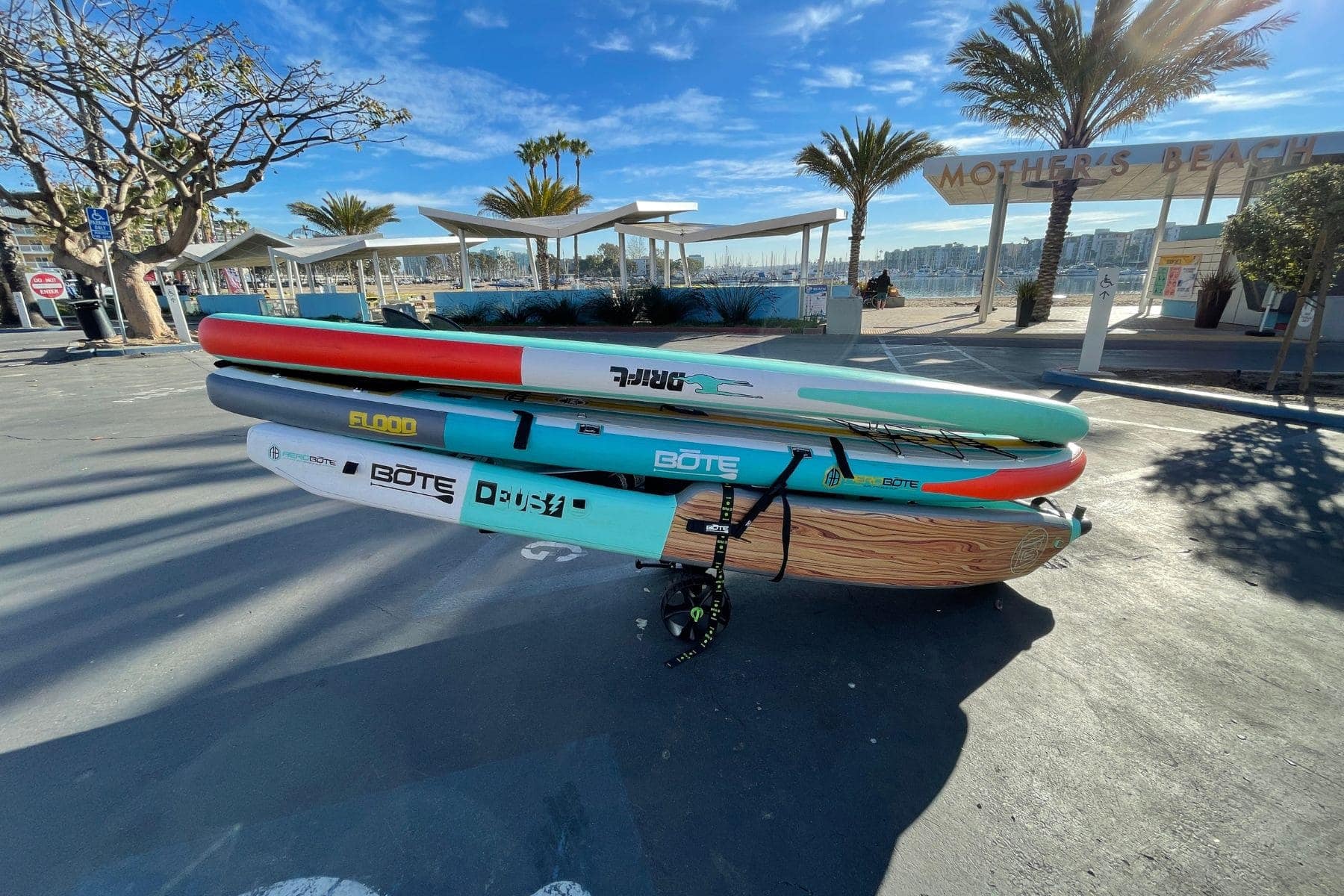
Depending on your circumstances, you may be required to transport the kayak cart on or in your kayak when paddling. If this is the case, you may want to choose a cart that is more compact or can be collapsed and disassembled to fit inside your hatch.
The C-Tug and Wheeleez carts are the best stowable kayak carts on this list and probably on the market right now.
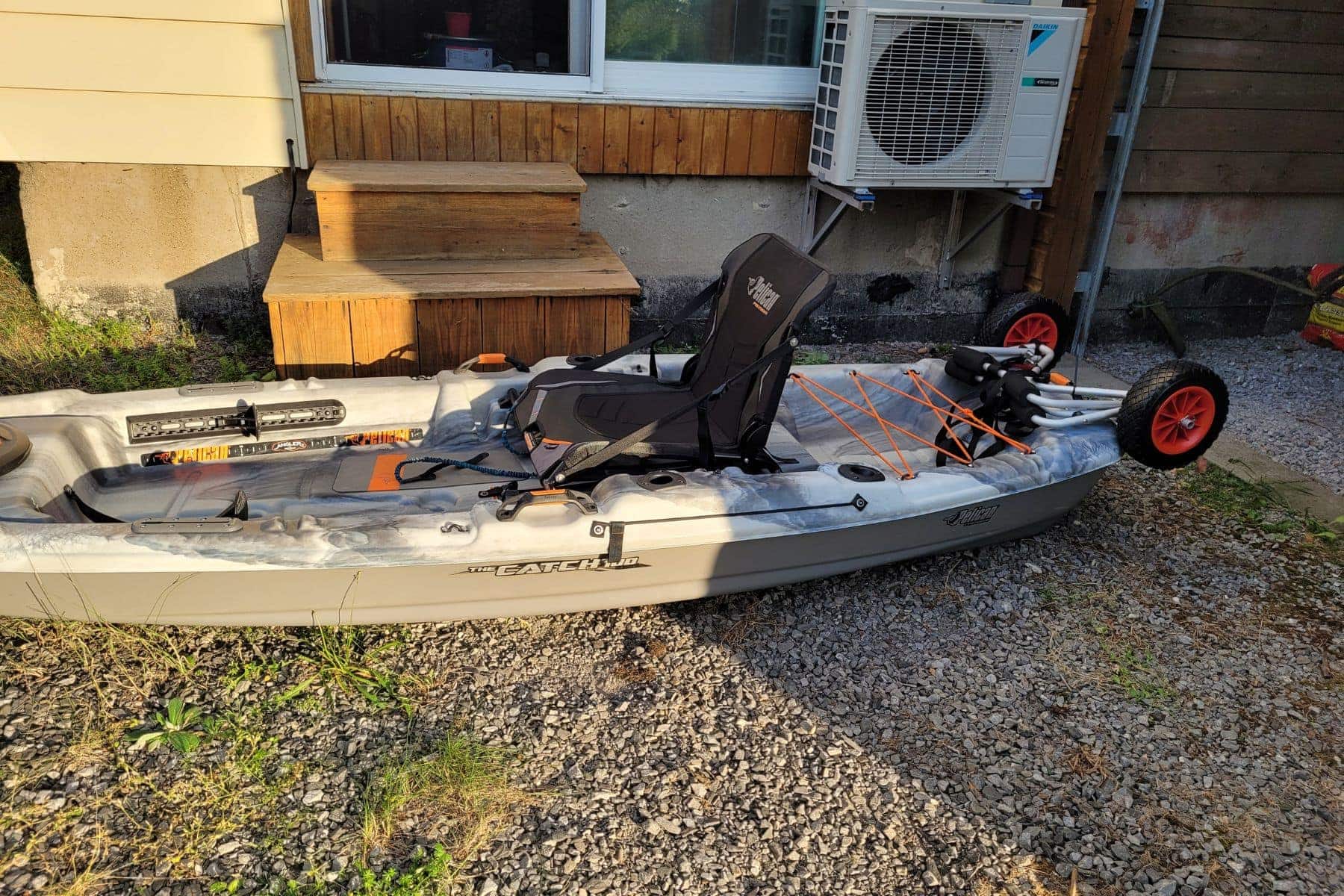
If the cart is too big to fit inside your hatch once collapsed, you have the option of strapping it to the deck of the kayak using bungee cords or straps. But adding weight to the deck of your kayak will alter its performance and compromise stability. So ensure the cart is evenly balanced and strap it to the stern of your kayak so it doesn’t impede your paddle strokes.
The terrain you’ll be transporting the kayak across:
In most cases, for a kayak cart to be effective, you’ll want a relatively accessible trail to follow to the water. However, some of the more sturdy carts with larger wheels will navigate roots, rocks, sandy beaches, or even a shallow staircase with ease.
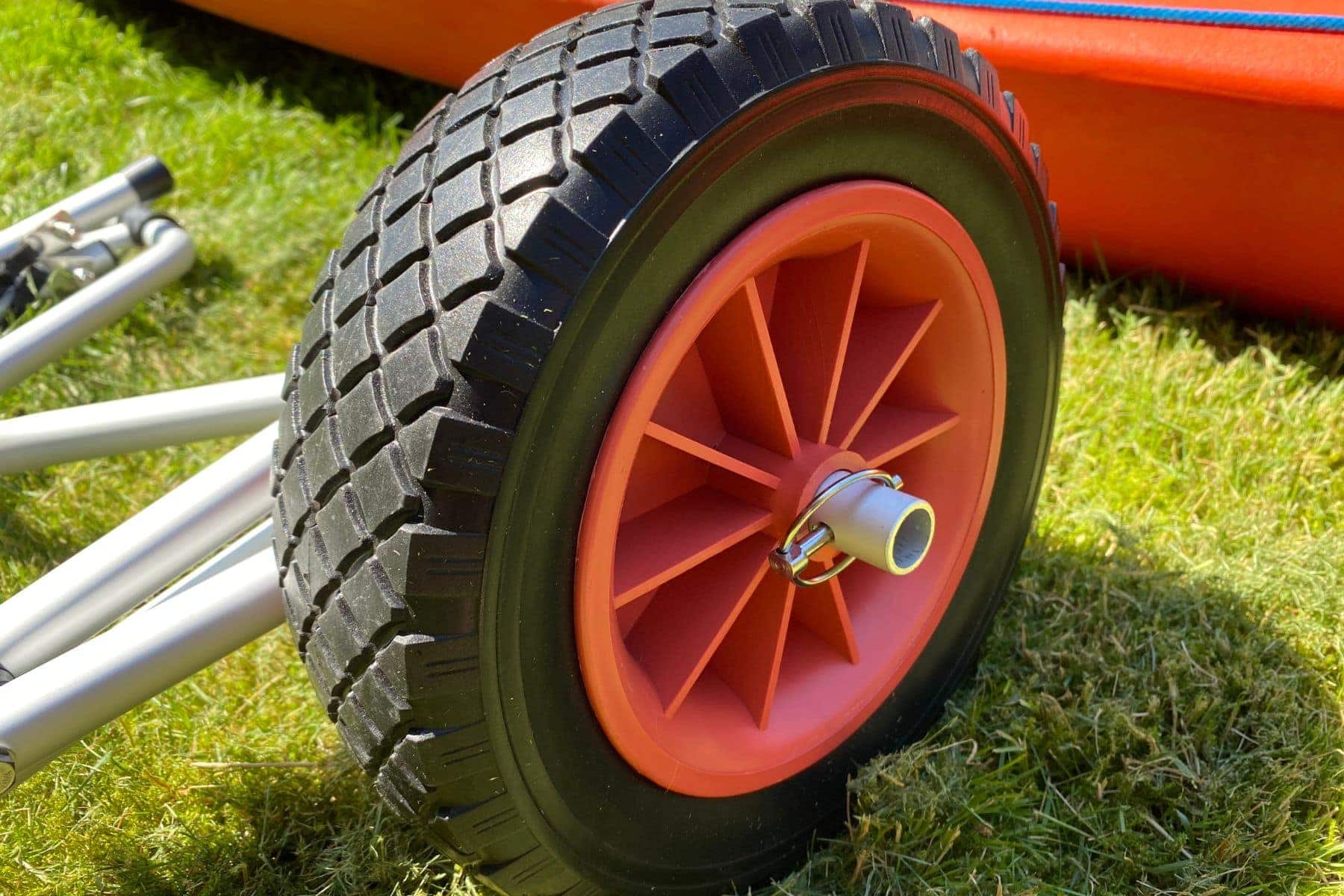
The terrain you’ll be transporting your kayak across will determine the type of wheels you’ll want on your kayak cart. Rolling your kayak over deep sand will require a wider wheel with a greater surface area to prevent the cart from becoming buried in the sand.
Transporting your kayak on paved roads might require a softer, rubber tire that will create less friction than a stiffer, plastic wheel.
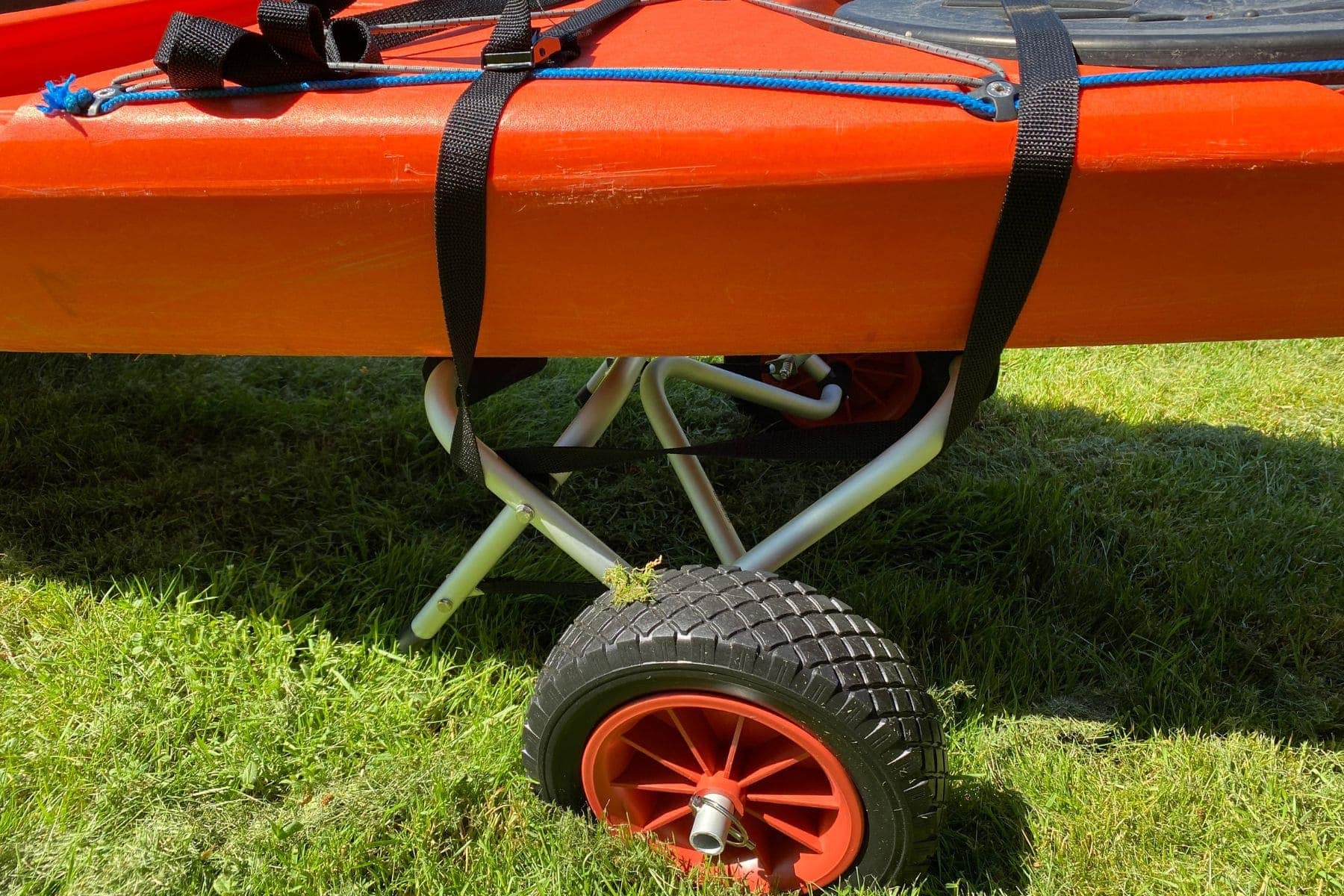
Maneuvering your kayak over challenging terrain like tree roots, pebbled beaches, and even down a shallow staircase will also require a stronger rubber tire with a bit of flex to allow the cart to glide over these surfaces more freely.
Railblaza’s wheels tackle tough terrain very well. Suspenz’s cart does a good job too. But in most cases, the landscape will be groomed enough for any wheels.
What Do Kayak Wheels Weigh?
The weight of the kayak cart will be determined by the materials it’s constructed from. Most kayak wheels use an aluminum frame and plastic or rubber tires, but the grade of the aluminum will vary. An aluminum frame designed with a greater weight capacity will likely weigh more.
Materials like plastic will also alter the weight of the cart, and the wheels will play a big part in the overall weight of the product. Weight is an important factor if you’re transporting the kayak cart in or on your boat when paddling. Weight may not be as important if you’re simply leaving the wheels in your car or on the shoreline.
Adjustability:
Some kayak carts have hull pads that can be adjusted to fit the specific shape of your hull. This might be important if you’re using the cart for multiple style boats such as a sea-touring kayak, tandem kayak, or canoe.
Most kayak carts will also come with adjustable straps, which can accommodate boats of various shapes and sizes.
Durability:
General wear and tear are inevitable on all kayak carts, but the more durable carts will be made from materials that withstand wear and tear better than others.
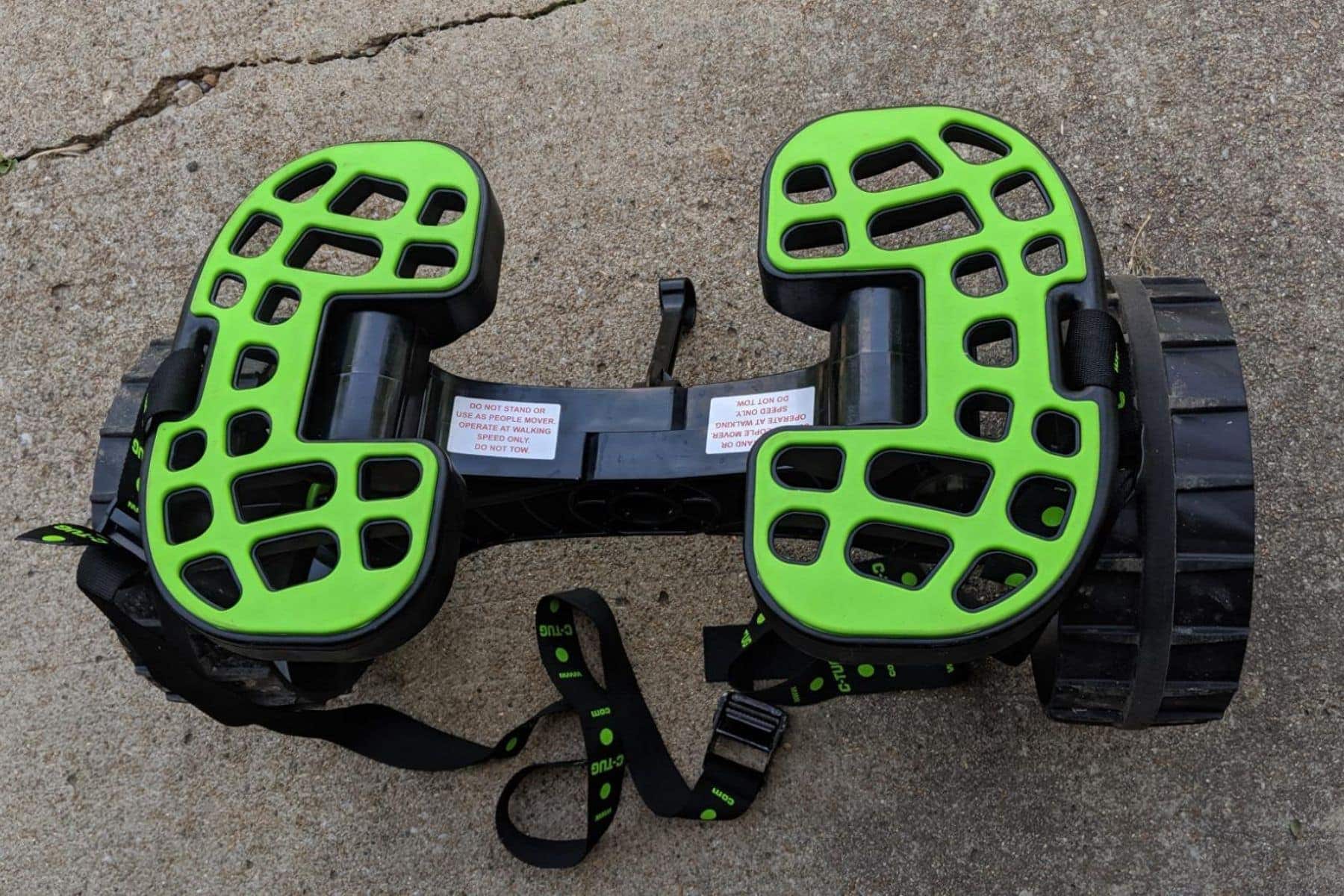
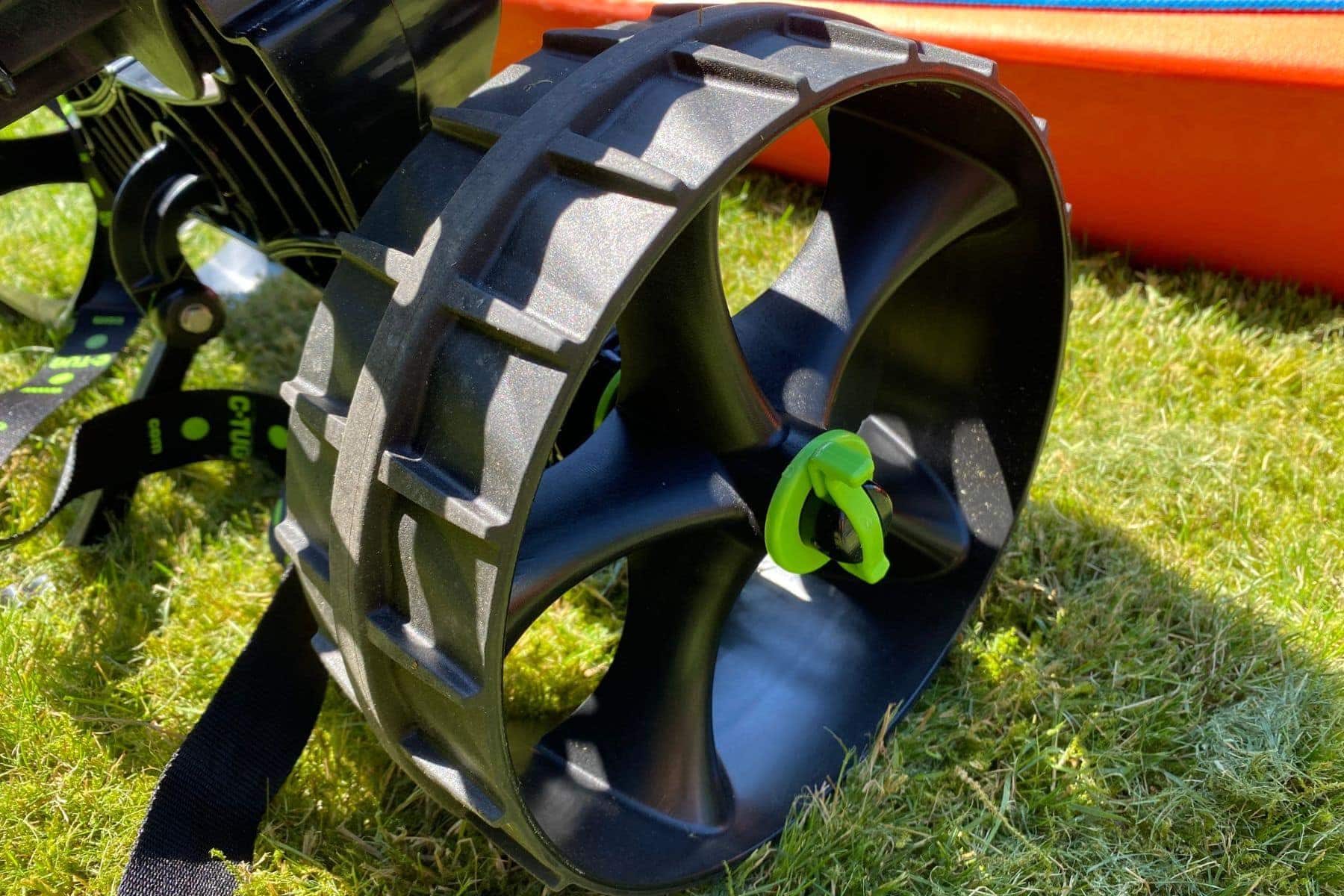
The Railblaza C-Tug Cart has solid non-corrosive materials: composite polymers atop stainless steel axles. Good treads make this an all terrain friendly kayak wheels.
Foam hull pads, for example, are more susceptible to cracking over time with exposure to salt water and UV light than rubber pads. A stronger aluminum frame will also be less likely to warp or bend under stress than a cheap, lightweight frame.
The necessary durability of your kayak cart will be determined by how much weight you’re planning to load onto it and the terrain you’ll be traveling across.
Maintaining Kayak Carts:
Maintenance of your kayak wheels should be as basic as hosing down the wheels after use, drying them, and keeping them stored out of the sun and rain to avoid sun damage and rust.
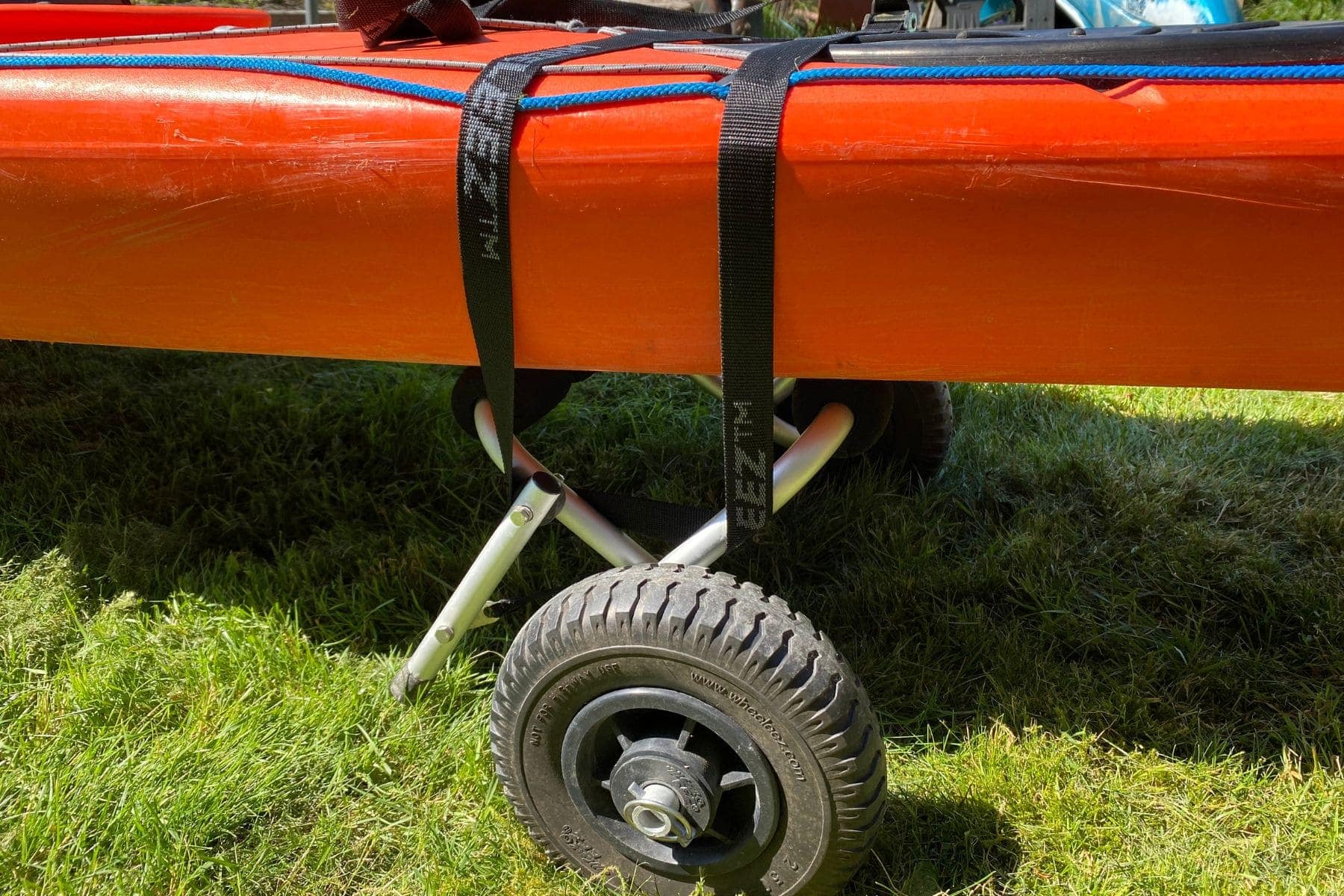
Some wheels may be fitted with tubes, which require being pumped with air like a bike tire. But most modern kayak carts are fitted with puncture-free wheels that require little to no maintenance.
Material:
The material your kayak cart is made from will determine its weight and durability. As mentioned above, if you’re hauling more weight, you may need a more robust aluminum frame, whereas lighter loads could use a lighter-plastic frame.
The Railblaza C-Tug is the plastic exception. It’s actually made with composite polymers on top of steel axles.
The Railblaza C-Tug Cart has solid non-corrosive materials: composite polymers atop stainless steel axles. Good treads make this an all terrain friendly kayak wheels.
Plastic will be less susceptible to rust from saltwater but may not have the longevity of its aluminum counterpart.
Choosing the material of your kayak cart will depend on how much weight you’ll be hauling, the type of terrain you’ll be traveling over, and whether you plan to paddle with the cart with you on the water.
What is a scupper cart?
A scupper cart is designed to fit sit-on-top kayaks with built-in scupper holes, which are designed to drain water from the kayak. Think kayak wheels with two prongs sticking up.
How do you use a scupper cart?
A scupper cart has two poles that slide through the scupper holes of a sit-on-top kayak to hold it into place. The advantage of a scupper cart is it doesn’t require any additional straps.
The disadvantage of a scupper cart is it can only be used with sit-on-top kayaks with scupper holes. It also requires the kayak to be turned on its side to mount onto the cart, which can be problematic if you have items stored on top of your kayak.
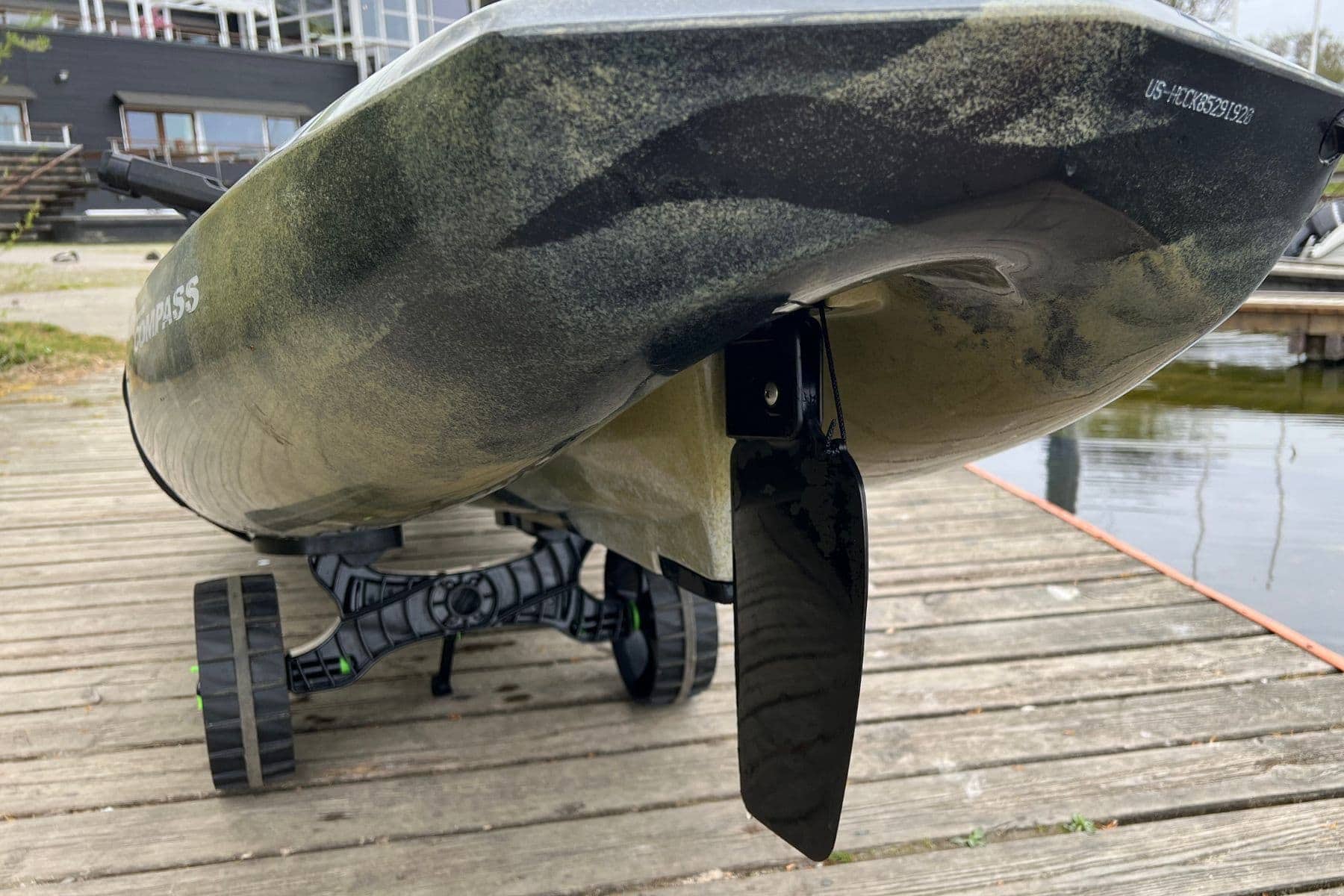
This sit on top kayak is easy to transport on its trolley because of scupper holes for fastening.
Make Life Easier
Using kayak carts–the right set of wheels–will dramatically cut down on the energy spent on transporting. The goal is to save time and energy for the water. Choose the right cart for your boat and getting to and from the water will be faster.