Kayak Paddle Buyer’s Guide
When you’re just getting into kayaking, it’s easy to be overwhelmed by the amount of equipment required to simply get out on the water. Kayaks are not cheap, and people often balance out the cost of their kayak by buying a cheap paddle to go with it.
It’s like buying a really expensive suit and then cheaping out on shoes. You soon realize you’re often on your feet, in the same way, your paddle is always in hand and in motion.
Comfort is a major consideration when it comes to selecting both your kayak and your paddle, but this doesn’t mean you need to rush out and purchase the most expensive carbon option on the market. There are hundreds of paddles to choose from, so it’s important to narrow down your choices by asking some important questions first, like:
- What sort of kayak are you paddling? (inflatable versus hard shell or performance versus recreational)
- Where are you paddling? (ocean, flatwater, whitewater, etc.)
- How long are you paddling for? (A few hours versus a multi-day trip)
- Is this your primary paddle? (as opposed to a spare paddle)
- What is your budget?
Once you’ve identified your primary application for your new paddle, you can begin delving into the more technical considerations like:
- Materials (plastic, aluminum, wood, fiberglass, or fiber composites like carbon fiber, Kevlar, or graphite)
- Blade Size
- Blade Shape
- Shaft Design
- Weight
- Paddle Length
- Budget
If you’re already feeling overwhelmed, hang tight, we’re going to break this down for you.
Materials
The cost of your paddle will mostly depend on the material it’s made from. A lighter, carbon paddle will be a lot more expensive than a heavy-duty plastic paddle. But again, it’s not the price that should determine which paddle you ultimately choose.
Plastic and Aluminum
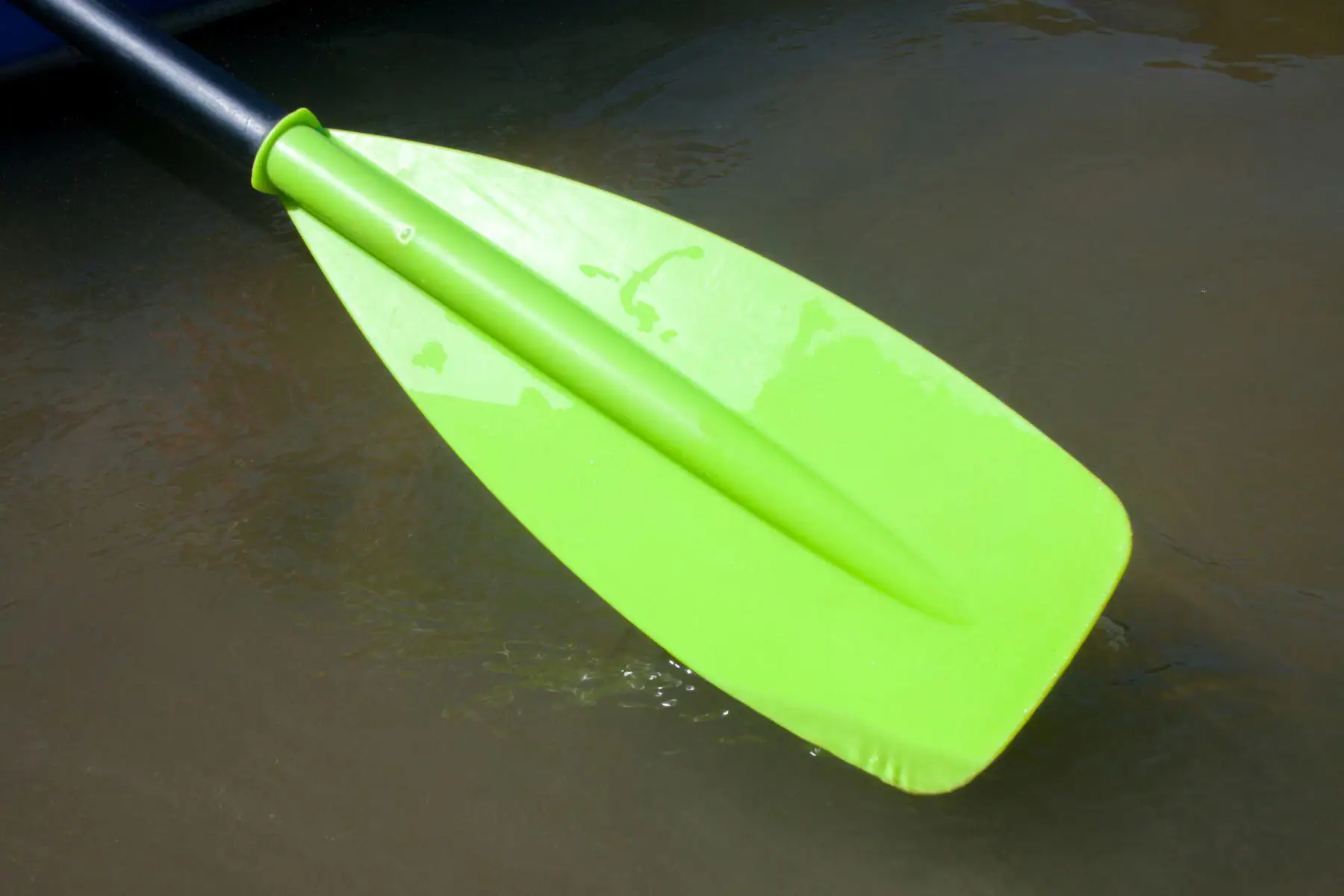
A robust plastic paddle is a great option if you’re paddling with young children, in low-class whitewater where the paddle is likely to get banged up and used to push off rocks, or even in very shallow water where it’s likely to be scraping against the ground.
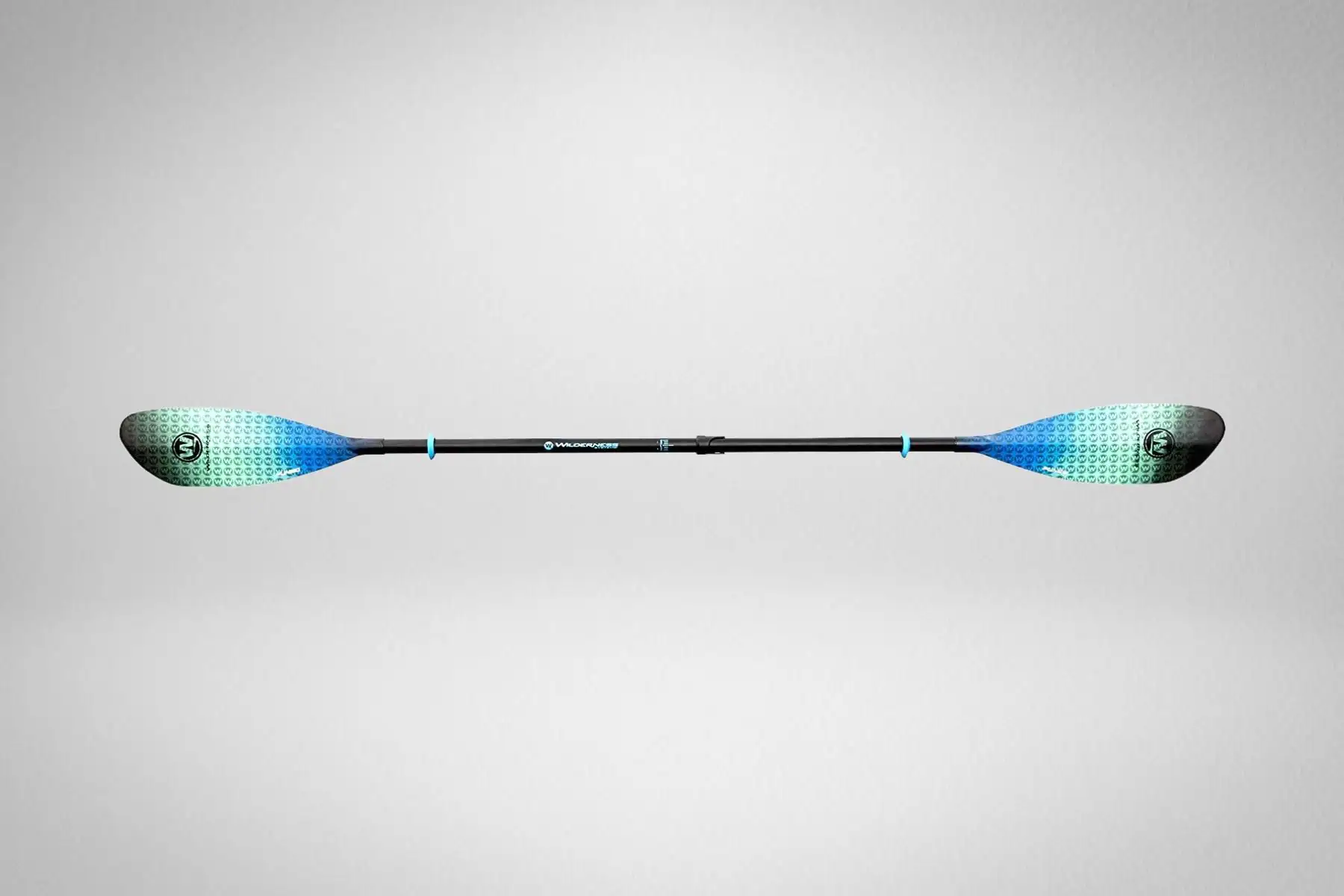
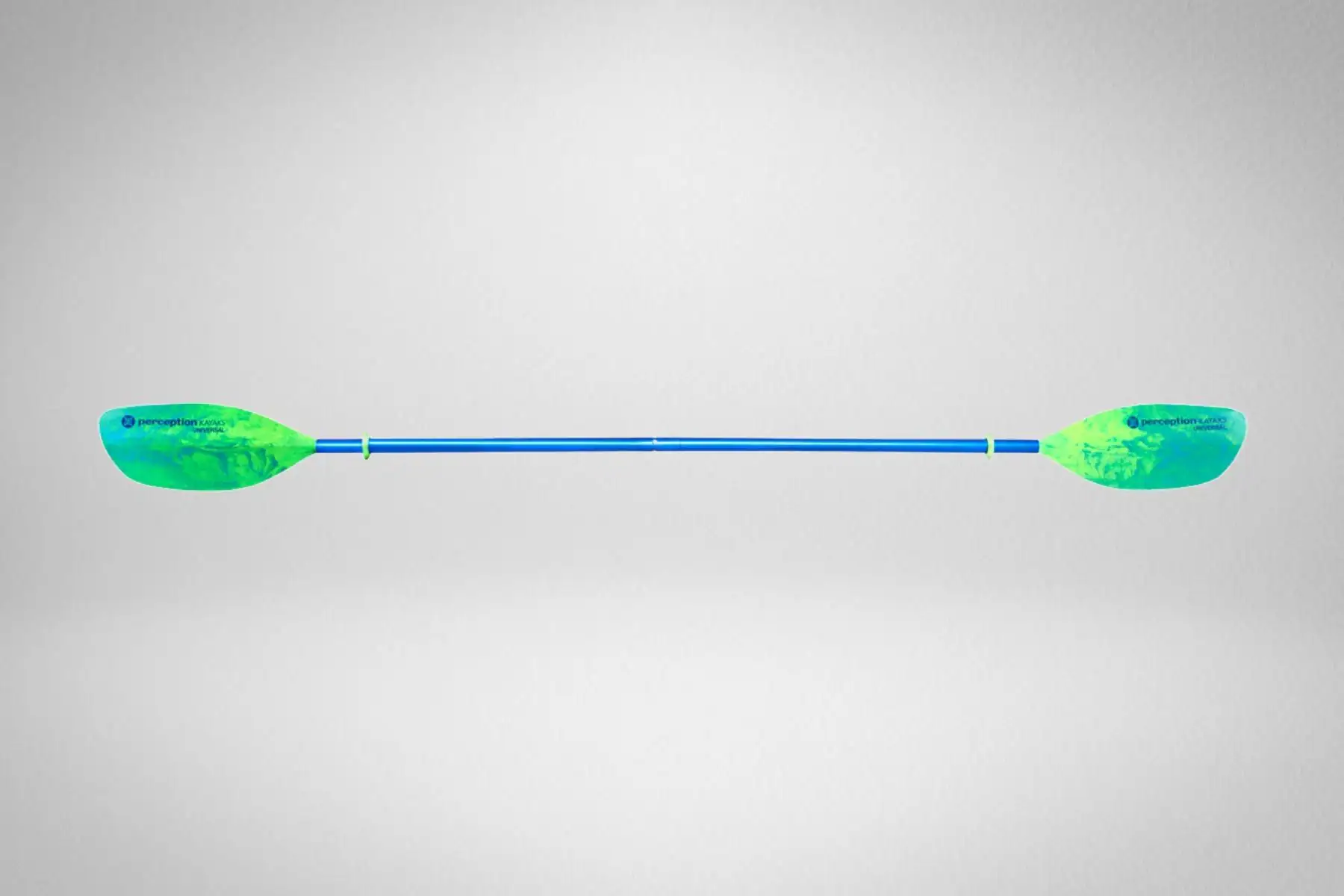
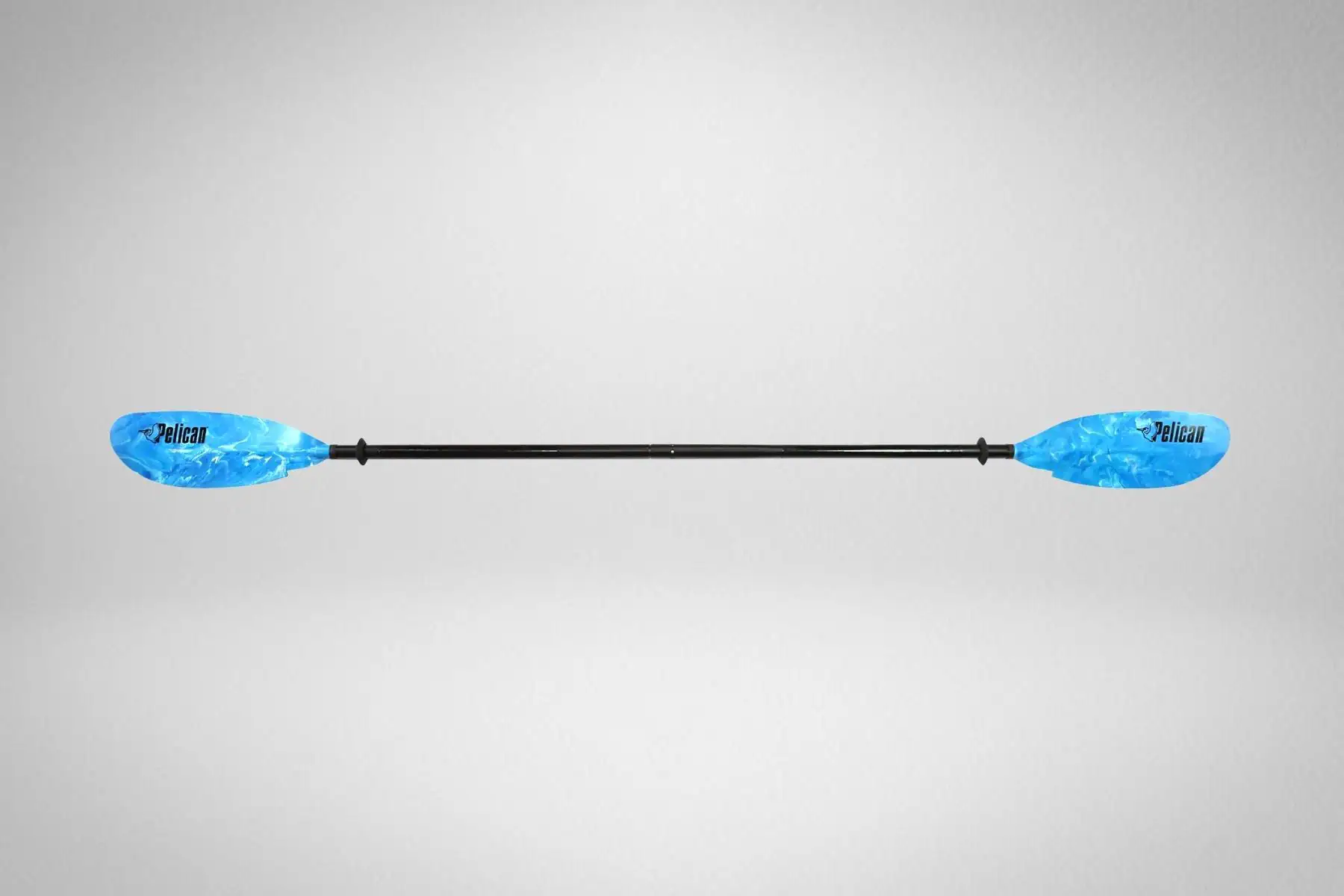
Plastic is only used in the construction of the paddle blade, not the shaft (the part of the paddle you hold onto). Plastic blades are practically indestructible, flexible, cheap, and low maintenance. On the flip side, they’re also heavier than other materials and have blunter edges because they can’t be shaped as easily.
A plastic paddle is perfect for shorter recreational paddles (1-2 hours), where high performance and extensive use are not requirements. Most paddles with plastic blades come with a low-cost aluminum shaft to create a tough, inexpensive paddle.
Fiberglass
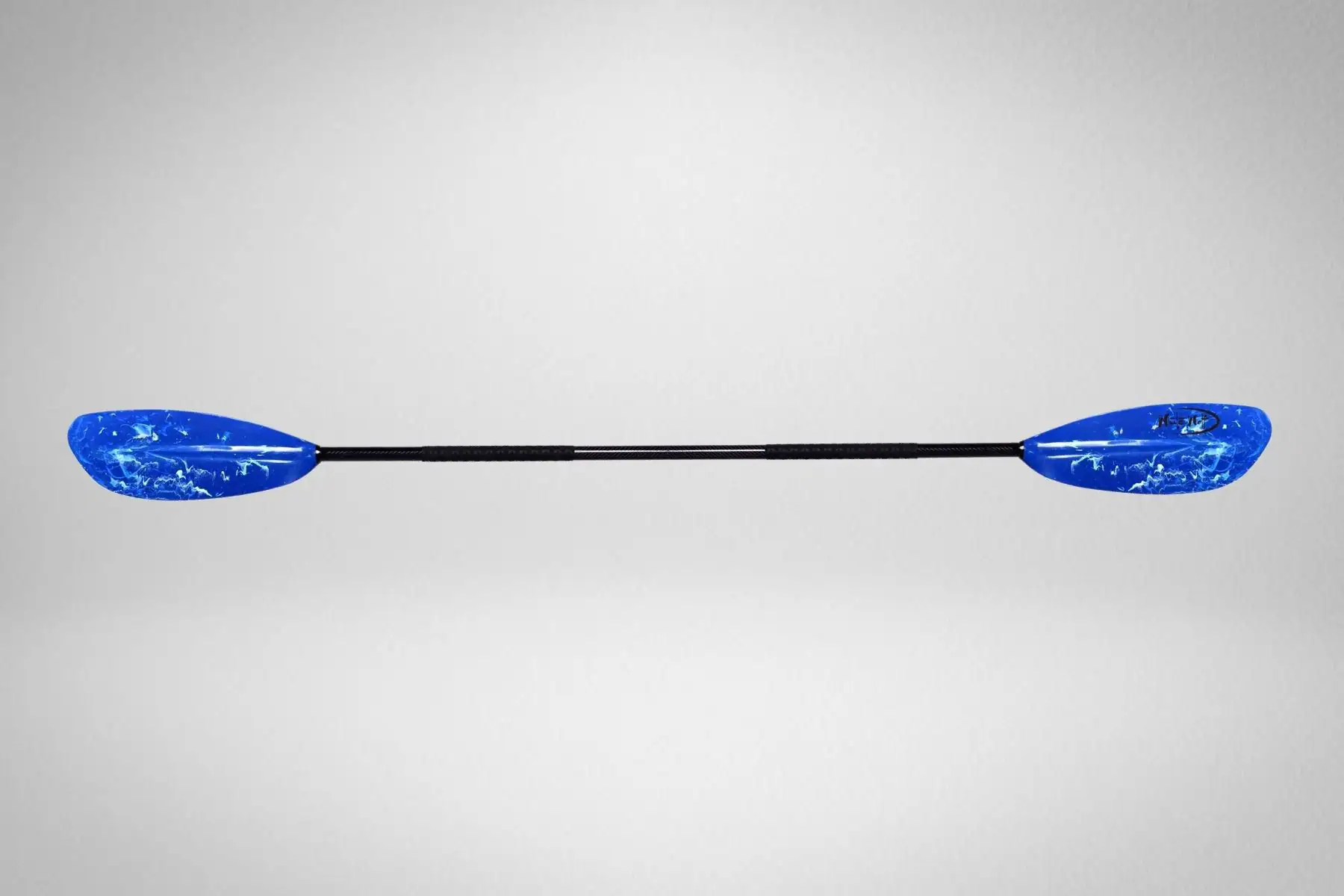
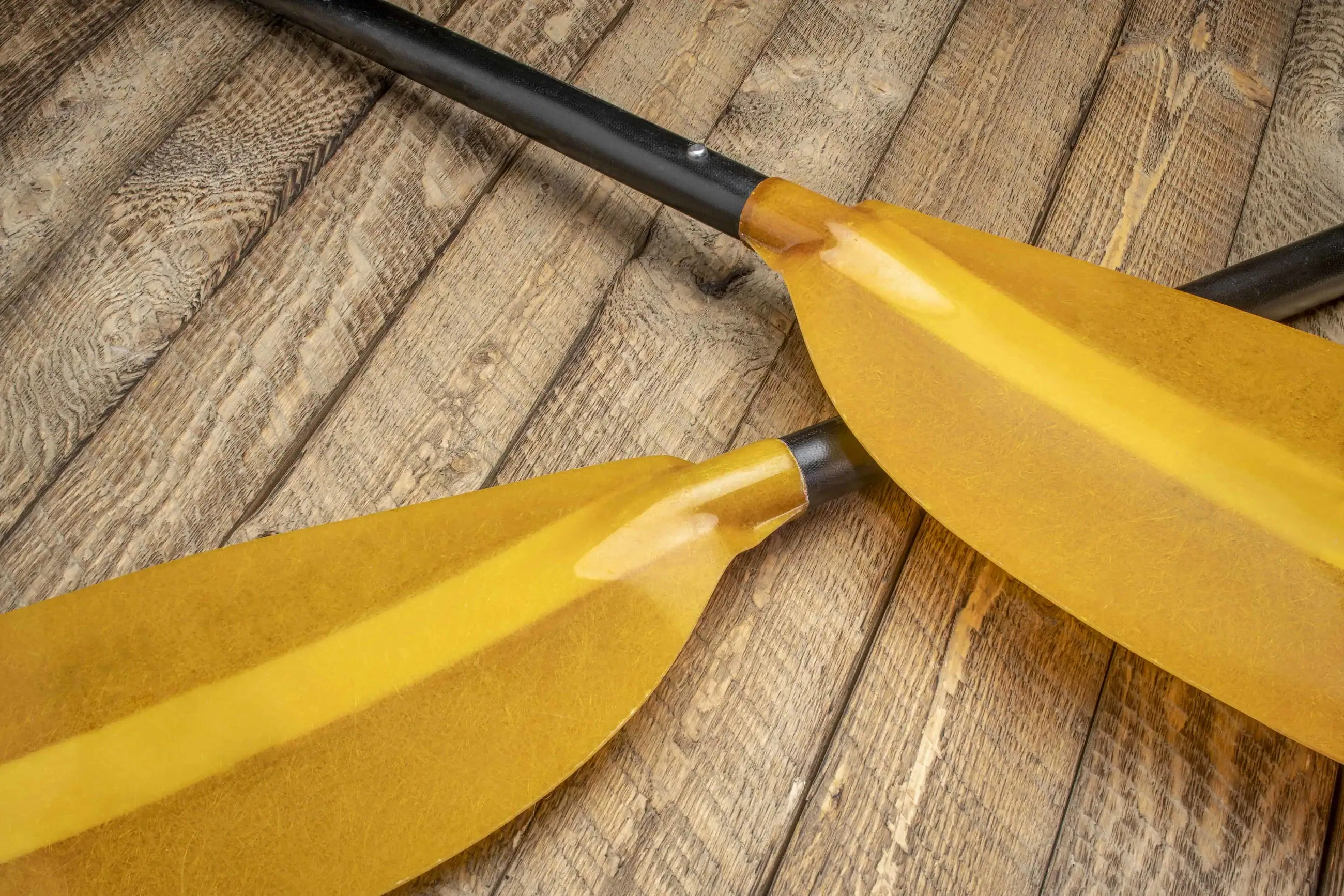
Fiberglass paddles provide excellent performance because they’re lighter than plastic yet strong and resilient. The blades of fiberglass paddles are usually thin and light for sharp entry into the water.
A fiberglass shaft will also have some flex and will warm up to your hands faster than an aluminum shaft. It is common, however, to find paddles with fiberglass blades constructed with an aluminum shaft to reduce the overall cost of the paddle.
A fiberglass paddle is a perfect middle-ground for someone looking to upgrade their paddling experience. A lighter paddle means you can paddle further and for longer, and will assist you in improving your technique. Fibreglass is also incredibly durable and can survive some hard knocks.
Carbon fiber, Kevlar, Graphite
Fiber composites like carbon fiber, Kevlar, or graphite are used to make ultra-light paddles. Fiber composite paddles can feel effortless to use after paddling with a plastic and aluminum paddle. These paddles are designed for high-performance paddling, including racing or long-distance touring, but have become popular among recreational paddlers because of their weight advantage.
Although fiber composite paddles are strong, they are also more likely to get damaged than a plastic or fiberglass blade. Although light, we wouldn’t recommend this type of paddle for family outings or recreational paddling where the paddle could get damaged by shallow water or inexperienced paddlers.
Fiber composite paddles pair well with high-performance and touring kayaks where you plan to race or travel long distances. This type of paddle would likely seem like overkill if you’re paddling a plastic sit-on-top or inflatable kayak designed for recreation.
Wood
Wooden paddles are sometimes preferred by traditionalists who like the feel of a wooden shaft that is flexible and warm. They’re heavier than fiber composite paddles but lighter than plastic and aluminum. Wooden blades are often reinforced with fiberglass for added durability but require the odd varnish and sanding if damaged.
Wood is more often used in canoe paddles rather than kayak paddles, but there are certain styles, like a traditional Greenland paddle (typically made from a single piece of wood with a long, narrow blade shaped like a teardrop) that are still very popular today.
Blade Size
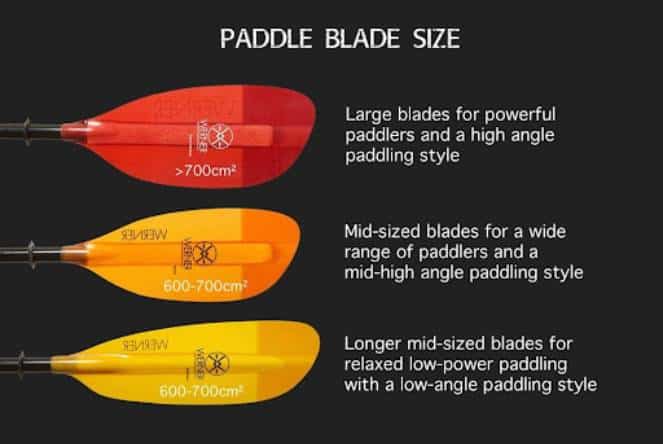
The size of your paddle blade will have a huge impact on how you paddle. If you plan on paddling at a high cadence, using short, quick strokes to move quickly through the water, it’s best to opt for a smaller blade. A smaller blade has several advantages, including being easier on your muscles and joints and being less affected by strong winds compared to larger blades.
Smaller blades do have a few disadvantages, however. A small paddle blade requires a higher cadence to maintain cruising speed and has lower leverage than larger blades, making quick maneuvers more challenging.
On the other hand, a larger or wider blade will catch the water more easily, providing more leverage and making maneuvers and rolls easier. Larger blades can be hard on your muscles, however, especially during extended use, and are more affected by the wind.
Choosing the right blade size is similar to selecting gears on a bike. If you’re paddling longer distances at a more methodical pace, it’s best to opt for a larger blade (like using a larger gear on a bike). If you’re wanting to accelerate quickly and paddle at a rapid race pace, you would opt for a smaller blade.
If you’re unsure, it’s best to look for something in the middle. A large blade is approximately 20cm wide, while a small paddle blade would be closer to 15cm wide.
Blade Shape
Paddle blades come in various shapes, and each will affect how the paddle moves through the water.
If you draw a line down the center of the paddle blade on the axis of the shaft, some blades are mirror images (symmetrical), and others are slightly different (asymmetrical). The purpose of an asymmetrical blade design is to reduce any twisting force or ‘torque’ generated when there is unequal water resistance on each half of the blade.
An asymmetrical blade design helps to mitigate this effect by shaping the blade so there is equal water resistance on each half of the blade when it’s submerged in the water.
Dihedral Blade
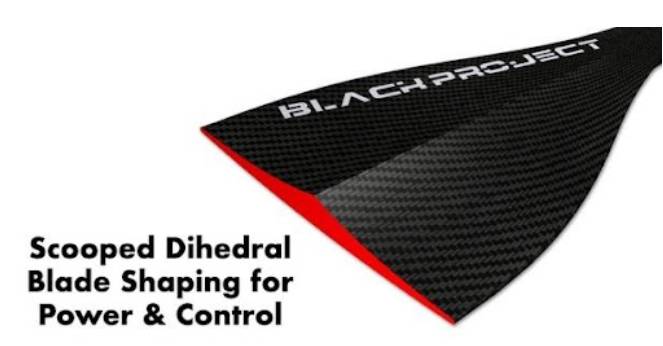
A dihedral blade is a type of kayak paddle blade that has a distinctive shape designed to improve the efficiency and stability of each stroke. The blade has two flat surfaces or planes that are angled away from each other, creating a V-shaped cross-section.
When a dihedral blade is used for paddling, the water flows across both planes of the blade, which helps to stabilize the paddle and prevent it from twisting or fluttering during the stroke.
Spoon-shape Blades
Spooned-shape blades have a concave face that grips the water better, providing more push and power in the stroke.
Wing Blades
Wing blades are similar, although they feature a curled upper edge that cups the water, allowing the application of high power and high efficiency.
Originally developed for flatwater racing, wing blades are becoming more common amongst touring paddlers. The only disadvantage of a spoon-shaped or wing blade is the added difficulty in performing sweeping and bracing strokes.
Shaft design
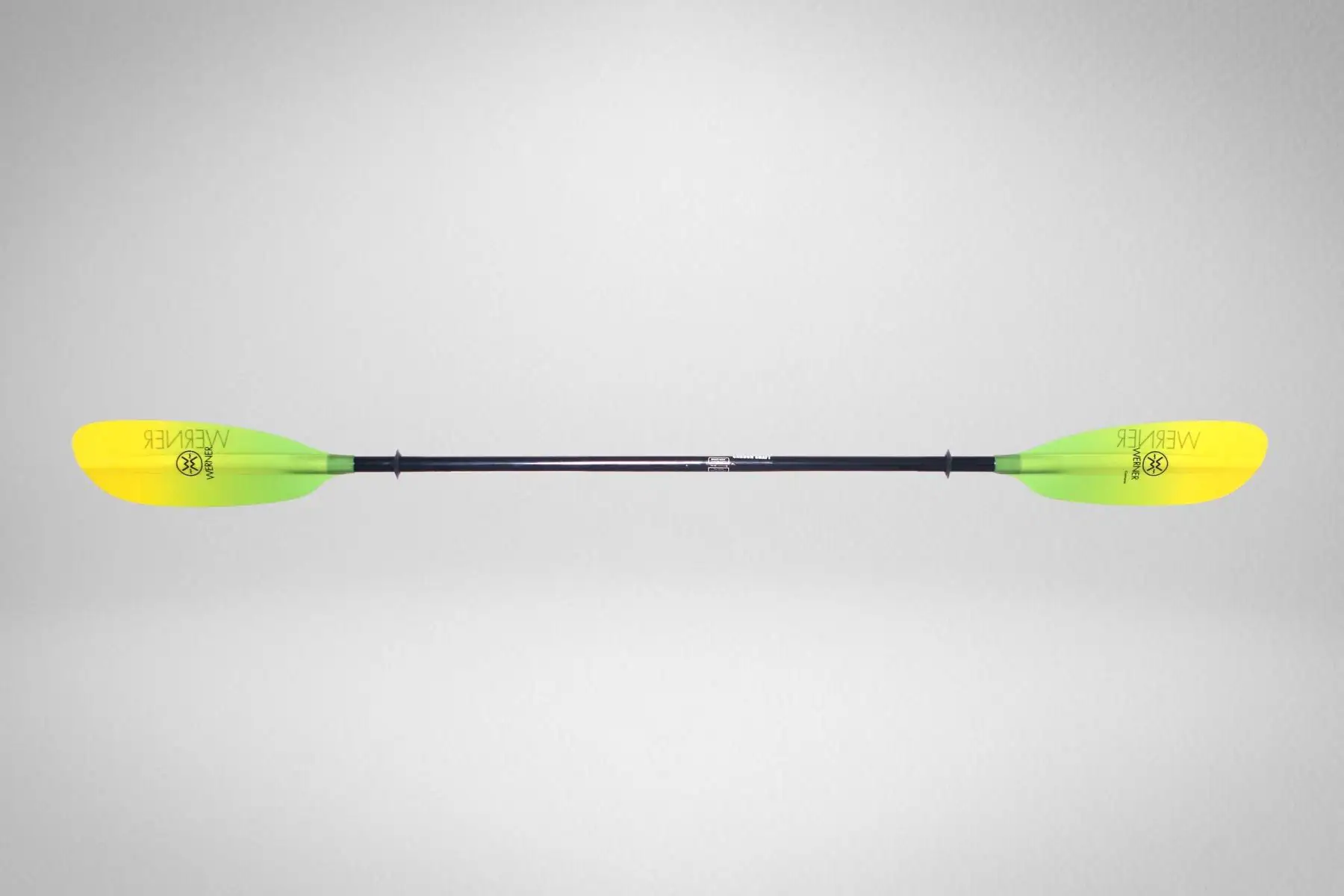
The shaft of the paddle is what you hold onto to maneuver the paddle through the water. Paddle shafts are most commonly made from aluminum, fiberglass, fiber composites, or wood. Aluminum is the least flexible and comfortable to the touch but the cheapest to produce.
Round or Oval
In addition to material construction, there are also different shaft shapes. Round is the most common, but there are oval shafts that are often found on more expensive paddles because they’re more comfortable. An oval shaft also provides greater rotational control and allows the paddler to know the orientation of the blade without having to look (which is helpful in maneuvers like rolling).
Bent
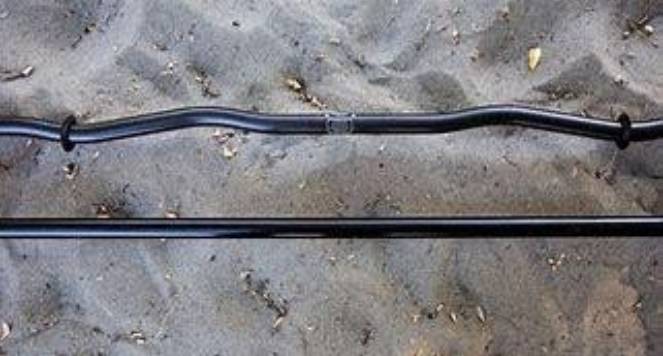
Bent shafts are ergonomically designed to minimize the amount of bending required on the paddler’s wrist. These paddles are especially useful for long distance paddling and for people with wrist or arm ailments.
Weight
The weight of a paddle affects how efficiently you can move the paddle through the water. A lighter paddle requires less energy to move, allowing you to paddle for longer periods without becoming fatigued. This is particularly important for longer trips or more challenging paddling conditions.
Heavier paddles made from plastic and aluminum are the most cost-effective. But a heavier paddle can cause strain in the arms, shoulders, and back if you’re using it for long periods.
The weight of a paddle can also affect its maneuverability in the water. A lighter paddle can be more responsive and easier to handle, particularly for making quick turns or performing other maneuvers.
While a light paddle may be more comfortable and efficient to use, it’s important to consider the durability and desired use of your paddle. Fiber composite kayak paddles that are lightweight are more prone to damage, scuffs, and scrapes and may not hold up well over time with extensive use.
Generally, cheaper paddles will be heavier because they’re made from less expensive materials like plastic and aluminum. While lighter paddles made from materials like Kevlar or carbon fiber are more expensive.
Paddle length
Finding the correct paddle length is important for both comfort and performance. A paddle that is too long can be awkward for quick maneuvers and takes more energy to use because of its higher leverage and weight.
On the other hand, a paddle that is too short will force you off balance because you’ll need to lean from side-to-side while paddling to ensure the blade is properly immersed in the water.
The length of your paddle will affect both your paddling cadence and resistance. Much like the blade size / gear metaphor above, a longer paddle is like paddling in a lower gear, while a shorter paddle is used for higher cadence strokes.
Kayak paddles range from around 210cm-275cm with 225cm-245cm being the most popular lengths. Your paddle length won’t just rely on how tall you are. You also need to consider the width of your kayak, your paddling style and cadence, and your torso length.
You can generally size a paddle by standing the paddle beside you and touching the top of the blade in the air with your finger tips. If your arm is straight and you can curl the tips of your fingers over the blade, it’s likely a decent length for you, depending on the width of your kayak and your application.
Generally, if you’re paddling a kayak with a width of around 23” to 25”, and you have a shorter torso, you might look for paddles in the 215 – 225cm range. If you have a medium-length torso, you would consider a 225 – 235cm paddle, and if you have a long torso, you might look for a paddle in the 235 – 245cm range.
| Kayak Width |
Under 23” |
23” – 28” |
28” – 32” |
Over 32” |
| Your Height |
Paddle Length |
| Under 5’ |
200 cm |
210 cm |
220 cm |
230 cm |
| 5’ to 5’6” |
210 cm |
220 cm |
230 cm |
240 cm |
| 5’7” to 6’ |
220 cm |
220 cm |
230 cm |
240 cm |
| Over 6’ |
220 cm |
230 cm |
240 cm |
250 cm |
But remember, the width of your boat and your style of paddling will also play into this. If you’re paddling an inflatable fishing kayak, you might opt for a much longer paddle. But if you’re paddling a narrow surfski, you would likely choose a shorter paddle to allow for high-cadence strokes.
Some paddles will allow you to adjust the length of the paddle shaft depending on your height and the type of paddling you’re doing. There are several types of locking mechanisms including the ‘snap button’ mechanism, which involves pushing a button to release the shaft before sliding it to the desired length and releasing the button to lock it into place. Another type is the ‘twist lock’ mechanism, which involves twisting the shaft to release it and then twisting it back to lock it in place at the desired length.
Having the ability to adjust the length of your paddle shaft is helpful if you paddle a variety of different style kayaks, you’re lending your paddle to family and friends, or you choose to both race and recreate in your kayak.
Budget
When purchasing a kayak paddle, it’s important to consider your budget and how much you’re willing to spend. Depending on how much you use your kayak and how often you get out on the water, you might want to consider investing in a premium kayak paddle. While affordable paddles can cost as little as $30, higher-end paddles can cost up to $500 or more.
High-end
The reason for the significant price difference between kayak paddles is the materials and design methods used to construct each paddle. Higher-end paddles are typically made from more lightweight materials such as carbon fiber or fiberglass, which can significantly improve the efficiency and comfort of each stroke.
Affordable
On the other hand, lower priced paddles are generally made from heavier materials like plastic and aluminum, which can take more of a beating. Heavier paddles are less efficient and more tiring to use over time, but if you’re looking to recreate rather than perform, a heavier paddle may suffice.
The cost of your kayak paddle should be balanced against your individual needs and intended use. If you plan to paddle frequently and for longer periods of time, a higher-end paddle may be worth the investment for the added efficiency and comfort. However, if you only paddle occasionally or for short distances, a lower-priced paddle may be a more practical option.