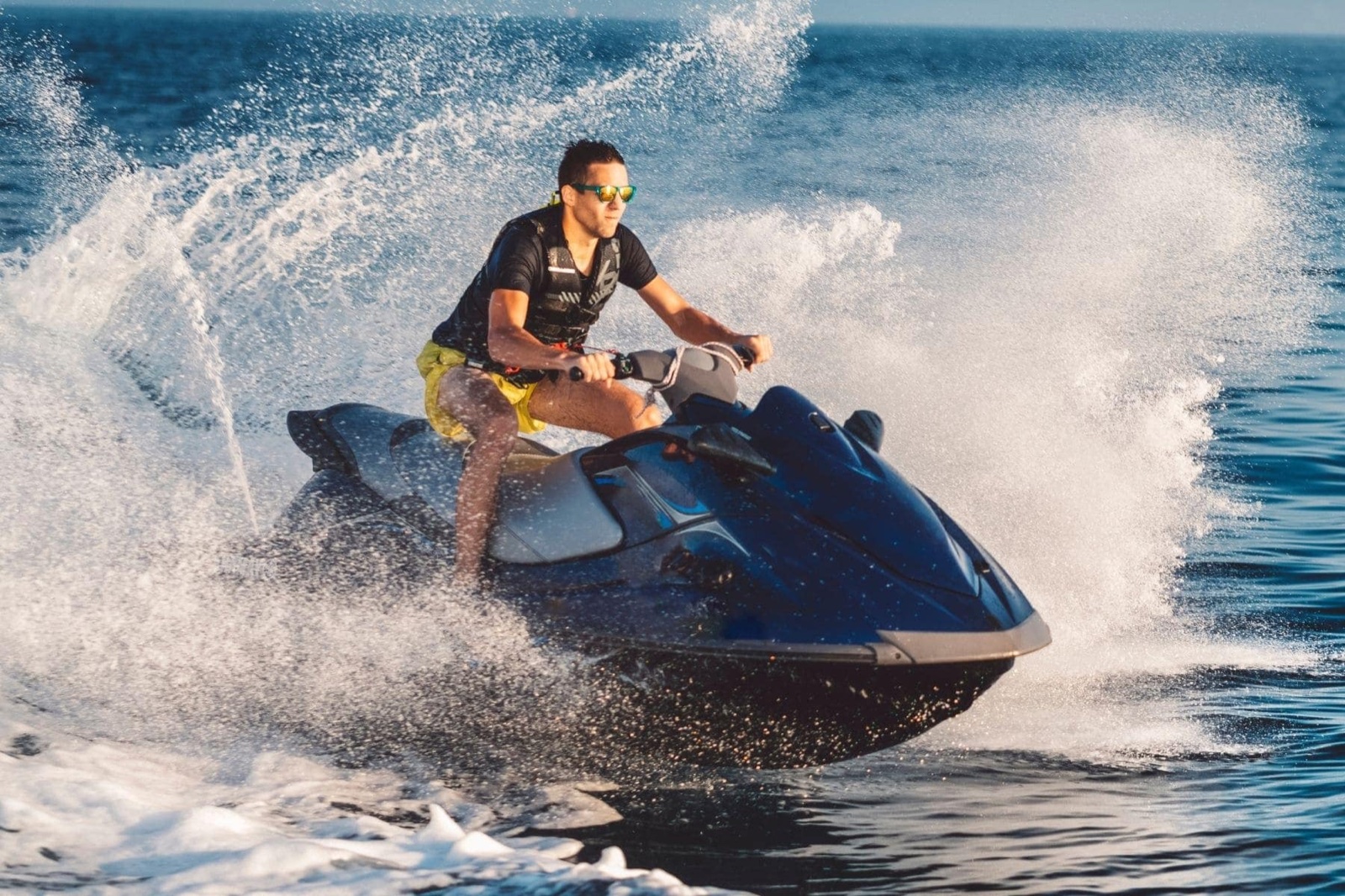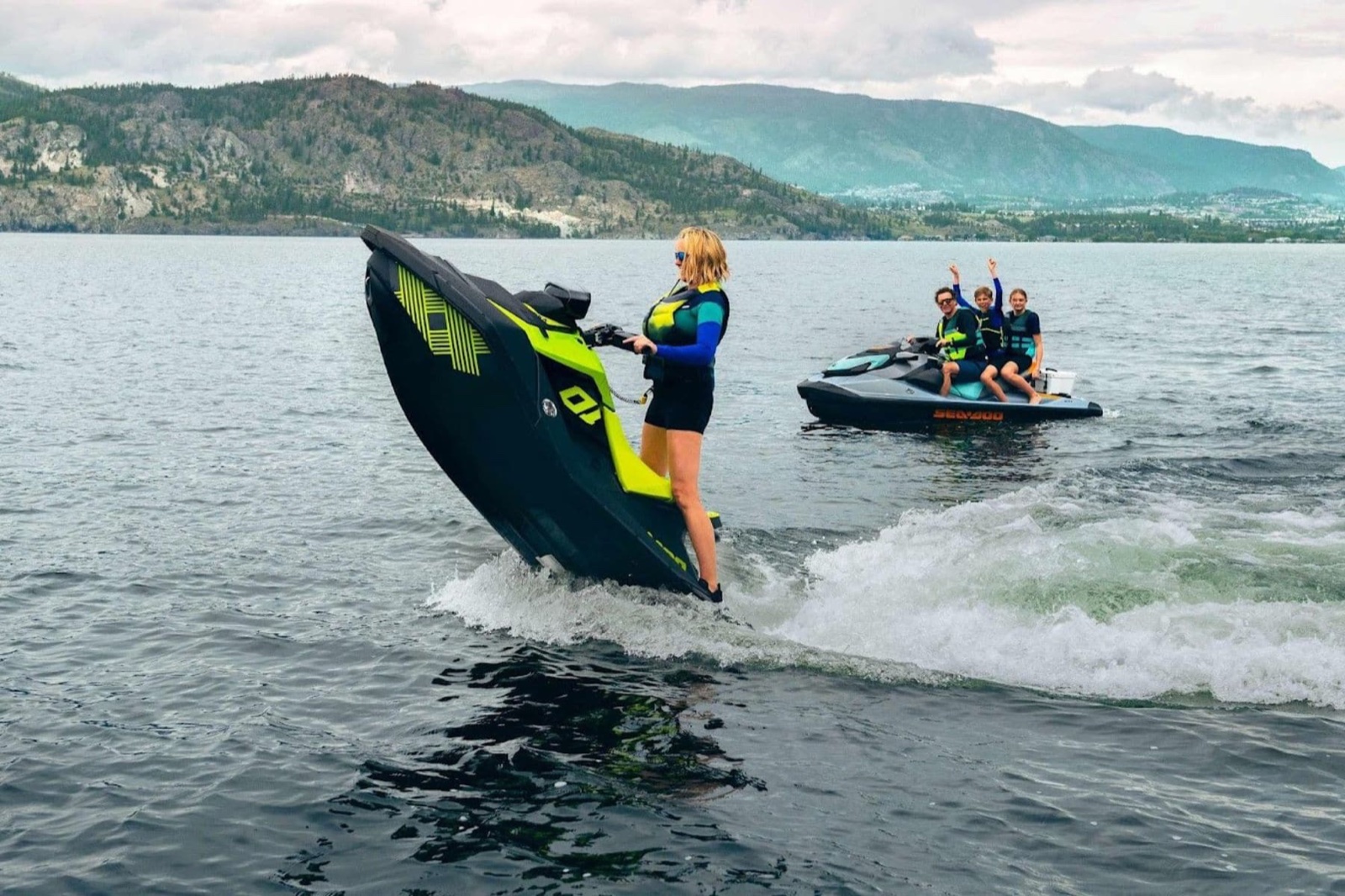
Boat & Sail

Top guide · PWC · First-time buyers

6 Best Jet Skis for First-Time Buyers in 2026

The first-time PWC buyer in 2026 has a different decision than the buyer five years ago. Brake-reverse systems are now standard at $11,000 (Sea-Doo iBR, Yamaha RiDE), debris-free intake systems have spread from premium to mid-tier (Sea-Doo iDF), and the entry tier has matured to where a $7,500 used 2022 ski does not feel like a compromise. We evaluated 14 models across the entry and mid tiers and kept six that consistently turn up at fair prices with documented reliability.

The picks span $7,500 to $16,000 and include two-up trick-friendly skis, three-up family rec skis, and a fishing-capable mid-tier ski for buyers who want double duty. Our weighting reflects what matters to a first-time buyer: value (25 percent) leads, followed by build (20 percent) for hull longevity, systems (15 percent) for safety features (brake-reverse, debris-free intake), accommodations (15 percent) for passenger comfort, performance (15 percent), and resale (10 percent).

Filters below let you narrow by use, seating, and price tier. Each pick includes the year and trim combination that consistently appears on broker listings at the right price as of April 2026.

By Boat & Sail Editorial · Updated April 2026 · 14 models evaluated, 6 selected

Filter: | |

Compare all 6 at a glance

Pricing sampled April 2026 from dealer quotes and broker listings. Click a ski to jump to its review.

#SkiClass SeatingUsed range BuildSystemsValue Best for
1 Sea-Doo Spark Trixx
Sea-Doo
rec-light 2-3-up $5,800–8,500 (2021–2024 hulls) ★★★★☆ ★★★★☆ ★★★★★ recreation, first-pwc
2 Yamaha EX Deluxe
Yamaha
rec-light 2-up $6,200–8,800 (2021–2024 hulls) ★★★★☆ ★★★☆☆ ★★★★☆ recreation, first-pwc
3 Sea-Doo GTI 130
Sea-Doo
rec 3-up $8,500–11,800 (2021–2024 hulls) ★★★★☆ ★★★★★ ★★★★☆ recreation, first-pwc
4 Kawasaki STX 160
Kawasaki
rec 3-up $7,500–10,500 (2021–2024 hulls) ★★★★☆ ★★★☆☆ ★★★★☆ recreation, first-pwc
5 Yamaha VX Cruiser HO
Yamaha
rec 3-up $9,500–12,800 (2021–2024 hulls) ★★★★☆ ★★★★☆ ★★★★☆ recreation, first-pwc
6 Sea-Doo Fish Pro Scout
Sea-Doo
rec 2-up $10,800–14,200 (2022–2024 hulls) ★★★★☆ ★★★★★ ★★★★☆ recreation, first-pwc
1. Sea-Doo · rec-light · 2-3-up · entry

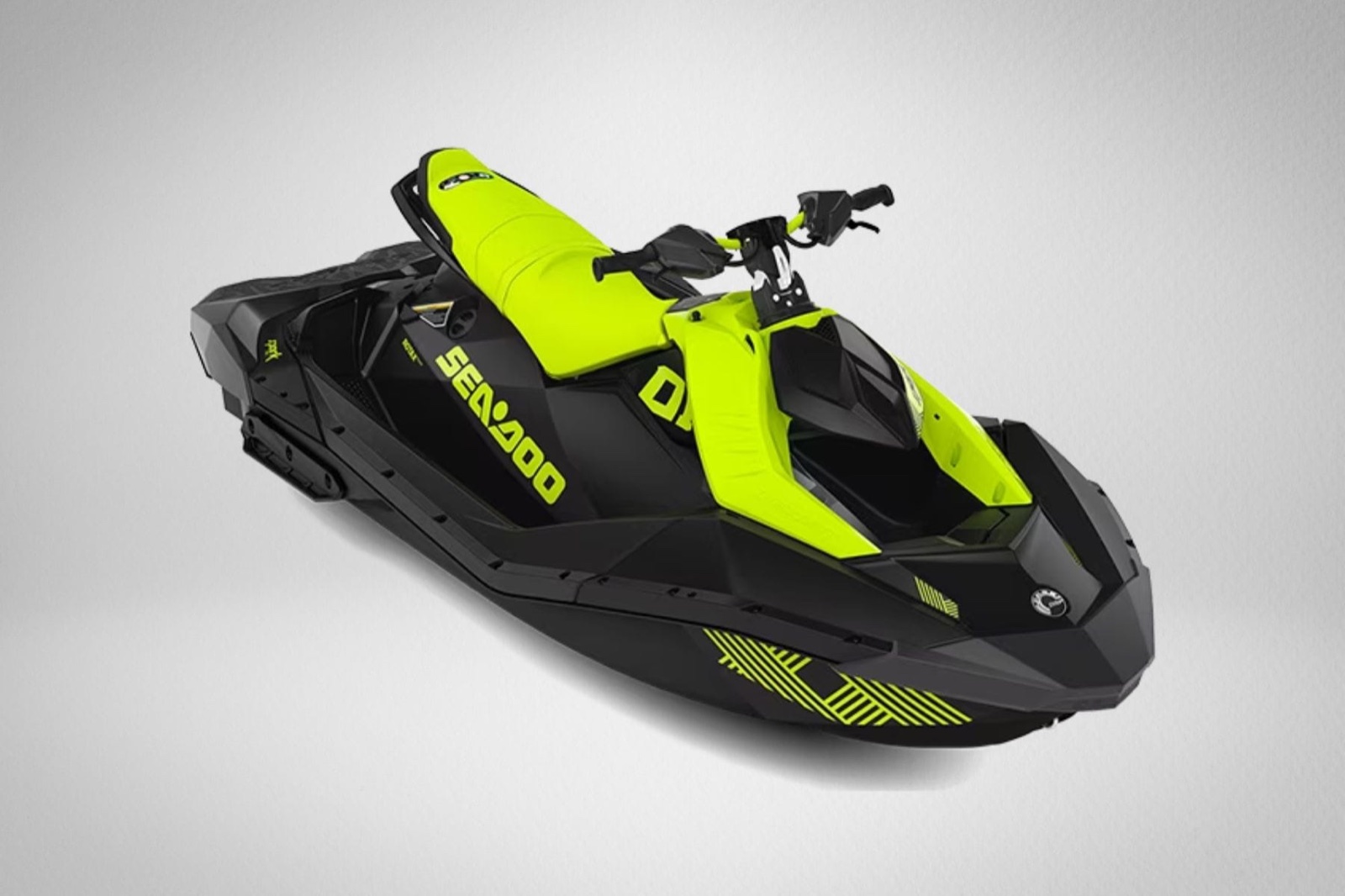
Sea-Doo Spark Trixx

Sea-Doo Spark Trixx

The verdict: Yes, the entry pick that does not feel cheap

The Spark Trixx is the boat that has done more for first-time PWC adoption than any single model in the last decade. Under $11,000 new, under $7,500 used for a clean 2022, and a build that holds up to family use without the budget feel of older entry-tier skis. The 90 hp Rotax is enough for two adults to ride comfortably and for one rider to learn tricks without overwhelming new skill. The adjustable handlebar and step wedges make it the easiest first ski to learn standing tricks on, which is the Trixx-specific argument over the base Spark. We rode a 2023 Trixx for a week on Lake Powell in summer 2024. Three adults rotating, no breakdowns, fuel light came on after roughly 75 minutes of hard riding per tank. The ski takes a beating and asks for an oil change at 50 hours like the manual says.

Build

★★★★☆

Performance

★★★★☆

Accommodations

★★★☆☆

Systems

★★★★☆

Value

★★★★★

Resale

★★★★☆

Build. Polytec hull material rather than fiberglass, lighter and more impact-tolerant than the segment expects. Hardware is mid-tier. The seat foam holds up better than older Sea-Doo entry-tier models. Service intervals at 50 hours.

Performance. Rotax 900 ACE engine produces 90 hp, top end 50 mph with one rider. Acceleration is brisk for the class, plane in under 3 seconds. Handles 1-foot chop without complaint, 2-foot chop starts to bounce.

Accommodations. Two-up seat standard, three-up optional. Storage is small (small dry bag plus phone). No mirrors standard. Reboarding step is the standard, not the optional ladder.

Systems. Digital dash with fuel, hours, and speed. iBR (intelligent brake and reverse) standard, the segment-defining feature for first-time riders. iControl ride modes including Touring, Sport, and Rec ECO.

Value. The strongest value pick on this guide. New at $11,000 with iBR brake-reverse standard, and used at $7,500 for a 2022 with low hours, the Trixx is the entry into PWC ownership without the entry-tier compromises.

Resale. Sea-Doo holds resale better than Yamaha at the entry tier. Three-year depreciation runs 30 percent for clean Sparks. Demand on the used market is consistent.

What's included

Rotax 900 ACE 90 hp engine, iBR intelligent brake and reverse, digital dash, two-up seat, adjustable handlebar with step wedges, swim platform, basic storage compartment.

What costs extra

Trailer, mirrors, ladder upgrade, three-up seat, Bluetooth audio, GPS, color upgrade beyond standard.

What works

  • iBR brake-reverse standard, the segment-defining safety feature for new riders
  • Polytec hull is lighter and more impact-tolerant than fiberglass entry-tier rivals
  • Rotax 900 ACE returns 50-plus mph top end with one rider, no shortage of fun
  • Adjustable handlebar and step wedges make it the easiest first ski for tricks
  • New under $11,500, used under $8,500, the cheapest real ski to buy in 2026

What doesn't

  • Storage is small, day-trip gear maxes out the dry bag quickly
  • 2-foot chop starts to bounce, the Polytec hull is lighter for a reason
  • Only seats two-up comfortably, three-up is technically possible not pleasant

Best for

First-time PWC buyers under $12k. Family-recreation riders. Lake riders who want easy launch and storage at home. Riders learning standing tricks.

Not ideal for

Coastal-saltwater riders who want a heavier hull. Three-adult households who need a real three-up ski. Performance-first riders who want sub-3-second 0-30 times.

Best year & trim to buy

2022-2024 with the iBR brake-reverse and the adjustable handlebar. Service records are worth a small premium given the 50-hour interval.

Pricing, April 2026

New
$10,499–11,799 new (2026 MSRP)
Used
$5,800–8,500 (2021–2024 hulls)
Read the full Sea-Doo Spark Trixx review →
2. Yamaha · rec-light · 2-up · entry

Yamaha EX Deluxe

Yamaha EX Deluxe

The verdict: Yes, the Yamaha alternative to the Spark with more storage

The EX Deluxe is the Yamaha answer to the Spark and the choice for buyers who want more storage and a slightly more substantial hull at the same entry-tier budget. The 1049cc TR-1 engine produces less peak output than the Sea-Doo Rotax 900 (100 hp vs 90 hp on paper, but the Yamaha torque curve feels heavier), the seat fits two adults more comfortably, and the storage compartment is meaningfully larger. The trade is acceleration off the line, the EX feels slower from 0 to 30 even with the higher peak number. We rode a 2023 EX Deluxe alongside a Spark Trixx on the same lake. The EX is the family ski. The Spark is the toy. Both have honest places.

Build

★★★★☆

Performance

★★★☆☆

Accommodations

★★★★☆

Systems

★★★☆☆

Value

★★★★☆

Resale

★★★☆☆

Build. NanoXcel2 hull material, Yamaha's lightweight composite. Build quality is mid-tier and consistent. Hardware holds up. Seat foam is denser than the Sea-Doo Spark, more comfortable for longer rides.

Performance. TR-1 1049cc 100 hp engine. Top end 50 mph with one rider, similar to the Spark. Acceleration off the line is slower (heavier hull, different torque curve). Handles 1-foot chop better than the Spark, the additional weight helps.

Accommodations. Two-up seat is more comfortable for adult passengers than the Spark. Storage compartment is roughly 50 percent larger. Reboarding step standard. No mirrors standard at this trim.

Systems. Analog gauge cluster (digital optional on higher trims). RiDE (Yamaha's reverse and braking system) standard on Deluxe trim. Cruise assist standard. No GPS, no Bluetooth at this tier.

Value. Same money as the Spark Trixx with more storage and a heavier hull. The trade is acceleration. For family-first buyers who value passenger comfort, the math tips Yamaha. For trick-first riders, Sea-Doo.

Resale. Yamaha entry-tier holds resale slightly weaker than Sea-Doo. Three-year depreciation runs 35 percent for clean EX hulls. Demand is steady but inventory moves slower than Spark.

What's included

TR-1 1049cc 100 hp engine, RiDE braking and reverse, two-up seat, larger storage compartment, swim platform, analog gauges, cruise assist.

What costs extra

Trailer, mirrors, three-up seat, Bluetooth audio, digital dash upgrade, GPS, ladder upgrade.

What works

  • Storage compartment 50 percent larger than the Spark Trixx
  • TR-1 engine torque curve favors family riding over acceleration tricks
  • Heavier hull holds 1-foot chop more comfortably than the Polytec Spark
  • RiDE braking and reverse standard, family-safety baseline
  • Yamaha service network for jet engines is the deepest in the segment

What doesn't

  • Acceleration off the line slower than Spark Trixx despite higher peak hp
  • Analog gauges at this trim, digital is a higher-trim upgrade
  • Resale 5 percent harder than Sea-Doo at three years

Best for

Family-first buyers who value passenger comfort and storage. Yamaha service-network loyalists. Riders who plan longer cruising rather than tricks.

Not ideal for

Trick-first riders, Spark Trixx is built for that. Acceleration-first riders, the EX is heavier off the line.

Best year & trim to buy

2022-2024 with the RiDE system and the cruise assist. Verify service records given Yamaha's 50-hour service intervals.

Pricing, April 2026

New
$10,799–11,999 new (2026 MSRP)
Used
$6,200–8,800 (2021–2024 hulls)
Read the full Yamaha EX Deluxe review →
3. Sea-Doo · rec · 3-up · mid

Sea-Doo GTI 130

Sea-Doo GTI 130

The verdict: Yes, the value-king mid-tier ski

The GTI 130 is the boat that owners describe as 'the ski you actually wanted, you just did not know it.' Three adults aboard comfortably, a hull that holds 2-foot chop without bounce, and a Rotax 1630 ACE detuned to 130 hp that returns 65-mph top end and honest fuel economy. The GTI is the entry into the full-size Sea-Doo platform, which means iBR brake-reverse, BRP iDF intake debris-free system, and the LinQ accessory-mount system that lets you bolt on coolers and dry storage without drilling. We ran a 2023 GTI 130 around Lake Tahoe in fall 2024, two adults aboard for a half-day, no fatigue, fuel consumption at roughly 4.5 gph at cruise. The mid-tier sweet spot in 2026.

Build

★★★★☆

Performance

★★★★☆

Accommodations

★★★★★

Systems

★★★★★

Value

★★★★☆

Resale

★★★★☆

Build. Fiberglass hull (not Polytec), heavier and more impact-resistant than the Spark. ST3 hull design with chines that throw spray sideways. Hardware is mid-premium. Seat fits three adults legitimately.

Performance. Rotax 1630 ACE detuned to 130 hp. Top end 65 mph with one rider, 58 mph with three aboard. Cruise at 40 mph returns 4.5 gph. Hull holds 2-foot chop at cruise without bounce.

Accommodations. Three-up seat fits three adults. Front storage compartment 27 gallons (segment-leading). Glove box. LinQ rear-rack system standard. Two reboarding ladders.

Systems. Color digital dash. iBR brake-reverse standard. iDF intake debris-free system standard. iControl ride modes (Sport, Touring, ECO, plus Slow Mode for new riders). Cruise control. Eco mode.

Value. $13,000 new for a real three-up ski with iBR, iDF, color dash, and 27 gallons of storage is the strongest mid-tier value in 2026. Used at $9,500 for a 2022 is the deal that owner forums circulate.

Resale. Sea-Doo GTI 130 holds resale within 30 percent of new at three years for clean hulls. Strongest resale in the mid-tier rec segment.

What's included

Rotax 1630 ACE 130 hp, iBR brake-reverse, iDF intake debris-free, color digital dash, three-up seat, 27-gal storage, LinQ rear rack, cruise control, two ladders.

What costs extra

Trailer, audio system, GPS, mirrors, premium seat upgrade, Connext dash upgrade, color upgrade beyond standard.

What works

  • Three-up seat fits three adults legitimately, no compromise
  • 27-gallon front storage is segment-leading at this price tier
  • iDF intake debris-free system reduces weed-strike risk on lakes
  • LinQ accessory-mount system, accessories bolt on without drilling
  • Cruise at 40 mph returns 4.5 gph, honest fuel economy

What doesn't

  • Heavier than the Spark Trixx by 200 pounds, towing matters more
  • 65 mph top end will not satisfy a performance-first rider
  • iDF system adds $400-600 to repair cost when impeller wear comes due

Best for

First-time buyers who want one ski that does everything for the household. Three-adult families. Lake riders who carry coolers and gear for the day.

Not ideal for

Sub-$11k budget shoppers, Spark or EX is the answer. Riders who want 70-plus mph top end, the GTR or GTX is the answer.

Best year & trim to buy

2022-2024 with the iDF system and the LinQ rear rack. The 2021 missed the LinQ standard rollout, prefer 2022+.

Pricing, April 2026

New
$13,099–14,399 new (2026 MSRP)
Used
$8,500–11,800 (2021–2024 hulls)
Read the full Sea-Doo GTI 130 review →
4. Kawasaki · rec · 3-up · mid

Kawasaki STX 160

Kawasaki STX 160

The verdict: Yes, especially for the mechanical-simplicity argument

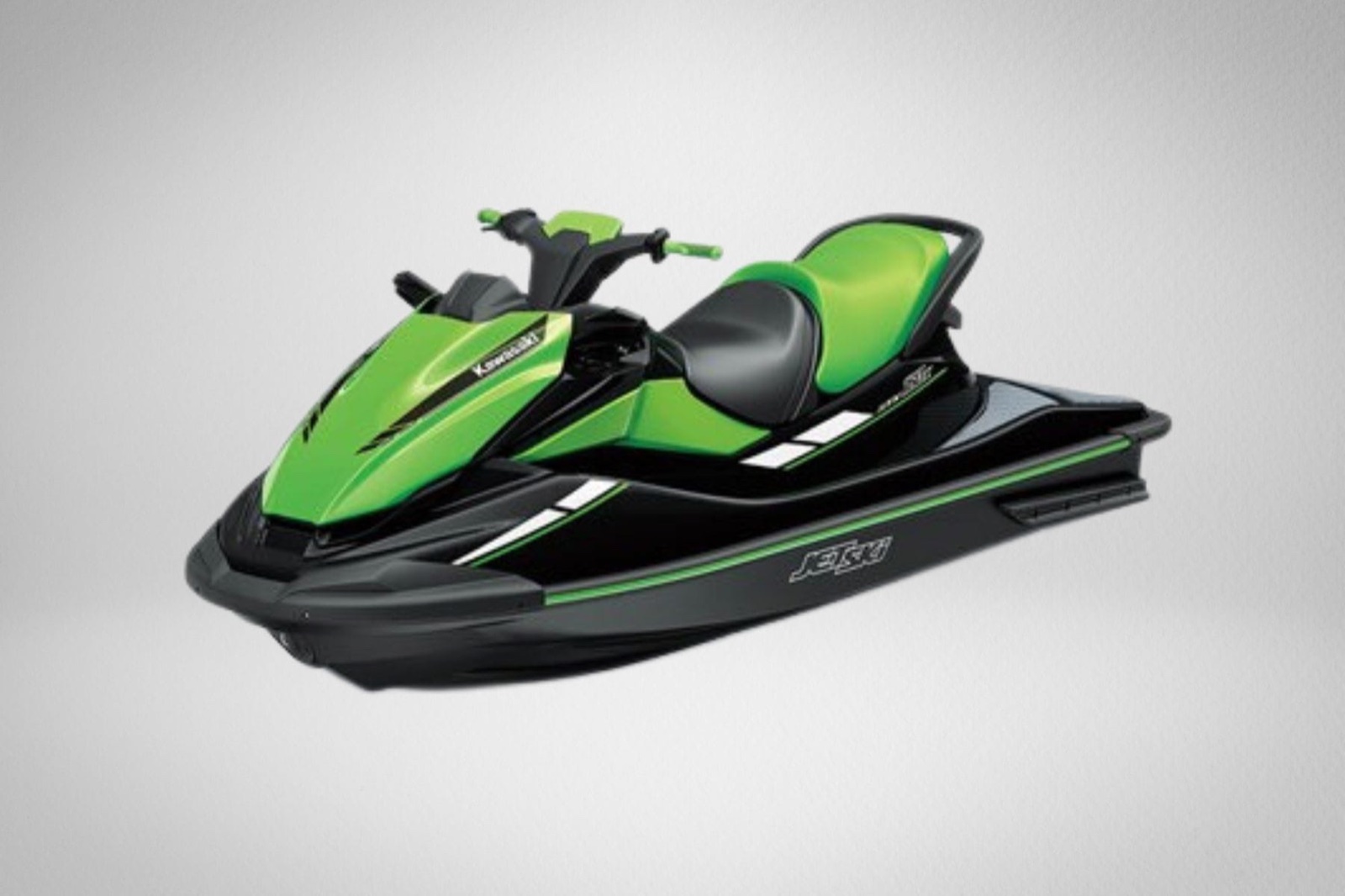
The STX 160 is the mechanical-honesty pick. A normally-aspirated 1498cc Kawasaki four-stroke that produces 160 hp without a supercharger, a hull that came over from the higher-trim Ultra series, and a price that undercuts the comparable Sea-Doo GTI by $500-1,000 at the same engine output. The trade is on systems, no brake-reverse-equivalent, no debris-free intake system, basic dash, and a service network thinner than Yamaha or Sea-Doo east of the Mississippi. For a buyer who values mechanical simplicity over dealer convenience, the STX is the answer. We rode a 2023 STX 160 for a week in Florida in October 2024, no breakdowns, no surprises, and the 160 hp output put it ahead of the Sea-Doo GTI 130 in real-world acceleration.

Build

★★★★☆

Performance

★★★★☆

Accommodations

★★★★☆

Systems

★★★☆☆

Value

★★★★☆

Resale

★★★☆☆

Build. Fiberglass hull from the Ultra series, heavier than the Spark by 250 pounds. Hardware is mid-tier. Seat is comfortable for three adults. Bilge access is honest, repairs are easier than the Sea-Doo GTI on the same systems.

Performance. Kawasaki 1498cc four-stroke, 160 hp normally aspirated. Top end 62 mph with one rider, 55 mph with three. Acceleration is brisker than the GTI 130 by a half-second to 30 mph. Handles 2-foot chop at cruise.

Accommodations. Three-up seat fits three adults. Storage compartments are honest but not segment-leading (about 35 gallons combined). Reboarding step. Glove box.

Systems. Analog-plus-LCD dash, not full color. No brake-reverse system equivalent (this is the segment gap). Cruise control standard. Eco mode standard. No iDF-equivalent intake system.

Value. $12,000 new for a 160 hp three-up ski is the strongest hp-per-dollar in the mid tier. The trade is the system gaps, no brake, no debris-free intake, basic dash.

Resale. Kawasaki holds resale weaker than Sea-Doo or Yamaha at the mid tier. Three-year depreciation runs 38 percent for clean STX hulls. Smaller used market keeps inventory thin in some regions.

What's included

Kawasaki 1498cc 160 hp four-stroke, three-up seat, cruise control, eco mode, swim platform, analog-plus-LCD dash, glove box, basic storage compartments.

What costs extra

Trailer, brake-reverse system, debris-free intake, color dash, audio system, GPS, mirrors, premium seat.

What works

  • Normally-aspirated 160 hp, no supercharger maintenance schedule
  • Hull from the Ultra series, heavier and more sea-worthy than entry skis
  • Cruise control and eco mode standard, real boat thinking at this price
  • $12,000 new for 160 hp, the strongest hp-per-dollar in the mid tier
  • Mechanical simplicity, fewer systems means fewer failure modes

What doesn't

  • No brake-reverse equivalent, the segment gap that Sea-Doo and Yamaha closed
  • Service network thinner than Yamaha or Sea-Doo east of Mississippi
  • Resale 8-10 percent harder than Sea-Doo GTI at three years

Best for

Mechanical-simplicity buyers. Performance-light riders who want 160 hp without supercharger maintenance. Buyers in regions with strong Kawasaki dealer coverage.

Not ideal for

First-time riders who want brake-reverse, the safety gap is real. Buyers in regions with thin Kawasaki dealer coverage.

Best year & trim to buy

2022-2024 with the LCD dash and cruise control. Avoid pre-2021 STX-15F hulls, the platform was meaningfully refreshed for 2021.

Pricing, April 2026

New
$11,899–13,199 new (2026 MSRP)
Used
$7,500–10,500 (2021–2024 hulls)
Read the full Kawasaki STX 160 review →
5. Yamaha · rec · 3-up · mid

Yamaha VX Cruiser HO

Yamaha VX Cruiser HO

The verdict: Yes, the comfort-first answer in the mid tier

The VX Cruiser HO is the Yamaha that family riders end up choosing after riding both this and the Sea-Doo GTI 130. The seat is the deepest and most padded in the mid-tier segment, the 1812cc HO engine produces 180 hp (more than the GTI's 130), and the Yamaha NanoXcel2 hull holds 2-foot chop with the same composure as the Sea-Doo at 50 pounds less weight. The trade is on systems, RiDE works as a brake-reverse but feels less refined than iBR, and the dash is functional rather than premium. The Cruiser HO trim is the upgrade over the base VX Cruiser, the HO engine is the meaningful difference. We rode the 2023 VX Cruiser HO for a weekend on Lake of the Ozarks, two adults, no fatigue at five hours per day, and the seat held up where the Sea-Doo Spark started to feel firm.

Build

★★★★☆

Performance

★★★★☆

Accommodations

★★★★★

Systems

★★★★☆

Value

★★★★☆

Resale

★★★★☆

Build. NanoXcel2 hull, lighter than fiberglass without sacrificing impact tolerance. Mid-premium hardware. Seat foam is the deepest in the segment, padded enough for all-day rides without rider fatigue.

Performance. 1812cc HO engine produces 180 hp. Top end 65 mph with one rider, 58 mph with three. Cruise at 40 mph returns 5 gph. Hull holds 2-foot chop at cruise, the NanoXcel2 weight savings shows in maneuverability.

Accommodations. Three-up seat is the segment-leading comfort spec. Storage compartment is large (24 gallons front, 5-gallon glove box). Reboarding step. Two cup holders.

Systems. Color digital dash. RiDE braking and reverse. Cruise control. No-Wake mode. Drive Control selectable modes. Two ladders.

Value. $14,000 new is $1,000 above the Sea-Doo GTI 130 for 50 hp more output and a more comfortable seat. The math works for comfort-first buyers, less so for budget-first.

Resale. Yamaha VX-line holds resale within 32 percent of new at three years for clean hulls. Improving trajectory vs the EX line, the VX is the Yamaha resale leader.

What's included

1812cc 180 hp HO engine, RiDE braking and reverse, color digital dash, three-up cruiser seat, 24-gal storage, cruise control, no-wake mode, two reboarding ladders.

What costs extra

Trailer, audio system, GPS, mirrors, debris-free intake, premium seat upgrade beyond cruiser standard.

What works

  • Seat is the deepest and most padded in the mid-tier segment, all-day comfort
  • 180 hp is 50 hp more than the Sea-Doo GTI 130 at $1,000 more new
  • NanoXcel2 hull is 50 pounds lighter than fiberglass equivalents
  • Color digital dash and RiDE brake-reverse standard at this trim
  • Yamaha service network is the deepest in the segment for jet engines

What doesn't

  • RiDE feels less refined than Sea-Doo iBR in low-speed maneuvering
  • $1,000 more new than the GTI 130, value math is comfort-dependent
  • No iDF-equivalent intake system, weed-strike risk is segment-baseline

Best for

Comfort-first family buyers. Day-cruising riders who spend hours on the seat. Yamaha service-network loyalists who want more hp than the EX provides.

Not ideal for

Sub-$13k budget shoppers, GTI 130 or STX 160 fit. Performance-first riders, the GTR or RXP is the answer.

Best year & trim to buy

2022-2024 with the RiDE system and color dash. The 2021 was the first year of the current platform, prefer 2022+ for refinement updates.

Pricing, April 2026

New
$13,899–15,299 new (2026 MSRP)
Used
$9,500–12,800 (2021–2024 hulls)
Read the full Yamaha VX Cruiser HO review →
6. Sea-Doo · rec · 2-up · mid

Sea-Doo Fish Pro Scout

Sea-Doo Fish Pro Scout

The verdict: Yes, if fishing is even occasionally on the agenda

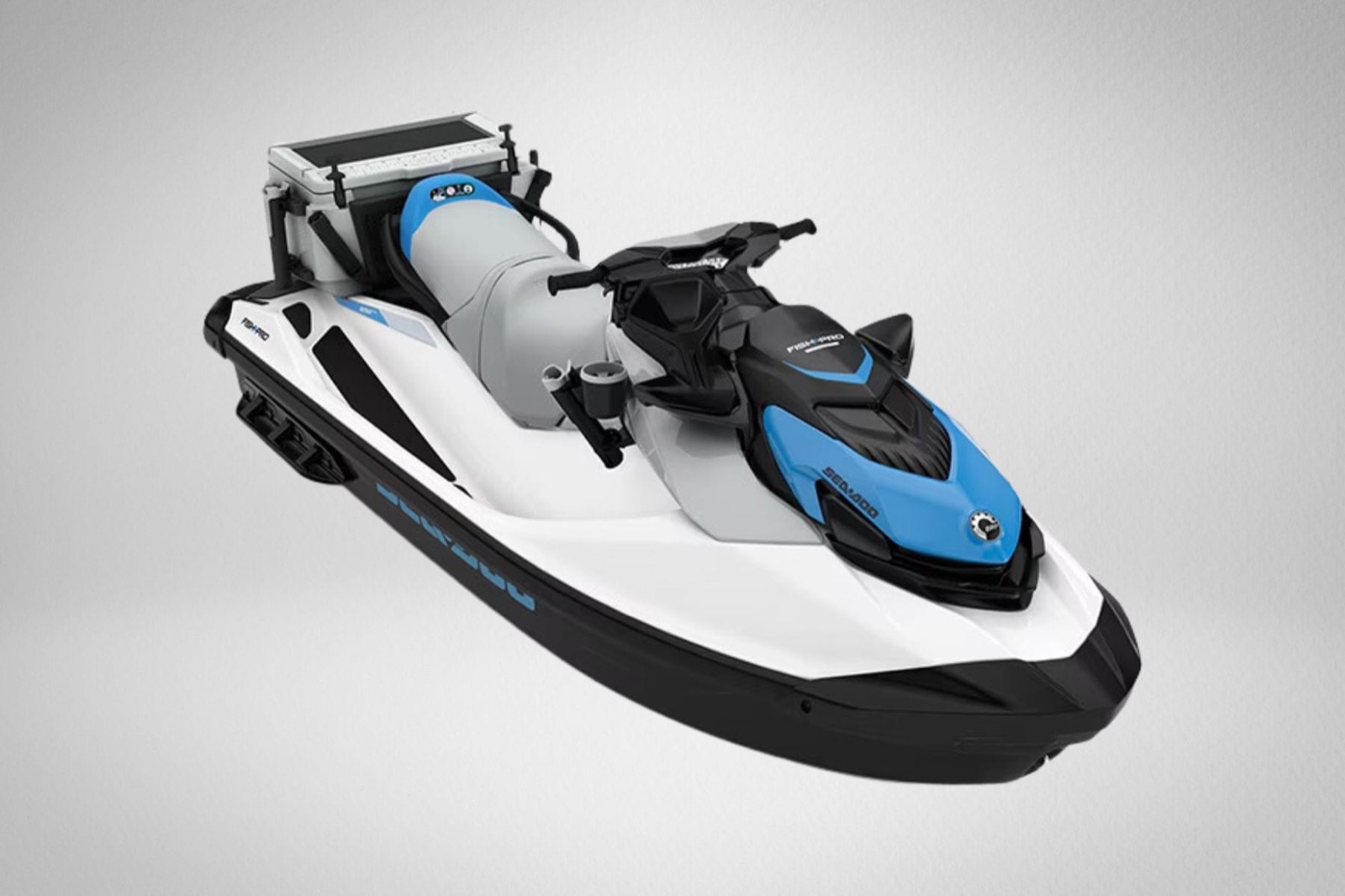
The Fish Pro Scout is the fishing-friendly Sea-Doo for buyers who want a ski that does double duty. A 130 hp Rotax (not the 170-supercharged Trophy trim), a 13.5-gallon livewell standard, two trolling-mode ride modes, and a swim-platform extension that doubles as a casting deck. The Scout is the first-time-buyer-friendly Fish Pro, the Trophy adds supercharger and complexity that a new owner does not need. The math is honest, you pay $2,500 more than a GTI 130 to get the livewell, the rod holders, the casting platform, and the trolling mode. If fishing is even occasional, the math works. If fishing is never, get the GTI 130 and save the money.

Build

★★★★☆

Performance

★★★☆☆

Accommodations

★★★★☆

Systems

★★★★★

Value

★★★★☆

Resale

★★★★☆

Build. Fiberglass hull from the GTI platform with the Fish Pro casting-platform extension. Hardware is mid-premium. Livewell pump is the same Rule 800 used on Boston Whaler livewells, owners do not replace it often.

Performance. Rotax 1630 ACE 130 hp, same engine as the GTI 130. Top end 60 mph with one rider, 53 mph with two and a full livewell. Trolling modes hold 5 mph and 3 mph speeds for slow-trolling.

Accommodations. Two-up seat (not three-up, the casting platform replaces rear seating). 13.5-gal aerated livewell with bait clip. Two flush-mount rod holders. Casting-platform extension. 27-gal front storage.

Systems. Garmin 6.5-inch chartplotter standard with sonar transducer. iBR brake-reverse standard. iDF debris-free intake. iControl ride modes including two trolling settings. Cruise control. LinQ rear rack.

Value. $2,500 premium over the GTI 130 buys the livewell, rod holders, casting platform, Garmin chartplotter, and trolling modes. If fishing is occasional, the math works. The Garmin alone retails $1,200.

Resale. Fish Pro Scout holds resale within 30 percent of new at three years. Smaller used market keeps inventory thin, which works in the seller's favor when listing.

What's included

Rotax 1630 ACE 130 hp, iBR brake-reverse, iDF intake, Garmin 6.5-inch chartplotter with sonar, 13.5-gal livewell, two rod holders, casting platform, LinQ rear rack, two trolling modes.

What costs extra

Trailer, three-up seat (not available), audio system, fish-finder upgrade, downrigger mounts, premium seat upgrade.

What works

  • 13.5-gal aerated livewell with the same Rule 800 pump used on Boston Whalers
  • Garmin 6.5-inch chartplotter with sonar standard, $1,200 of dash hardware included
  • Two trolling-mode ride settings, slow-trolling is genuinely usable
  • Casting-platform extension converts the swim platform to a real casting deck
  • Same iBR, iDF, and LinQ ecosystem as the GTI, full Sea-Doo systems suite

What doesn't

  • Two-up only, the casting platform replaces rear seating, not a family ski
  • $2,500 premium over GTI 130 is wasted spend if fishing is never on the agenda
  • Top end 60 mph with one rider, 53 mph with livewell full and two aboard

Best for

First-time buyers who fish even occasionally. Solo or two-up riders who want a casting platform. Buyers who would otherwise add a livewell aftermarket to a base ski.

Not ideal for

Three-adult families, the two-up seating is the cap. Pure-recreation buyers with no fishing plans, the GTI 130 saves $2,500.

Best year & trim to buy

2022-2024 with the Garmin chartplotter and two trolling modes. The 2022 was the first year of the Scout trim, all years are mechanically the same.

Pricing, April 2026

New
$15,599–16,799 new (2026 MSRP)
Used
$10,800–14,200 (2022–2024 hulls)
Read the full Sea-Doo Fish Pro Scout review →

How we picked

The first-time PWC buyer in 2026 has more capable entry-tier options than at any point in the segment's history. Brake-reverse is standard at $11,000. Debris-free intake systems have spread from premium to mid-tier. The 50-hour service interval that used to define the category has stretched to 100 hours on Sea-Doo's iDF-equipped models.

Our picks span $10,500 to $16,800 new, $5,800 to $14,200 used. We evaluated 14 candidate models, prioritized those with consistent dealer support and clean owner-thread reputations, and kept six. The Sea-Doo Spark Trixx leads the entry tier on value-per-feature. The Sea-Doo GTI 130 leads the mid tier for the same reason. Yamaha and Kawasaki models are included where their specific strengths (passenger comfort, mechanical simplicity) make them the right answer for specific buyer profiles.

Cross-references include 1,400-plus owner posts on Personal Watercraft Forum, X-H2O, and the official Sea-Doo and Yamaha owner forums from the rolling 12 months. Service-interval and supercharger-maintenance threads informed our year-range guidance for several picks.

Each ski scored on six dimensions:

  • Value (25%). Dollars per feature on the new and used markets, weighted toward systems-included pricing.
  • Build (20%). Hull material, hardware grade, seat foam quality, bilge access.
  • Systems (15%). Brake-reverse, debris-free intake, dash quality, ride modes, cruise control.
  • Accommodations (15%). Seat comfort, storage, reboarding, passenger comfort over 2-plus hour rides.
  • Performance (15%). Top end with one rider, acceleration, fuel burn at cruise, chop handling.
  • Resale (10%). Three-year depreciation, brand demand on the used market.

Quarterly refresh, next revision July 2026.

What people actually ask

Sea-Doo or Yamaha for a first ski?

Both are correct depending on what you value. Sea-Doo wins on systems (iBR brake-reverse is more refined than Yamaha RiDE, iDF debris-free intake has no Yamaha equivalent at this tier), value (more features per dollar at the entry tier), and resale (5-10 percent stronger at three years). Yamaha wins on seat comfort (the deepest cruiser seat in the segment), passenger experience, and dealer-network depth for jet engines. For a trick-and-tow ski, Sea-Doo. For a family-cruiser, Yamaha.

How important is the brake-reverse system?

Important enough that we exclude any new ski without it from this guide. Both Sea-Doo iBR and Yamaha RiDE let new riders stop in roughly half the distance of a no-brake ski and reverse for docking without practicing. The Kawasaki STX 160 is on the list despite having no brake-reverse equivalent because the value math at $12,000 for 160 hp is strong, but it is the one pick on this guide where we flag the system gap as a real consideration for first-time riders.

Should I get the supercharged trim?

Not for a first ski. Supercharged trims (Sea-Doo RXP-X 300, Yamaha GP1800R) add $4,000-6,000 to MSRP and require supercharger ceramic-washer service every 200 hours at $400-600 per service. The mid-tier 130-180 hp normally-aspirated skis on this guide return 60-65 mph top end which is more than enough for first-year ownership. Get the supercharger after year three if the speed bug bites.

What ongoing costs should I plan for?

Annual service $300-500 (oil change, spark plugs, impeller inspection at 50 or 100 hours depending on model). Winterization $150-250 in cold-climate states. Storage $400-1,200 depending on indoor or outdoor. Insurance $200-450 per ski per year. Fuel at 4-5 gph at cruise, figure 30-50 hours per season for a recreational owner. Trailer $1,200-2,400 single or $2,400-4,000 dual.

Two-up or three-up seating for a family of four?

Three-up if any of the family members are adult-sized. Two-up rides cramped with two adults, much less three. The Sea-Doo GTI 130 and the Yamaha VX Cruiser HO both fit three adults legitimately and are the right answer for a family-of-four household. Buy two skis if four people will ride simultaneously, three-up seating handles overflow when one ski is being driven.

Saltwater riding, what changes?

Freshwater flush after every saltwater ride is non-negotiable, takes 5 minutes with the included flush adapter. Service intervals stay the same on schedule. Hull material matters less than hardware corrosion resistance, all skis on this guide have stainless or corrosion-resistant hardware standard. Anode replacement annually instead of every two years. Storage indoors or under cover, salt eats vinyl seats faster than fresh.

Weekly

Get one honest boat review a week

One boat we ran, one guide worth reading, one model we'd shop next week. No press-release rewrites. Unsubscribe any time.