Boat & Sail

10 Best Catamarans in 2026

Lagoon 40 featured
1 / 10
· Updated June 9, 2026

A catamaran is a sailboat that has a multi-hull design. It gives it more stability because it’s wider and that creates more livable space for more people.

Read about the best multihull boats in this article and learn which one is best for your voyages.

The biggest advantages of a multihull are:

1. Lagoon 40

Max Space, Smart Vessel
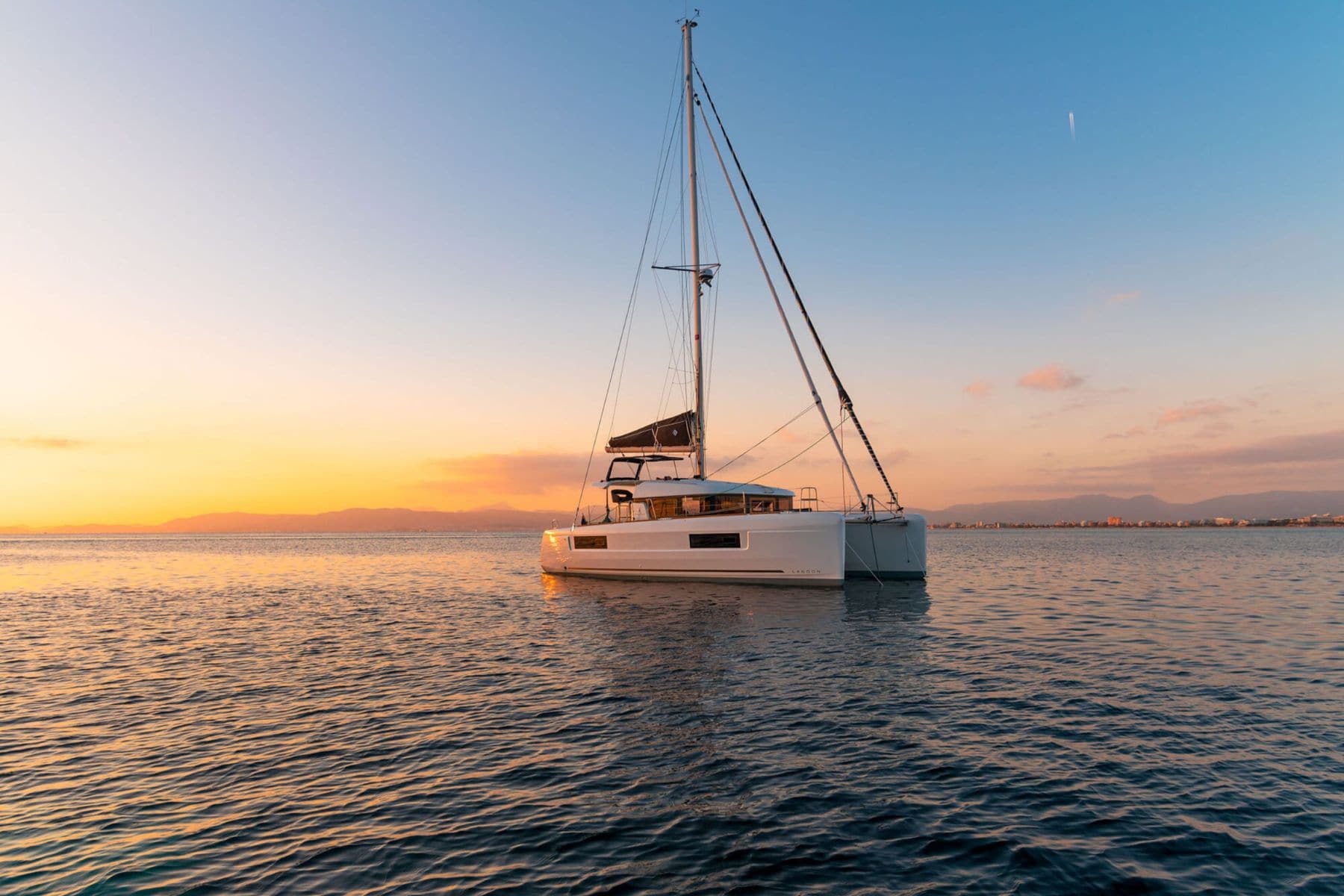
Lagoon 40

Lagoon has always enjoyed a sweet spot in the 38 to 40-foot catamaran market. The Lagoon 380 became one of the most popular cats ever, with nearly 1,000 hulls being produced over a 20-year run. The L400 and L39 attempted to tweak that popular design, but neither caught on to the extent the 380 did.

The new Lagoon 40 is turning heads for many reasons. The Lagoon 380 is officially off the Lagoon website, so it might finally be time for the torch to be handed to a new cat. And the 40 has just the right mix of modern features, small size, and affordability that many cruisers and families seek.

Here’s a go-anywhere boat that looks good, sails easily, and keeps you comfortable.

Things we like

  • Good size for most cruising couples--easy to handle and maintain, but plenty of living space
  • Easy to sail with its smaller main, self-tacking jib, and optional furling genoa or gennaker
  • Beautifully designed exterior and interior
  • Great, thought-out living space with good traffic flow patterns
  • Mast height is inland coastal waterway-friendly (US East Coast)

Things we don't like

  • Average production boat quality of construction and materials
  • Limited after-sales support
  • Limited options to customize your vessel

2. Leopard 42

A Touring/Party Boat
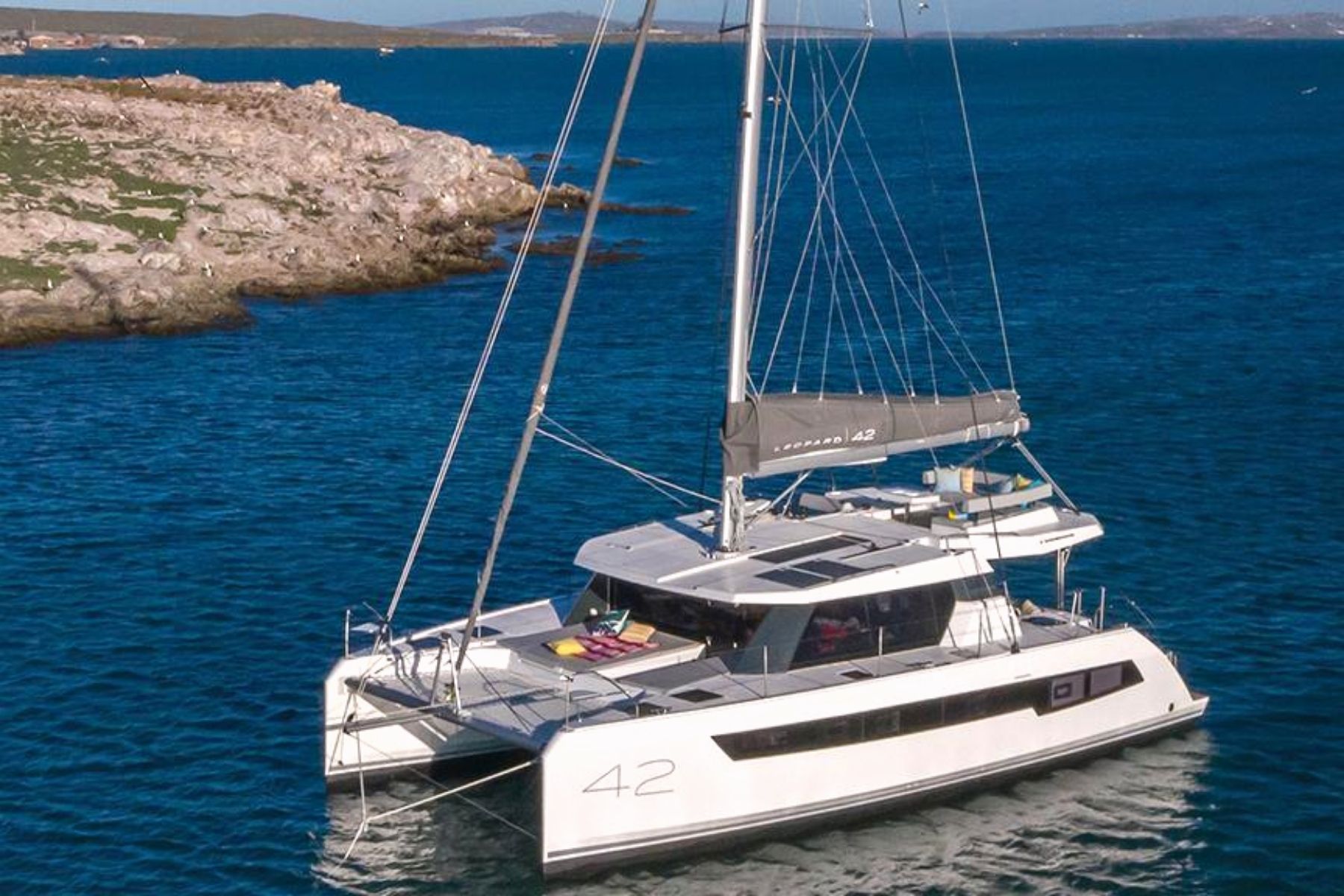
Leopard 42

The Leopard 42 is the company’s replacement for the 40. It integrates several design elements that were proven on the new 50 and 45-foot models, including an upper lounge area atop the coachroof. The design also has the unique forward salon door that opens for direct access to the foredeck and a sun pad lounging area.

Like all Leopard catamarans, the 42 is not only comfortable to stay on, but it’s also fun to sail. All sailing controls lead to the compact helm. Everything can be handled from this one control station. The full-roach main and overlapping genoa provide plenty of power, and optional electric winches make sail handling a snap.

The Leopard 42 share company in the market for 42-foot cats with some very attractive boats–the Lagoon 42, the Bali 4.2, and the FP Astrea, to name a few.

Things we like

  • Leopard brand targets individual owners; you can spec your boat however you like
  • Smallest sailing cat with so large a roof-top lounge area available
  • Pronounced hull chines provide more interior space without sacrificing the performance of narrow hulls at the waterline
  • Plentiful storage and accommodations
  • Factory optional dishwasher and washing machine
  • Standard Yanmar 45-horsepower engines
  • Galley-forward, open salon design
  • Forward outdoor sun pads
  • Foam-cored deck construction (most catamarans use balsawood as core)
  • Boats are EU CE-certified and US NMMA and ABYC certified

Things we don't like

  • Standard mast height exceeds ICW and most bridge limitations (for US East Coast sailors, a shortened rig option is available from the factory)
  • Deeper draft than competitors
  • Rooftop lounge takes up space that some owners would rather have for more solar panels
  • Some quality and design issues reported

3. Fountain Pajot 80 Catamaran Superyacht

Supercatamaran Luxury
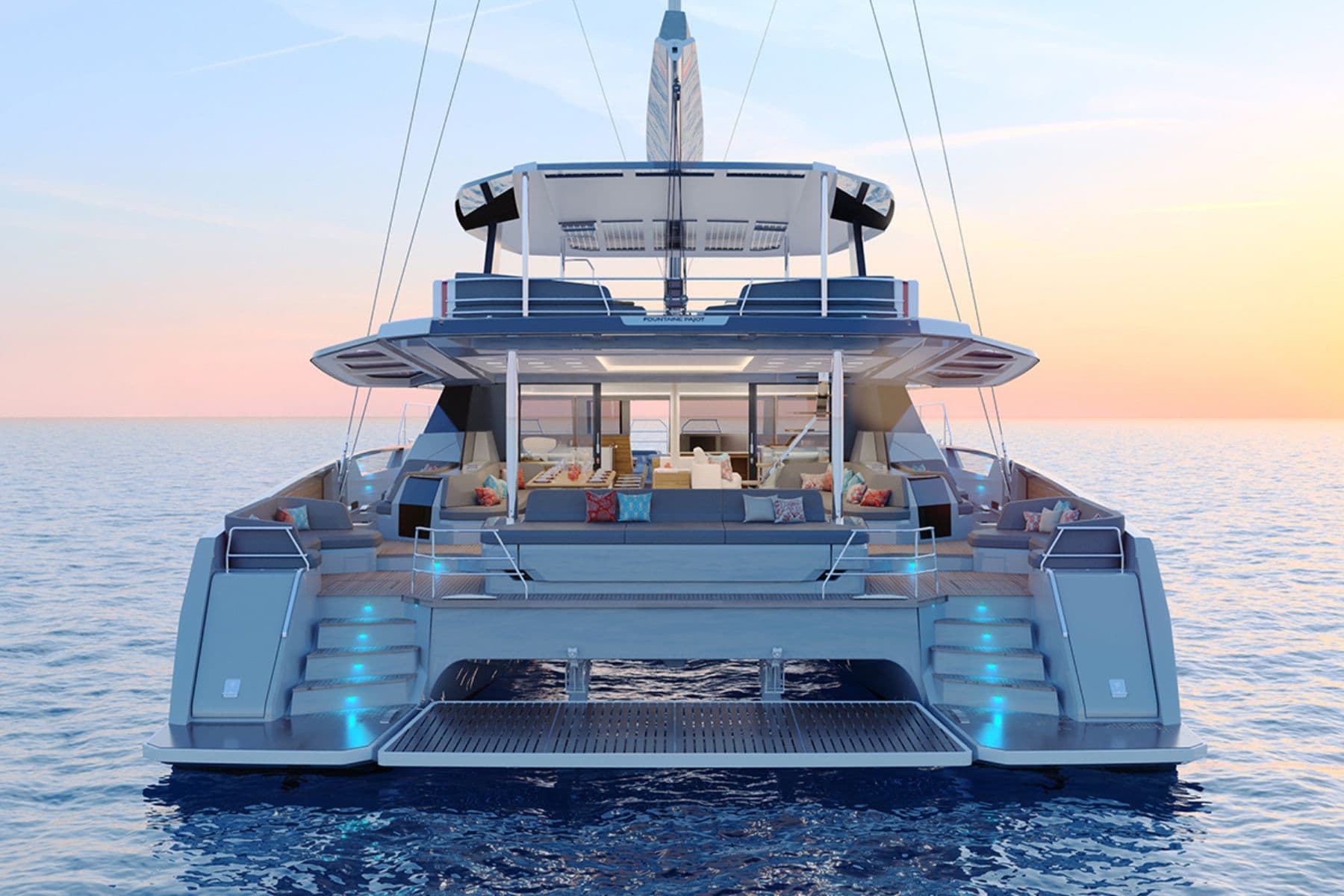
Fountain Pajot 80 Catamaran Superyacht

Fountaine Pajot, one of the foremost builders of sailing catamarans, unveiled their biggest “Super Catamaran” ever: the Thira 80.

The release comes on the tail of an ever-increasing trend in the catamaran market, the bigger-the- better era. With Sunreef, Lagoon, and Gunboat all making boats in the 70 to 80-foot range, these companies clearly see a market for the catamaran superyacht.

Boats this size are easily comparable to a motor yacht of more than 125 feet long. The very wide beam provides cavernous interiors for more livable space. And they have plenty of room for the toys of the trade, tenders, jet skis, paddleboards, and more.

Things we like

  • Detail in design carries over to sound sailing performance
  • Perfect for a luxury crewed charter catamaran business
  • Ample crew accommodations, including separate captain's cabin, crew bunks, and crew mess
  • Solid foredeck (no trampolines) with sun lounges and optional jacuzzi
  • Toy storage with room for tender, jet ski, and paddleboards
  • More lounge space than any other catamaran
  • Three versatile layouts to choose from

Things we don't like

  • No hybrid or electric drive options

4. Kinetic KC54

Tech-Savvy Liveaboard
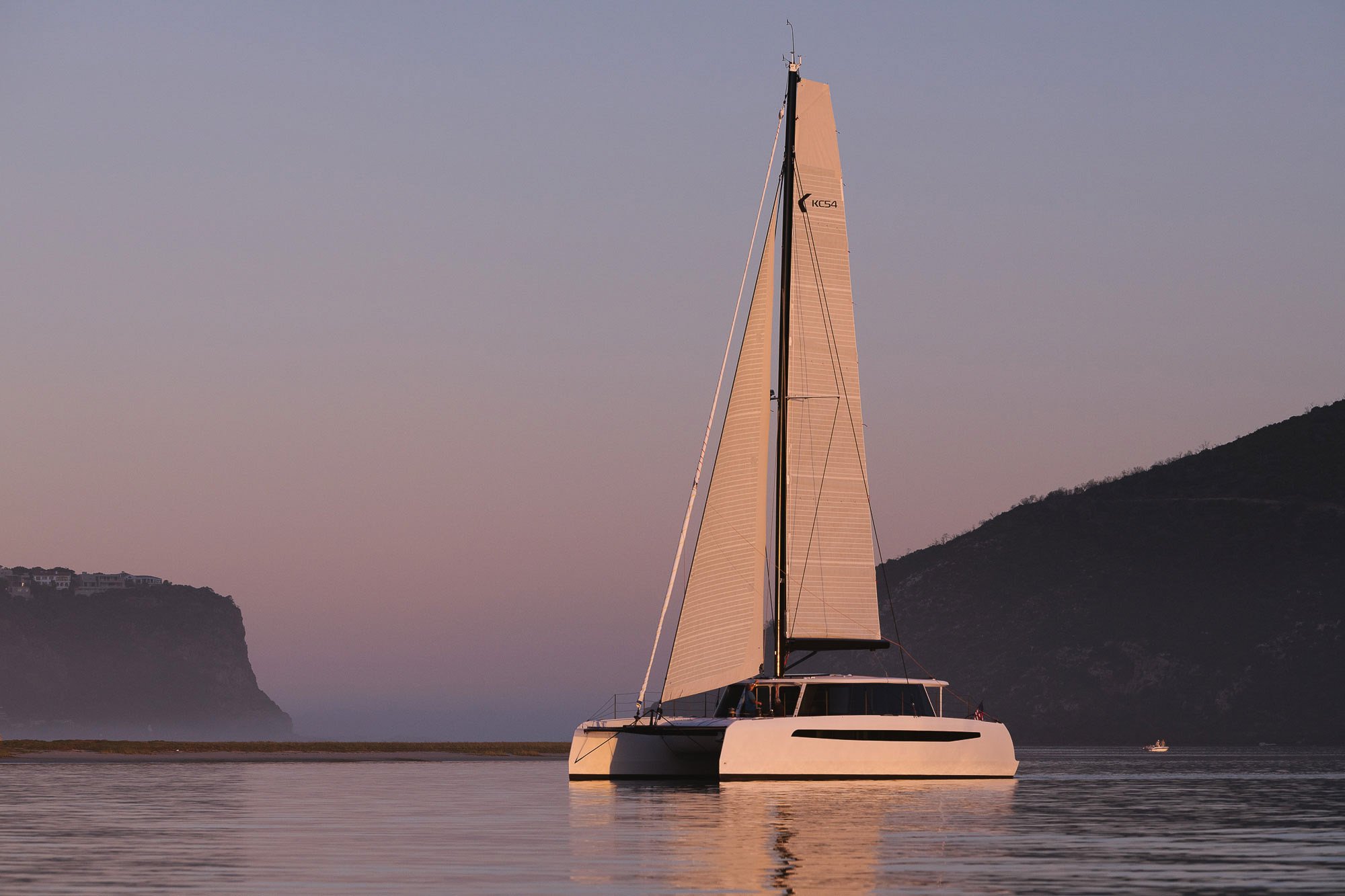
Kinetic KC54

The Kinetic may be fresh on the scene of the Super Cats but it is on the cutting edge of the finest fast craft in terms of performance and latest technology while also having features, impeccable finishes and the amenities of stylish cruising.

This has been awarded the Cruising World Best Large Multihull 50ft and Above Boat of the Year 2022 as well as the Special Recognition Award – for Overall Excellence 2022 by Sailing Magazine. Said Gerry Douglas of Sailing Magazine: ‘This was the Tesla of sailboats…in terms of design and execution and technology, it hit all three of those marks. This boat is built without compromise’.

These catamarans are all-carbon construction, an aggressively lightweight construction and set up for short-handed sailing. Mast is coachroof mounted and there are options for centreboards and daggerboard. There are three steering stations (two outside aft on each hull, one inside right behind the working cockpit) to suit weather conditions and personal preference.

Things we like

  • There is no compromise on design, execution and technology
  • The spacious saloon with 360 degree panorama
  • Drop down swim platform that bridges the aft steps
  • Three steering stations for choice and flexibility
  • The position of the forward cockpit and the deck cabin’s glass window wall that can be opened - touches that opens up spacious living zones to maximize indoor/outdoor living

5. Xquisite X5 Plus
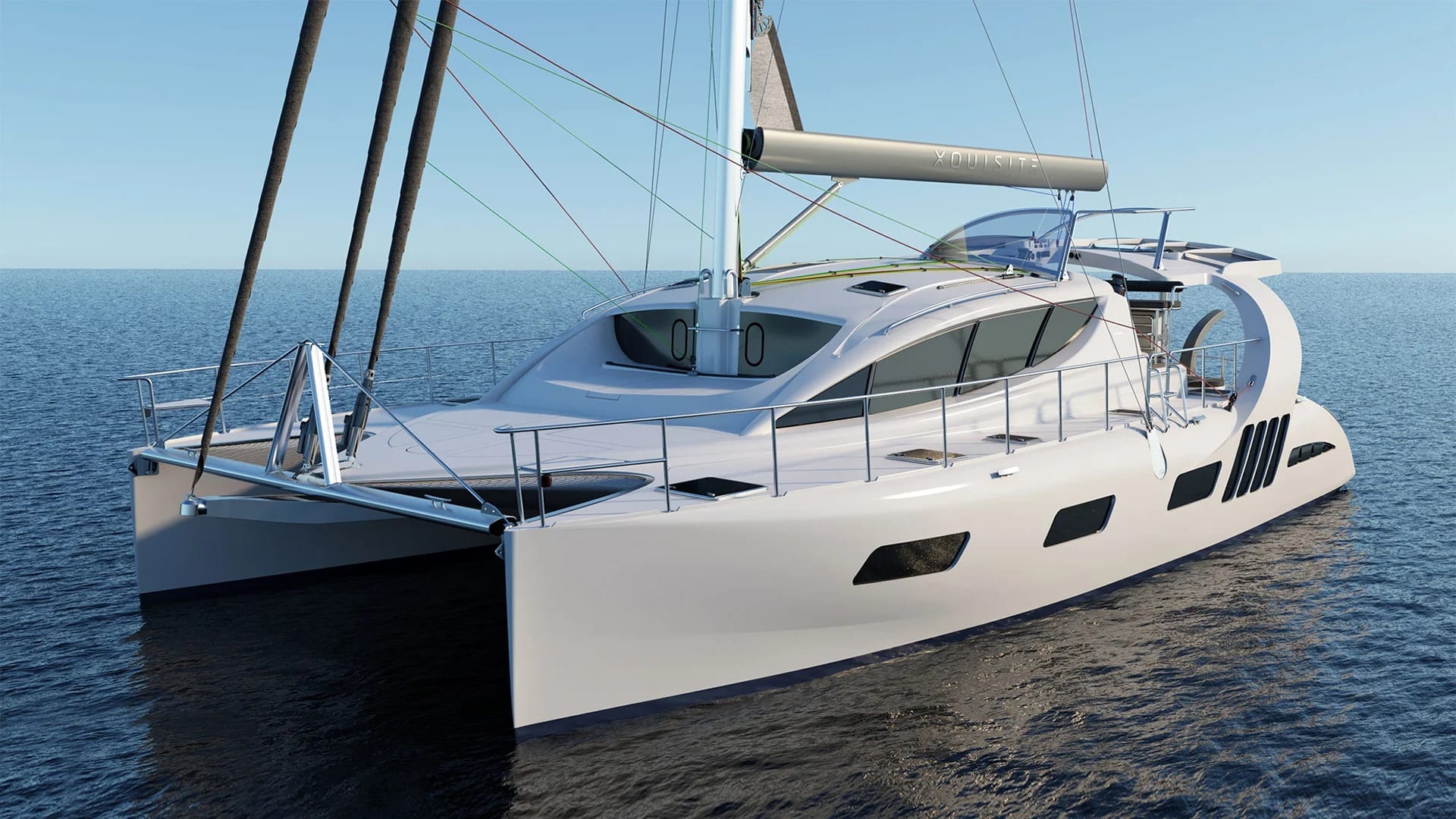
Xquisite X5 Plus

2022 saw the Xquisite X5 named the Cruising World magazine’s Best Cruising Catamaran of the year – yet again (it won the Best Multihull over 50ft award in 2017) .

As Ed Sherman said: ‘There are 40,000 man-hours invested in this boat. And you can see it.’ To the bolts that are torqued to the 2 weeks spent with each new owner training them on systems – this is a strong product, well designed by Rudolf Jonker and built by Phoenix Marine incorporating all of Tamas Hamor’s ideas and experience. This really is a well thought out 53 ft cruising sailboat and is another South African-built catamaran loaded with important details, not only the visible ones.

The goal for Xquisite is to supply fully equipped catamarans for long-term live-aboard cruising with comprehensive lifetime service assistance for the owners.

Things we like

  • Toverhead shower-head built into the targa arch on deck
  • Systems operation and maintenance are controlled and monitored through the iPad, which sends all data back to the builder whenever it is connected to the Internet
  • The Xquisite X5 is quality built in every respect
  • This catamaran is built for easy sailing and comfort, never compromising on innovation and safety with back up systems though through
  • The dedicated tool storage unit

6. McConaghy MC60
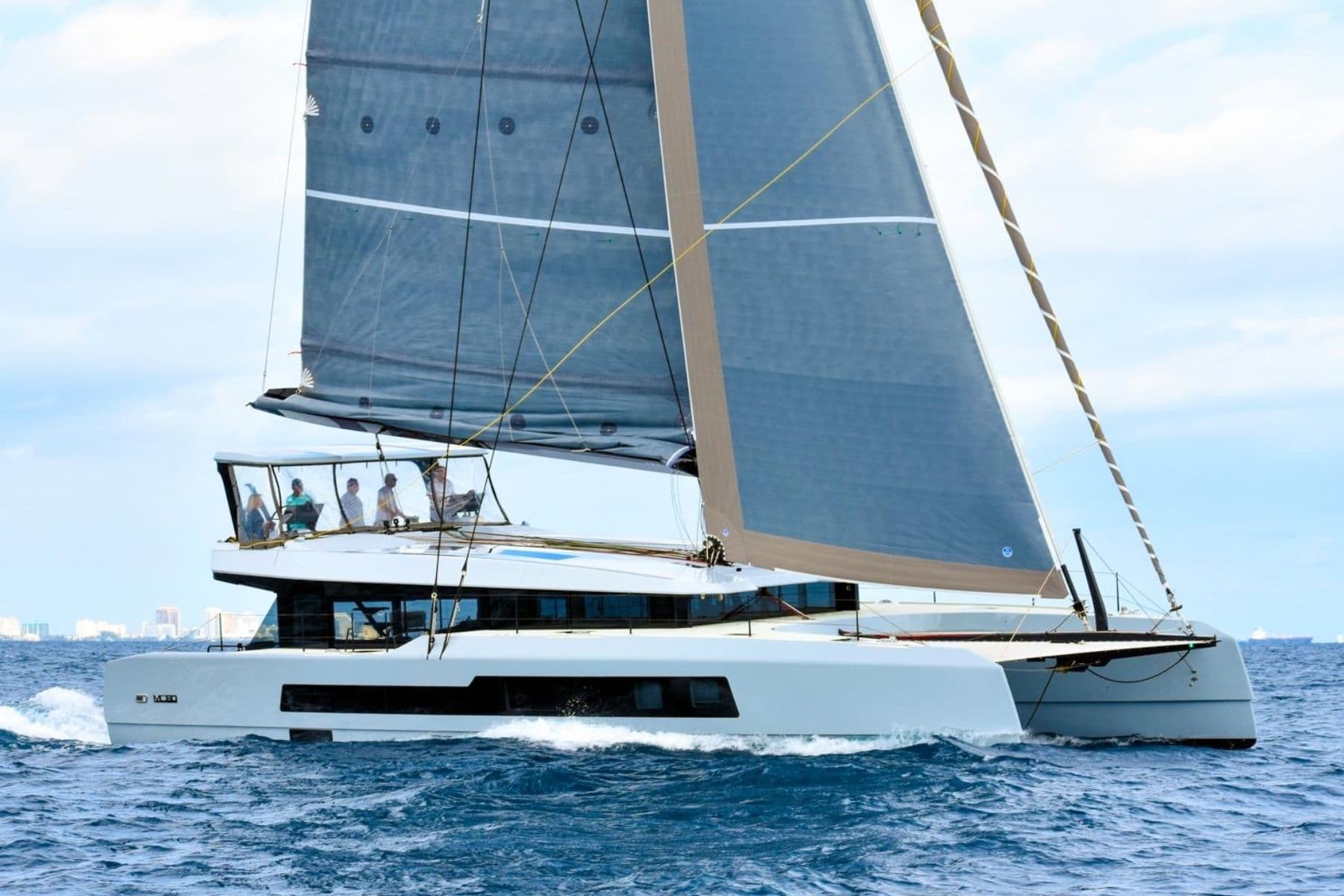
McConaghy MC60

The MC60 is the fastest and most luxurious flybridge catamaran. ‘Think next-gen fighter jet meets a New York style luxury loft apartment.’

McConagy boats was founded by John McConaghy in 1967 and in 2000 Mark Evans & Jono Morris embraced the opportunity to take over the country. They partnered with Tiger Group Investments and have grown from strength to strength – building the world’s fastest racing yachts, submarines, components for Formula One racing and developing solutions for architects, scientists and others. They have a proven track record on complex composite products which are lightweight, corrosion resistant, have design flexibility, durability and high strength.

In the MC60, designed and engineered with safety as priority, this performance sailing meets stylish living with only finest wood veneers and luxurious materials throughout – the wide saloon which offers a versatile but spacious living area, large windows and retractable glass doors aft, a galley well positioned best suited to socialising. The attention is to detail and innovation even in the storage solutions so that living space is maximised with semi-customisation of interiors too. She is the perfect blend of sophistication and high tech.

Things we like

  • Elegance and luxurious sophistication on the fastest catamaran
  • Push button centreboards making this one of the safest offshore catamarans
  • The saloon has large glass windows the length of the hulls so is exceptionally light and provides for fantastic viewing.
  • All glass aft saloon glass screens, even in the rain you can enjoy sitting on the aft deck

7. Sunreef 80
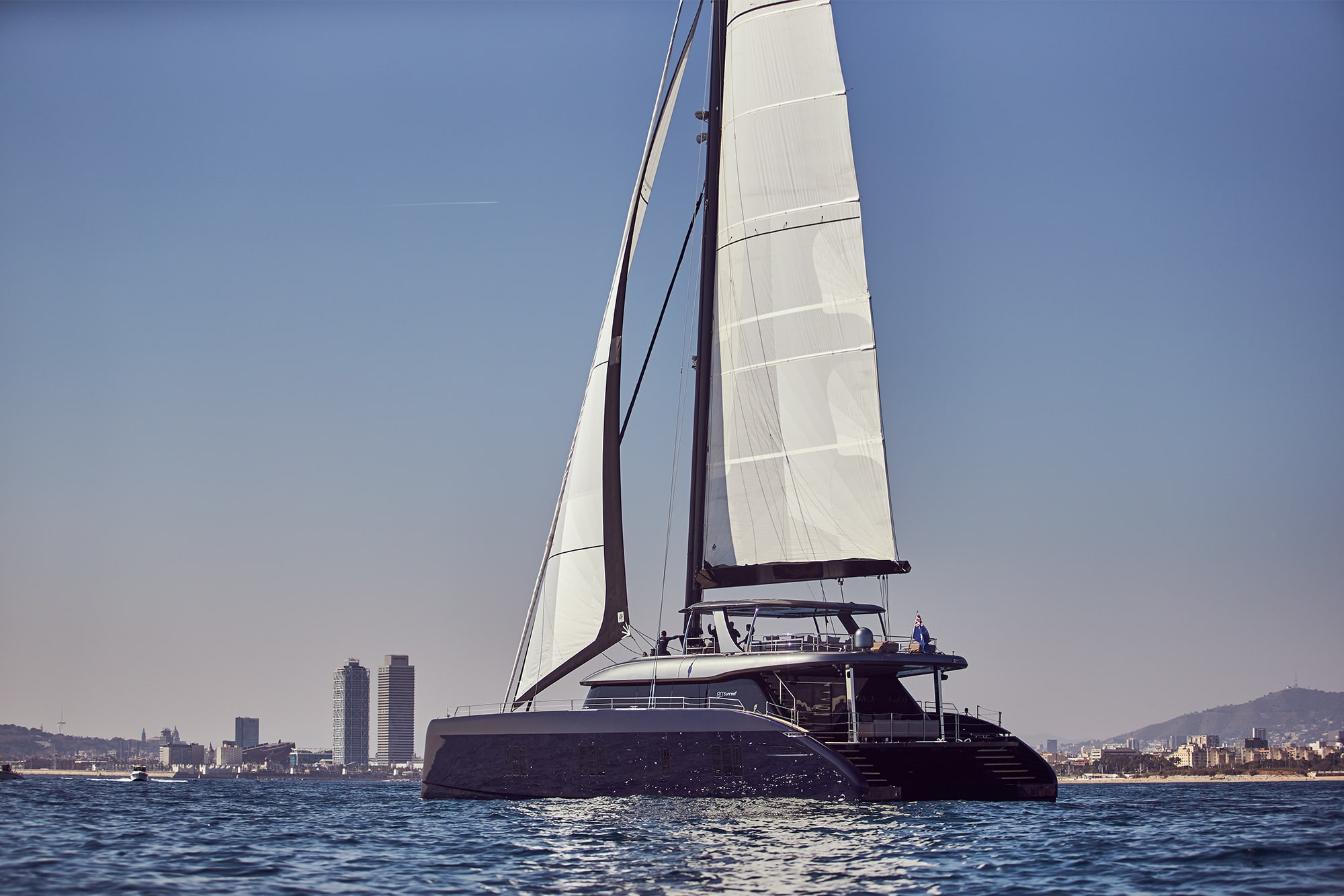
Sunreef 80

Winner in the 2019 Oceanway China Yachts Award, the 2019 Yacht and Aviation Awards and claiming Best of Show Award in the 2020 Miami International Boat Show this mighty fine catamaran justly deserves all and more. It is an all-round sailing leisure yacht for exclusive getaways, charter and transocean adventures and is set up for professional crew.

The Sunreef is built in Poland under management of Founder and CEO Francis Lapp who has been producing large vessels from 50-165 ft since 2002 and knows well what semi-custom cruising is all about.

The Sunreef 80 fuses contemporary design with its layout flowing easily one into another area in ultimate luxury. Custom finishes ensure that you have found your ultimate catamaran – the vast central lounging space with panoramic view opens both onto the bow and cockpit. The cleverly designed bridge deck and superstructure facilitates the superior comfort onboard.

Things we like

  • Every line of this catamaran is a delight to savor with its classic edge given a modern twist
  • The saloon’s expansive area has outstanding potential for your customization navigation console to starboard. The console includes the autopilot and throttle so despite lacking a steering wheel, course adjustments can be made here, along with navigation via the B&G 16-inch scree
  • The generous use of teak combined with brushed metal and lacquered laminates;
  • The amazing vast aft deck with its protective overhanging flybridge overhang
  • All the areas bow to lounge to aft platform combined form a universal, open environment where flexibility and freedom reign
  • Luxury throughout - we do love the wide steps leading to the water on each hull and its spacious hydraulic swim platform

8. HH50 cruiser
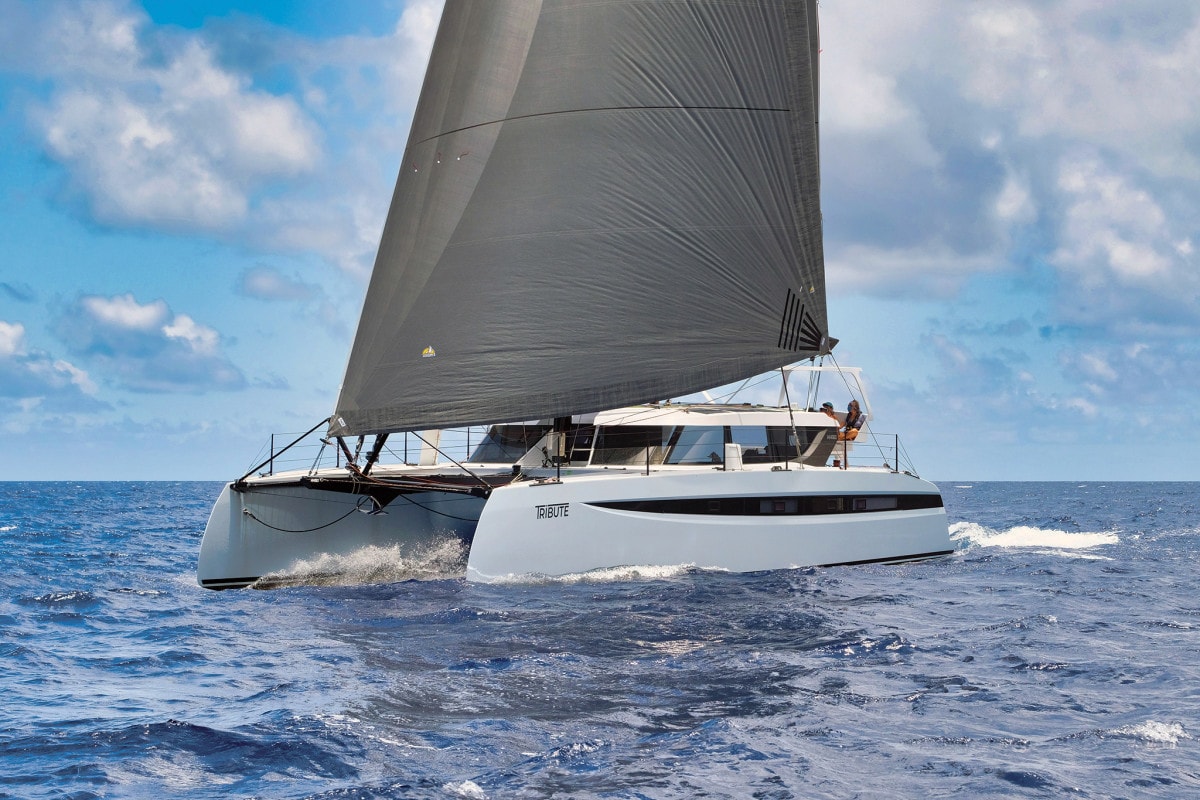
HH50 cruiser

The HH50 is a performance cruiser for the blue water with simple to use but intelligent systems, carbon construction and to top it all luxurious and spacious interior. She offers to best of all worlds – easy to manage sailing vessel which is robustly built, fully equipped and stylishly comfortable for your adventure.

The sailing systems and deck layout are designed for short-handed sailing with dual helm stations each giving the helmsman total sail control from either side and having excellent visibility. The C daggerboards are curved and are fully retractable. Push button mainsheet and self-tacking jib are standard. Equal-to-Wind speed is normal, this is a performance sailing vessel.

The large saloon has a good sized galley and when at anchor the sail handling area converts easily to a comfortable forward facing seating area. The aft cockpit has an integrated wet bar and barbeque – perfect for al fresco entertaining or dining. Luxury queen size beds await in the cabins.

Things we like

  • The style, speed and simplicity of this vessel
  • Easy to manage sailing vessel, robustly built but comfortable
  • Options for push button controls for sails and daggerboards at helm
  • When at anchor the sail handling area easily converts to an a comfortable forward facing seating area

9. Excess 11
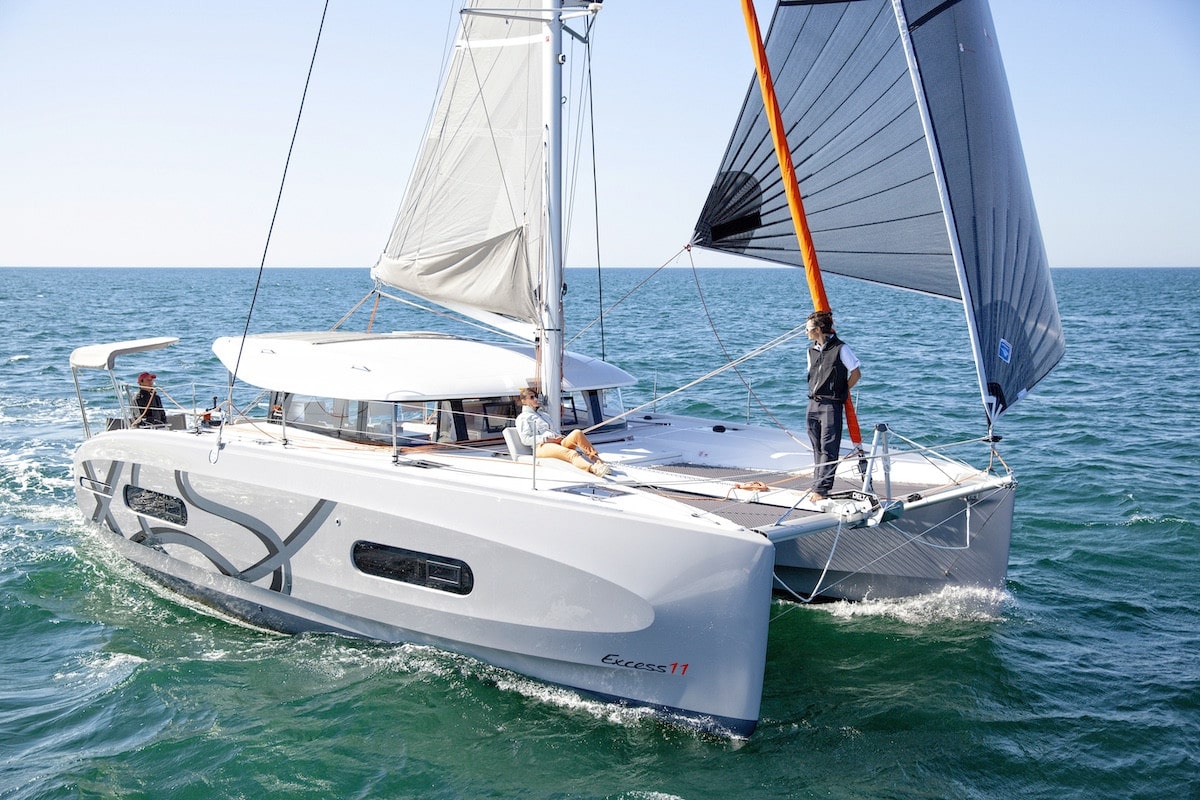
Excess 11

This gem earned the title of Cruising World’s Boat of the Year 2021 impressing the judges with its allocation of space all the while offering superior sailing performance. All at a great price.

Using compact space effectively – effectively and seamlessly assimilating working and social areas in a thoughtful, pleasant, workable and innovative way. This is a sure winner for the Excess 11.

The Excess 11 is one of the smallest catamarans as well as the only large-scale production boat of this size, with comfort, space and thrilling sailing. She is comfortable in her simplicity and light style. It is very capable for long passages and meets the needs for life on board, built on the experience of previous models and designs.

Things we like

  • All the comfort needed for cruising in a smaller vessel
  • Great value for money
  • There is a real navigation station, good galley, expansive owner’s cabin, bathrooms with separate showers, trampoline forward, workable cockpit - all integrated seamlessly

10. BALI Catspace
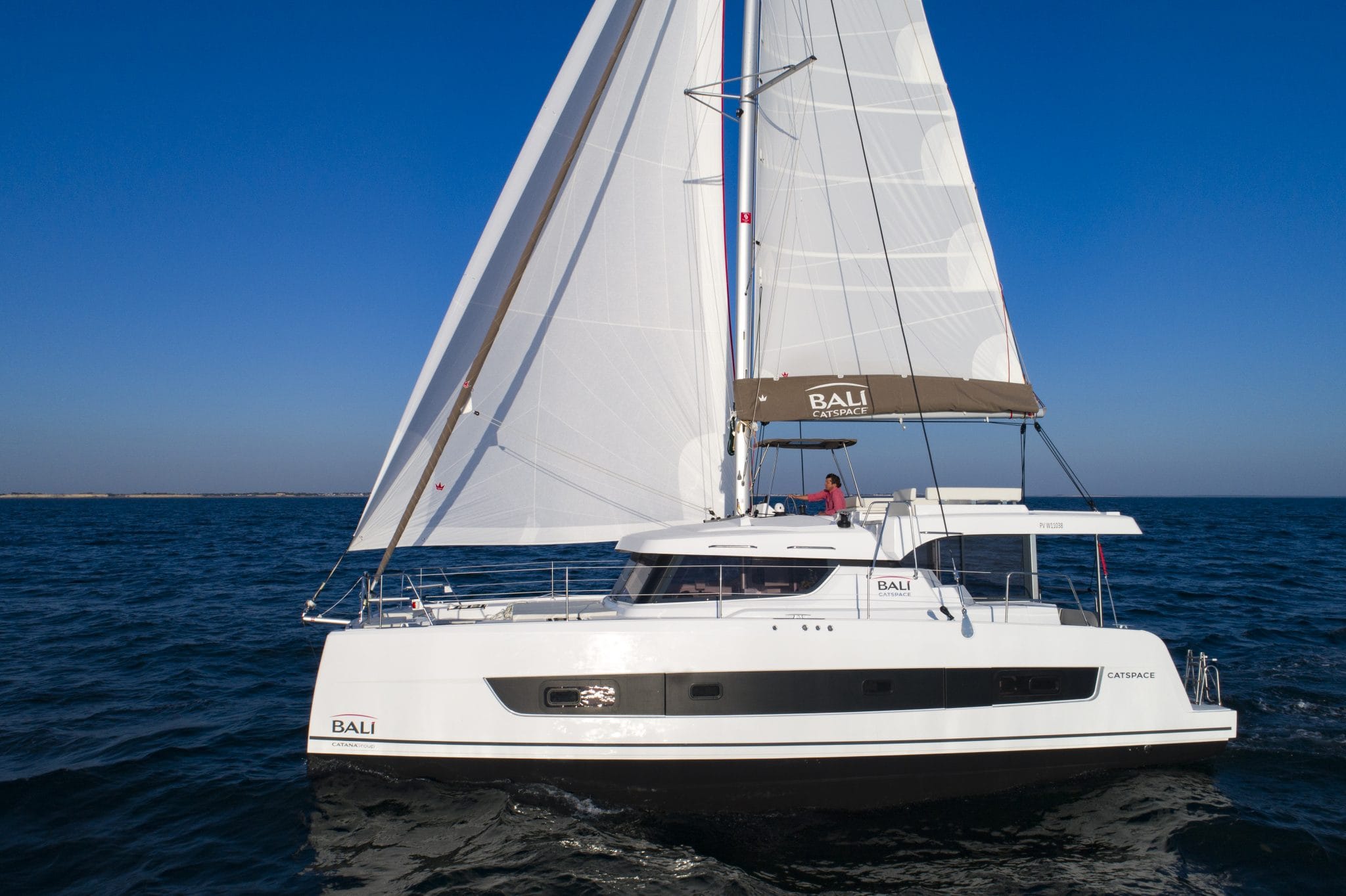
BALI Catspace

The BALI Catspace is the most successful catamaran in her class with the Catspace being the smallest of the BALI range, combining all the latest innovations in cruising. It was nominated for the Cruising World’s best boat of the year: Catamaran under 50 ft, 2022.

The Catspace was conceived by Olivier Poncin & designed by Lasta Design – combining all the latest innovations in cruising into a really neat vessel.

The sailing quality is not to be faulted for a catamaran of this size, the deck which is efficient for sailing allows smooth movement from the aft platform to the forward cockpit with lounge and sunbathing area. There is, in addition a full-comfort flybridge which has a safe relaxation area and a helm station which is designed for single/short handed use.

Things we like

  • The open indoor/outdoor space on deck
  • Neat finishes and welcoming furnishings - makes you feel like you’re on holiday
  • Plenty of amenities including air conditioning and multiple fridges
  • Good sailing, including a self-tacking jib
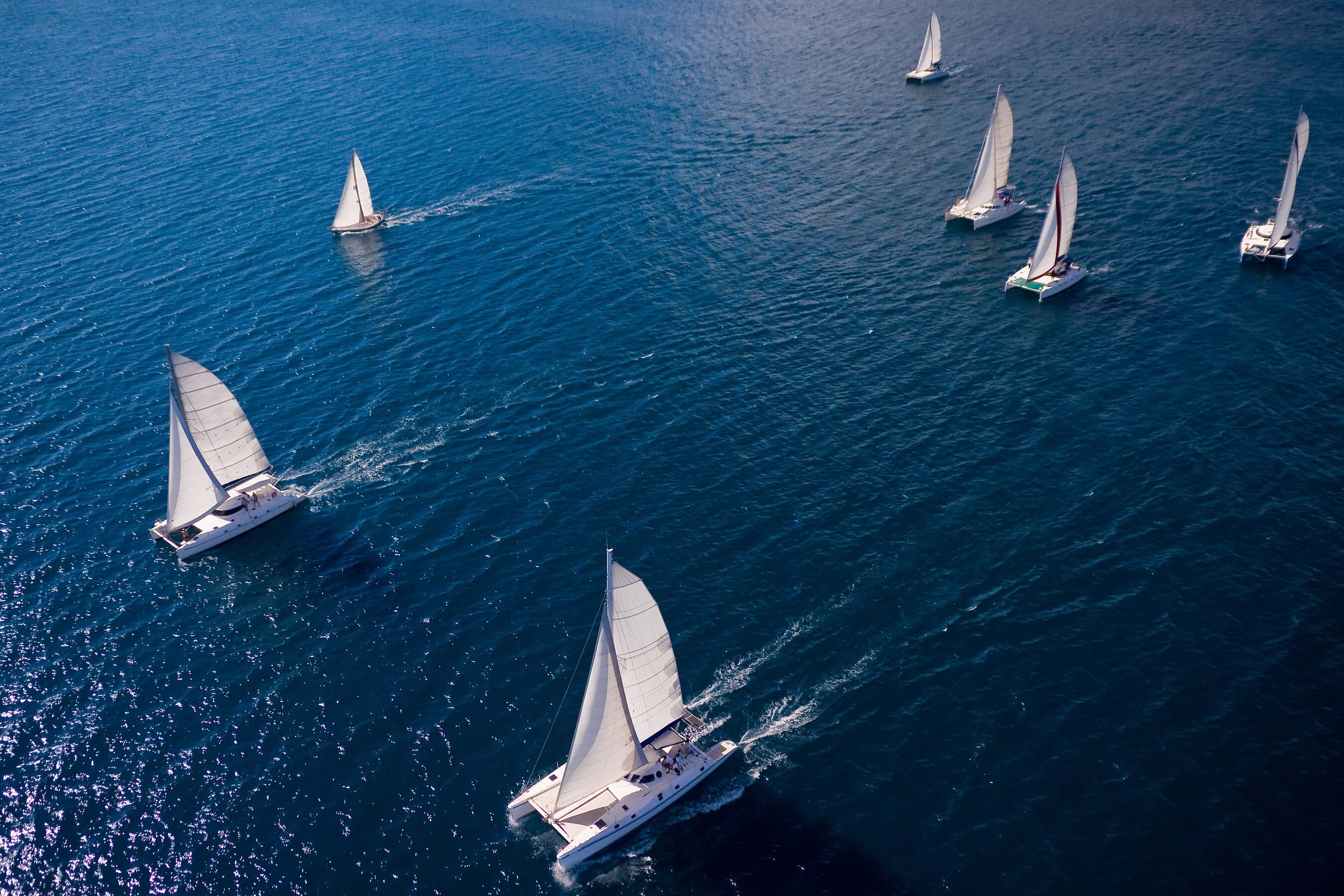
Regatta In Indian Ocean, Sailboat And Catamaran. Helicopter View
Regatta in indian ocean, sailboat and catamaran. Helicopter view

Big ‘blue water’ Sailing

Blue water sailing refers to the open sea. Non-blue or pond sailing refers to inland waters and coastal areas.

The difference in specific design of a blue water or non-blue water vessel is for the ship captain’s visibility as well as based on the hazards of the area they are to be used.  A bluewater (offshore) catamaran is designed for voyages in very rough seas. They are usually 40ft or longer, designed to be very stable, carry heavy loads and very safe.  Ocean sailing has different dangers to coastal water with different challenges – sailing through storms, longer distances, more maneuvering space, night sailing – and more gear, better technology, skills and sturdier vessels are needed.

When sailing in confined waters it is important to have more reactive steerage, less maneuvering time, you do not need to store multiday provisions as you are more reliant on daytime sailing, do not need so much speed so have smaller sails and lower horsepower engines and perhaps the intention if for pleasure alone so one of the major considerations will be the  layout of the vessel.

For most sailors the choice of size is between 40-50 feet which is manageable for 2 persons with lots of room to spread out and entertain or have friends on board and that is easy to dock both in terms of space and cost.

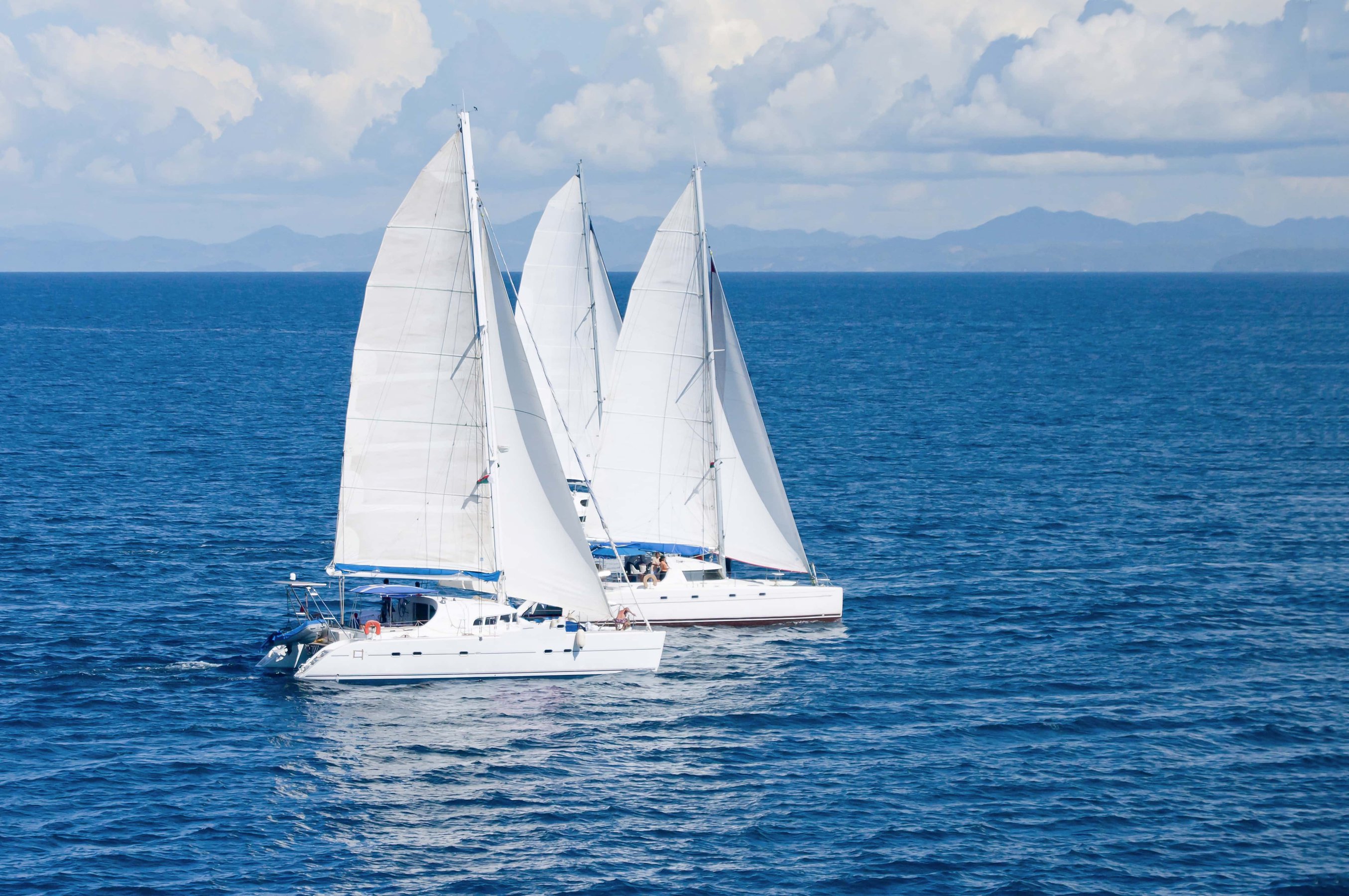
Three Sailboats Racing In The Indian Ocean
Three sailboats racing in the Indian Ocean

First questions to ask yourself

First up consider these 5 points before you decide on your multihull model, length and manufacturer.

Use

Will you be using your sailing vessel for coastal or blue water adventures? What is your primary objective and then: is this for family pleasure or entertaining or Charter?

For sailing

Must it be suited for single-handed sailing? What proficiency of sailing do I have/need? Degree of technology required? Equipment required?

Functional Use

How many berths do I need? How much privacy? Elegance, comfort and style – what is required? Space for ‘toys’?  If for charter or private use with crew – extra berths.

Budget

Your total budget must include the initial cost of the vessel plus survey, transport, upgrading of equipment, insurance, etc – there is a lot to consider. Would a second hand vessel be a consideration? What is the smallest I can go?

Annual Costs

What will my ongoing budget be for Insurance, berthing, maintenance, repairs, haul out fees, etc? This excludes any travel costs

Location

Where do I want to berth my vessel? Or living aboard?

It is said that BOAT is an acronym for: Break Out Another Thousand!

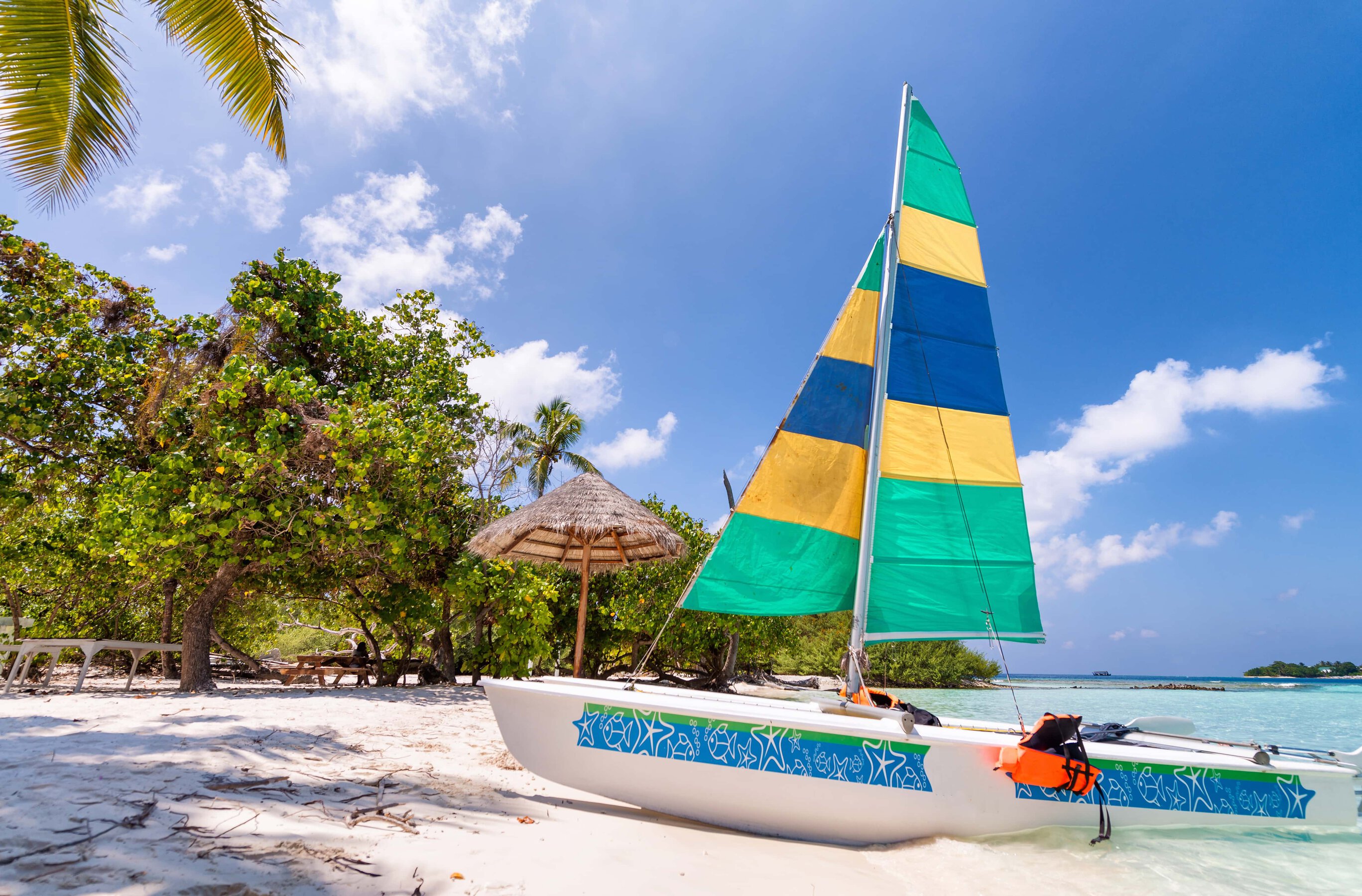
Beautiful Catamaran On A Tropical Beach.
Beautiful catamaran on a tropical beach.

Review of Our Favorite 15 Multihulls 2026

With cutting edge technology and the strive for sail performance this was no easy task – there are many deserving vessels who deserve to be in the Top Reviews such as Privilege 510, Outremer 51, Knysna 500SE and the St Francis 50. There are also other models by manufacturers we have selected that have proven themselves over the years that may be a better size for you.

Here’s our listing!

Final Thoughts

Multihull vessels have a lot of the potential for creature comforts that motor yachts have without the constant thrumming of the engines. But they still require a modicum or rudimentary understanding of sailing.

There’s also a bit of maintenance required, but this is something–like having kids–that you figure out along the way.

Another popular boating segment is the power catamaran. Like their sailing counterparts, power catamaran boats have great living space, but without the need to understand sailing principles. Either way, both multihull markets look to be growing in popularity over the next many years.

The resale market for multihull ships also looks promising, so getting one, trying it out for a couple of seasons and selling it again is a possibility without losing too much on the purchase price.

Before you sign the cheque….

So you’ve located some a catamaran for sale that looks promising. It’s one of the models on the list here and you’re wondering if its in the best shape relative to the price. Here’s what you do:

Take time out to go and view it in person. Book yourself an experience aboard and head over to your closest marina and speak to owners (this may well help you create your shortlist too). Consider these points before purchasing:

  •       Pre-book buyer’s sea trials for your shortlist
  •       Select the perfect sailing vessel for you (and if it’s for your family make sure they agree too!)
  •       Used – get a certified hull survey, safety comes first
  •       Get annual insurance quotes
  •       Calculate dockage – purchase or rent a slip or dock
  •       Calculate monthly upkeep and maintenance
  •       Calculate extra costs like navigational devices & fittings
  •       Draft your own checklist
  •       Draft & sign off sale & purchase contracts
  •       Draft & sign off a Memorandum of Agreement (MOA)
  •       Ensure you are satisfied 100%
  •       Execute payment and take transfer of ownership
  •       Register and insure your vessel

Check all necessary Stock is aboard – Sail away!

Pre-Departure Checklist

Some ideas for you –

  • Always pre-check the weather and wind conditions prior to any excursion on the water
  • Always know the tide table in your head, so you know what the ocean is doing at all times, incoming or outgoing tide, and what is the tidal range if you are in an ocean estuary or channel.
  • Check you have fuel, water, food and all the basics before loading passengers aboard, and follow these easy steps to ensure safety is first at all times.
  • Plan your upcoming voyage, does it feature high swells, rocky shores, and cold water
  • Check Safety equipment, making sure you have enough life jackets for all sea-farers
  • Check sails, sheets and lines. All sailing gear
  • Check your engines – Open fuel lines, check oil and spark plugs
  • Check fuel tank levels and have extra fuel aboard for an emergency
  • Start the motor, make sure water is coming out to cool the motor
  • Test both forward and reverse gears on the engine before guests board
  • Check that you have a working and full battery communications radio, with all correct channels programmed, and that all the vessel lights and electrics are in working order
  • Check for first aid kits, manual hand pump, paddles, lifejackets, additional lines, fresh drinking water and food for passengers plus some spare in case your voyage is longer than expected, necessary repair tools & kit and flags
  • Strap any equipment and gear down safely before you start to motor
  • If you have passengers boarding, ensure you give a proper safety briefing and point out where all the safety gear is on the vessel. Children should be included in the briefing and be secured properly before departure

Catamarans versus Trimarans

Trimarans have limited space in slimmer hull designs generally. This makes Catamarans with their comfortable open leisure space both above and below deck far preferred for leisure sailing.

On the plus side for Trimarans are their speed and seaworthiness.

How Safe are Multihull Boats at Sea?

Probably a close second in terms of questions asked. On a twin hull design the buoyancy is on the outer edges of the boat and their is greater stability and less rolling when drifting or trolling compared to a monohull.

Catamarans are safe in rough seas because of their wide stance which makes them stable with increased motion comfort and excess buoyancy due to lack of ballast. They are easy to maneuver and with high speeds that may help them outrun storms with skilled crew who know the vessel. A trimaran is the safest of multihulls with the 3 hulls, centering of its weight and anti-drift plan. The righting torque between a catamaran and trimaran is significantly different.

An important consideration is this – if your catamaran is anything longer than 45ft, unless specifically modified for single handed sailing, then it probably cannot be sailed alone. At some stage in your journey you may well have to sail alone – can it be done?

As Blue Water Sailing Vessels

Catamarans are more stable and fast and depending on conditions some can distance more than 200 miles in a day.

Cats usually sail faster than monohulls (standard) due to the weight of them and displacement, especially on a run or broad reach when the sails are perpendicular to the wind. There are many variables to consider.

Solo Sailing a Multihull

Most small and medium-sized cruising catamarans can be sailed single-handedly. The skill of the sailor with high tech equipment such as electric winches and powered sail control, layout (such as all lines to the cockpit, roller furling mainsail, autopilot, etc) and safety precautions make it an adventure not to be missed.

If your catamaran is longer than 45ft, unless specifically modified for single-handed sailing, you will not be able to safely sail it alone. Consider:

  • What the minimum length of the vessel would suit your needs to handle on your own
  • Layout planning is essential
  • Space you need
  • The bigger the boat means larger sails which will be harder to raise and repair
  • The bigger the boat means more power and speed – be comfortable with your vessel
  • Update your sailing skills

Finding the Right Size

It is a very personal choice but at the very least the advice would be to buy the smallest catamaran you think would meet your needs – this is because you have many other costs to consider and the bigger the vessel the more the costs of upkeep, dockage, space for crew.

A perfect size for blue water sailing (including around the world) is around 40 ft, small enough to be sailed by one person but big enough to provide safety and speed. The smallest size to consider to cross the ocean safely and in some comfort by consensus is around 30ft. Any smaller and you will possibly have the following problems as dealing with large seas the size of your vessel does count :

  • A smaller vessel is always pitching and yawing and this impacts the crew negatively over a long period of time or in crisis situations
  • Low bridge deck clearance due to the small size of the vessel
  • when sailing upwind the waves are projected with speed and force into the decks understand (between the pontoons) creating bridge deck slamming.  This vibration and noise impacts the crew and is very tiring – sailing downwind to prevent this may not be where you want to go
  • Not having enough space for all the supplies and equipment needed for a long passage
  • Alongside the problem of weight to be carried is the problem of distribution of this weight over the length of the vessel safely

Multihulls best for ponds, slow rivers and calm bodies of inland water benefit from having flat hulls to provide shallow draft with great deck space manufactured from aluminium or fibreglass. Make sure you take extra food and water and all safety supplies just in case of an emergency!

The question everyone wants to know – how much does it cost to live onboard?

There are many variables depending on your lifestyle, where you intend to cruise or berth and how much you want to travel aboard. A good estimate would be between US$2000-US$5000 per month for a family of 4, a little less for a couple/single person plus the maintenance cost of your boat which is on average 5-10% of the cost of the boat. The maintenance of your boat varies depending of equipment, age, condition and size.

What do I need to consider differently to live on-board rather than racing ?

Racing vessels are designed for speed and exhilaration and safe fun.

Living on-board requires space and comfort – space for storage, large-sized comfortable berths, living space, entertaining space, home-space! You need to know your long term goals and what your personal needs are – do you need a dedicated work area or desk space/permanent interconnectivity for work?

Generally cruising catamarans have wider hulls which give you more space as well as creating more drag which slows your boat down and is more costly on fuel.

Many used charter boats are seen as great purchases for living on-board, however make sure that they are suited for blue water sailing and not only for coastal water.

Here’s a list of the Top 15 best Multihulls reviewed in this article: 

  1. Leopard Catamarans – 41 ft 7 in – Leopard 42
  2. Balance Yachts – 48 ft 26 in – Balance 482
  3. Kinetic Catamarans – 54 ft 2 in – Kinetic KC54
  4. Xquisite Yachts – 53 ft – Xquisite X5
  5. McConaughey – 60 ft 1 in – MC60
  6. Sunreef Yachts – 80 ft – Sunreef 80
  7. Leopard Catamarans – 50 ft 6 in – Leopard 50
  8. Voyage Yachts – 57 ft 42 in – Voyage 590
  9. Seawind – 52 ft 8 in – Seawind 1600
  10. HH Catamarans – 52 ft – HH50
  11. Fountaine Pajot – 39 ft 14 in – Isla 40
  12. Lagoon-Beneteau Group – 38 ft 5 in – Lagoon 40
  13. Excess Catamarans – 37 ft 2 in – Excess 11
  14. Maverick Yachts of SA – 44 ft – Maverick 440
  15. Chantier CATANA – 37 ft 5 in – Catspace

FAQ

What does a catamaran cost?

This varies greatly, often defined used or new by the design, size, year and finish.  Quality vessels are built to last and retain market-related value if undamaged.

On average a 45-foot catamaran can range from US$250,000-US$1,000,000.

The fully loaded Isla 40 costs around US$527,000. The Balance 42 sail away price fully cruise equipped is US$1,450,000 while the Kinetic 54’s price tag approaches US$3,000,000. The modern styled Sunreef 80 costs around $6.2 million.

We think that the Seawind 1600 is, for its size and quality, a superb priced performance product at US$900,000.

How shallow can a catamaran go?

One of the major benefits for a cruising vessel is to be able to enter shallower seas – catamarans have a shallower draft than monohulls and therefore a great appeal to folk for whom this is a major consideration. Most lagoons are only 6-8 feet deep in the South Pacific. The Caribbean and other areas where you have reefs to navigate and shallow sandbanks to cross to enter overnight anchor stops draft is a very important consideration. Always remember to read your tide tables and swell.

Are catamarans more fuel-efficient than monohulls?

A catamaran is lighter on the water and therefore takes less energy to move, however they have 2 engines which drives up fuel costs. They are more fuel-efficient on flat water (compared to equal horsepower and number of engines) but in heavy weather the monohull’s hull design causes less resistance and therefore higher efficiency.

Do catamarans have less drag?

With lighter weight and high buoyancy generally they have low water drag by comparison to the displacement of a monohull of the same length.

What is the function of the trampoline on a catamaran?

The trampoline serves many purposes – primarily to allow water to quickly pass through, allowing the bow to rise and so preventing the vessel from flipping and they are ideal for pleasure purposes.

Is a bigger catamaran better for sailing around the world?

To sail around the world the vessel needs to be equipped for offshore cruising and have a heavy load capacity.

The bigger Modern blue water cats are built with this in mind – supplies, crew, technology and gear.

A bigger boat has many advantages such as speed (not only to travel longer distance in shorter time but also to outrun potential bad weather) and comfort space, space for crew and friends, storage space for supplies and fun equipment, etc.

It is important to balance price against comforts, maintenance and repair costs as well as any potential income from your vessel (chartering, Air BNB, hosting courses on-board, etc) – generally here the bigger your vessel the higher the potential for greater income.

The larger your vessel the higher your expenses are in all ways – from Insurance to berthing, maintenance, haul out fees and equipment.

Weekly

Get one honest boat review a week

One boat we ran, one guide worth reading, one model we'd shop next week. No press-release rewrites. Unsubscribe any time.