Kid’s Paddle Board Buyer’s Guide
Stability of Kids’ Paddle Boards
Stability is the most important board quality for inexperienced paddlers. A stable board facilitates learning and progression, allowing beginners to gain the confidence and comfort needed to build their skills. It also makes the ride safer in less than ideal conditions.
Most kids paddle boards prioritize stability, which usually means maintaining widths no less than 27 inches. The wider and larger the board, the more stable it will be. This can sometimes detract from other performance areas like speed and tracking, but these are generally qualities desired by more expert SUPers. Overall, paddle board stability is not only essential for enjoyment and relaxation but also for promoting safety, confidence, and growth.
Performance of Kids’ Paddle Boards
Kids SUPs may not prioritize high-performance features like their adult counterparts, but they still offer a satisfactory level of performance tailored to the needs of young paddlers. These paddle boards are designed to provide stability and maneuverability for local play, allowing children to develop their balance and paddling skills with ease. While they may not be as fast or agile as adult SUPs, kids paddle boards offer a solid foundation for young riders to explore calm waters and practice basic paddling techniques.
Performance of Kids’ Paddle Boards
Kids SUPs may not prioritize high-performance features like their adult counterparts, but they still offer a satisfactory level of performance tailored to the needs of young paddlers. These paddle boards are designed to provide stability and maneuverability for local play, allowing children to develop their balance and paddling skills with ease. While they may not be as fast or agile as adult SUPs, kids paddle boards offer a solid foundation for young riders to explore calm waters and practice basic paddling techniques.
Thicker boards will be more rigid, wider boards more balanced and stable, and longer, narrower boards with large fins will likely be faster with better tracking. Most kids’ paddle boards will be comparatively shorter, wider, rounder, and thinner than their adult counterparts. Expect stability, slow speeds, and some challenges paddling straight for long periods.
Though they may not excel in extreme conditions or challenging surf, kids SUPs deliver a reliable and enjoyable ride for young adventurers as they learn and grow in their paddleboarding journey. The focus is on providing a stable and fun platform that encourages confidence and skill development, fostering a love for the sport in young paddlers.
Appearance of Kids’ Paddle Boards
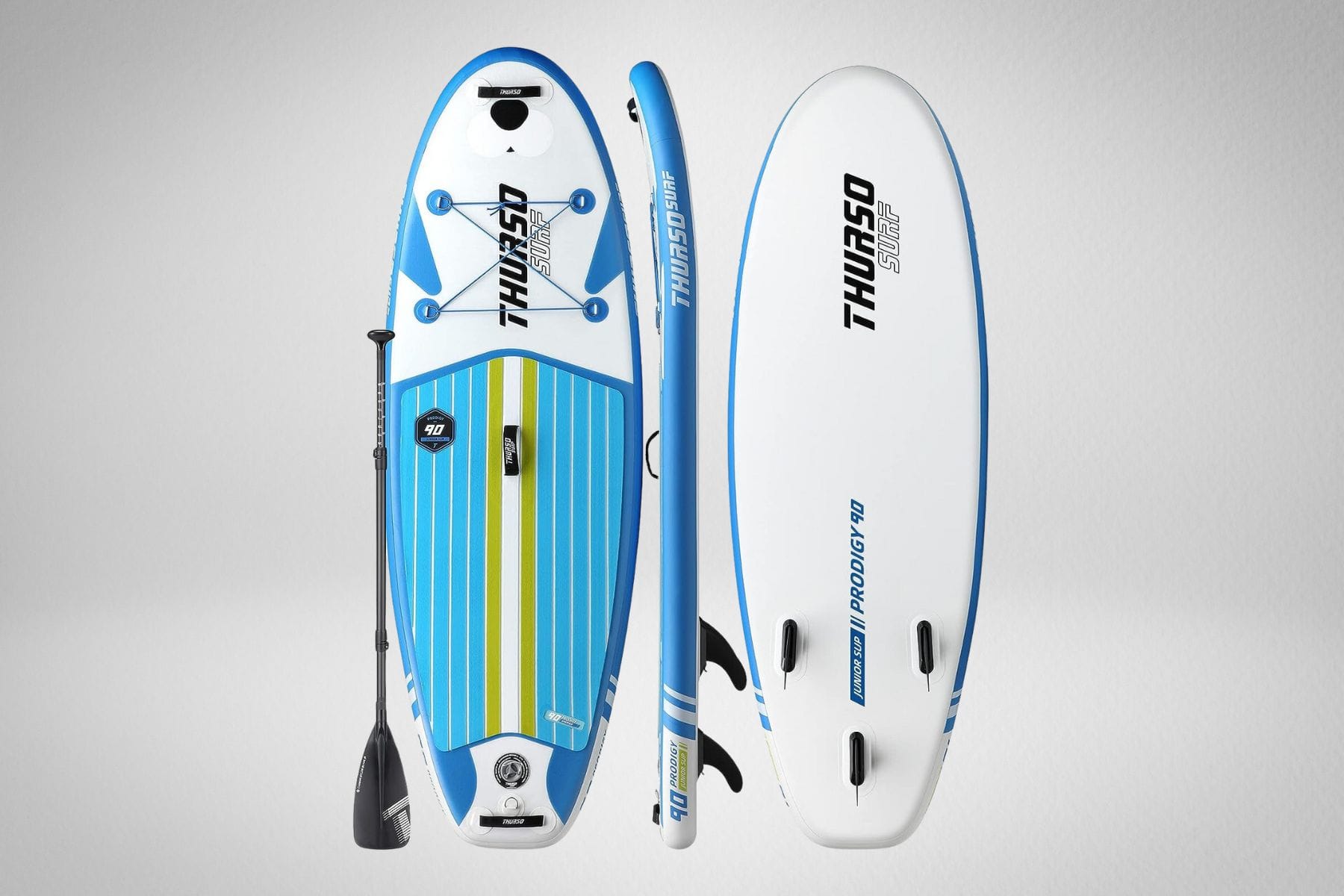
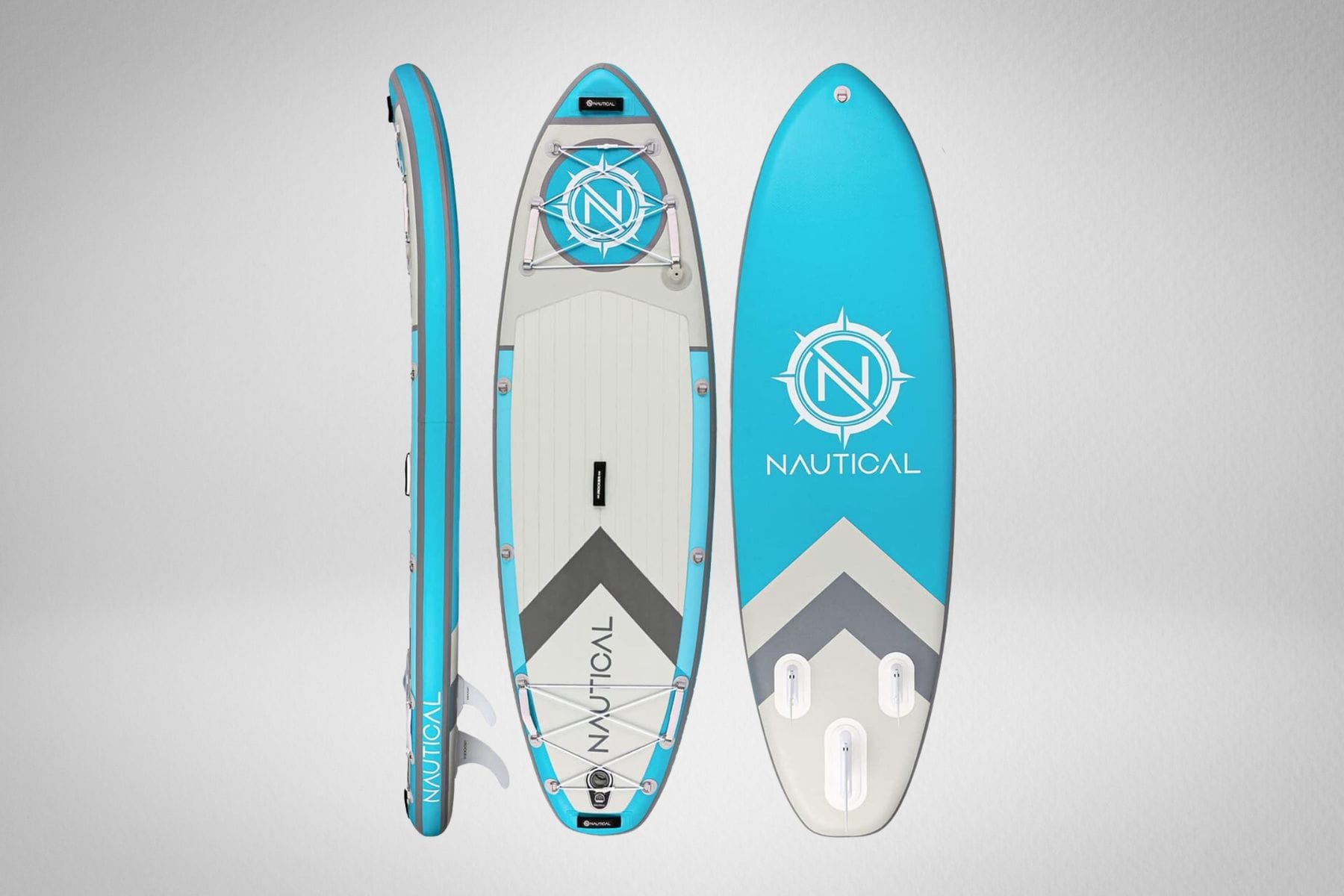
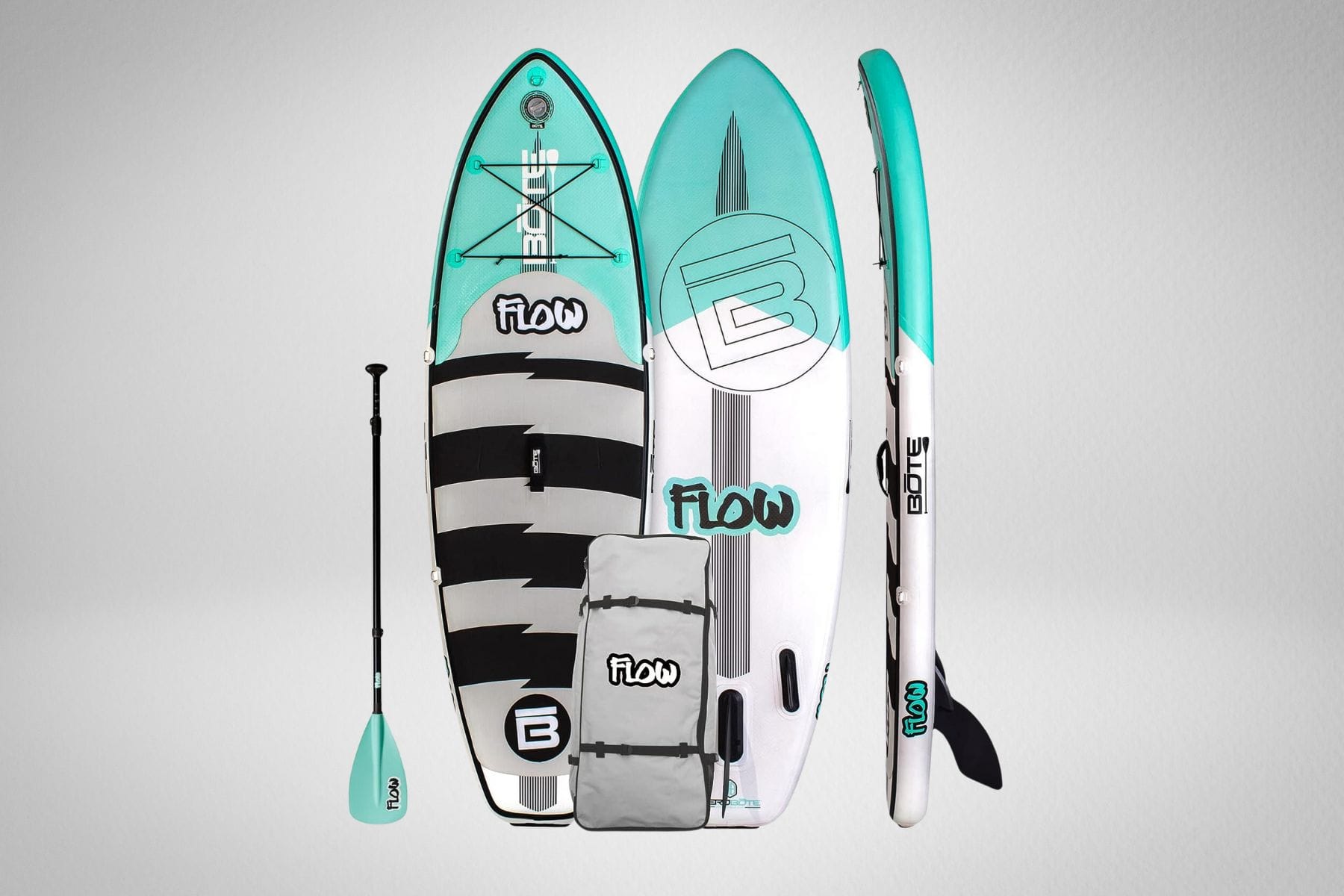
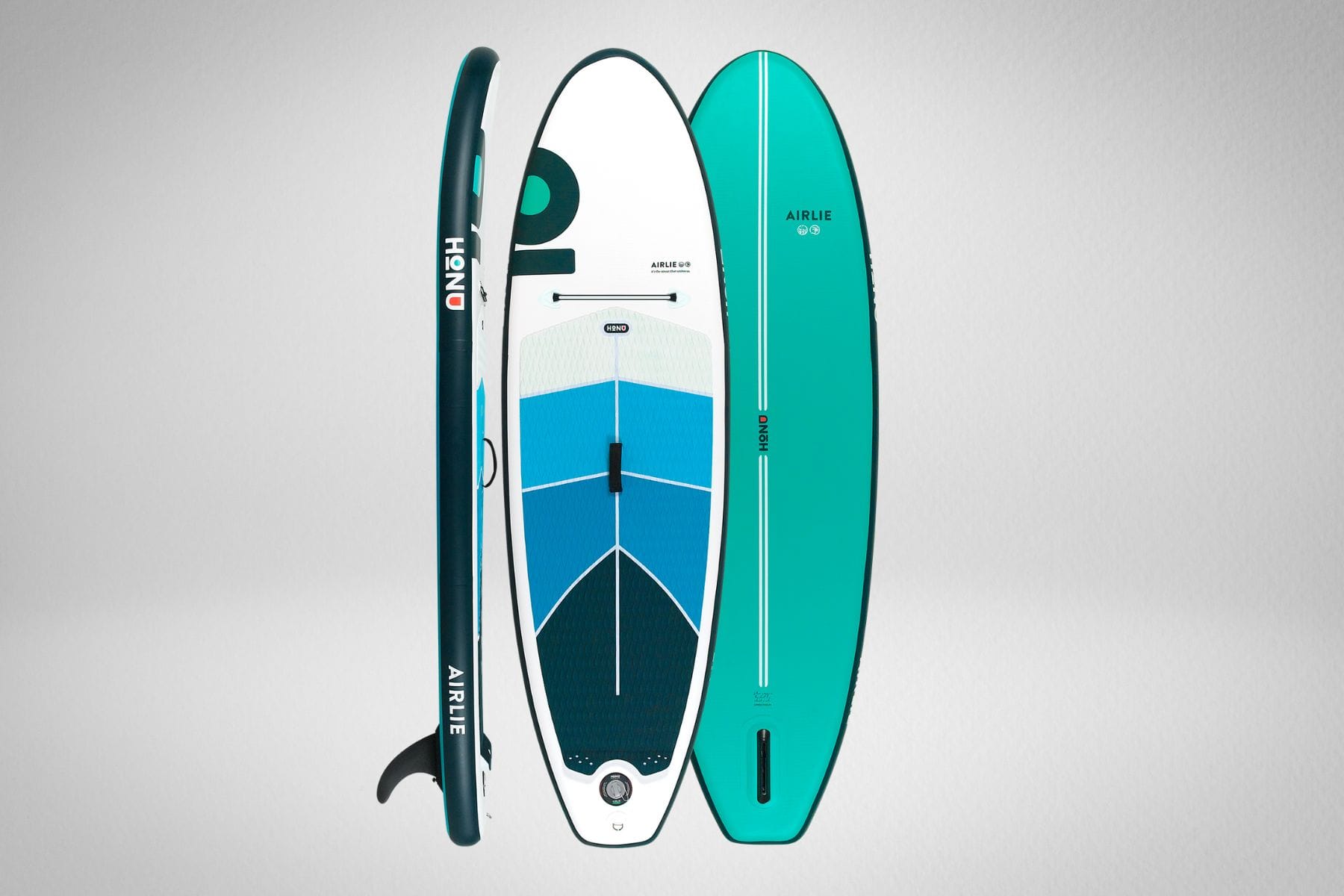
Even more than adults, kids want to like the way they look on the water. For this reason–give them the chance to pick what they like best. Most boards have a variety of color options, and all vary in what bonus features are adding to the look of the board. The Gili Sports Cuda, for example, is like the SUV of kids SUPs–part of its look is utility. Whereas the Honu Airlie has the minimalist, streamlined look (and performance) of a sports car.
Thankfully, most boards have at least two or more color options, too. So, give kids a chance to decide what look they’re going for.
Weight and Capacity of Kids’ Paddle Boards
The best kids SUPs strike the balance between being lightweight to carry and rigid enough to support as heavy a paddler as possible. In most cases, they prioritize a lightweight design under 20 lbs. or less, and offer weight capacities up to 150 lbs.
The reduced weight allows kids to carry and maneuver the board with confidence without feeling overwhelmed. The weight capacities are specifically tailored to the size and weight of children, and need to be kept in mind when shopping to ensure that the board remains stable and buoyant, providing a safe and secure platform to explore the water.
As essential factors to ensuring the best paddle boarding experience, both these features should be listed in each board’s “Specs” or “Technical Details” section. Make sure these numbers meet your young paddlers needs before making any purchases.
Features and Accessories of Kids’ Paddle Boards
While most kids’ paddle boards are simple to reduce unnecessary obstacles, there is still extra gear out there to help make their experience easier. Accessories and essentials like PFDs, leashes, whistles, tow-ropes, and dry bags (which fit in bungee cargo areas) all can add safety and protect kids’ stuff on the water.
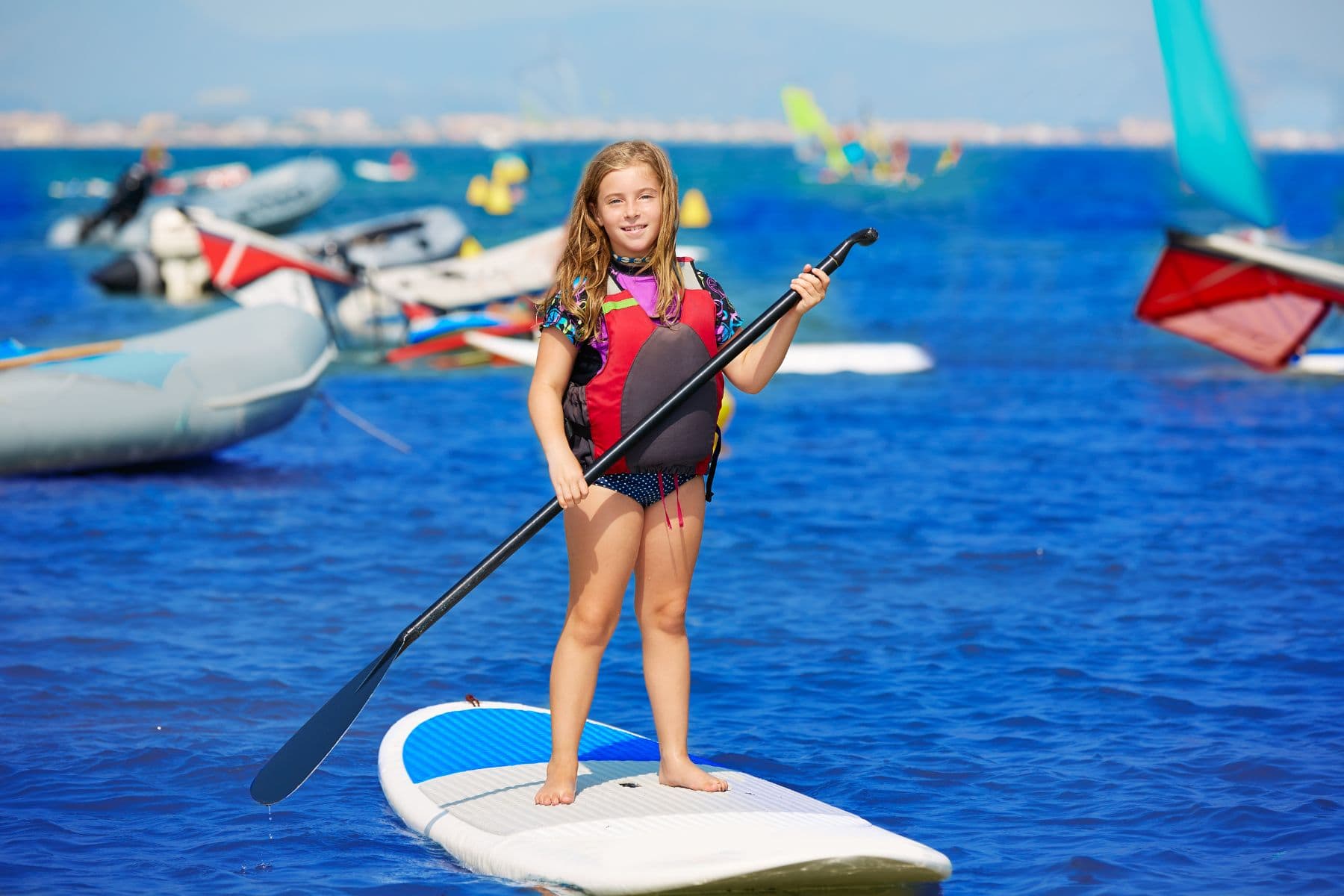
Be sure your youngsters are leashed to their boards and wearing coast-guard approved PFDs. Any other accessories are simply a bonus.
A good paddle and pump can be game-changers for ensuring your kids have fun on the water. Clunky and heavy paddles may be liable to sink (and disappear) on your rider, or make their day on the water exhausting. Slow inflation processes can do the same. Quality versions of these items are worth the expense, so don’t hesitate to buy them separately from what comes in your paddle board’s kit.
Handles also make a difference. Unless a board is really lightweight, like the Honu Airlie, your child will likely need at least one handle on the tail or nose of the board to either tandem carry, or drag it into the water. The more handles on your potential SUP purchase, the merrier.
Camera mounts are also great for kids serious about making a name for themselves in the sport, or simply sharing their experiences. They aren’t necessary, but talk to your child about that option, as mounts also allow for other accessories like fishing-rod or cup holders. The possibilities are abundant.
Durability of Kids’ Paddle Boards
With casual use, the average SUP can last eight years or more, with some companies offering lifetime warranties. A good paddle board should last a long time.
Inflatable SUPs are all constructed out of heavyweight PVC, but some will endure more than others. Look for dual-layer constructions and reinforced rails. Rails take the brunt of the damage during transport, bumps with obstacles/debris, and dragging along shore. An inflatable will usually be lighter and easier to store/transport, but may not offer the same longevity as a hardboard.
Hardboards, specifically budget-friendly plastic models, can take a beating over a number of years, and still perform okay as a kid’s technique improves. However, they can be trickier to store and transport without a garage or car, and will be heavier for kids to carry on their own, limiting their independence.
If we had to pick, we’d recommend inflatables. They are lighter to carry and easier for kids to manage, and softer/safer when dropped or fallen on, making the SUPing experience more forgiving overall.
Cost Effectiveness of Kids’ Paddle Boards
Kids’ paddle boards can often be the cheaper option for parents and guardians–especially for ages 10 and under. These boards are typically priced more affordably compared to adult-sized paddle boards, considering their smaller size and reduced materials required for construction.
Additionally, since children tend to outgrow their equipment relatively quickly, some quality brands consider this and price for a more economical approach. Rather than purchasing an adult-sized board that a child may struggle to handle, lower prices for kids SUPs provide a suitable and cost-effective solution.
Two ensure the most cost-effective purchase, consider a paddle board size that kids can grow with for two years or more. Some kids’ paddle boards border on adult hybrid sizes and can carry up to 150-200lbs. These could last your young SUPer into adulthood–a great long term investment.
Many kids’ paddle boards are designed to be durable and sturdy, ensuring longevity and the ability to withstand the rough handling that is often associated with younger users. This durability, combined with the lower initial cost, makes them a practical choice for families looking to introduce their children to the joys of paddleboarding without breaking the bank.
Kids’ Paddle Boards vs. Adult Hybrids
Kids’ Paddle Boards
Kids’ SUPs and adult hybrid SUPs have some similarities, but are ultimately designed with different goals in mind. Kids’ paddle boards are tailored to accommodate the smaller size and strength limits of children. They typically can’t handle a rider over 150 lbs., and feature reduced dimensions, weigh less, and may be narrower, allowing young paddlers to handle and maneuver the board more easily. These boards typically have softer edges and a lower volume to enhance stability and provide a more forgiving experience for beginners.
Adult Hybrids
Adult hybrid SUPs are designed to cater to a broader range of users, including beginners and more experienced paddlers. They offer a balance between stability and performance. This allows adult paddlers to maintain stability while enjoying improved glide and maneuverability. Their designs may also veer from an all-around style, moving towards more pointed, touring shapes. Hybrid SUPs will often have more features than kids’ SUPs, too– like bungee cords, tie-downs, and accessory mounts to accommodate various activities like fishing, yoga, or touring.
The Best Choice for Kids’ Paddle Boards
Prices for adult boards will usually be higher than kids’ paddle boards. But this is of course dependent on brand and quality. Depending on who in the family plans to use the board–whether adults plan to share the paddle board with kids, for example–can also make an adult hybrid the best move.
The main thing to consider when deciding which route is right for you is size and age. Kids aged 4-9 will likely need a smaller, kids SUP tailored specifically to them. Forcing them to work with more may turn them off from the sport. Whereas ages 10 and up may be able to handle either larger kids boards OR adult hybrids that provide plenty of growing room.
The more time you can get out of your paddle board, the more cost effective it becomes. Growing room is ideal for achieving this, so when shopping, think at least two to three years ahead.
Let Them Help Choose Their Paddle Board
When it comes to purchasing a kids’ paddle board, several key factors should be considered. First and foremost: prioritize safety and stability, ensuring that the board is designed to provide a secure and confidence-building experience for young paddlers.
The cost-effectiveness of kids’ paddle boards makes them a practical choice for families, as they offer affordability without compromising on quality. But also consider the potential for growing room. The weight and weight capacities of kids’ paddle boards are crucial considerations, ensuring that the board is lightweight for easy handling while offering appropriate support for the child’s size and weight. The greater weight capacity a board offers, the more years a kid will be able to grow with it.
The performance of kids’ paddle boards may not match that of adult boards, but they will certainly meet the needs of young riders, promoting skill development and enjoyment on the water. You can be confident when giving them the freedom to play around! Encourage them to practice falling, too– mistakes are the key to growth.
By carefully assessing all of the above factors, you can make an informed decision and choose the perfect kids’ SUP that combines safety, affordability, performance, and suitability for your child’s paddle boarding adventures. Finally, involve your kids in the process. It is a great way to get to know them more closely, empower their sense of independence, and bond over starting them into the amazing sport of SUP!