What is the Candela C-8?
The Candela C-8 is a 28-foot, 6-passenger electric daycruiser with two retractable hydrofoils under the hull. The boat sits on the water like any displacement craft until 16 knots, when a flight-control computer extends the C-Foils, lifts the hull clear of the water, and the entire vessel rides on two carbon-fiber foils about a meter below the surface. Drag drops by roughly 80 percent against an equivalent planing hull, which is the only reason a 69 kWh battery and a 50 kW pod motor can produce 22-knot cruise speeds for 57 nautical miles between charges.
The hull is carbon fiber, dry weight is 1,950 kg, and the drivetrain is a single submerged C-Pod motor partnered with a Polestar-supplied lithium pack. Top speed is 27 knots, not the 30 some early press claimed. The DC trim adds the 135 kW fast-charge port, which is the version most buyers should target. Standard charging is 11 kW AC, roughly 6.5 hours from empty.
Who is it good for?
Households running 30 to 50 nautical mile day loops in flat to lightly chopped water are the core buyer. Stockholm archipelago commuters, Florida intracoastal runners, San Francisco Bay weekenders, and Pacific Northwest sound cruisers all fit. Operators who care about quiet running and zero-wake operation, particularly anyone moored in a no-wake zone or running through manatee and seal habitat, get a boat that produces almost no surface wake at foiling speed.
Buyers who already drive a Tesla or a Polestar and want the same drivetrain experience on water tend to acclimate fast. The flight-control system handles foil management, so the helm is essentially a steering wheel and a throttle. Owner reports are consistent that a first-time helmsman can run the boat steadily inside 10 minutes.
Who is it not good for?
Shallow-flats anglers and skinny-water cruisers should look elsewhere. Foiling needs roughly 1.5 m of water column and clean flow. Weeds, kelp mats, and floating debris all interrupt foil function and force the boat back onto the displacement hull at 6 knots. Buyers who tow between lakes most weekends are also wrong-targeted because the trailer setup is heavy and the foils need careful handling on the ramp.
Big-water offshore operators get a hard ceiling at roughly 1 m sea state. The C-8 will run through that, but anything bigger and the foil ventilates, the boat drops, and you finish the run at displacement speed. If your typical day involves 2 to 3 foot wind chop with the occasional 4-foot wake, this is not the right hull.
Long-range cruisers running 100-plus nautical mile days will run out of battery before they run out of daylight. Even with fast-charging on shore, the infrastructure for 135 kW DC marine charging is concentrated in a few European harbors and a handful of US East Coast marinas. Plan accordingly.
Pricing
A new C-8 DC lists at roughly $400,000 in the US for 2026 model year, with the open and the cabin variants pushing $440,000 to $480,000 once you load the upgrade list. European pricing for the same boat runs around 330,000 to 390,000 euros depending on trim and tax regime.
The 2023 first-production hulls have started showing on the brokerage market at around $300,000 to $330,000 with low hours, with the better-equipped 2024 boats at $325,000 to $355,000. Demo units direct from the factory sit in the same band but include a refreshed warranty, which is worth real money on a boat this new to the market.
What works
- Foiling efficiency is real. At 22 knots cruise the boat pulls roughly 0.8 kWh per nautical mile, which is the kind of figure no other 28-foot powerboat can post.
- The ride above the wave train is quiet and dry. Owners running in 1 to 2 foot chop report a helm that stays drier than a planing 28 in the same conditions.
- Build quality at the cabin and helm matches the asking price. Hand-stitched upholstery, carbon trim, twin Garmin GPSMap displays, and a clean dash layout.
- Active flight control corrects roll and pitch faster than a human can and limits the boat to safe turn angles automatically. First-time helmsmen do not feel out of their depth.
- DC fast-charging at 135 kW takes the pack from 10 to 80 percent in under 30 minutes when you can find the infrastructure, which makes a 100-plus mile day genuinely possible.
What doesn't
- Foil actuators are the recurring service item. The early 2022 production batch had a port actuator stall that Candela has since superseded, but service intervals on the actuator and the six height sensors are tighter than any conventional outboard.
- Lake weeds, kelp, and floating debris will lift the boat off the foils. Owners in weedy lakes report regularly clearing the foils between runs.
- Hitting a submerged log or rock will shear the foil at a designed break point. The hull is spared and the boat returns to displacement mode, but a replacement foil set is not cheap.
- Service networks outside Sweden, a handful of US East Coast marinas, and a few European hubs are thin. Plan your service trips around the dealer footprint.
Year-by-year notes
2022 first hulls had the port-actuator stall issue documented in early sea trials. Production boats from late 2022 onward use the updated actuator batch. If you find a true 2022 production hull on the used market, confirm the actuator has been swapped under warranty.
2023 model year settled the build. The DC fast-charge port became standard on most spec sheets and the cabin variant joined the line. The flight-control firmware also went through several over-the-air revisions through 2023, smoothing the takeoff transition between displacement and foiling.
2024 added refinements to the helm software, a quieter motor mount, and revised upholstery options. No mechanical changes.
2025 and 2026 model years have been incremental. Candela has put more development effort into the larger P-12 platform, so the C-8 has stayed close to the 2024 spec.
Cost of ownership
Annual operating cost on the C-8 sits well below an equivalent gasoline 28-footer. At typical residential electric rates a full 69 kWh charge costs roughly $10 to $14, and a full-day run uses one to one and a half packs. Fuel cost over 100 hours of running is in the low hundreds rather than the low thousands.
Insurance premiums are higher than a comparable gasoline boat because the replacement value is higher and the parts inventory is thinner. Budget 2 to 3 percent of hull value annually.
Service is the line that catches first-time owners. Annual flight-control inspection, height-sensor cleaning, actuator service, and foil hardware checks are not optional, and the bill from a Candela-trained technician is not small. Plan $4,000 to $7,000 a year for routine service plus a foil-set reserve fund for impact events.
Battery degradation has been slow on the 2022 to 2024 fleet. Owner data shows roughly 5 percent capacity loss across the first three years, which tracks with the Polestar pack warranty. Plan for a major battery service event sometime in the 8 to 10 year window.
Best year and trim to buy
The value buy is a 2023 or 2024 DC hull with the 135 kW fast-charge port, the post-recall actuator batch, and a documented service history. Asking prices in the $310,000 to $345,000 band are reasonable when low-hours examples come up.
Verify three things before close. First, confirm the actuator service log and any battery health report from a Candela technician. Second, sea-trial the boat through the takeoff transition at 14 to 18 knots to confirm the foils deploy and hold lift cleanly. Third, check the height-sensor housings under the hull are clean and undamaged. These are the three failure modes that turn a clean used boat into an expensive one.
The open-deck DC layout is the volume seller and the easiest to resell. The cabin variant is more useful for overnight stops but trades stowage for the cuddy.
Alternatives
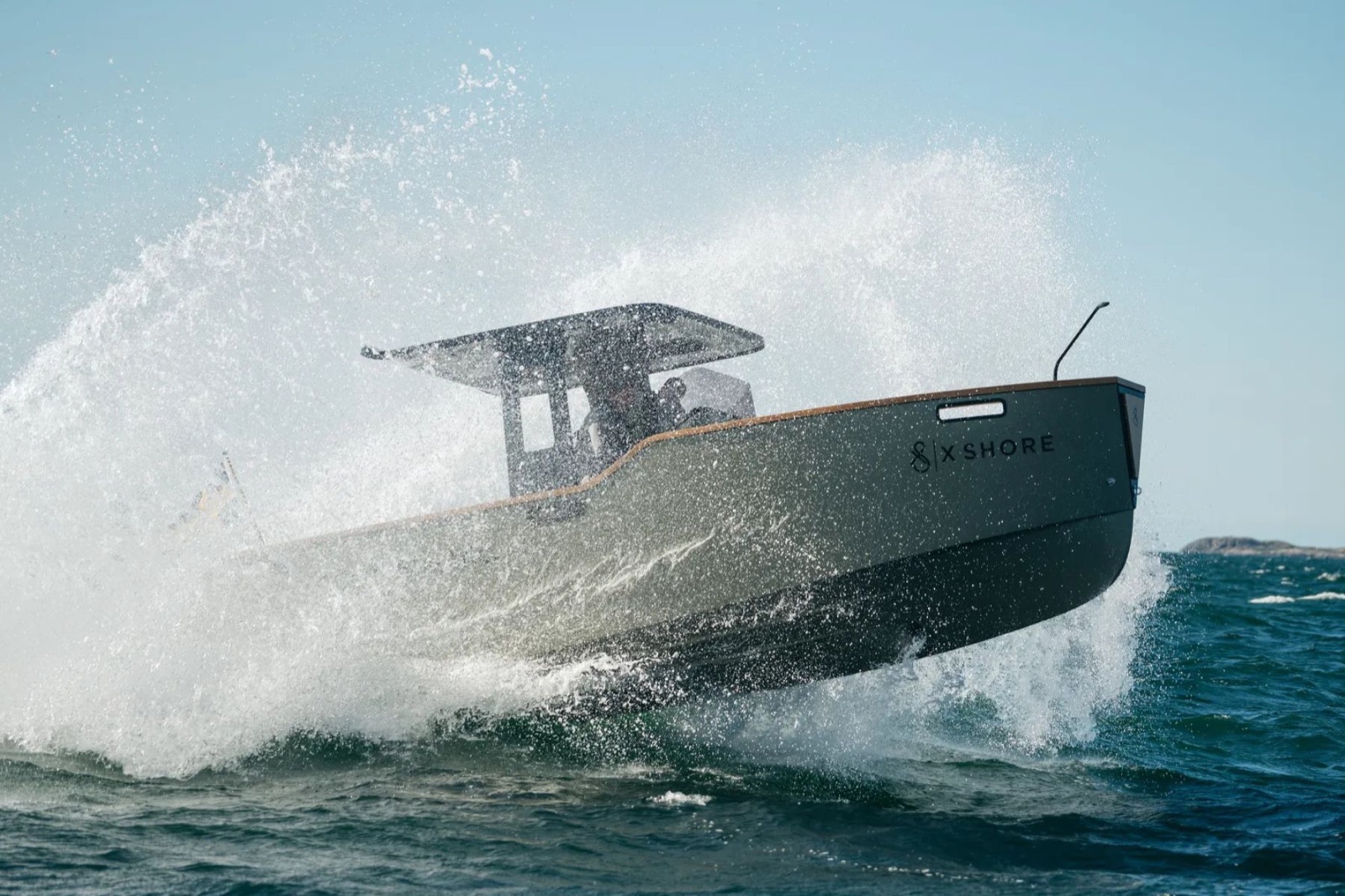
If foiling sophistication is not the point and you mostly want quiet electric running at 20 knots over short loops, the X Shore Eelex 8000 has half the cruise range and a simpler service profile at a lower price. If you need range and weather flexibility more than electric running, the Axopar XC Cross Cabin offers a gasoline drivetrain and a similar all-weather layout. If your taste runs to traditional premium daycruisers and the technology is not the draw, the Chris-Craft Launch 27 is a comparable-length boat with classic design and a conventional sterndrive.