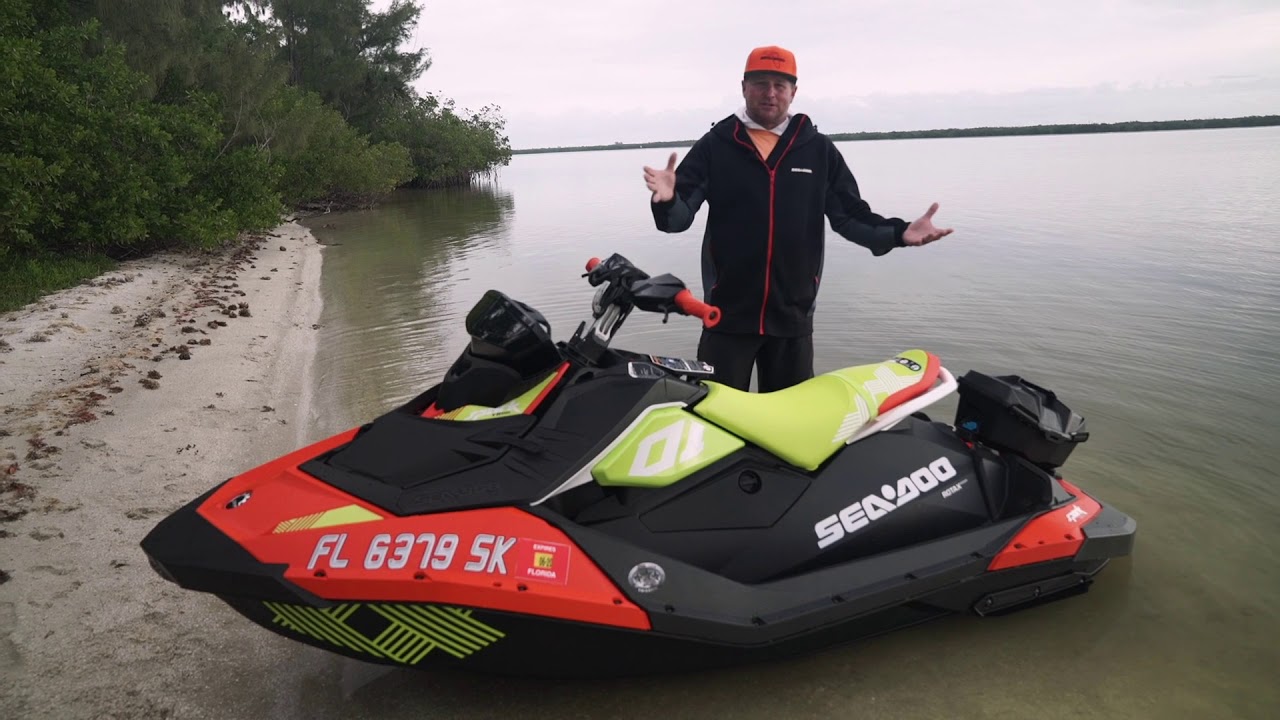
The Sea-Doo Spark Trixx is a cheaper, lightweight, freestyle jet ski. True to its name, it does tricks no other watercraft can, including riding on its tail. It is best suited to lakes and rivers, it is easy to ride around, and the trick-focused setup rewards a more experienced rider. The key feature is the Extended Range VTS (Variable Trim System), which is how it does wheelies, along with adjustable handlebars and a light frame that helps control during daring moves. It is nimble and agile, and hard to hold onto when you are spinning donuts.
Performance
The Trixx uses a 90 hp Rotax engine, and with the low weight the speed and acceleration are good for the class. It gets to 20 mph quickly, then the push past 40 is more gradual, topping out around 48 to 50 mph stock. It is a good choice for short hauls and playing in the waves. The control system is well equipped, with a customizable digital display, a brake and reverse system, and a finger throttle, start/stop button, and boost switch you can set up to your liking.
Maneuverability and safety
The Trixx is built for maneuverability. The lightweight, high-performance hull is easy to transport, and at 428 lb for the 2-up it is simple to tow. Safety kit includes the brake and reverse system, a reliable bilge pump (the pump that clears water from inside the hull), and an anti-theft security system.
Trixx-ing it out
The V-Tech VICTORY turbo kit is the big upgrade, engineered to push the engine past 100 horsepower. It includes an IHI turbocharger, a wastegate with a 7.5 psi spring, a MAP sensor, and injectors, and it lifts the rev range to 8,800 to 9,000 rpm for top speeds around 61 to 63 mph. The Trick Handlebar adds grip and control for spins and flips. A seat extension improves stability, though the Trixx still will not win awards for comfort in chop. The LinQ retractable boarding ladder helps a lot, because the Spark Trixx is not the easiest ski to climb onto from the water, and the Speed Tie system gives you a secure way to tether at a dock.
Is the Trixx worth the treats?
Its closest rival is the Yamaha JetBlaster, built to take on Sea-Doo's rec-lite model. The JetBlaster can trim up and stand on its tail for a short time, but it is around 100 lb heavier and feels intended for more than just fun, and it holds more rider weight. The Trixx is shorter and lighter, and the base engine is less potent unless you upgrade. Storage is a 0.42-gallon glovebox, so there is barely any. On price, the Trixx base is about $1,700 less than the JetBlaster, but that gap shrinks fast once you add accessories. The turbo kit alone runs over $3,500. When I priced one out with the accessories I would want and the turbo kit, I was over $14,000. So whether the Trixx is worth it depends on what you want from a ski, and for a thrill-seeking rider it is solid value.
Do we recommend it?
Yes, for riders who want a jet ski built to excel at freestyle tricks and stunts. The handling and the BMX-style fun make it a compelling pick for an exciting day on the water. For leisurely cruising or touring, other models will suit you better. The right choice comes down to your preferences, how you plan to use it, and how into freestyle riding you are.