Origin and ownership
Axopar was founded in 2014 by Jan-Erik Viitala and a team of former XO Boats veterans. The founders had spent years building aluminum sport boats at XO and saw an opening in the European market for a fiberglass adventure boat with the same Scandinavian-design language: clean, serviceable, and built around the cockpit rather than the cabin.
The brand grew quickly. By 2018 Axopar had become one of the fastest-growing European boat brands, with the 28 platform leading sales across the Nordics, UK, Netherlands, and the Mediterranean. The Brabus partnership, launched in 2017, took the 28 platform into a premium-styled variant that pulled in buyers from the German and Swiss markets.
Ownership remains private and founder-led. Production has expanded from the original Finnish facility to a second plant in Poland, which builds the 22, 25, and 28 hulls; the 37 and 45 stay in Finland. The factory ownership structure has been stable, which is unusual at this growth rate.
Design philosophy
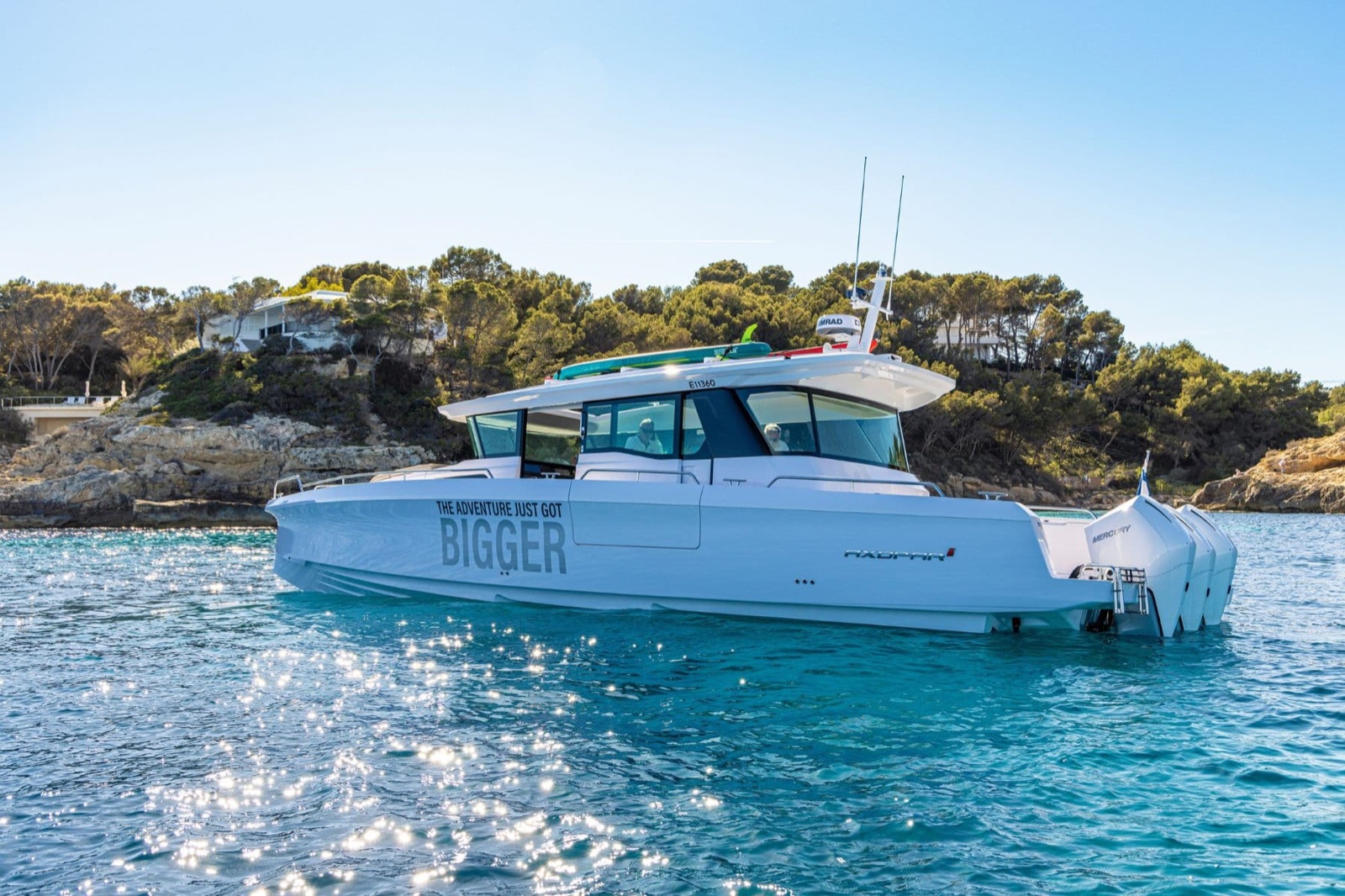
The Axopar argument is the stepped hull plus the working cockpit. The twin-step hull form (single-step on the 22) holds planing speed at low fuel burn, gives a tighter turning circle at speed, and dries out faster after a wet run. The cockpit is the boat's primary living space, with the cabin sized for sleeping and weather shelter rather than full-time living.
The cabin-to-cockpit ratio is the line that separates Axopar from Nordic Tug, Beneteau Antares, or Jeanneau Merry Fisher. Those brands prioritize the cabin volume; Axopar prioritizes the cockpit and accepts a smaller cabin in trade. Buyers who want a long-distance cruiser with a saloon should cross-shop those brands. Buyers who want an adventure boat that overnights well should stay with Axopar.
Mercury Verado V8 (and V12 on the 45) is the dominant rigging. Yamaha and Suzuki are not factory options. The Mercury relationship is deep and the factory tuning is set up around the Verado torque curve, which simplifies parts and service planning across the global dealer network.
Terminology you should know
- T-Top
- Open deck with a hardtop overhead. No forward cabin, day-boat use.
- Sports Cabin
- Semi-cabin with a small forward berth, used for weather shelter rather than overnight.
- Cabin
- Full forward cabin with overnight berth and head, classic walk-around layout.
- Cross Cabin
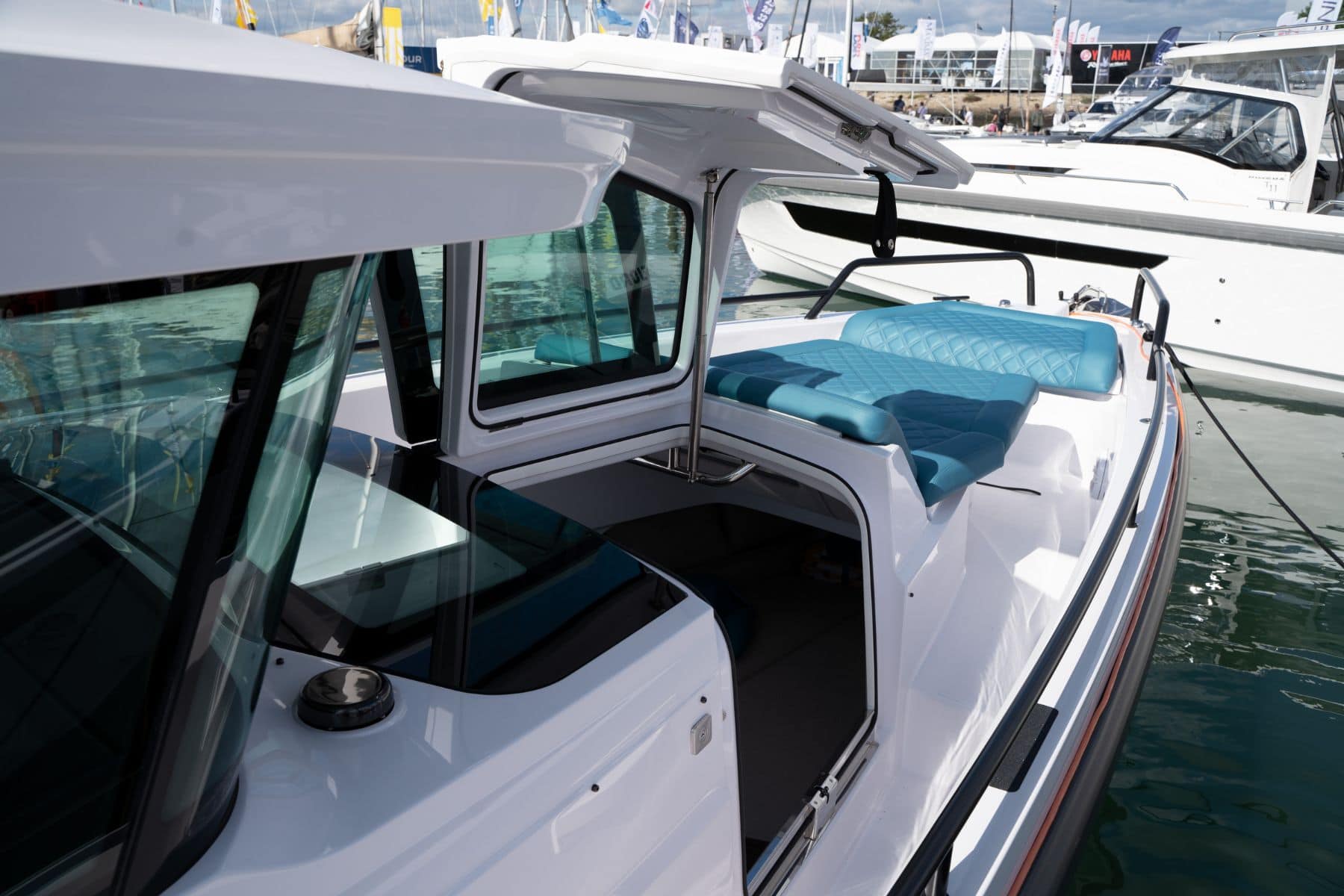
- Rear cabin walk-around. The cabin sits behind the helm with side decks running forward, opens up the bow as a usable seating and casting platform.
- Brabus Edition
- Premium-tuned variant developed with the German tuning house Brabus. Cosmetic and trim package, not a hull change.
- Stepped hull
- Hull form with a transverse step (or two) in the running surface. Reduces wetted area at planing speed, lifts the bow, drops fuel burn at cruise.
Used-market notes and known issues
The 2021 hull cutover is the most important screen for any used Axopar shopping decision. Pre-2021 hulls used a first-generation stepped form. The 2021 redesign across the 28 and 37 platforms tightened the step geometry and dropped two-to-three percent off cruise burn at 25 knots. Used market trades pre-2021 hulls at five-to-ten percent below post-2021 hulls of the same age.
Pre-2020 forward cabin window gaskets collect salt and weep. Two service visits in the first season are normal on used 2018 to 2020 hulls. Post-2020 gaskets are improved, the issue is a known and inexpensive fix.
Mercury Verado 300 V8 cylinder-wall corrosion pattern surfaces on 2018 to 2021 rigs without documented fresh-water flush history. Inspect on any used hull before purchase. Annual flush is the mitigation and adds maybe an hour of seasonal owner work.
Joystick rigging on twin-Verado 28 and 37 hulls can show slow-response lag if the harness ground is corroded. Owner-mechanic forum threads document the fix as a 30-minute reseat at the helm bus. The 29 platform updated the electrical bus and resolves the issue at design level.
European dealer coverage is dense across the Nordics, UK, Netherlands, and Mediterranean. US coverage runs through Nimbus Boats USA and is thinner than Grady-White or Pursuit. Service for Mercury Verado V8 engines is independent of the dealer in most markets, which softens the dealer-density gap.
Resale
Axopar resale has been one of the strongest in the European adventure-boat segment across 2021 to 2024 hulls. Three-year depreciation sits at 10-to-15 percent for clean 28 Cross Cabins, which is unusually tight. The 45 Cross Cabin is too new to have a clean five-year resale picture, but the early data on 2022-2023 hulls trades inside the segment leader. US resale is softer than European, reflecting the thinner dealer network and a smaller used-buyer pool.
Where Axopar fits
Buyers cross-shop Axopar against Beneteau Antares and Jeanneau Merry Fisher in Europe, and against Grady-White and Pursuit in the US. The argument for Axopar is the cabin-on-a-small-hull form: a 28-foot hull that gives you a working cabin, a usable cockpit, and a planing speed that does not punish the fuel bill. Buyers who want a saloon and a third stateroom should look at Nordic Tug or Sealine. Buyers who want fishing-first should look at Grady-White or Pursuit. Buyers who want fast multi-day adventure cruising are why Axopar exists.