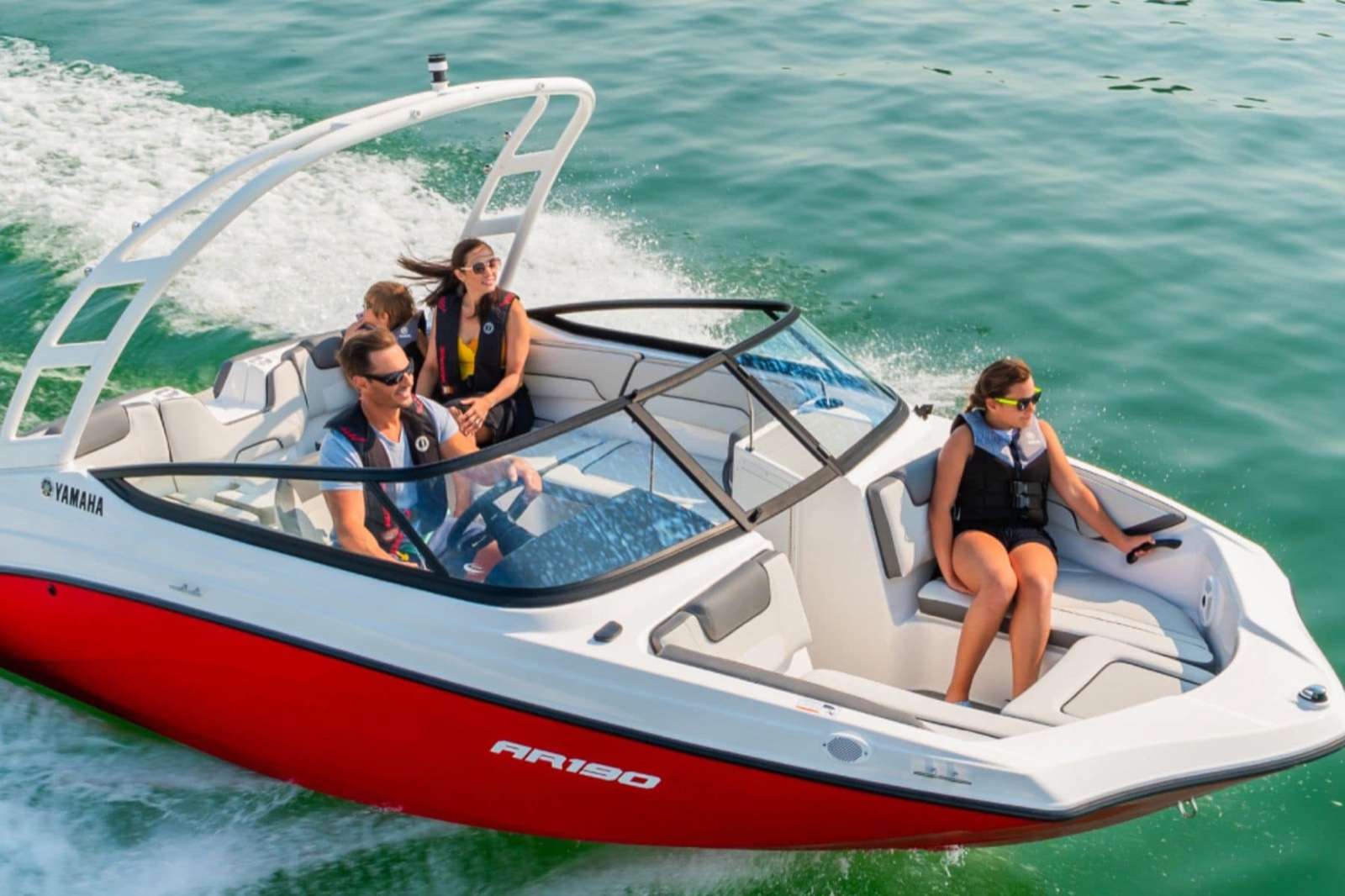
Origin and ownership
Yamaha Jet Boats was founded in 2000 as Yamaha Motor Corporation's US sport-boat operation. Production has stayed at the Kennesaw, Georgia facility throughout. The division is separate from Yamaha Outboards.
The 242 platform launched in 2007 and reset the segment with a wider beam. The 2017 redesign across the 252 platform tightened the hull form and improved wake-sport capability.
Design philosophy
Yamaha jet boats use twin Yamaha 1.8L marine jet drives across the entire current lineup. No outboard or sterndrive variants. The supercharged variant adds 50 to 100 horsepower at the top of the lineup.
Hull forms across the lineup run flatter than non-jet sport boats (the jet drive does not need a deep V to clear a propeller). Wider beam than non-jet equivalents.
Used-market notes and known issues
Pre-2017 252 platform has narrower beam, tippier at rest. Used market trades pre-2017 hulls at a 15 percent discount.
Jet pump impeller wear at 200 hours on hulls in shallow rocky water. Replace as preventive.
2018 to 2020 supercharger maintenance is 100-hour factory service item. Documented cost.
Reverse-bucket wear on the 195 platform at three years on heavily-used dock-in/dock-out hulls.
Resale
Yamaha jet-boat resale runs mid-pack. Three-year depreciation sits at 20 to 25 percent on the 252 platform. Five-year depreciation runs 30 to 35 percent. Smaller used-buyer pool than sterndrive comparables.
Where Yamaha Jet Boats fits
Buyers cross-shop Yamaha jet boats against Bayliner VR / Element, Chaparral H2O, Scarab jet boats, and Sea Ray SDX. The argument for Yamaha is the price-per-feature equation, the shallow-draft jet form, and the wide-beam family layout.