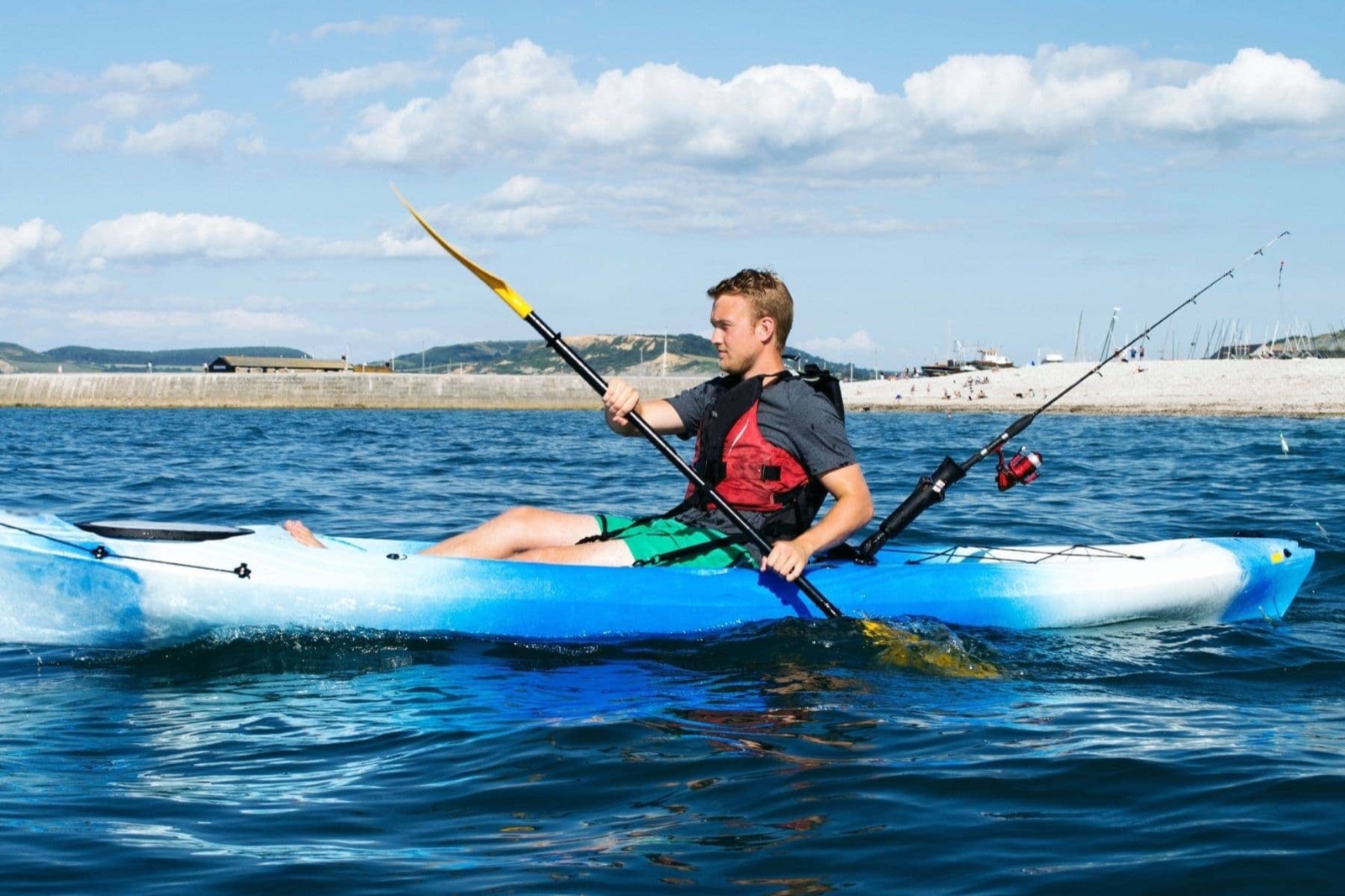
The Radar 135 is the modular argument in this segment. The Helix PD prop drive drops in for pedaling, lifts out in 15 seconds for paddling, and the kayak is genuinely capable in either mode (most pedal-first kayaks paddle poorly, the Radar paddles well). The 35-inch beam standing platform fits most boots, the AirPro Hi-Lo seat is comfortable in the high or low position, and the price slots between the Old Town PDL 120 and the Native Slayer Propel 13. The trade is on resale, Wilderness Systems holds value 5-8 percent harder than Old Town. We tested a 2023 Radar 135 on the Florida Keys flats in February 2025, paddled to push pole spots, dropped in the Helix PD for distance covering between spots, lifted it out again at the next flats. The modularity is the differentiator and works in real fishing scenarios.
For the full scoreboard, what works versus what does not, year-and-trim guidance, and pricing as of April 2026, see our roundup Best Pedal Fishing Kayaks for Standing Anglers.
What works
- Helix PD drive drops in for pedaling, lifts out for paddling in 15 seconds
- Paddles well as a pure paddle kayak, most pedal-first kayaks do not
- AirPro Hi-Lo seat works in high or low position, dual-purpose flexibility
- 35-inch beam standing platform fits most anglers without standing fatigue
- $3,500 new puts modular pedal-or-paddle capability at mid-tier pricing
What does not
- Helix PD drive at 17 lbs adds to the boat-plus-drive weight calculation
- Wilderness brand is less standing-angler-associated than Hobie or Native
- Resale 8 percent harder than Hobie at three years
Pricing, April 2026
- New: $3,499–3,899 new (2026 MSRP)
- Used: $2,200–3,200 (2021–2024 hulls)
Long-form review
The full Wilderness Systems Radar 135 long-form review republishes in July 2026 with on-the-water testing notes, a 6-dimension scorecard, fuel-burn or charge-time numbers, and the trim and year we would buy. Until then, the roundup link above is the decision-grade read.