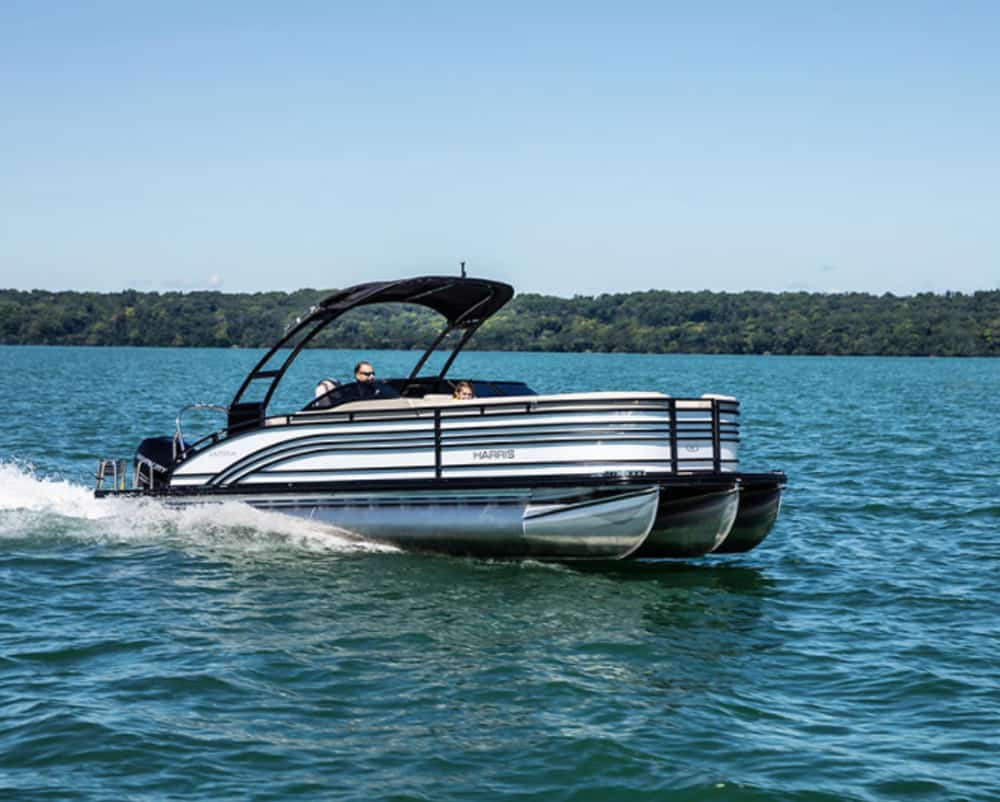
The Pontoon Boat Buyer’s Guide
Now that you’ve gone through our list of the best pontoon boats money can buy (in 3 price ranges), go deeper into the subject with our guidelines to choosing the right pontoon boat for your needs.
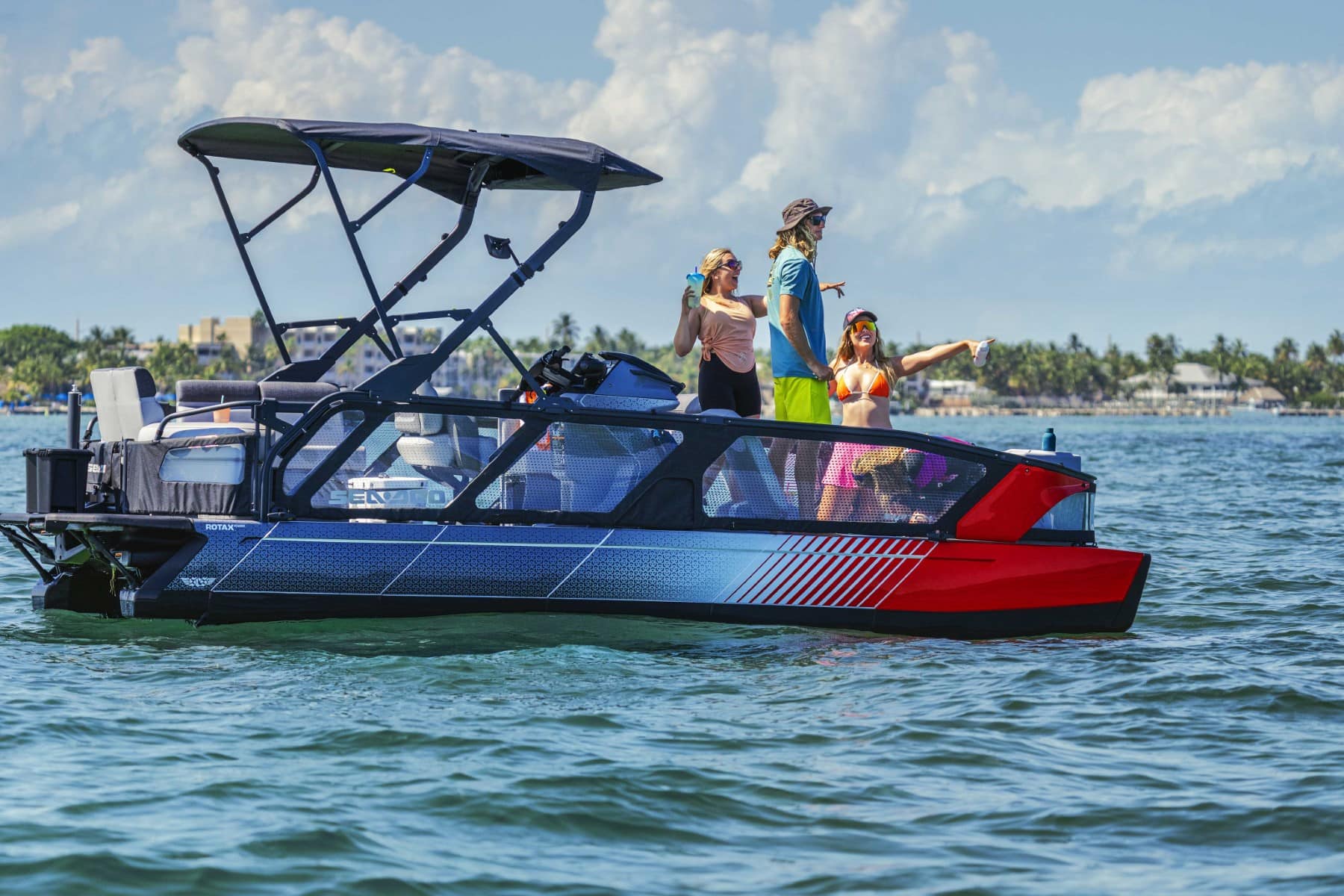
As newer models come into production and new players, like Sea Doo with their Switch pontoon, the market for these is fast changing.
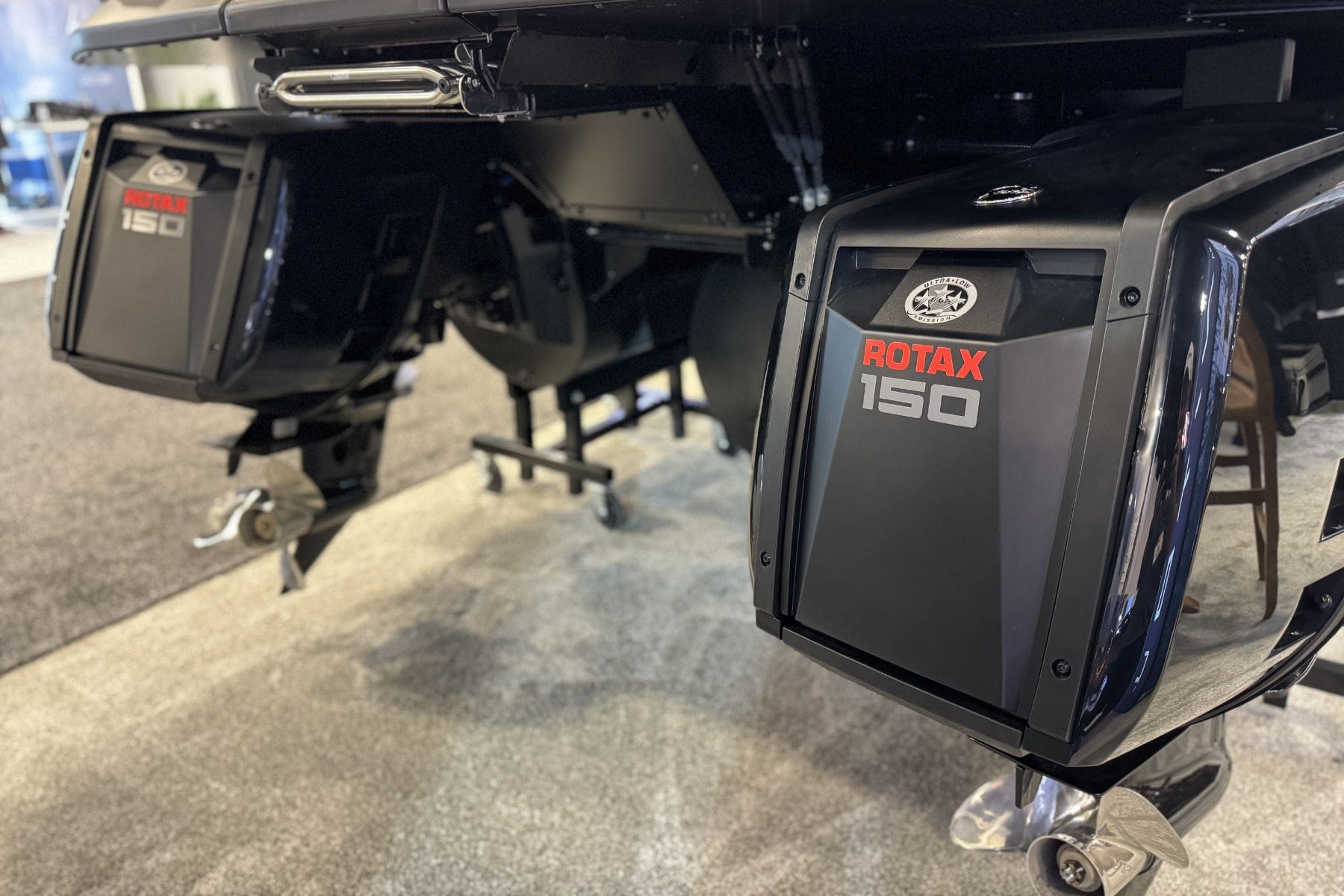
BRP’s other watercraft brand, Manitou is leveraging Rotax motors to take advantage of innovation in the outboard motor industry too.
This points to increased versatility and function for the toon lifestyle.
Remember that pontoon boats are also generally easy to maintain, but they require some rinsing down the right kind of boat paint at least every other season.
1. Pontoon Life
How do you plan to use your boat most of the time?
This will help decide which size as well as which layout and accessories you should go for.
As we’ve mentioned above, the possibilities for customization are countless.
But if fishing is your main priority, you might want to consider getting a pontoon boat designed specifically for that. As they come with rod holders, livewells, and fishing chairs.
Inflatable pontoon boats are also a great alternative for fishing if you don’t want to spend much and/or only need a small watercraft.
Likewise, if entertaining is what you want, think about the seating configuration as well as all the amenities you’ll need such as tables, changing rooms, portable toilets, among others.
Still not sure which layout suits you best? Then check out this video for more information on the 4 most common layout types as well as their advantages.
2. 2 or 3 Pontoon Tubes?
Once you’ve decided on the main purpose of your boat, it’s time to determine which one is ideal for your needs, twin pontoons or tritoons?
The former is great for cruising, entertaining, and swimming. But because of its slow power, it’s not ideal for water sports and for those who enjoy zipping through the water.
So the latter might be your best option. Although they are more expensive, they not only provide you with great speed and stability but also more storage space.
3. What is the Water Like?
Pontoon boats were NOT designed to take on big waves and saltwater. Instead, they were made for calm inland bodies of water such as lakes and rivers.
However, there are a few models on the market that let you bring them into the sea.
But if you’re not an experienced sailor and/or your boat is not seaworthy, maybe you should stay away from the ocean or this will cost you big time.
Having said that, if you still want to take your pontoon boat into the ocean, here are a couple of things you should know beforehand.
When in contact with seawater, the aluminum which your tubes are made of will corrode quite fast.
So before going on offshore adventures, make sure the tubes as well as the lower unit are properly protected with anti-fouling and anti-corrosive paint.
And once you’re done for the day, be sure to give your boat a thorough rinse in freshwater. This will help you get rid of the dried salt deposits.
To handle rough waters, you’ll need a triple-hull with tubes that are at least 25 inches in diameter. In addition to a motor with no less than 150 horsepower.
Anything less will not be enough for proper ocean navigation.
4. What Will the Pontoon Cost
Lastly and most important is the price, which will primarily depend on the size, brand, engine, quality of materials, and the extra amenities you eventually add.
Also, as many great investments in life, they come with a handful of expenses that you need to include in your budget such as fuel, insurance, docking, and storage and maintenance costs.
Looking to buy a pontoon boat or are you a pontoon boat owner yourself?
Share with us your experience in the comments below. We’d love to hear your story!