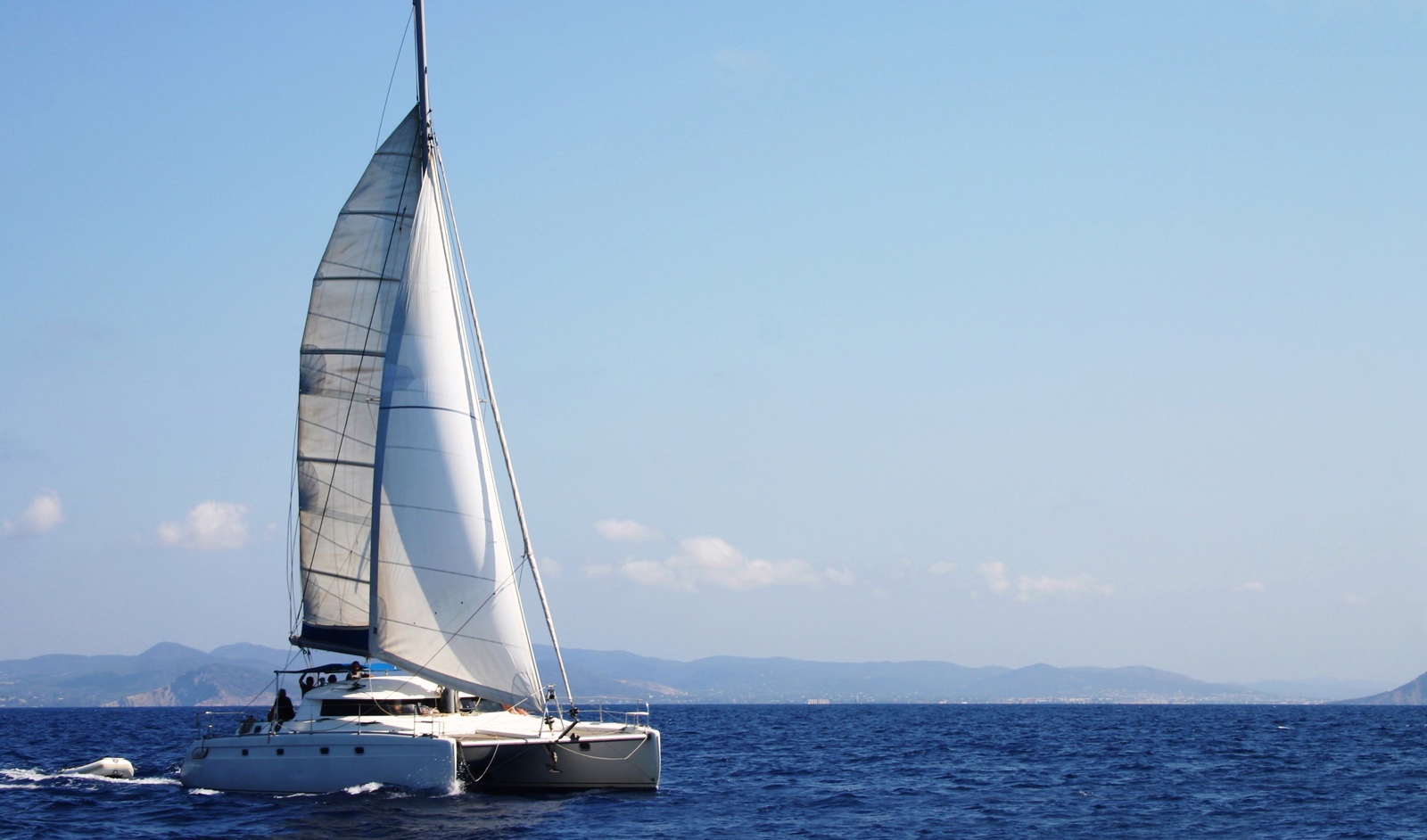
The Hanse 388 is a 38-foot German production cruising monohull, designed by Judel/Vrolijk and launched for the 2018 model year. Hanse has been building production sailboats since the early 1990s in Greifswald, Germany, and the company sits as the volume-builder alternative to Jeanneau and Beneteau in the European cruising shelf. The 388 replaced the long-running Hanse 385 in the 38-foot slot and runs current through the 2026 catalog.
What is the Hanse 388?
The 388 is a 37-foot 4-inch fiberglass cruising monohull. Beam is 12 feet 7 inches, displacement is 17,400 pounds, draft is 6 feet 5 inches with the deep keel or 5 feet 5 inches with the shoal-keel option. The hull is a Judel/Vrolijk design, moderate-displacement, with a clean feel under sail and a stiff section at moderate heel. The sailplan with the standard rig totals about 780 square feet, with a self-tacking jib as the standard headsail. The self-tacking setup is the headline ergonomic feature.
The drivetrain is a 40-horsepower Yanmar diesel saildrive. Saildrive seal service every five to seven years applies the same as on the Jeanneau and Beneteau saildrives. Fuel is roughly 42 gallons, water roughly 80, with a holding tank and a small generator option through the build.
The accommodations come in two-cabin owner trim or three-cabin trim. Owner trim has a stateroom forward with an island berth and a separate head with a stand-up shower. Three-cabin trim splits the aft into two cabins. The cockpit is wide for a 38-foot boat, and the twin-helm option opens the working space and gives clear sightlines from both sides. Single-helm builds keep the cockpit shape closer to traditional center-helm geometry.
The self-tacking jib is what owners point to first. With the standard rig the boat tacks through the wind without anyone touching a winch or a sheet, the jib rolls across the foredeck on a self-tacking track, and the crew works the mainsheet. For shorthanded sailing through a long day, the math is real. The trade is that the standard headsail is smaller than a 105-percent overlapping genoa, and reaching performance off the wind wants an asymmetric or code sail added to the inventory.
Who is it good for?
Shorthanded coastal-cruising couples are the core buyer. Long Island Sound, Chesapeake, San Francisco Bay, San Diego, Caribbean charter, Mediterranean charter. The self-tacking jib makes the 388 a one-person tacking boat in moderate wind, which matters on a long day-sail with one crew below or off-watch. On a San Diego weekend sail last winter I worked a 388 out of Shelter Island into the bay, tacked across the channel three times in light wind without leaving the helm, and rounded Point Loma in 12 knots true with the main and self-tacking jib alone. The boat is built around that pattern.
Owners who tack often in confined waters are the second profile. Tight harbors, channel work, evening sails out and back from a slip with the boat alone or with one guest. The self-tacking setup pays for itself in those conditions.
Buyers who want a German production cruiser at 38 feet with a moderate-displacement hull are the third. The Hanse interior fit and finish is a step up from the French production names in places, and the Judel/Vrolijk hull gives a slightly cleaner feel under sail than the chined Jeanneau or Beneteau hulls at similar length.
Who is it not good for?
Bluewater passage-makers should walk past. The 388 is a coastal cruiser. Standing-rigging fittings, chainplate access, bulkhead structure at the keel root, and saildrive service interval are production-spec rather than offshore-spec.
Racing-oriented owners should also look elsewhere. The self-tacking jib limits headsail size, and the boat is tuned for comfort and shorthanded sailing rather than performance.
Families who want a three-cabin charter layout at 38 feet should look at the Jeanneau Sun Odyssey 380 or the Beneteau Oceanis 38.1 (earlier model). The Hanse 388 does a three-cabin layout but the volume per cabin is tighter than the 40-foot French boats.
Pricing
New 2026 Hanse 388 builds at the dealer land between roughly $285,000 and $365,000 depending on keel choice, rigging spec, electronics package, and equipment options. Base sailaway pricing is at the low end; a fully equipped boat with electronics, dodger, bimini, generator, asymmetric sail, and cruising-spec inventory sits near the top.
The used market spans roughly $195,000 at the bottom (2018-2019 charter-fleet boats with high hours) to $295,000 at the top (clean 2022-2023 owner-spec boats with low hours). The sweet spot is the 2020-2023 owner-spec build with the self-tacking jib, the Yanmar saildrive, an updated electronics package, and a charter-free or lightly-chartered survey history. Those land in the $235,000 to $275,000 band.
Five-year depreciation on a clean Hanse 388 lands somewhere near 28 to 33 percent off MSRP. That is a step behind the Jeanneau and Beneteau curves in North America by 5 to 10 points, partly because the dealer network is smaller and the resale buyer pool is narrower.
What works
- Self-tacking jib makes shorthanded sailing easy. One-person tacking through a long day is the headline.
- Judel/Vrolijk hull is moderate-displacement with a clean feel under sail.
- Build is a step up in interior fit and finish from the French production names in several places.
- 40-horsepower Yanmar diesel saildrive is a known quantity with broad parts support.
- Cockpit is wide for a 38-foot boat. Twin-helm option opens the working space.
- Hanse dealer network is broad across Europe and the Mediterranean charter bases, growing in North America.
What doesn't
- Self-tacking jib limits headsail size. No real reaching sail without an asymmetric or code sail addition.
- Build is production-spec, not bluewater. Long passages want a careful survey.
- Saildrive seal service every five to seven years adds to the recurring cost line.
- Charter-fleet history is common on used boats and adds wear.
- Resale curve in North America is 5 to 10 points behind Jeanneau and Beneteau.
- North American dealer network is smaller than the French builders. Parts logistics vary by region.
Year-by-year notes
The Hanse 388 launched for 2018 as the follow-on to the Hanse 385. The 2020 model year brought refinements to the electronics and the cockpit layout. 2022 onward carries the current generation of dash electronics and the latest interior trim patterns. Production continues through 2026 with the same fundamental platform. There is no defect cutover year. Buyers should screen on charter-fleet history, saildrive seal service, and standing-rigging age rather than year-chasing.
Cost of ownership
Annual recurring costs on a coastal-cruising Hanse 388 land in the same shape as the French production cruisers at similar length. Annual yard haul-out, bottom paint, and zinc anode service runs $1,500 to $3,000. Saildrive seal service every five to seven years adds $1,500 to $3,000 at the yard. Standing-rigging inspection at five-year intervals and full replacement at ten to twelve years is a $5,500 to $9,000 line. New cruising sails (main, self-tacking jib, asymmetric) at the end of their working life run $6,500 to $12,000 for a full inventory.
Insurance on a $250,000 hull is $2,200 to $4,000 a year. Slip rental for a 38-foot boat runs $9,000 to $18,000 in major coastal markets. A five-year hold on a 2021 used Hanse 388 bought at $250,000, used 65 sailing days a year on San Diego Bay with slip storage at Shelter Island, lands at roughly $22,000 to $33,000 a year all-in.
Best year and trim to buy
The 2020-2023 Hanse 388 in owner-spec (two-cabin) trim with the self-tacking jib, the 40-horsepower Yanmar saildrive, an updated electronics package, and a charter-free or lightly-chartered survey history is the right buy in 2026. Twin-helm versus single-helm is preference. The single-helm build keeps the cockpit cleaner; the twin-helm gives clearer sightlines from both sides.
Verify five things pre-purchase. First, saildrive seal service is current or budgeted into the offer price. Second, standing-rigging age is documented and chainplates have been inspected. Third, bulkhead structure at the keel root shows no stress cracking or fiberglass tabbing failure. Fourth, engine hours match the file and the Yanmar service file shows current oil and impeller intervals. Fifth, the self-tacking jib track and car run cleanly without binding.
Alternatives
The step-up cross-shop at 40 feet is the Jeanneau Sun Odyssey 410, which trades the Hanse self-tacking jib for walk-around side decks and a longer hull. The Jeanneau has the bigger accommodations volume and the broader North American dealer network. The Hanse has the cleaner shorthanded-sailing ergonomic.
The same-tier cross-shop at 40 feet is the Beneteau Oceanis 40, the volume-builder reference at the step-up length. Same Beneteau Group family as Jeanneau, slightly different design philosophy, similar entry price. For buyers cross-shopping inside the volume-production tier, the choice between Jeanneau, Beneteau, and Hanse comes down to ergonomic preference and dealer-relationship considerations more than to any single spec line.
For buyers asking whether a monohull is the right answer at all, the Leopard 46 PC sits in as the multihull reminder. A power catamaran at a step-up length covers a very different brief, with more accommodation volume, more deck space, and a level platform underway, but at higher entry cost and different slip math. The monohull-versus-multihull question is worth asking out loud before signing on either side.
The honest summary on the Hanse 388 is this. The self-tacking jib is the headline and the reason most buyers choose the boat. If you sail shorthanded often, the math is real and the ergonomic pays for itself in a season. If you sail with crew most of the time, the self-tacking jib's limit on headsail size is a real trade against the larger overlapping genoa on a Jeanneau or Beneteau at similar length. The Hanse fit the buyer who wants the German production-cruiser build and the easy-tacking rig. It does not fit the buyer who wants the largest possible coastal-cruising volume at the price, who would be better served at a 40-foot Jeanneau or Beneteau.