Handheld VHF Marine Radios for boats are relatively inexpensive and maintain a level of safety. For coastal fishing, cruising and sailing, one of these should be on board.
Very High Frequency radios are line-of-sight devices that work where smartphones have weak signal strength.
The recommended options on this list have different features and cost between $70-$340 depending on those attributes.
The most expensive VHF radio here has both AIS, GPS, floats and has tri-watch functions for monitoring channel 16 while communicating across other channels.
See a table of comparisons with prices and features below.
The Top 6 VHF Marine Radios in 2026
-
1
Best Budget: Uniden Atlantis 155 -
2
Bare-Bones Quality: ICOM M25 21 -
3
Solid Budget Option: Uniden MHS75 -
4
Floating, Tri-Watch: Cobra MR HH350 VHF Radio -
5
Great UX plus GPS: Standard Horizon HX890 -
6
Sleek & Complete: ICOM 94D with AIS
All the VHF Marine Radios We've tested
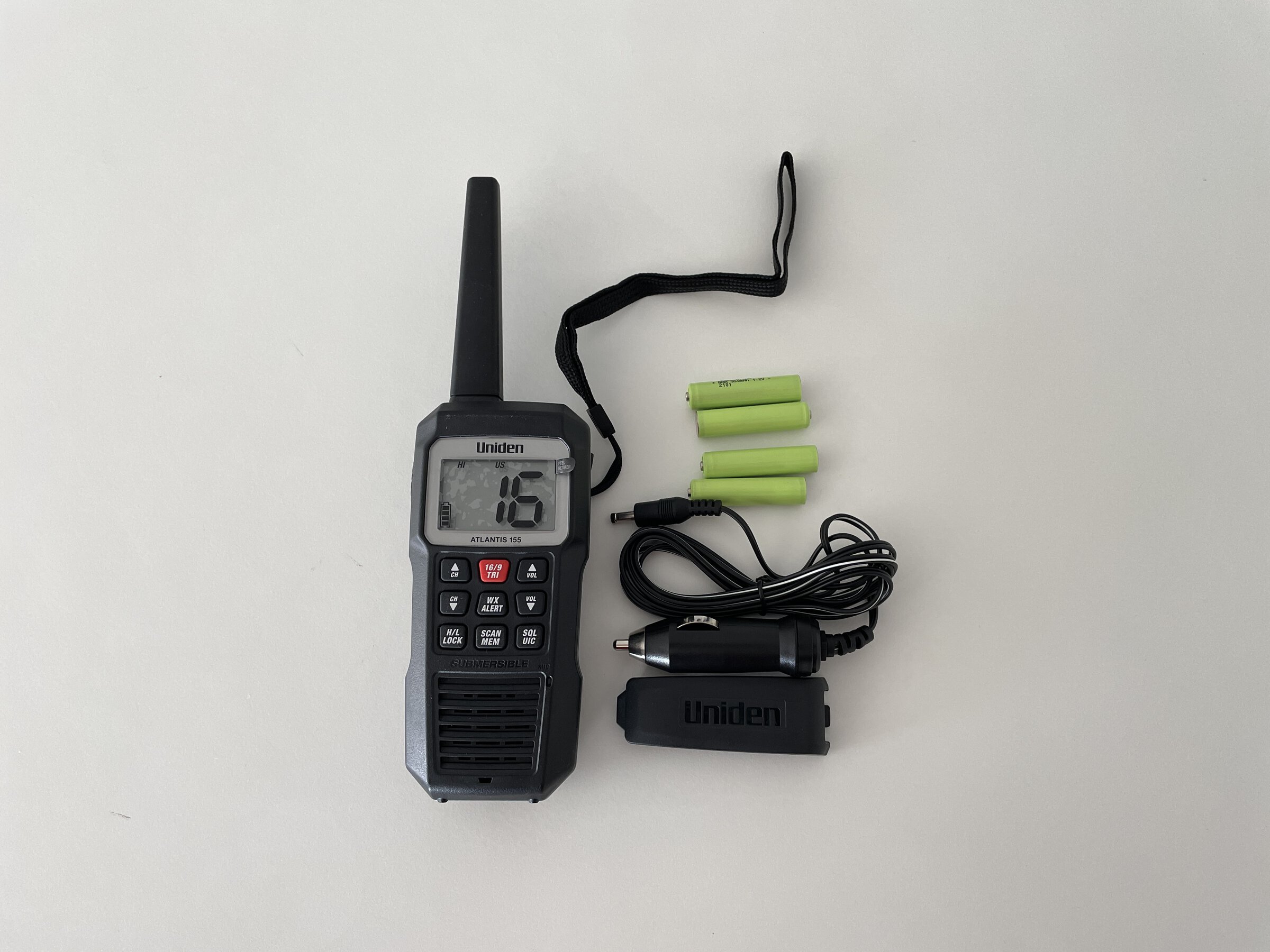
This inexpensive, handheld VHF radio is a great backup for a fixed unit or serves you well in a kayak, on a paddle board or when out fishing within 2 or 3 miles from the shore. Though it’s compact and easily tucked into a pocket or cargo tray, it has one of the largest screens for its class. It has what you need when in distress with a reliable build and transmission capability at a really affordable cost.
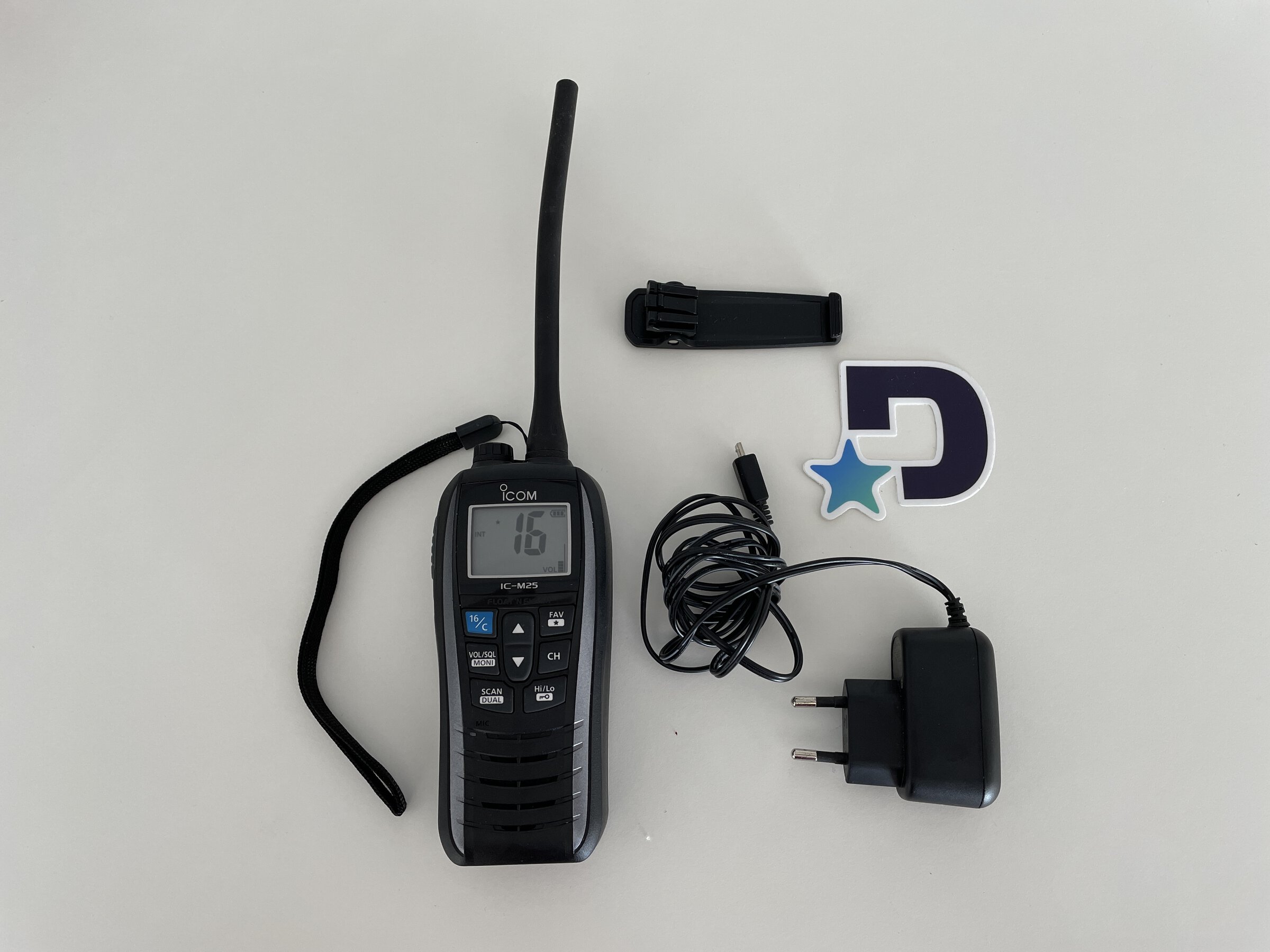
This small, lightweight unit has all the features you need, including tri-watch, float & flash, USB charging, aqua-quake to vibrate water out. There aren’t all the bells and whistles of higher end devices but the price of this VHF makes it a unit you should buy if in doubt. ICOM makes great products and their support is great too. It includes weather information channels too. For the casual cruiser or as a redundancy VHF or ditch bag radio this is a good choice as it doesn’t take up much space but does a pretty good job when needed.
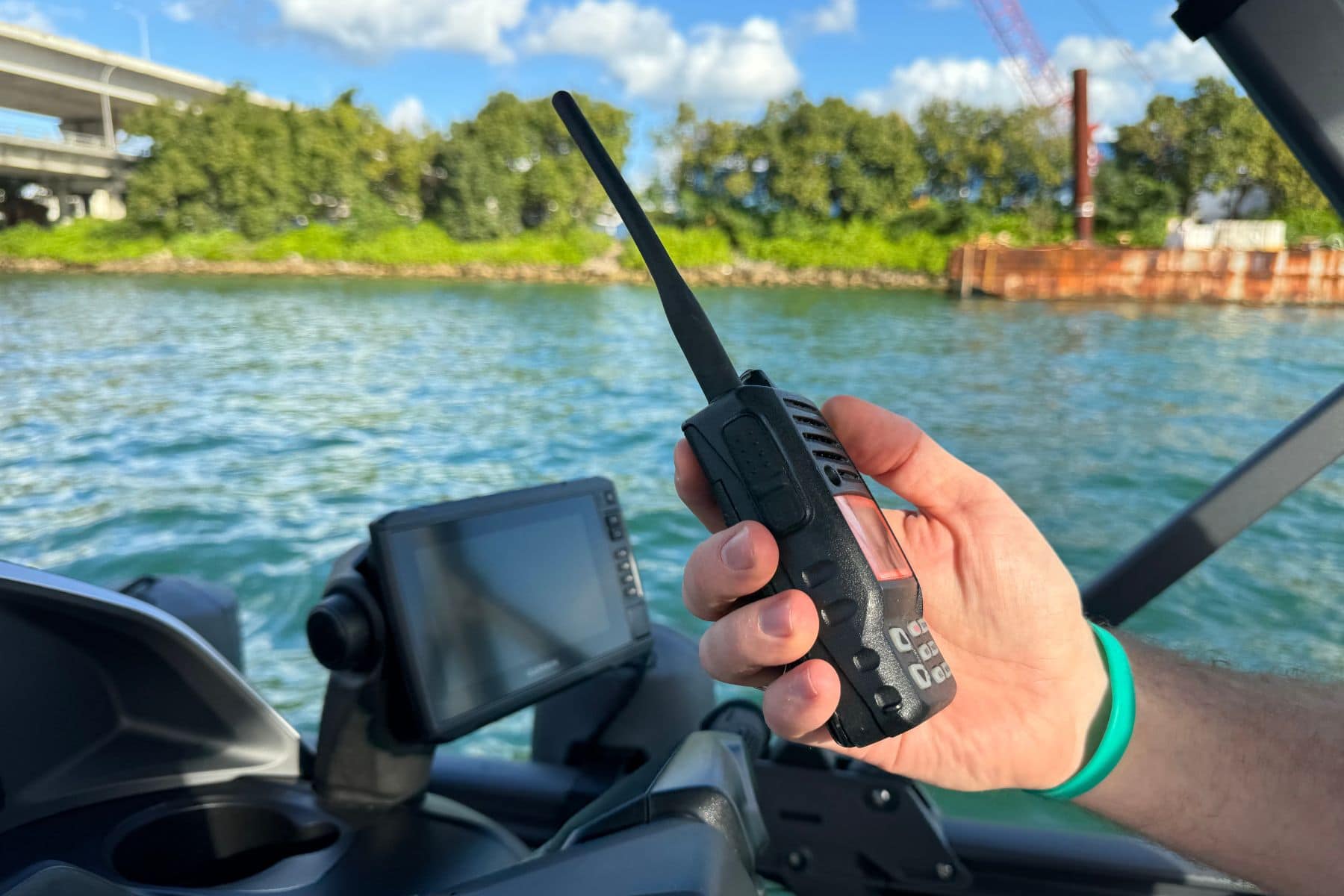
This basic yet feature-filled handheld VHF costs less than $100. It’s hard to imagine because the Uniden brand delivers reliability in a quality package. It’s pretty robust. Though not really compact, it’s small enough to be able to carry it around in your pocket (though it comes with a clip) and the battery will give you 10 hours of combined stand-by/talk-time. Surprisingly, it also has the triple watch feature allows you to monitor channel 9 & 16 while using another switch-over channel making it both useful and safe.
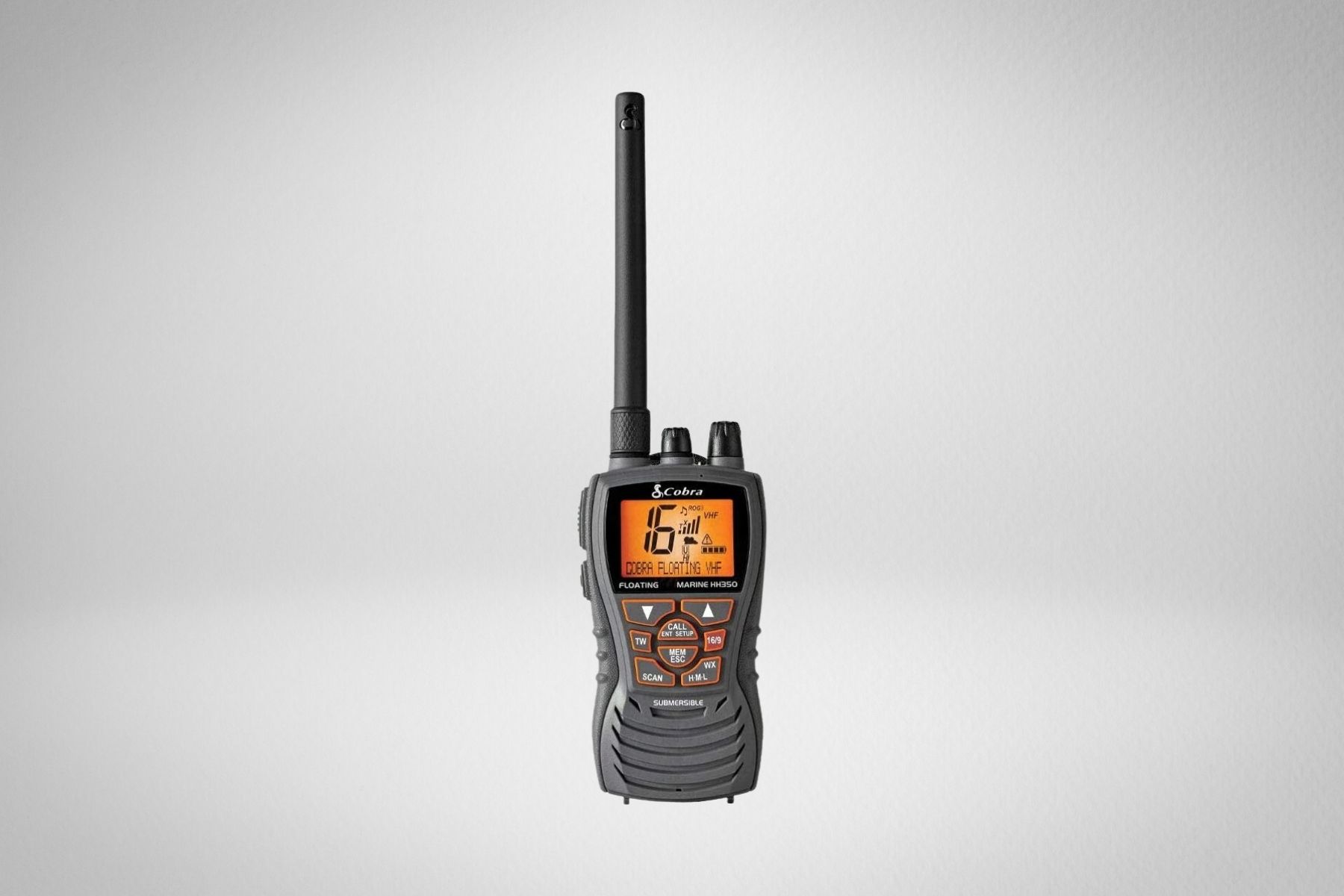
The Cobra MR HH350 is an inexpensive, floating VHF radio with impressive value. It’s submersible, making it a good option for smaller vessels. It has Tri-Watch monitoring that will provide safety and awareness for coastal cruising boats too.
It does not have DSC or AIS, but that’s expected at this price. With very good sound and an LCD screen that’s clear in daylight, Cobra’s entry-level marine radio punches above its weight.
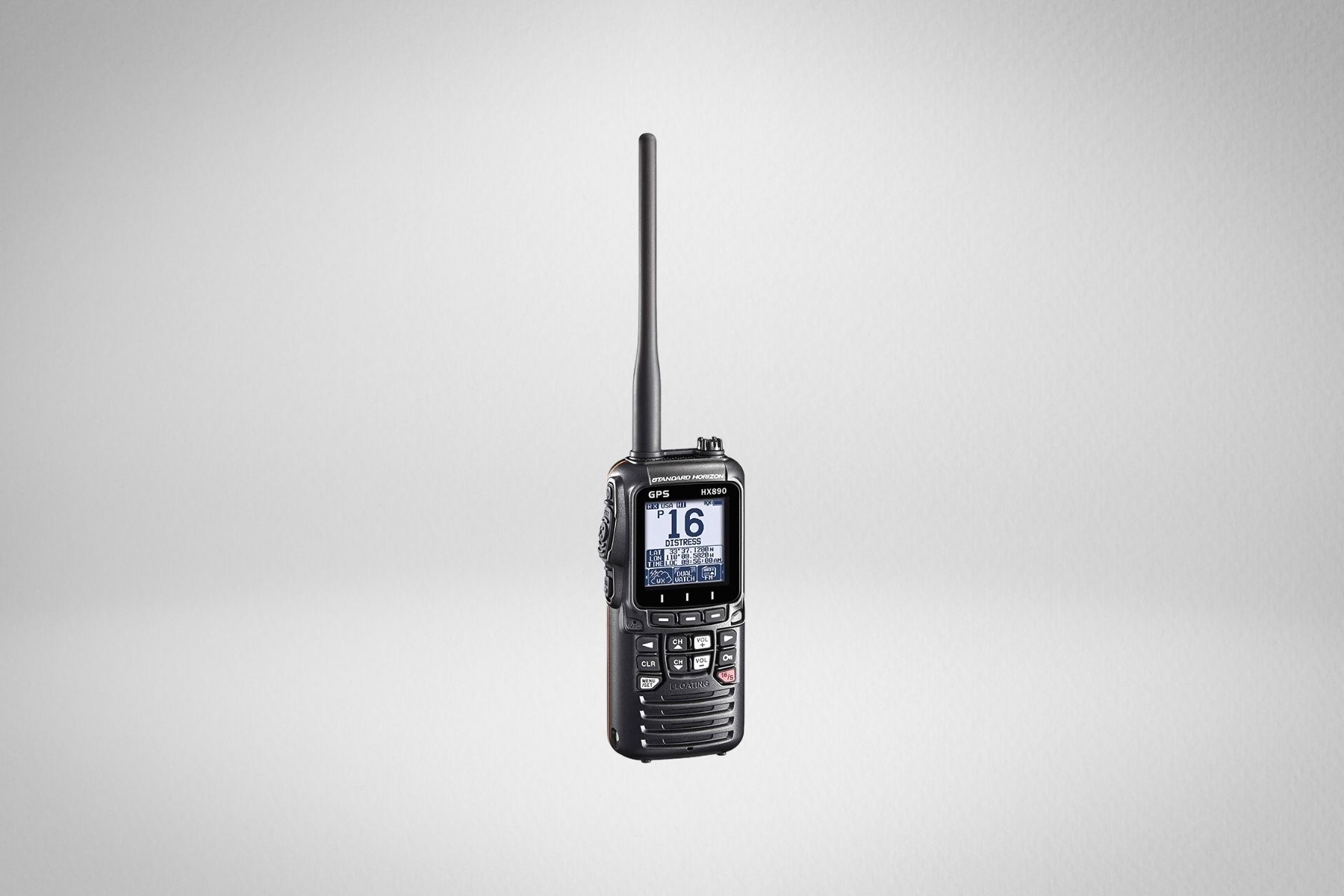
Whether you use it as a primary marine VHF or to compliment a fixed unit, this Standard Horizon will serve you well. “Nothing takes to water like Standard Horizon” so goes their mission cry. SH is a 50-year old company that delivers a feature-packed do-everything VHF.
Between its rugged construction and ease of use, including an easy-to-read LCD screen, and a programmable operating system, the HX890 might just replace your smartphone. Well, maybe not, but with FM radio receiver, navigation assists, standard DSC, man overboard feature (MOB)–to name just a few–you can quickly see why this VHF costs a wee bit more than other units. But it’s worth it and you’ll have this for several nautical years. And the battery operating time of about 11 hours ain’t too shabby.
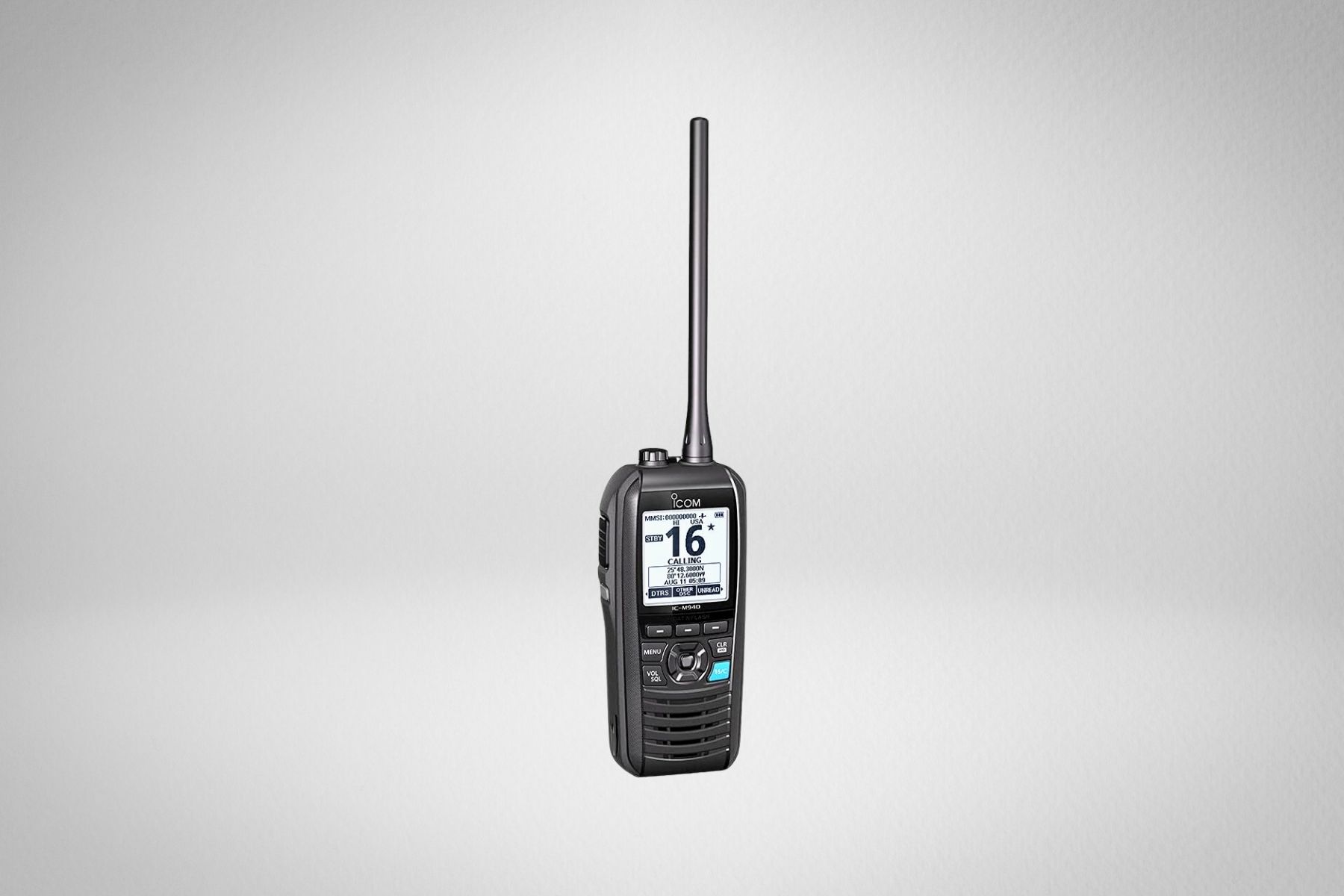
The successor to the popular 93D, previously one of the best VHF radios, ICOM’s latest handheld unit hits it out of the ballpark with the 94D. This is the first handheld VHF radio with a built-in AIS receiver.
An ocean cruising backup or mobile unit, a primary waterway option as well as an excellent ditch-bag VHF, the 94D does what its predecessor did and more.
With tri-watch, DSC & AIS, MOB button and the flashing feature, safety and peace of mind are made better.
It’s easy to use and has all the right features and accessories to make marine activities safer. There’s a reason both kayakers and sailors have been praising this VHF.
There’s always banter between older sailors and newer mariners about the virtues of a chart plotter. The old-school comment, “can’t you read a map” doesn’t always reflect the trouble of navigating in fog or with so much boat traffic.
The 94D adds a simplified navigation system, one that fixed units have had for some time. We think this greatly improves the tools of safety for boaters in waterways and in tricky weather.
An AIS will show the location of other ships around, and at the same time reveal your position to them (albeit on AIS “B”), which commercial vessels can ignore.
With a 1500mW speaker that’s clear, even after a dunk in the drink–thanks to the AquaQuake and Float and Flash functions–and a directional control pad for easy navigation, the 94D is user-friendly and reliable.
This is the newest and possibly the best handheld VHF marine radio available. The price reflects that.
Why Trust Us
Bradley has been sailing since childhood in the Great Lakes, the St. Lawrence and the mercurial Lake Simcoe. His experience with VHF radios in both North America and in Europe where he sails a Viking ship on the Baltic Sea is basis for his expertise and council.
We’ve selected products here that have been tested by a member of Boat & Sail or by a friend or sailing partner who can vouch for these marine radios.
VHF Radios Compared
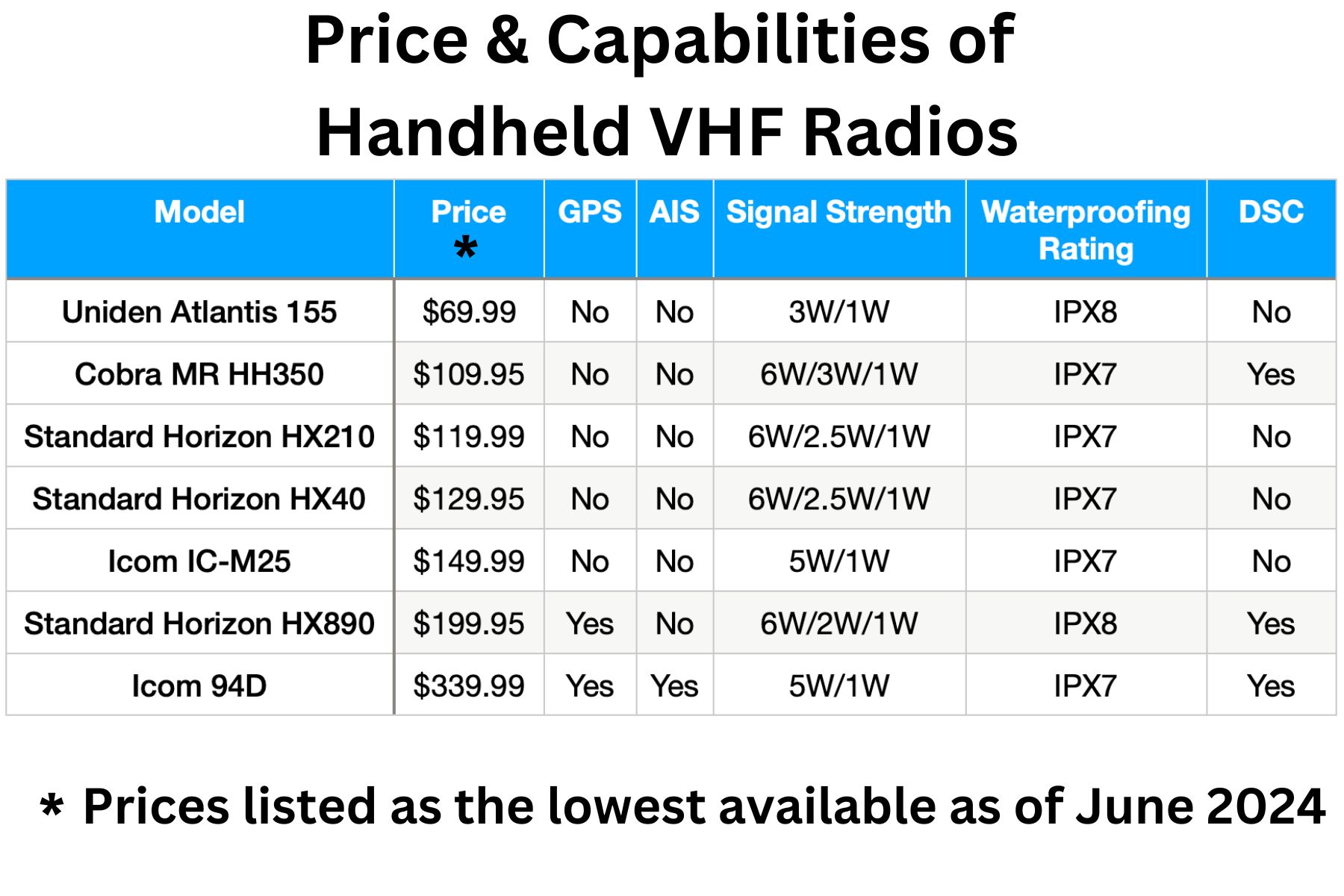
VHF Marine Radios: Essential Tools for Safe Boating
VHF marine radios, also known as VHF radios or marine radios, are helpful for ensuring safety and effective communication on the water in defined areas where cell tower signals are unreliable.
These devices, including boat radios and united radios, provide reliable communication between vessels, marinas, and Coast Guard services.
Note: Recreational boaters in the United States do not need a VHF certificate to use marine radio. Many European countries require a license to use them–not to have one and monitor Channel 16.
Read a more in-depth guide to using VHF marine radio to understand what channels to use, how to talk and how very high frequency works.
Key Features and Usage
When operating your vessel with a VHF radio, understanding the key features and proper usage is essential. In the United States, the primary VHF radio safety and distress calling channel is channel 16. It is vital to monitor this channel to ensure safety and to respond to any emergencies. Additionally, familiarize yourself with other important marine VHF channels for weather updates and local communication.
Important Channels and Functions
- **Channel 16:** The international distress, safety, and calling channel that must be monitored at all times.
- **Digital Selective Calling (DSC):** Enhances safety by allowing boaters to send automated distress signals, including the vessel’s location, to the Coast Guard and nearby vessels.
- **Automatic Identification System (AIS):** Provides real-time tracking information about nearby vessels, improving situational awareness and preventing collisions.
Marine Radio Communication Tips
Effective marine radio communication involves understanding and using proper radio language and procedures. Key practices include:
– Performing regular radio checks to ensure your equipment is functioning properly.
– Understanding the meaning of terms like “Pan Pan” and “Mayday” for distress calls.
– Following navigation rules and being aware of emergency frequencies.
Choosing the Best VHF Marine Radio
Selecting the best marine VHF radio depends on your specific needs and boating habits. Consider factors like range, frequency channels, and additional features such as weather alerts and GPS integration.
Conclusion
A well-functioning VHF marine radio is an indispensable tool for any boater. By understanding its features, monitoring the correct channels, and using the proper communication protocols, you can significantly enhance your safety on the water. Stay informed and prepared by integrating VHF marine radios into your boating routine.
For more detailed information on VHF marine radios, read our more comprehensive guide. This guide details most of the information contained in the short range communication (SRC) course.