Boat & Sail

Builder · Core · Kennesaw, Georgia

Yamaha WaveRunner

Yamaha's personal-watercraft division, established 1986. Six lineups across rec-lite, family, performance, luxury, stand-up, and freestyle. Competes head-up with Sea-Doo and Kawasaki on price-per-feature and long-distance touring durability.

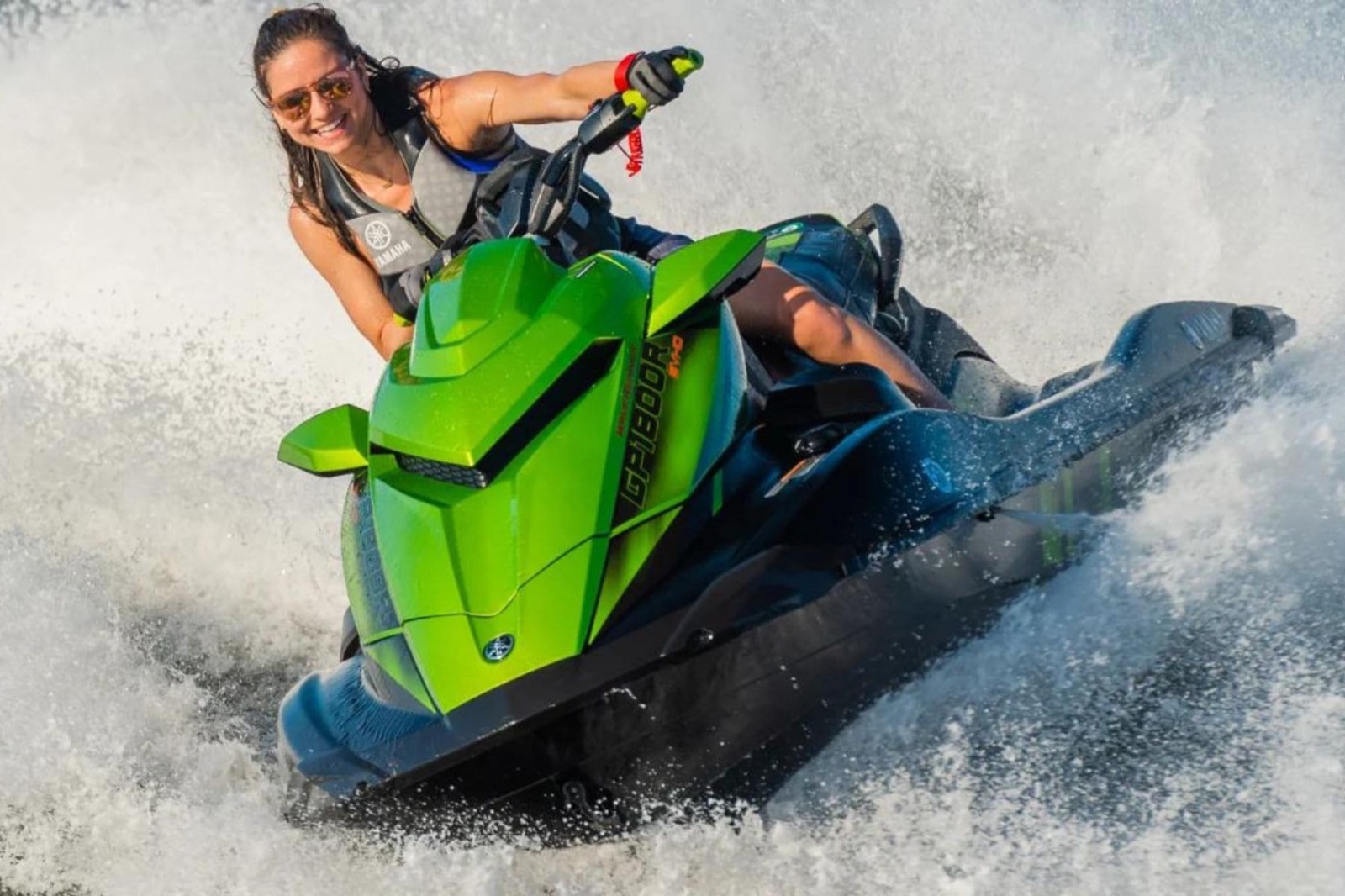
Yamaha WaveRunner FX Cruiser at speed
Founded
1986
Headquarters
Kennesaw, Georgia (US division)
Ownership
Yamaha Motor Corporation
Tier
Core
Website
yamahawaverunners.com

Yamaha WaveRunner is the personal-watercraft division of Yamaha Motor Corporation, established in 1986. The lineup runs across six platforms today: EX legacy entry, JetBlaster freestyle, VX family recreation, FX luxury touring, GP performance, and the SuperJet stand-up.

The argument is durability and price-per-feature, which buyers cross-shop directly against Sea-Doo and Kawasaki.

Lineup

Current platforms.

Model breakdown

Each platform, what it does and where it falls short.

Yamaha WaveRunner EX series (legacy through 2024)

EX was the entry rec-lite line. Discontinued in 2025 as JetBlaster filled the entry slot.

Things we like

  • · Lowest entry pricing in the Yamaha PWC lineup
  • · Used market parts and service available

Things we don't

  • · Discontinued in 2025, used-only segment
  • · Entry-tier ergonomics tire on long touring rides

Yamaha WaveRunner JetBlaster

JetBlaster is the freestyle line. Multiple trim levels (DLX 2-Up/3-Up, Pro, Limited).

Things we like

  • · Trick-focused ergonomics
  • · Pricing $7,999 to $11,799 across trims

Things we don't

  • · Freestyle ergonomics not ideal for sustained touring use
  • · Smaller used market than VX

Yamaha WaveRunner VX series (VX, Deluxe, Cruiser, Cruiser HO, Limited)

VX is the family-recreation line. Multiple trim levels with progressively more features.

Things we like

  • · Family-friendly volume seller
  • · Pricing $10,599 to $14,499 across trims

Things we don't

  • · Mid-tier ergonomics across trim levels
  • · EX wear-ring (jet-pump liner) replacement at 200 to 300 hours

Yamaha WaveRunner FX series (FX HO, FX Cruiser HO, SVHO variants, Limited)

FX is the luxury touring line. Supercharged HO and SVHO variants, GPS displays, premium ergonomics.

Things we like

  • · Supercharged HO and SVHO variants compete with Sea-Doo GTX 325
  • · Touring-class ergonomics and storage

Things we don't

  • · Supercharger 100-hour service is non-negotiable on SVHO
  • · Pricing $16,399 to $21,199 across trims

Yamaha WaveRunner GP series (GP HO, GP SVHO)

GP is the performance line. Race-bred ergonomics, supercharged HO or SVHO.

Things we like

  • · GP SVHO competes with Sea-Doo RXP-X 325 on top-end performance
  • · Race-bred handling for performance riders

Things we don't

  • · Performance ergonomics tire on long touring rides
  • · Pricing $14,999 to $17,499 across trims

Yamaha WaveRunner SuperJet

SuperJet is the stand-up jet ski. Single platform, freestyle and competitive use.

Things we like

  • · Heritage stand-up form preserved across multiple generations
  • · Freestyle and competitive-use ergonomics

Things we don't

  • · Stand-up segment is small, used market thin
  • · Pricing comparable to Kawasaki SX-R 160

Buyer's guide

The Yamaha WaveRunner story and what to know on the used market.

Origin and ownership

Yamaha WaveRunner was established in 1986 as the personal-watercraft division of Yamaha Motor Corporation. The brand grew through the 1990s and 2000s as the PWC segment expanded.

Yamaha Motor Corporation has owned the brand throughout. US production happens at the Kennesaw, Georgia facility shared with Yamaha Boats; engines come from Japan.

The RecDeck rear platform launched in 2019 on FX and expanded to VX and GP in 2023. The RecDeck supports JetFish accessory kits, cargo decks, and specialty packages.

Design philosophy

Yamaha WaveRunner uses 1.05L (EX, JetBlaster, VX) and 1.8L (FX, GP) marine engines. Supercharged variants on the FX SVHO and GP SVHO add 250+ horsepower output.

Hull design across the lineup runs moderate-V optimized for sustained-cruise touring use. RecDeck accessory mount system supports cross-product compatibility on FX, VX, and GP from compatible model years.

Terminology you should know

EX / JetBlaster / VX / FX / GP / SuperJet
The six current platform lines. EX (legacy entry), JetBlaster (freestyle), VX (family rec), FX (luxury touring), GP (performance), SuperJet (stand-up).
HO / SVHO
High-Output and Super Vortex High-Output. Naturally aspirated and supercharged variants of the 1.8L marine engine.
RecDeck
Rear platform accessory mount system. Standard on FX 2019 forward, VX and GP 2023 forward. Supports JetFish kits and cargo decks.

Used-market notes and known issues

Supercharger service interval on SVHO engines is a 100-hour preventive item. Skipping it is the single most common owner complaint on the FX HO line and reflects poorly at resale survey.

EX and VX wear-ring (jet-pump liner) replacement at 200 to 300 hours on hulls used in shallow rocky water. Inspect on used hulls.

Battery and electrical-harness corrosion on saltwater-stored skis is the second-most-common owner-mechanic forum thread topic. Annual fresh-water flush and battery-tender storage are the mitigations.

Wide US dealer network, often shared with Yamaha Boats and motorcycle dealers. Coverage is broad. Parts supply through Yamaha is fast.

Resale

Yamaha WaveRunner holds resale at the segment top alongside Sea-Doo. Three-year depreciation runs 18 to 25 percent on FX SVHO flagships. Five-year depreciation runs 30 to 38 percent.

Where Yamaha WaveRunner fits

VX trades blow-for-blow against the Sea-Doo GTI on price and family use. FX SVHO trades against the Sea-Doo RXP-X 325 and the Kawasaki Ultra 310LX on the touring and performance flagship segment. The argument for Yamaha across the lineup: long-distance durability, supercharger service intervals that align with serious touring use, and parts availability through the broad Yamaha dealer footprint.
FAQ

Frequently asked.

Yamaha WaveRunner or Sea-Doo?
Both segment-leading PWC brands with comparable build quality. Yamaha gives RecDeck accessory compatibility and the SuperJet stand-up. Sea-Doo gives iBR docking control and the Switch hybrid platform. Cross-shop on dealer proximity and specific feature preference.
Is the FX Cruiser HO worth the premium?
Yes for buyers who run multi-hour touring days. The HO engine, premium ergonomics, GPS display, and storage capacity all earn their premium on long-distance use. For shorter recreation use, the VX line gives most of the experience at lower pricing.
What's the maintenance cost on an FX SVHO?
Annual service runs $700 to $1,200 plus 100-hour supercharger service at $600 to $900. Insurance for a $20,000 hull runs $400 to $900. Trailer storage $500 to $1,500.
Where are Yamaha WaveRunners built?
Kennesaw, Georgia for US-market hulls; engines built in Japan. Yamaha Motor Corporation facility, shared with Yamaha Boats.

Compare

Categories Yamaha WaveRunner fits.

Weekly

Get one honest boat review a week

One boat we ran, one guide worth reading, one model we'd shop next week. No press-release rewrites. Unsubscribe any time.