Boat & Sail

Builder · Tournament · Bradenton, Florida

Yellowfin

Florida tournament-grade builder, 1998-founded. Deep-V hulls favored by tournament canyon fishermen. Family-held by Wylie Nagler and the Wood family.

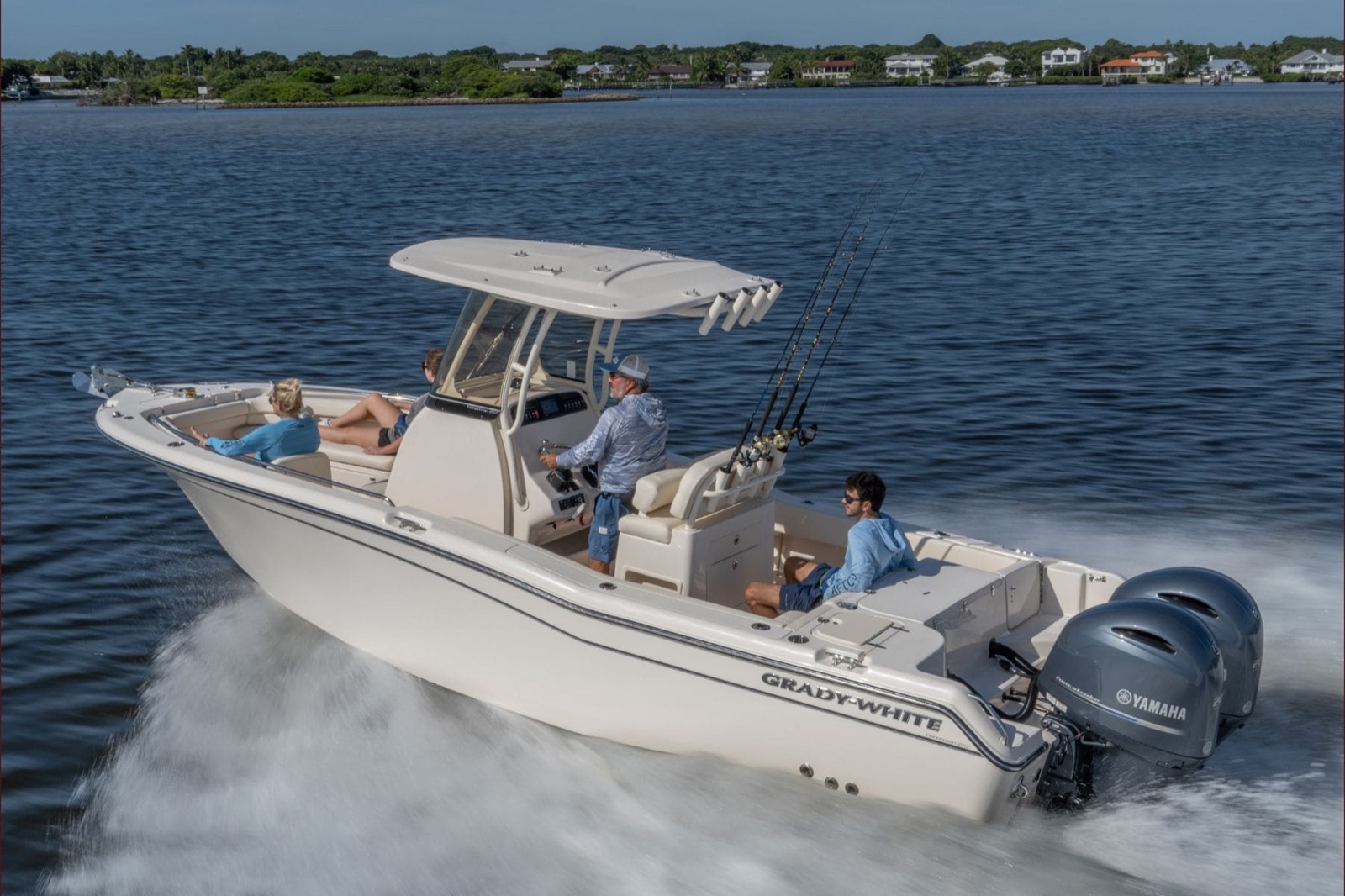
Yellowfin center console at offshore cruise
Founded
1998
Headquarters
Bradenton, Florida
Ownership
Private, family-held (Wood family)
Tier
Tournament
Website
yellowfinyachts.com

Yellowfin is the tournament-grade offshore center-console builder from Bradenton, Florida. Founded in 1998 by Wylie Nagler, the brand has stayed family-held and has become one of the dominant tournament-circuit hulls on the East Coast and Gulf. The lineup runs from the 26 Bay through the 54 Offshore flagship.

The brand argument is the sharp deep-V hull, the build discipline, and the tournament-circuit credibility. Yellowfin hulls run slightly sharper at the transom than Contender (26 to 28 degrees on the offshore line) and prioritize top-end speed in offshore conditions. Tournament fishermen who need the fastest hull in 3-to-4-foot head seas cross-shop Yellowfin against Contender and Jupiter.

Lineup

Current platforms.

Model breakdown

Each platform, what it does and where it falls short.

Yellowfin Bay series (24 / 26 Bay)

Bay is the inshore line. Forward casting deck with deep-V tournament-grade hull, twin-engine rigging unusual at this LOA.

Things we like

  • · Twin-Yamaha F250 rigging on a bay boat handles bay-mouth chop better than single-engine equivalents
  • · Bay-boat layout with offshore-grade hull discipline

Things we don't

  • · Twin-engine pricing pushes well above typical bay-boat segment
  • · Sharper-V than typical bay boats means less stable at slow troll on the flats

Yellowfin CC series (24 / 29 / 32 / 36 / 39 / 42 / 47 / 54)

CC is the offshore line, the volume of the brand. Twin to quintuple Yamaha XTO 425 V8 outboards depending on LOA. The 36 and 39 are the volume tournament hulls.

Things we like

  • · Sharp 26 to 28-degree transom deadrise gives top-end speed in head seas that Whaler or Grady cannot match
  • · Triple-XTO 39 holds 38-knot cruise on a 39-foot hull with documented dry running
  • · Tournament-circuit credibility supports a tight resale floor

Things we don't

  • · Sharpest-V trades against slow-troll stability harder than Contender
  • · Pricing premium over Contender at equivalent rigging

Yellowfin 54 Offshore

The 54 is the brand's flagship. Quintuple Mercury Verado 600 V12 outboards, full standing-headroom forward cabin, generator and A/C.

Things we like

  • · Quintuple-V12 rigging holds 38-knot cruise on a 54-foot hull, top-end speed unmatched at this LOA
  • · Forward cabin with master stateroom gives motor-yacht overnight on a tournament center console

Things we don't

  • · Five-engine maintenance runs $25,000-plus annual outboard service
  • · Pricing competes with full motor yachts at similar dollars

Buyer's guide

The Yellowfin story and what to know on the used market.

Origin and ownership

Yellowfin was founded in 1998 by Wylie Nagler in Bradenton, Florida. Nagler came from a tournament-fishing background and designed the original 36-foot hull around the canyon-fishing use case. The brand grew through the 2000s as tournament fishermen on the East Coast and Gulf adopted the deep-V hull form.

The brand has stayed Wood-family-held and Wylie Nagler-led throughout. Production stays in Bradenton, single-site. Build queue runs tight, hulls are built to order with longer lead times than premium-tier production brands.

Design philosophy

The Yellowfin hull is the sharpest-V in the production tournament segment. Transom deadrise runs 26 to 28 degrees on the offshore CC line, with a deep entry forward and minimal bow flare. Designed for sustained 30-knot cruise in 3-to-5-foot head seas with documented dry running at speed.

Yamaha XTO 425 V8 is the dominant rigging across the lineup, with the larger flagships rigged with Mercury Verado 600 V12. Single-engine variants are not available at any LOA.

Construction uses hand-laid fiberglass with composite stringers and a vacuum-bagged hull lay-up on most current production. Build queue runs slow, which keeps tournament-circuit credibility tight.

Used-market notes and known issues

Yamaha F300 V6 cylinder-wall corrosion pattern on pre-2018 hulls warrants an inspection on any used Yellowfin without documented annual fresh-water flush.

XTO 425 V8 used on the post-2019 hulls does not show the same corrosion pattern, but service history matters for warranty claim eligibility.

Hardtop hardware on 2018 to 2020 hulls in salt-heavy markets shows pitting at the rear stanchion mounts.

Dealer network is concentrated in Florida, the Gulf, and the Bahamas. East Coast Mid-Atlantic coverage is mid-density. West Coast coverage is thin.

Resale

Yellowfin holds resale among the tightest in the tournament-grade offshore segment. Three-year depreciation runs 6 to 12 percent on clean CC hulls. Five-year depreciation runs 18 to 24 percent. Tournament-circuit demand and the family-held production support the floor.

Where Yellowfin fits

Buyers cross-shop Yellowfin against Contender, Regulator, and Jupiter on the tournament-grade offshore segment. The argument for Yellowfin is top-end speed in head seas (sharpest-V transom in the production tournament segment), tournament-circuit credibility, and the resale floor. Buyers who prioritize slow-troll stability should look at Grady-White or Pursuit. Tournament fishermen who need the fastest 30-foot-plus hull in head seas buy Yellowfin.
FAQ

Frequently asked.

How does Yellowfin compare to Contender?
Both are tournament-grade Florida builders with deep-V offshore hulls. Yellowfin runs slightly sharper at the transom (26 to 28 degrees against Contender's 24 to 26). Yellowfin runs faster at top end; Contender holds slightly more bow flare and a fuller-bow forward. Pricing is comparable. Cross-shop on hull-form preference and tournament credibility within the buyer's regional circuit.
Is Yellowfin practical for non-tournament use?
Yes for offshore-capable family or cruising use, less so for inshore or slow-troll fishing. The sharper-V hull rides drier at speed but rolls more at slow troll than a Grady or Whaler. Family-cruising use is comfortable when the boat is up on plane; less so at idle or troll.
What's the maintenance cost on a 36 CC?
Annual service on triple Yamaha XTO 425 V8 outboards runs $3,000 to $4,200. Bottom paint $600 to $1,200. Storage $2,500 to $6,500 indoor. Insurance for a $450,000 hull runs $3,000 to $5,500. Total seasonal cost runs $10,000 to $16,000 outside of fuel.
Where are Yellowfins built?
Bradenton, Florida. Single-site, family-owned production.

Compare

Categories Yellowfin fits.

Weekly

Get one honest boat review a week

One boat we ran, one guide worth reading, one model we'd shop next week. No press-release rewrites. Unsubscribe any time.