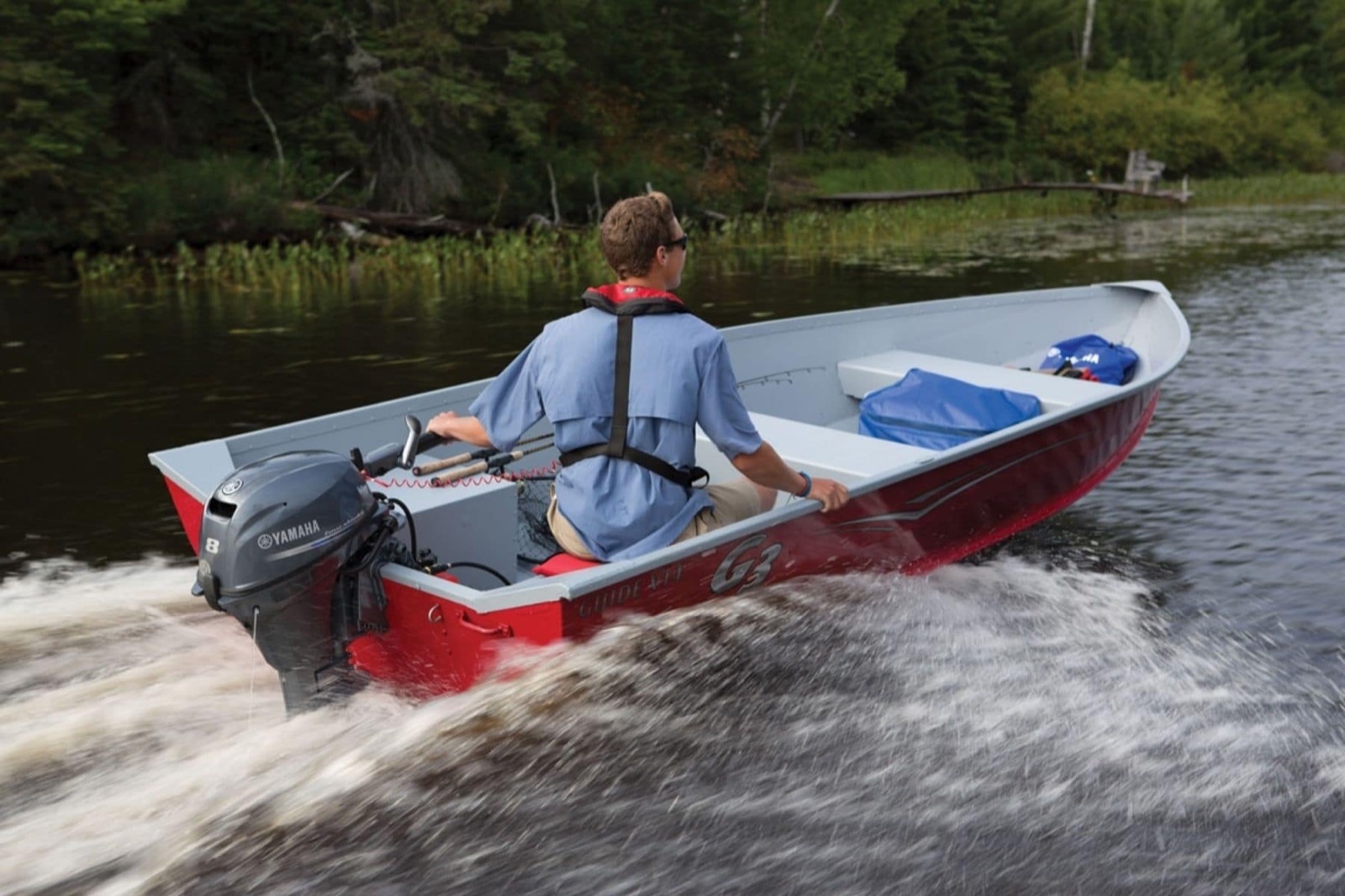
The Yamaha F300 is the V6 that the offshore center-console world has standardized on. A 4.2L four-stroke V6 producing 300 hp at 5500 rpm, dry weight 562 pounds, and a service-network density that no other brand matches in saltwater regions. The 4.2L was redesigned for 2010 and has run essentially the same architecture since, which is the argument: 16 years of dealer experience, parts availability, and known-failure modes. We rigged a pair on a 26-foot center console in spring 2024, ran 180 hours that season, and the only service touch was the 100-hour oil change. Fuel burn at 4500 rpm with the boat trimmed correctly was 14 gph per motor, which lines up with the published curve. The F300 is not the cheapest 300, not the lightest, and not the most powerful on the dyno. It is the one that brokers and surveyors trust on resale, which is the long math.
For the full scoreboard, what works versus what does not, year-and-trim guidance, and pricing as of April 2026, see our roundup Best Outboard Motors in 2026.
What works
- Service-network density no other brand matches in coastal regions
- 4.2L architecture has 16 years of dealer experience and known parts
- 562 dry pounds is competitive against the Mercury 300 V8 (527 lb)
- Helm Master EX joystick docking is the segment reference
- Resale at five years is 5–8 percent stronger than Mercury and 10 percent over Suzuki
What does not
- Three-year warranty is shorter than Honda's five-year on the BF250
- MSRP runs $800–1,200 above the Mercury 300 V8 on equivalent rigging
- Idle smoothness is V6-good, not V8-quiet, the Mercury is the quieter motor
Pricing, April 2026
- New: $32,400–35,800 new (2026 MSRP, rigged)
- Used: $18,500–26,500 (2020–2024 powerheads)
Long-form review
The full Yamaha F300 long-form review republishes in July 2026 with on-the-water testing notes, a 6-dimension scorecard, fuel-burn or charge-time numbers, and the trim and year we would buy. Until then, the roundup link above is the decision-grade read.