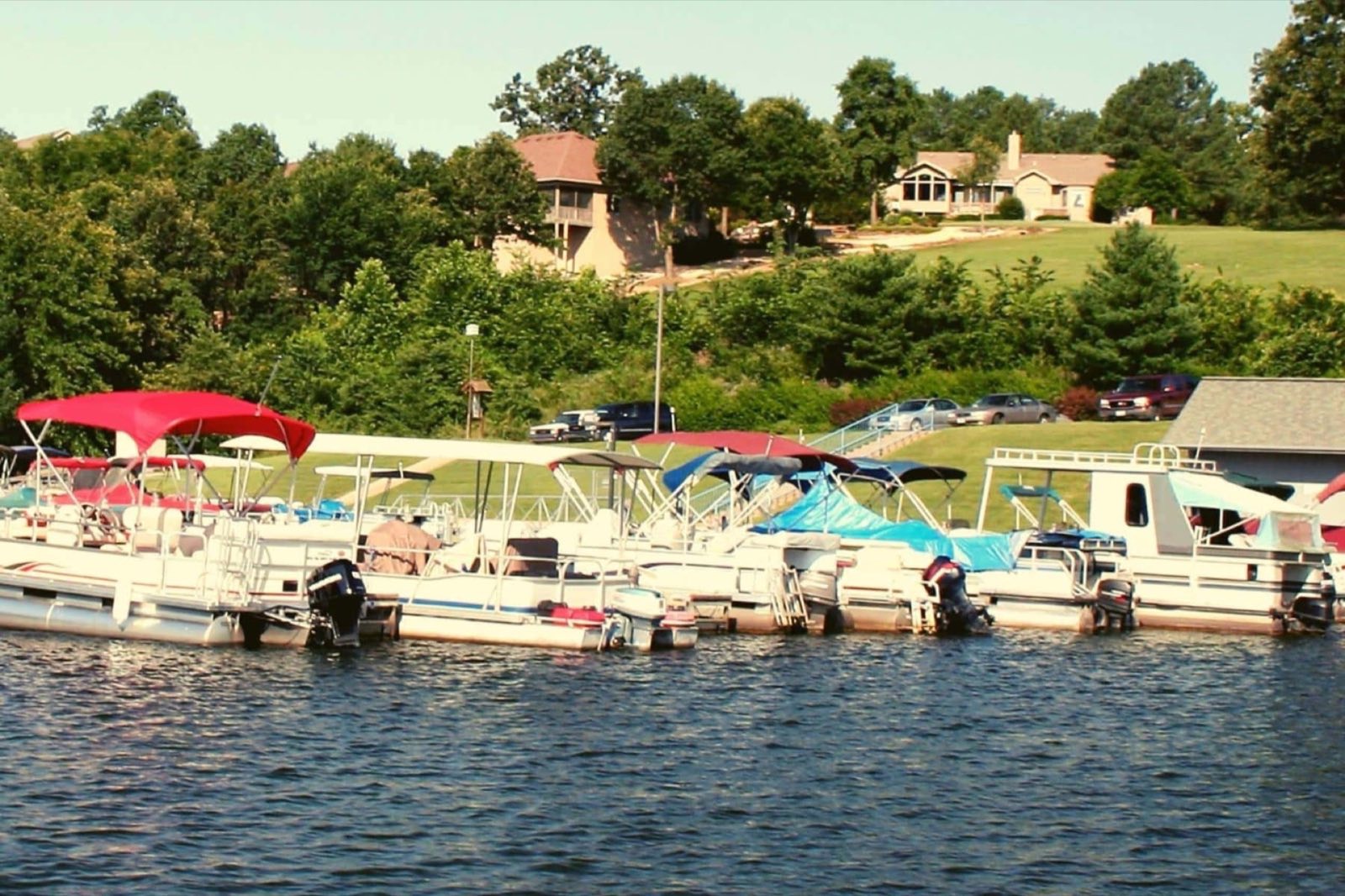
What is the Bennington 22 SSLX?
The Bennington 22 SSLX is a 21-foot 11-inch pontoon built in Elkhart, Indiana. It is part of Bennington's S-Series, the family-and-day line below the L and Q series. The trim badge breaks down like this: the double S puts it in the S layout family with the L-shaped rear bench, and the X is for the upgraded X-style railings that became standard across the line in the 2018 to 2019 cleanup. The 22 SSLX has an 8-foot 6-inch beam, a 2,196-pound dry weight, a 29-gallon fuel tank, and an 11-passenger NMMA capacity. It rides on two aluminum tubes, not three.
Standard outboard rigging covers the Mercury FourStroke range from 90 to 150 horsepower. Most dealer orders go out with a 115 or a 150. The 2026 SSLX comes standard with the Sterling Series furniture, a powder-coated playpen rail, a docking light, a stereo with two speakers, a captain's chair on a fixed pedestal, and a six-foot Bimini. Bennington has been the top-selling pontoon brand in the US for twenty years, and the SSLX is the spec that most lake dealers stock in volume.
What's it like on the water?
The first thing you notice is the deck width. At 8 foot 6, the SSLX is six inches wider than the entry-level pontoon segment, and you feel it the moment four adults stand up to dock. Nobody is rubbing shoulders. Step off the dock at idle and the two tubes track straight, the boat is steady, and there is no rocking from the dog walking from the bow to the stern.
We took a 2021 hull out of a quiet bay on Lake Wawasee in northern Indiana last summer with eight adults aboard and a Mercury 150. Hole shot was four to five seconds, top speed at full throttle came in at 28 mph, and cruise at 4,000 rpm was an easy 22 mph. On a flat lake at cruise the boat is quiet, the wake is small, and the bow stays level. With a 115 instead of the 150 the same boat is a 24 mph boat and the hole shot stretches to seven or eight seconds with a full load. Owners say the same thing consistently: the 115 is fine for cruising and swimming, the 150 is what you want if you ever plan to pull a tube.
In chop the two-tube hull does what two-tube hulls do. A 10-inch lake chop is fine. A 14-to-16-inch wind chop with a fetch across two miles gets bouncy and wet at the bow. If you are on a big inland lake that gets stirred up most afternoons, a triple-tube package is the better answer. The 22 SSLX is a fair-weather and morning-and-evening boat on big water, an all-day boat on smaller lakes.
Docking is straightforward. The fixed pedestal helm has good visibility forward and the playpen rail gives you a hand-hold to walk forward and grab the cleat. The single outboard turns the boat well enough at idle, and the wide beam means you can stand on the bow gate and step off without the deck tilting under you.
Who is the Bennington 22 SSLX for?
The 22 SSLX is for the lake family that does 30 to 80 hours a season and wants the segment-leading brand without paying for the Q-series. Picture a Saturday on a midwestern lake, ten adults aboard, an anchor down off a sandbar, kids swimming off the rear ladder, a cooler under the L-bench, music from the cockpit stereo. That is the SSLX. It is for the buyer who wants the Bennington dealer network behind them, the Bennington resale on the back end, and the build quality that holds up after ten seasons without the furniture peeling at the seams.
It is also for the casual angler who fishes a couple of bass rods on the bow, not for the angler whose Saturdays are about fishing. The standard SSLX has no rod lockers and no livewell. The S fishing trim is the right Bennington for that.
It is not for you if your boating includes pulling a slalom skier or a wakeboarder. The two-tube hull on a 150 is a tubing-and-kneeboarding boat, not a watersports platform. It is not for you if you boat on big open water where afternoon chop builds to 18 inches or more. For that, look at a triple-tube SX or a 23-foot R-series. It is not for you if you are shopping on entry price alone, the Bennington price over a Sun Tracker at the same length is $8,000 to $12,000 and that is the cost of the brand and the build.
Pricing
A 2026 Bennington 22 SSLX rigged with a Mercury 115 starts around $42,000 at the dealer. The same boat with a Mercury 150, an upgraded stereo package, and a longer Bimini lands between $48,000 and $58,000. Trailer is extra in most markets, figure $2,500 to $3,500 for a matching aluminum tandem-axle trailer.
The used market is wide because Bennington has been building the SSLX badge in roughly this configuration since 2018. The oldest 22 SSLX boats from 2012 to 2014 sit around $15,000 to $20,000 with high hours and tired furniture. The 2018 to 2019 hulls run $28,000 to $38,000 depending on power and condition. The sweet spot for a 2026 buyer is a 2020 to 2022 hull with the Mercury 115 or 150, the Sterling Series furniture, and 100 to 250 hours: those are landing between $32,000 and $45,000 at most dealers. A 2023 with light use can still ask north of $48,000 from a clean trade-in.
Year-by-year notes
Two model-year cutovers are worth knowing about. The first is 2018. Before 2018 the SSLX naming was muddled because Bennington was running both the older flat-panel S rail and the newer X rail across the same boats, and dealers ordered whichever they wanted. From 2018 on the SSLX has the X rail standard and the trim ladder cleaned up. If you are looking at a 2014 or 2015 boat, the rails and trim level vary boat-by-boat, you have to read the specific build sheet.
The second cutover is 2020. The Sterling Series furniture became standard on the SSLX, the helm got an updated panel with the digital Mercury VesselView gauge as an option, and the dash mounting received reinforced backing. The reinforced backing is the fix for a known issue on 2017 to 2019 hulls where dash panel clip bolts broke and the dash rattled, owners say it shows up around year three or four. Bennington fixed it under warranty for many but not all owners, and it is the first thing to check on a used 2017 to 2019 boat.
Cost of ownership
Annual operating costs on a 22 SSLX are moderate for a pontoon. A Mercury 150 FourStroke needs an annual service at the dealer, which costs $250 to $400 for parts and labor. Every 300 hours the engine wants a more thorough service including spark plugs and water pump impeller, that is $450 to $700.
Slip rental on most inland lakes is $1,200 to $3,000 a season for a covered slip and $600 to $1,500 for a tie-up. Insurance for a $40,000 pontoon is $350 to $650 a year in most freshwater states. Winter storage, indoor with shrink-wrap-equivalent protection, is $400 to $900 depending on the marina.
If you buy a 2021 SSLX with a Mercury 150 for $39,000 with 150 hours and use it 60 hours a season at a covered slip on a midwestern lake, your total annual cost over five years lands around $3,200 to $4,800 plus fuel. We refueled the same 2021 hull at the end of a four-hour cruise-and-swim day last summer in northern Indiana. The boat used about 8 gallons of 87 octane, the bill was $30.
Best year and spec to buy
The best buy in 2026 is a 2020 to 2022 hull with a Mercury 150 FourStroke, the Sterling Series furniture, the reinforced dash panel, the powder-coated playpen rail, and 100 to 250 hours of documented use. Look for service records that show the annual oil change at the dealer and at least one impeller replacement.
If you can find a 2023 with a Mercury 150 under 100 hours at $44,000 or less, that is a strong buy too. The 2024 and 2025 model years tick the price up another five to eight thousand without adding much on the water. Skip the 115 unless you are absolutely certain you will never pull a tube or three swimmers up the ladder at once. The 150 holds its value better and makes the boat usable for everything an SSLX is meant to do. We talked to an owner at a fuel dock on Lake James in Indiana last summer, he had a 2020 SSLX with a Mercury 150 and 320 hours on it. He had replaced the battery once, added a battery isolator switch to deal with the stereo drain, and otherwise left it alone. He said he would buy the same boat again. That kind of report comes up consistently when you talk to people who own this hull.
Alternatives
The closest in-house alternative is the Bennington 21 SSLX, one foot shorter, a couple thousand less new, same trim ladder. If you want the same length and brand in a different layout, the Bennington 22 SVSR puts a swivel-lounge front bench in place of the L-shaped rear, the choice depends on whether your crew faces forward or sits in a U at the stern. Outside Bennington, the Harris Cruiser 230 is the closest mid-tier cross-shop, similar build, often a few thousand less for the same year and power. The Avalon Venture 22 is another 22-foot two-tube competitor with a slightly different furniture style and a similar dealer footprint in the midwest.
For value buyers, the Sun Tracker Party Barge 20 is the obvious step down: cheaper, sold through Bass Pro, lighter on standard features, but a solid boat for half the budget. The Crest Classic 220 comes from the same Indiana corridor and competes head-on with the SSLX on layout and build at a slightly quieter resale ladder.