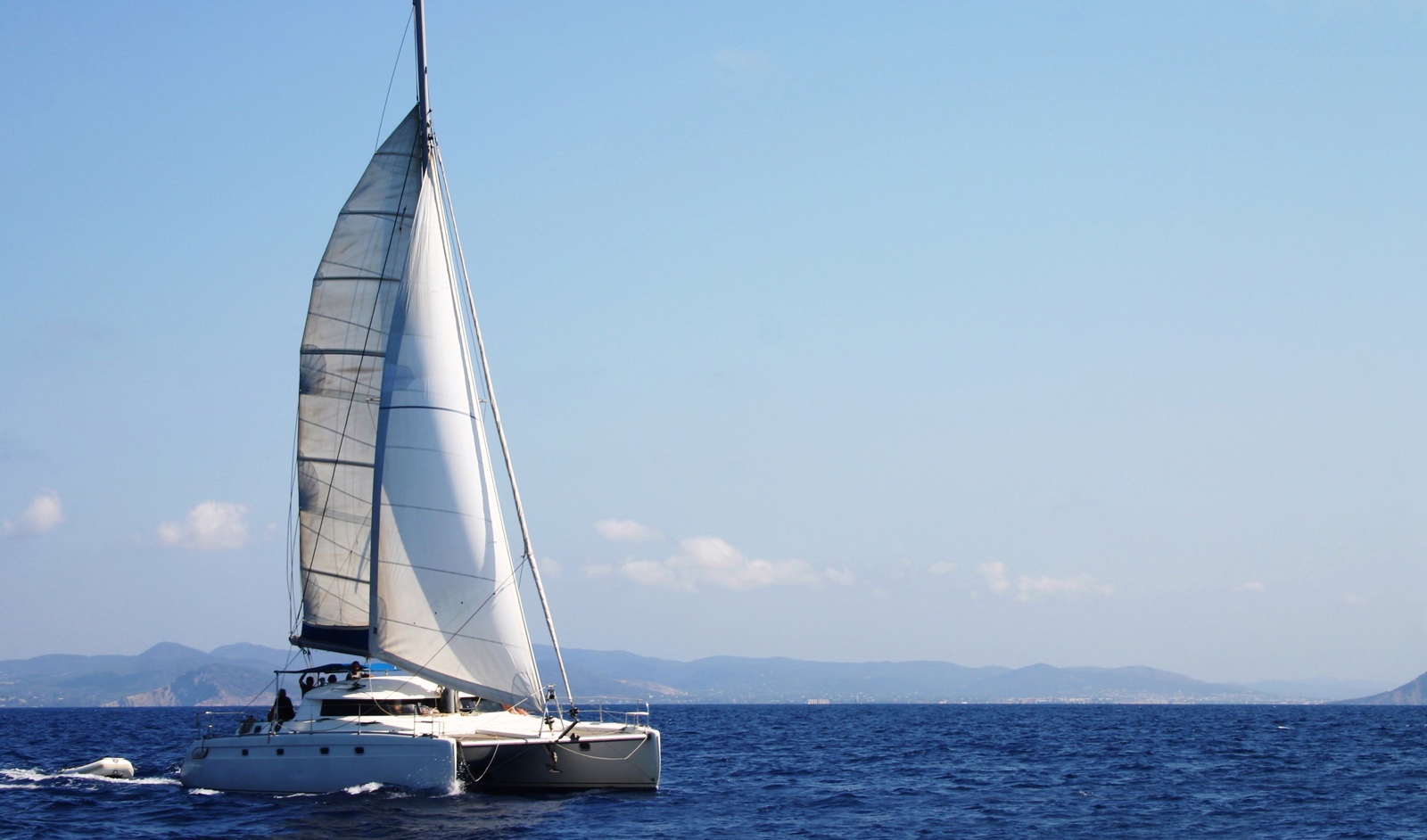
The Catalina 275 Sport is the smallest cruising boat Catalina has built in recent years that bridges day-sailor and weekender use. Catalina has been building production sailboats in California since 1969, and the 275 Sport ran from 2013 to 2020 as the trailer-sailable entry to the company's keel-boat range. It is the boat you buy when you want a real cabin without committing to a 35-foot weekender, when you want a boat that fits on a trailer, and when you want a Catalina dealer to answer the phone when something needs service.
What is the Catalina 275 Sport?
The 275 is a 27-foot 6-inch fiberglass sloop with an 8-foot 6-inch beam and a dry weight around 4,150 pounds with the swing keel up. The 8-foot 6-inch beam is the spec that matters most for the trailer-sailor brief. It is the width that most US states allow without an oversize-load permit, which means the boat can move between ramps and lakes without paperwork. Two keel options. The swing-keel boat sits at under 3 feet of draft with the keel up and around 5 feet 9 inches with the keel down. The fixed fin-keel boat sits at 4 feet 6 inches and is the choice for slip-stored owners.
Power comes from a Yanmar 1GM10 at around 14 horsepower across the production, driving a two-blade folding prop. The little Yanmar is a known quantity, parts are available everywhere, and the fuel burn is well under half a gallon per hour at cruise. Fuel capacity sits at 12 gallons, which is modest, and is one of the spec lines that frames the boat's natural use as day sailing with weekend overnights rather than long motoring passages.
Below decks is sized for what the boat is. Forward V-berth that sleeps two adults, a saloon with port and starboard settees that convert to additional berths, a galley with a single-burner stove and a small sink, and a head locker with a porta-potti. Standing headroom is six feet at the companionway and drops as you move forward. We sat aboard a 2017 hull at a slip in Marina del Rey on a clear afternoon, and the cabin felt like what it is: a usable weekender for two adults, a tolerable weekend for four, and a working day-boat for six.
Who is it good for?
Day-sailing families who want a real cabin without committing to a 35-foot weekender are the core buyer. The 275 covers the case where the boat goes out for an afternoon most weekends, hosts a weekend overnight a few times a season, and sleeps four when the in-laws come down. The cabin is not luxurious but it works.
Trailer-sailors are the second profile, and they are the buyer the swing-keel build is engineered for. Owners who want to drop the boat in at a different lake or bay across a season, take it inland for a week, and rinse the trailer back to the home slip. The 8-foot 6-inch beam and the under-3-foot draft with the swing keel up make the boat genuinely trailerable.
First-time keelboat owners stepping up from a daysailer or a small powerboat are the third buyer. The Yanmar diesel is small enough to be approachable, the sail handling is manageable for a sailor learning the ropes, and the Catalina dealer network means parts and service are accessible.
Who is it not good for?
Owners planning multi-night cruises should walk past the 275. The cabin is sized for an occasional weekend, not a week, and the storage volume runs out quickly with provisions for more than two adults. A Catalina 30 is a real step up in cabin volume for not a huge step up in money.
Buyers who want a stand-up enclosed head with a real marine toilet and a shower should also skip the 275. The porta-potti in a locker is what the brief produces, and there is no easy upgrade path. People who care about head facilities are looking at a 30 or 32-foot boat.
The third anti-profile is the buyer who wants a fast performance day-sailor. The 275 sails well for a small cruiser but it is not a racer, and the hull form prioritizes interior volume and stability over pure speed. People who want a sport-boat are looking at a J/80, an Etchells, or a similar dedicated daysailer.
Pricing
The Catalina 275 Sport is no longer in current production. The Catalina lineup in this length has shifted in the modern catalog. On the used market, 2014 to 2019 hulls in clean condition sit in the $48,000 to $78,000 band depending on whether the boat carries the swing keel or the fixed keel, the electronics package, sail condition, and the condition of the trailer if one comes with the sale. The broader market runs from about $32,000 for older or higher-hour boats up to $92,000 for low-hour, well-equipped examples.
Depreciation has flattened on the 275. A boat that sold new for around $80,000 in 2017 now sits in the $55,000 to $65,000 band, which is close to where it has been for the last several seasons. Catalina cruisers tend to lose value steadily for the first three to five years and then plateau. The 275 follows that pattern.
What works
- Swing-keel option drops draft under 3 feet, opens up shallow-draft cruising and trailer-sailing
- Trailerable at 8-foot 6-inch beam without a permit in most states
- Sleeps four in a forward V-berth and saloon convertible
- Yanmar 1GM10 at 14 horsepower is durable and parts are available
- Catalina dealer and parts network is wider than any direct competitor at this length
- Holds its price on resale better than most boats at this length
- Sails well for a small cruiser. Points reasonably and accelerates in working breeze
What doesn't
- Cabin volume is modest. Sized for an occasional weekend
- Head is a porta-potti in a locker, not an enclosed head
- Swing-keel pivot pin and wire system ask for inspection every 3-5 years
- Small 12-gallon fuel tank limits motoring range
- Standing headroom is 6 feet 0 inches at the companionway and drops moving forward
- Standard sail inventory is sized for cruising. Performance buyers upgrade
Year-by-year notes
The Catalina 275 Sport ran from 2013 to 2020. The Yanmar 1GM10 was the standard powerplant throughout the run. Electronics shifted from Raymarine to a mix of Raymarine and B&G across the production as plotter technology updated. The swing-keel and fixed fin-keel options were both available throughout. There is no defect cutover year worth screening for, but on any swing-keel boat over 8 years old the pivot pin, the keel-raising wire, and the winch mechanism should be inspected closely. Sail life on the original main and jib is 5 to 7 seasons of regular use.
Cost of ownership
A 275 lived on a trailer at home with 50 sailing days a season costs roughly $3,500 to $5,500 a year all-in once you spread the recurring lines across an ownership year. The trailer-storage model is part of why the 275 is the value buy in the small-cruiser segment. No slip rental, no annual haul-out, no bottom paint. Trailer maintenance and bearing service is the offset. Bearings repacked every 2-3 years, lights and wiring checked annually, and a brake inspection on the hauling distance.
The Yanmar 1GM10 wants oil and impeller service every 100 hours or annually, at $150 to $250 in parts. Standing rigging replacement comes due every 10 to 15 years and costs $3,500 to $5,500 on a boat this size. Sail life on the original main and jib is 5 to 7 seasons of regular use, with replacement at $3,000 to $5,500 for the main-and-jib package in cruising fabric. Insurance on a $60,000 hull value is $600 to $1,000 a year depending on whether the boat is trailer-stored or slip-stored, and whether named-storm coverage is part of the policy.
Best year and trim to buy
A 2015 to 2019 Catalina 275 Sport with the Yanmar 1GM10 diesel, swing keel if you plan to trailer the boat or fixed fin keel if you plan to slip-store, a B&G or Raymarine plotter at the helm, and a trailer in serviceable condition if one is included is the right buy in 2026. Look for a boat with a clear service history on the swing-keel mechanism if that is the build, and a clean engine log on the Yanmar.
Check five things before buying. First, the swing-keel pivot pin and the keel-raising wire. Failure here is the most expensive issue a 275 Sport can have. Second, the chainplate seal at the deck. Water intrusion is the standard cruising-monohull failure mode. Third, the rudder bearings, which on a small fin-keel boat can wear faster than expected with hard use. Fourth, the engine hour log. Yanmars are durable but an owner who skipped service leaves the bill for you. Fifth, the sail condition and the date stamps.
Alternatives
The next size up in the same family is the Catalina 30, which trades trailerability for materially more cabin volume and a real enclosed head. For a more European cross-shop at the next size up, the Beneteau Oceanis 320 is materially more boat for materially more money and is not trailerable. The closest performance-cruiser cross-shop is the Tartan 30, an older classic design that sails better but lacks the swing-keel and trailerability the 275 Sport delivers.