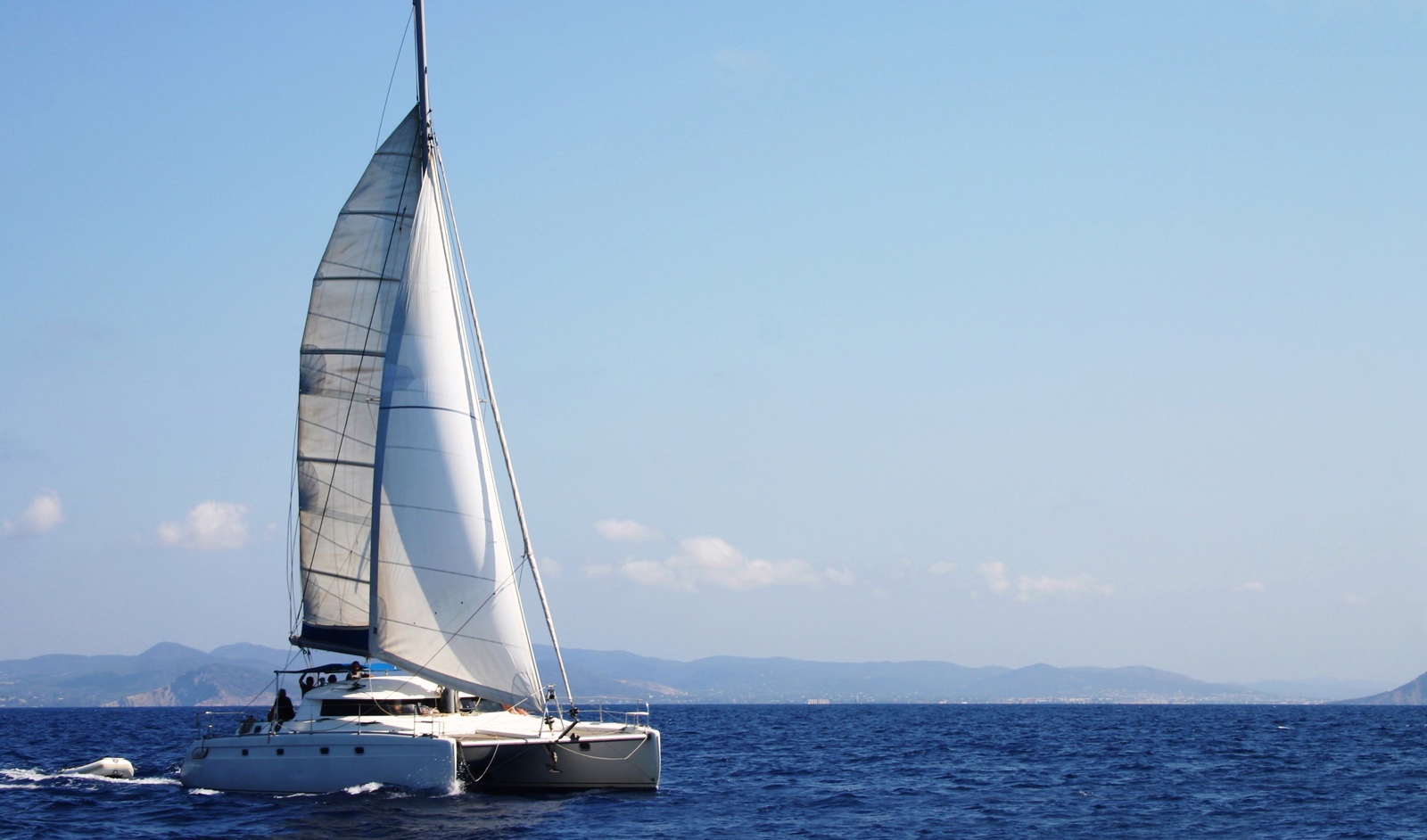
The Catalina 30 is the boat 6,500 owners learned to sail on. Frank Butler started Catalina Yachts in 1969 and launched the 30 in 1972. Production ran for 35 years, ending in 2007 with more than 6,500 hulls built across three major design generations, and the boat aged into the most-supported first cruiser in North America. The owners association keeps a parts inventory and a technical archive that no other production sailboat at this length can match. That alone is half the reason to buy one.
What is the Catalina 30?
The Catalina 30 is a 29-foot 11-inch fiberglass sloop with a fin keel drawing 5 feet 3 inches (the tall-rig version draws a few inches more) and a beam of 10 feet 10 inches. Hull weight is around 10,200 pounds depending on ballast spec and year. The mast is keel-stepped on most hulls, deck-stepped on a smaller share of the production. The standard rig is a masthead sloop with a roller-furling genoa available from the dealer on later boats and retrofitted on most older ones. The auxiliary engine is one of two: a Universal Atomic Four gasoline inboard on the earliest production (1972 through the late 1970s), then a Universal M-25 series diesel through the 1980s and into the 1990s, then a Yanmar 3GM30F diesel on later hulls.
The interior is the reason the boat sells. A V-berth forward that sleeps two adults, a saloon with port and starboard settees that convert to additional berths, an enclosed head with a basin and a marine toilet, a working galley aft on the starboard side with a two-burner stove, a sink, and an icebox. Headroom in the saloon is 6 feet 2 inches, tight for taller crew but workable. The quarter-berth on the port side aft tucks under the cockpit and fits a single adult or two kids. Stowage is generous for a 30-footer because the bilge is shallow and the lockers compensate.
The cockpit is wheel-steered on most hulls, tiller-steered on the earliest production. Coamings are generous, the cockpit seats six comfortably for an afternoon, and the companionway has a real bridge deck that keeps water out in a knockdown. The standing rigging is straightforward, two lower shrouds and one upper per side, a backstay, and a single forestay with roller furling on most boats.
Who is it good for?
First-time cruising sailboat buyers are the core profile. The Catalina 30 is the boat most US sailing schools owned a fleet of through the 1980s and 1990s, and the boat most coastal liveaboards bought as their first move-aboard hull. The systems are simple, the diesel is the most-supported small auxiliary in North America, and the sailing characteristics are predictable. A first-year owner is not going to find themselves over their head.
Coastal weekenders are the second group. Couples or families running Friday-to-Sunday trips on the Chesapeake, Long Island Sound, San Francisco Bay, or any of the Great Lakes coastal markets. We sailed a 1995 hull out of an Annapolis marina on a summer afternoon in 12 knots of true wind on a beam reach, the boat moved at six knots without effort, the motion was comfortable, and the cockpit fit the four of us aboard without anyone feeling crowded. That is the brief the boat was designed against and it delivers.
Long-hold owners who plan to sell in five to ten years are the third profile. Catalina 30 resale is nearly flat in real terms across the production once the hull crosses the 20-year mark. A clean 1995 boat bought in 2020 for $24,000 sells in 2026 for $24,000 to $28,000 on the same coast. There is no other 30-foot cruising sailboat with that resale curve.
Who is it not good for?
Performance-minded sailors are the wrong buyer. The Catalina 30 points well enough to make most coastal passages but it does not sail like a sport cruiser. Sailors who want a boat that accelerates out of a tack and points 35 degrees off the wind should walk to an Ericson 32-3 or a Tartan 30 instead.
Offshore-passage buyers are the second exclusion. The Catalina 30 is a coastal cruiser. The freeboard, the bridgedeck, the rudder geometry, and the rigging spec are designed for protected water and short coastal hops. Offshore passages happen on these boats but they happen with caveats and with crew that knows the boat well. A first-time owner planning trans-Atlantic or Caribbean passages should buy a different boat.
Tall crew who need full headroom for guests fit the third exclusion. Six feet 2 inches in the saloon is workable for the owner but it is not generous, and anyone who routinely sails with crew above 6 feet 4 will hear about it. A Hunter 33 or a larger Catalina (the 320 or 34) gives more headroom at modest extra money used.
Pricing
The Catalina 30 is out of production. The 2026 used market spans $8,000 at the bottom (1970s hulls with original Atomic Four gas engines, deferred maintenance, deck soft spots) to $52,000 at the top (clean 2005-2007 final-generation hulls with Yanmar diesel, recent rigging, and refit electronics). The sweet spot for 2026 buyers is the 1985-1995 hull with the Universal M-25XP or Yanmar 3GM30F diesel, post-1985 deck and rigging upgrades, and current standing-rigging file, which lands in the $18,000 to $42,000 band.
Geography matters. A clean 1990 hull on the Chesapeake or Long Island Sound trades for $22,000 to $32,000. The same boat on the Great Lakes is $18,000 to $26,000. On the West Coast, where supply is thinner, $24,000 to $38,000. Price spreads narrow on the Mark III generation (1995-2007), where production volume was lower and the boats are still close to current build quality.
Depreciation is not a meaningful concept on the Catalina 30 in 2026. A clean hull bought today sells in five years for close to what you paid. The capital cost of ownership is roughly the difference between purchase and sale, and that difference is small enough that the boat operates more like a long-term rental than a depreciating asset. Refit costs (rigging, sails, electronics) are real and they accumulate, but the hull itself does not lose value the way a production powerboat does.
What works
- The Catalina 30 owners association maintains a parts inventory and technical archive no other boat in the segment matches.
- Universal M-25XP and Yanmar 3GM30F are the two most-supported small auxiliary diesels in North America. Parts and service available in every coastal market.
- Sleeps four with a working galley and an enclosed head, real weekending capability for couples or small families.
- Five-foot 3-inch fin keel draws shallow enough for most coastal anchorages, including most of the Chesapeake and most West Coast bays.
- Production volume means hulls in every coastal market. You can shop in person within a few hours of most US sailing centers.
- Resale is essentially flat in nominal terms after the boat crosses 20 years old.
- Chainplate, rigging, and engine access are well-documented across decades of owner refit experience.
What doesn't
- Sailing performance is honest, not impressive. The boat moves fine in 12 knots and is comfortable in 18, but it does not point 35 degrees off the wind and it does not accelerate like a sport cruiser.
- Balsa-cored decks on most hulls. Pre-purchase moisture mapping at every deck fitting is non-negotiable.
- Standing rigging service life of 15 to 20 years means most 2026-market hulls are at or past the original rigging window. Budget $4,000 to $7,000 for replacement.
- Headroom is 6 feet 2 inches, tight for taller crew or taller guests.
- Bilge depth is shallow, which simplifies stowage but means water reaches the cabin sole faster than on deeper-bilge designs.
- Engine compartment access on early Universal hulls is tight. Owners who do their own oil changes plan for an extra hour.
Year-by-year notes
Three major design generations defined the production. Mark I (1972 to 1982) carried the Atomic Four gasoline engine on early hulls, with the Universal M-12 and then M-25 diesel options through the run. Mark II (1983 to 1986) brought interior layout refinements, hardware upgrades, and the Universal M-25XP diesel as the standard auxiliary. Mark III (1987 to 2007) is the longest-running generation, with deck-layout updates, the Yanmar 3GM30F diesel option from the early 1990s, and a saloon and head refresh in the mid-1990s.
The 1985 model year is a common shopping cutover for buyers who want the post-Mark-I deck and rigging spec. The early 1990s shift to the Yanmar engine is the other common cutover, preferred by buyers who want the easier service network. No single defect cutover year defines the production, but pre-1985 hulls warrant a more careful deck-core inspection because the laminate schedule and the deck-fitting bedding standards evolved through the run.
Cost of ownership
Annual operating costs on a Catalina 30 are low for a 30-foot cruising sailboat because the systems load is light. Universal M-25XP or Yanmar 3GM30F service every 100 hours runs $250 to $400 in parts and $200 to $400 in dealer labor. Bottom paint on a Catalina 30 is a $400 to $700 materials job and a single-day haul-out. Sails are the larger variable: a new main and genoa from a regional sailmaker runs $4,500 to $7,500 and lasts 8 to 12 years depending on use. Standing rigging replacement is $4,000 to $7,000 once every 15 to 20 years.
Insurance on a $30,000 hull is $800 to $1,500 a year in most coastal US markets. A slip in a Chesapeake or Long Island Sound marina is $3,500 to $6,500 a year. On the Great Lakes, slip rates are lower in absolute dollars but the season is shorter, which evens out the cost-per-sailing-day. A five-year hold on a 1995 used Catalina 30 bought at $28,000 with the rigging current, used 80 hours a season, lands at roughly $4,500 to $7,000 a year all-in including insurance, slip, fuel, service, and amortized capital cost. The amortized capital cost is lower than it looks because the boat sells for close to what you paid.
Best year and trim to buy
The 1990-1995 Catalina 30 Mark III with the Yanmar 3GM30F diesel, post-1990 deck and rigging spec, and 1,500 to 3,500 engine hours is the right buy in 2026. The Mark III is the most-sorted generation, the Yanmar is the easier engine to service in the current parts market, and the 1990-1995 production lands in the price band where you get a clean hull without paying the premium of the final-generation 1998-2007 boats.
Verify six things before purchase. The deck-core moisture map shows no wet readings at any deck fitting (a survey-grade moisture meter reads the core through the gelcoat). The chainplates are accessible and show no crevice corrosion at the deck pass-through. The standing rigging file is current or the rigging has been replaced within the last 15 years. The engine compression is even across all cylinders and the oil pressure holds at idle and at cruise rpm. The mast step shows no signs of water intrusion or core damage. The owners-association membership has been transferred and the technical archive is accessible (this part is free to the buyer but a 1995 hull without an active OA membership is a small flag, the owner who maintains the boat usually maintains the association tie too).
Alternatives
The closest cross-shop on sailing performance is the Ericson 32-3, which gives up some accommodation volume and a much smaller owners network in exchange for a hull that points higher and sails faster. Sailors who want to race their cruiser or who care about getting somewhere upwind should look here first. The other big-builder cross-shop is the Pearson 323, which sits adjacent to Catalina on coastal-cruiser brief and on resale stability. The Hunter 33 is the entertaining-oriented cross-shop with more headroom at modest extra money on the used market, and the Tartan 30 is the performance-cruiser alternative with a stronger sailing pedigree at a similar age.