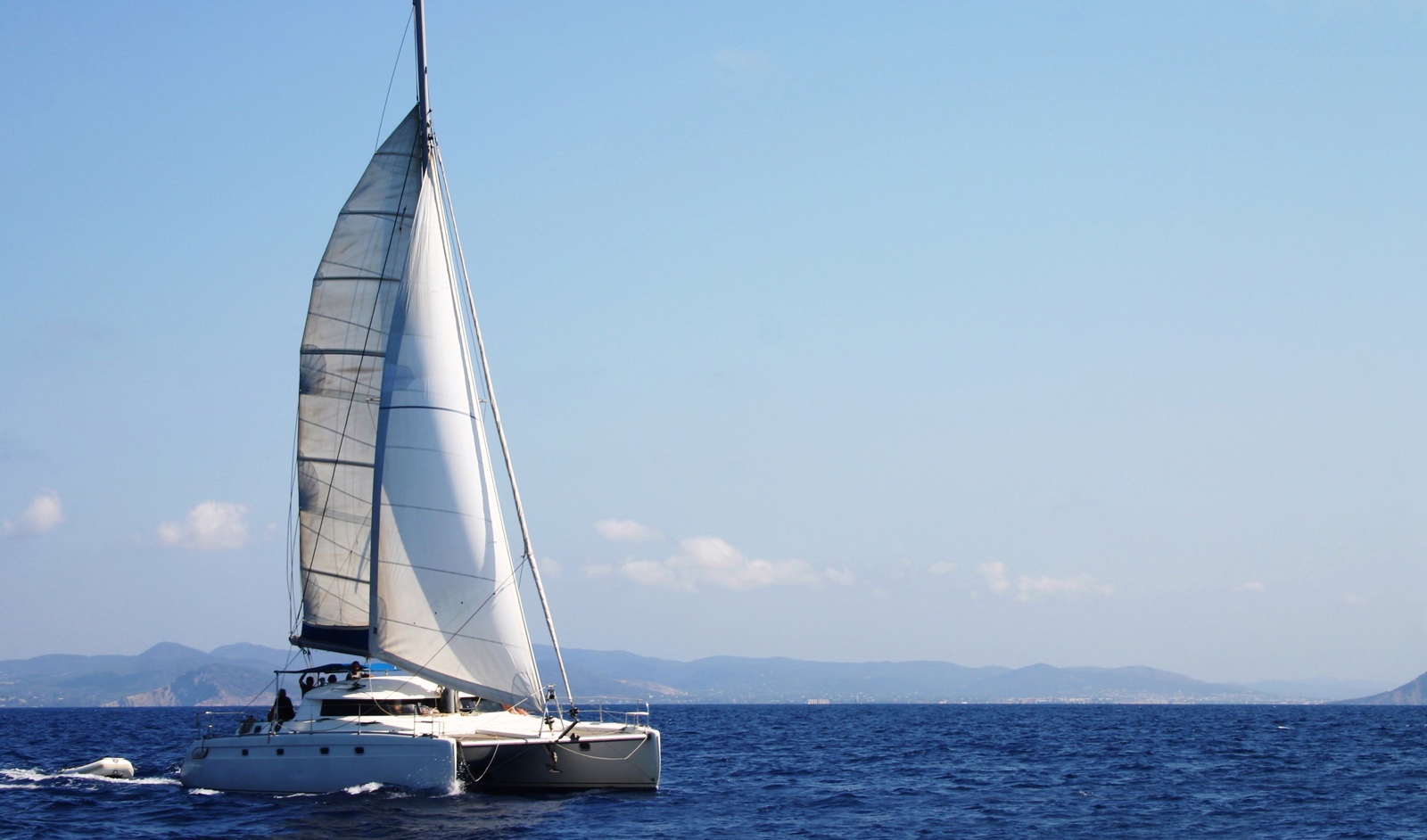
The Ericson 32-3 is the boat sailors buy when they want their first cruiser to actually sail. Ericson Yachts built the 32-3 from 1985 through 1990 in Southern California, with Bruce King drawing the hull. The production was short, the owners network is small, and the boat aged into the performance-cruiser pick in a segment dominated by volume builders. It sits in our first-cruiser-under-$50k guide because the sailing characteristics are an honest step up from the Catalina 30, the Hunter 33, and the Pearson 323 at a price that puts it in reach of first-cruiser shoppers.
What is the Ericson 32-3?
The 32-3 is a 32-foot fiberglass sloop with a fin keel drawing 5 feet 6 inches and a beam of 11 feet. Hull weight runs around 11,300 pounds. The mast is a deck-stepped aluminum spar on a compression post, with a fractional rig that gives the boat its sailing character. The standard auxiliary is the Universal M-25XP diesel at 21 horsepower, the same engine that powers most contemporary Catalinas, Hunters, and Pearsons of similar length.
The hull is the headline. Bruce King drew the 32-3 with a sail-area-to-displacement ratio at the top of the production-cruiser segment for the era. A fine entry forward, a moderate underbody, a fin keel with a high-aspect rudder on a skeg, and a deck plan that keeps the cockpit working. The result is a boat that points 35 degrees off the wind without effort, accelerates out of a tack the way a sport cruiser does, and holds a comfortable groove on a beam reach in 15 knots of true wind. The bilge is deep enough to keep water below the cabin sole in heel, which is the small detail that shows the design was thought through.
The interior is narrower than a Catalina 30 of the same length because the hull is more performance-oriented. A V-berth forward, port and starboard settees, an enclosed head with a basin and a marine toilet, a working galley aft, and a quarter-berth on the port side under the cockpit. Headroom is 6 feet 3 inches in the saloon. The galley fits a two-burner stove, a sink, and an icebox. Stowage is workable but tighter than on the volume cruisers of the same era. The trade for the narrower saloon is the hull that actually sails.
The cockpit is wheel-steered with a pedestal that mounts the engine controls and the binnacle compass. Coamings are generous, the cockpit fits four for sailing and six for an afternoon at anchor, and the bridge deck and companionway are sized for serious weather. The deck layout puts the genoa winches within reach of the helm, which matters on a boat that gets sailed shorthanded as often as not.
Who is it good for?
Sailors moving up from a daysailer or a one-design dinghy are the core profile. The 32-3 rewards the things a dinghy sailor already knows: sail trim, weight placement, reading the wind on the water. Owners who came up through the Lasers, the J/22s, or the small keelboat fleets find the 32-3 a natural step into cruising because the boat responds to inputs the way a smaller racer does.
Club racers who want a weekend cruising hull are the second group. The 32-3 will not win against a modern racer-cruiser, but it holds its own in a club fleet against newer 32-footers and gives up nothing on accommodations to those competitors. We sailed a 1988 hull in a fall club race out of a Marina del Rey marina, 10 to 12 knots of wind on the nose, four legs around the harbor entrance buoys, and the boat finished mid-fleet against newer 32-foot designs without working at it. That is what the design was for and that is what it still does.
Long-hold owners willing to do the parts and refit legwork are the third profile. The 32-3 owners network is real but small. Parts for the hull-specific bits (chainplates, deck hardware, interior trim) take more searching than the equivalent Catalina parts. Owners who enjoy the refit side of sailboat ownership find the 32-3 a satisfying long-term project. Owners who want a turnkey boat with everything in stock at the local chandler should buy a Catalina.
Who is it not good for?
First-time sailors who want the easiest possible boat to own are the wrong buyer. The 32-3 sails better than a Catalina 30, but the fleet support, the parts pipeline, and the sailing-school familiarity are all on the Catalina side. A first-year owner learning to sail benefits from the volume-builder ecosystem. The 32-3 is the second boat, not the first.
Families wanting maximum interior volume per LOA fit the second exclusion. The 32-3 saloon is narrower and the stowage is tighter than the Catalina 30 at similar length. Families who plan to live aboard for weeks at a time or who want guest berths for more than two extras should look at a larger boat or a wider design.
Owners tight on budget for refit work are the third exclusion. The 32-3 hulls in the 2026 market are all 35-plus years old. Standing rigging at that age is at or past service life, sails are usually a refit line, and chainplate condition warrants a careful survey. A clean turnkey 32-3 exists but it costs more than the average asking price, and buyers tight on the refit budget should not stretch to a boat that needs work.
Pricing
The Ericson 32-3 is out of production. The 2026 used market spans $14,000 at the bottom (hulls with deferred rigging, deck core issues, and tired sails) to $58,000 at the top (refit hulls with new rigging, new sails, recent electronics, and a clean survey). The mid-band, 1987-1990 hulls with the Universal M-25XP diesel, current standing rigging or rigging replaced within the last ten years, and a clean balsa-core deck survey, lands in the $28,000 to $46,000 band.
Geography spreads the price more than the year does. West Coast 32-3 hulls (where Ericson built the boats) trade in a tighter band and tend to sit at the higher end of the range. East Coast and Great Lakes hulls trade lower because the buyer pool is smaller and the supply is thinner. Buyers willing to ship a boat across the country sometimes find the value play that way.
Five-year depreciation is not a meaningful concept on the 32-3 in 2026, the same as the Catalina 30. A clean hull bought today sells in five years for close to what you paid, less any refit work absorbed into your ownership. Refit costs are real and they accumulate. The capital cost of ownership is the gap between purchase and sale plus the carrying costs along the way. The gap is small. The carrying costs are the larger line.
What works
- Bruce King hull design delivers segment-leading sailing performance for a 32-foot production cruiser of the era.
- Points 35 degrees off the wind without effort, accelerates cleanly out of a tack.
- Sleeps four with a real galley and an enclosed head, real coastal-cruising capability.
- Bilge depth is generous, water stays below the cabin sole in heel.
- Universal M-25XP diesel is the most-supported small auxiliary in North America. Parts and service are available in every coastal market.
- Deck and hardware layout was thought through, the cockpit works for sailing shorthanded.
- Performance-cruiser positioning supports a small but committed used-market demand. Clean hulls move when they list.
What doesn't
- Saloon is narrower than the Catalina 30 of similar length. Accommodations feel tighter even with the headroom advantage.
- Standing rigging on most 2026-market hulls is 35-plus years old. Replacement is a non-negotiable budget line, $5,000 to $8,000 in materials and labor for a typical refit.
- Owners network is small. Parts and technical knowledge require legwork the Catalina does not.
- Used inventory is thin. The right year-and-trim combo may take six months to find on a national search.
- Balsa deck core requires a moisture survey at every deck fitting before purchase.
- Resale is firmer than the average performance-cruiser peer, but the buyer pool is small and sales take longer than equivalent Catalinas.
Year-by-year notes
The 32-3 ran from 1985 through 1990 with the same hull mold and the same Bruce King design throughout. Hardware spec, deck layout, and interior trim evolved across the production. Early hulls (1985 and 1986) carried first-generation deck and rigging spec. The 1987-1988 production brought hardware refinements that owners point to as the easier-to-own years. The 1989-1990 final-production hulls are the most-sought used boats, with the rig and the interior settled. No single defect cutover year defines the production, but pre-1987 hulls warrant slightly more careful deck-fitting bedding inspection because the standards evolved through the run.
Cost of ownership
Annual operating costs on a 32-3 are comparable to a Catalina 30 of the same age, with one exception: the standing rigging service window catches almost every 2026-market hull. Owners buying a 32-3 in 2026 should budget for rigging replacement within the first 24 months of ownership if it has not been done recently. Universal M-25XP service every 100 hours is $250 to $400 in parts and $200 to $400 in dealer labor. Bottom paint is a $400 to $700 materials job. New sails from a regional sailmaker run $5,000 to $8,500 for a main and a genoa and last 8 to 12 years.
Insurance on a $35,000 hull is $900 to $1,800 a year in coastal US markets. Slip costs vary by region. A five-year hold on a 1989 hull bought at $32,000 with the rigging already replaced and the sails within five years of new, used 80 hours a season on a Pacific coast, lands at $5,500 to $8,500 a year all-in including insurance, slip, fuel, service, and amortized capital cost. If the rigging is your project in year one, add $5,000 to $8,000 to year one's number.
Best year and trim to buy
The 1987-1990 Ericson 32-3 with the Universal M-25XP diesel, standing rigging current or replaced within the last ten years, and a clean balsa-core deck survey is the right buy in 2026. The 1988-1990 hulls are the most-sorted production years. The earlier hulls (1985-1986) are correct buys at a slightly lower price point if the deck-core survey is clean and the rigging file is in order.
Verify six things before purchase. The deck-core moisture map reads dry at every deck fitting. The chainplates show no crevice corrosion at the deck pass-through, on a 35-plus-year-old hull this is the most common point of expensive surprise. The standing rigging is within service life or has been replaced. The rudder bearing has no play (a small wiggle is normal, a larger one means a bearing rebuild). The engine compression is even across all cylinders. The mast step compression post shows no signs of crushing or water intrusion at the cabin sole. A clean 1989 hull with these six boxes ticked lands in the $34,000 to $44,000 range from a broker who knows the Ericson market.
Alternatives
The closest cross-shop is the Catalina 30, which gives up sailing performance in exchange for the largest owners network in the segment and the easiest parts pipeline of any boat in the guide. Sailors who want the easier owner experience should look here first. The other performance-cruiser cross-shop is the Tartan 30, a similar-era boat from a different builder with a comparable hull philosophy and similar refit expectations. The Pearson 323 sits between the Catalina and the Ericson on most dimensions, including hull design and accommodation volume, and is the middle-ground option for buyers who want some of the sailing performance and some of the fleet support.