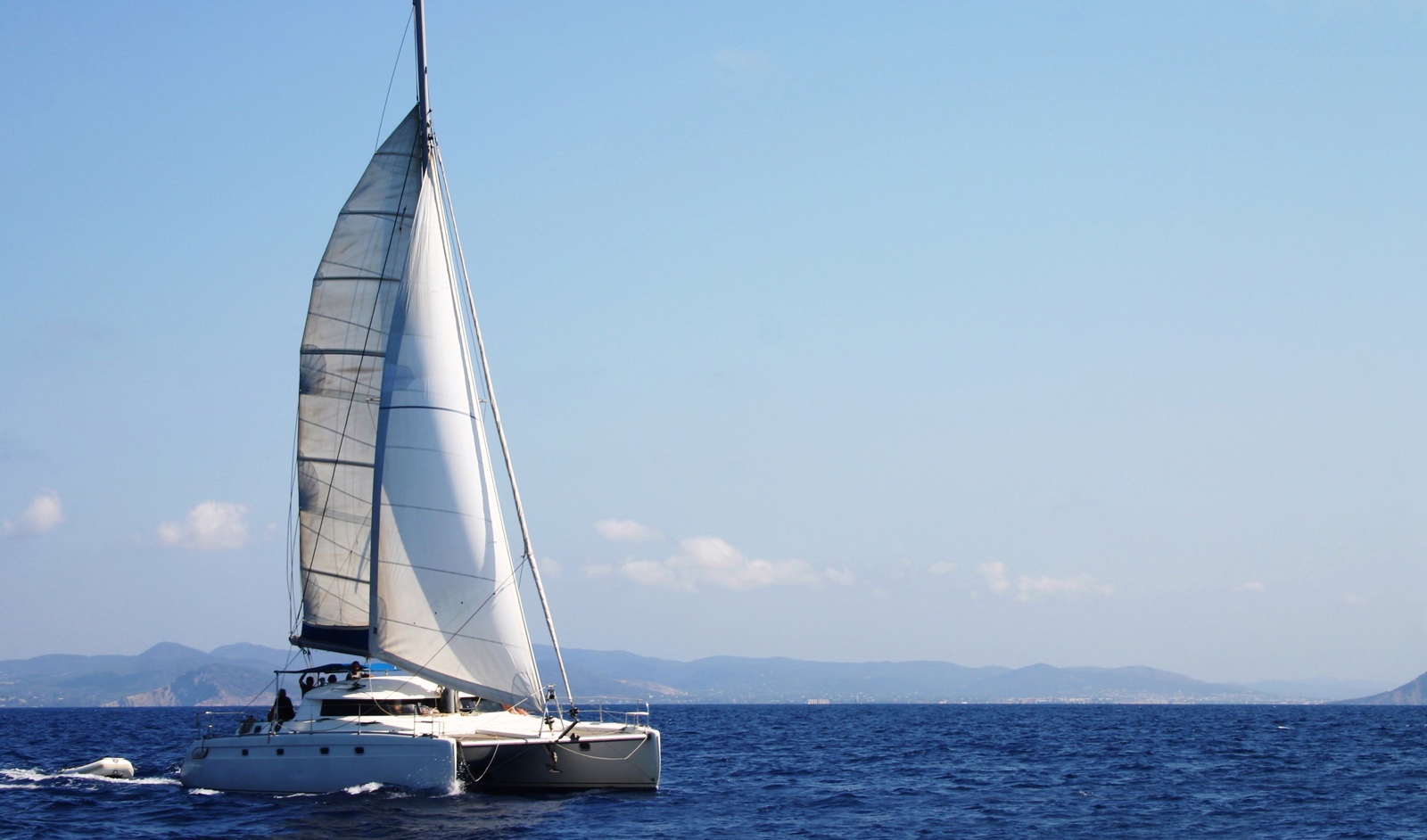
The Pearson 323 is the build-quality reference point in the under-$50k first-cruiser segment. Pearson Yachts started in Bristol, Rhode Island in the late 1950s, and by the time the 323 entered production in 1977, the company had a couple of decades of hand-laid fiberglass work behind it. The 323 ran through 1983, which means every example on the used market has at least four decades of weather. That's the deal. You're not buying a new boat. You're buying the build culture of a 1970s Rhode Island sailboat yard at a price that's less than half what a comparable new 32-foot cruiser would cost you today.
What is the Pearson 323?
The 323 is a 32-foot 3-inch fiberglass sloop designed by Bill Shaw, Pearson's in-house designer for most of the company's production years. Beam is 10 feet 9 inches. Draft is 4 feet 6 inches on the shoal-keel version and 5 feet on the deep-keel. Displacement runs around 13,200 pounds with ballast at 5,400 pounds. Auxiliary power was the Atomic 4 gas engine on early boats, with a switch to small Universal or Westerbeke diesels later in the run. Most boats on the market today have been repowered with a Yanmar 2GM20F or 3GM30F. If a boat still has its original Atomic 4 running, the engine isn't necessarily a problem, but the math on a repower comes up fast.
The hull is solid fiberglass top to bottom. The deck has a balsa core in some areas but Pearson laid the boat heavy and the deck cores hold up better than the average 1970s build, especially around the cabin top. Bulkheads are bonded to the hull rather than just tabbed, which is the construction detail that puts the 323 in a different category from the entry-level boats of the same era. The hull-deck joint is mechanical-fastened with sealant rather than bonded. Forty years on, that joint sometimes weeps, and the locker corners are the first place you'll see it.
The interior fits five for sleeping. V-berth forward, settee berths port and starboard in the saloon, and a quarter berth aft. The quarter berth is the one that turns the boat into a real coastal cruiser, because it's the sea berth that lets the off-watch person actually rest underway. The galley is to port at the foot of the companionway. The head is to starboard with a small wet shower in the head compartment. Headroom is 6 feet 1 in the saloon and a little less in the forward cabin. Tall sailors notice it in the head door more than anywhere else.
Who is it good for?
First-time cruisers who plan to keep the boat for fifteen or twenty years are the right buyer. The 323 is not the boat you flip in three years. The depreciation curve has been flat for two decades because every remaining hull is being held by someone who values what Pearson built. The hull, the bonded bulkheads, the heavy fiberglass deck, the design that tracks straight on a long reach. None of that is going to be outdated by next year's models.
A couple who occasionally takes another couple aboard for a weekend fits the layout well. The forward V-berth is a real double, and the saloon settees make up two more berths. Quarter berth as the fifth and as the sea berth underway. We spent an October weekend on a 1980 323 surveyed in Narragansett Bay, the hull tight and the original Atomic 4 long since replaced with a Yanmar 3GM30F. The boat sailed dry on a hard reach in 18 knots with the rail buried to the toe, and the companionway stayed dry. That's the design working the way Bill Shaw drew it.
The third profile is the sailor who can do some of their own work. The 323 is a hands-on boat. Through-hulls, head plumbing, electrical panel cleanup, deck-hardware rebedding. None of it is hard. All of it is on the list when you buy a forty-plus-year-old hull. A boat owner who can pull a head off and replace the joker valve without calling a yard saves real money over a ten-year hold.
Who is it not good for?
Anyone who wants a turnkey boat should walk past the 323. The bones are excellent. The systems are forty years old. Even a 323 with a recent repower, recent standing rigging, and new through-hulls will have an electrical panel and wiring runs that need attention, a head that's on its third pump, and locker hinges that crumble in your hand when you tug on them.
Sailors who plan to flip the boat in three years should also look elsewhere. The 323 is a long-hold boat. The used market is patient. If you list yours in three years with no improvements, you'll get what you paid, give or take a few thousand. The boat that goes up in value is the one that's had work done. New rigging, recent diesel, fresh paint, sound deck. That work doesn't pay back in three years.
Tall sailors with a partner who also wants room should think about the headroom. Six feet one in the saloon is not enough for someone who's six four, especially in the head. A taller boat at this length exists if you stretch the budget by ten grand toward a Catalina 30 or a Hunter 33, both of which feel airier inside.
Pricing
The Pearson 323 was discontinued in 1983, so there's no new-boat number to anchor against. The used market in 2026 spans roughly $15,000 at the bottom (rough hulls with engine issues and deferred yard work) up to $42,000 at the top (a fully repowered, recently re-rigged 1982-1983 hull with current canvas and a maintained interior).
The sweet spot is the $25,000 to $35,000 band, which buys you a sound hull with a diesel repower in the file, standing rigging that's been replaced within the last decade, and an interior that's lived-in but functional. Below $20,000 you're usually looking at a boat with an active project list that adds up to as much as the purchase price.
Survey is non-negotiable on any 323. Budget $800 to $1,500 for a proper hull-and-rig survey. The surveyor's job on this boat is to find the deck-core moisture readings, the chainplate condition, the keel-bolt corrosion, and the engine-bed condition under whatever diesel is in there now.
What works
- Solid fiberglass hull and deck. No core delamination to fight, no soft-spot repairs hiding under the gel
- Bill Shaw hull tracks straight on long reaches. The comfort ratio near 30 means it handles open-coast chop without throwing the crew around
- Bulkheads bonded to the hull. The build culture is from a different era and you can feel it on a hard rail
- Five-berth layout on 32 feet, with a quarter berth that's genuinely useful underway
- Pearson Owners' Association keeps the knowledge base going. Less depth than the Catalina network but real and active
- Forty years of flat depreciation means the boat you buy this year is the boat you sell in fifteen at roughly the same number
What doesn't
- Every example is forty-plus years old. Survey, repower, rigging, through-hulls. The list is real
- Hull-deck joint can weep on older boats. Locker corners are the tell
- Headroom is 6 feet 1 in the saloon. Tall sailors hit it in the head doorway
- Original Atomic 4 gas engines are still in some hulls. A Yanmar repower in the file is worth real money
- Deck hardware bedding is on its second or third round on most boats. Stanchion bases are the usual suspect
- Pearson Owners' Association is smaller than Catalina's. Parts hunting takes longer
Year-by-year notes
The 323 ran from 1977 through 1983 with the basic platform unchanged. Early boats (1977-1979) shipped with the Atomic 4 gas engine. The Universal M-25 diesel option appeared in 1980 and became more common as the model aged. Late hulls (1981-1983) had small interior refinements and slightly improved electrical panels, but the hull, the deck mold, and the rig stayed the same. There's no defect-cutover year worth screening for. The condition of any specific 323 in 2026 is more about how the boat has been kept than which year it left the factory.
Cost of ownership
Annual costs on a 323 split into three buckets. The boat costs roughly $2,000 to $4,000 a year in routine maintenance if you're handy and use a yard for haul-out and bottom paint only. That's fuel, oil, filters, head consumables, sail cover and dodger repairs, and electrical odds and ends. Slip rental on the East Coast for a 32-foot sailboat is $3,000 to $9,000 a year depending on market. Insurance is $600 to $1,200.
The bigger lines are the periodic ones. Standing rigging replacement runs $4,000 to $7,000 when it's due, which is every 15 to 20 years on a coastal boat. A diesel repower if you still have an Atomic 4 is $12,000 to $18,000 installed with a 2GM20F or 3GM30F. New sails are $4,000 to $7,000 for a working main and a 130 percent genoa. Bottom job every two to three years is $800 to $1,500. None of these are surprises. They're the cost of owning a boat with this much hull behind it.
A five-year hold on a 1982 Pearson 323 bought at $32,000 with recent rigging and a Yanmar repower, sailed 100 hours a year on Narragansett Bay or Long Island Sound, with yard storage in winter and a transient mooring in summer, comes out to roughly $5,000 to $8,500 a year all-in, including amortized capital cost. The capital line is small because the boat sells for roughly what you paid five years later if you've kept it up.
Best year and trim to buy
A 1981-1983 Pearson 323 with a Yanmar 2GM20F or 3GM30F repower already in the file, standing rigging replaced within the last ten years, and current through-hulls is the right buy in 2026. Either keel version works. The deep keel sails a few degrees closer to the wind. The shoal keel opens up the thin water in places like the Chesapeake or Florida's Big Bend.
Five things to verify before you sign. First, the deck core readings under stanchions and the cabin-top hardware. Moisture meters tell the story. Second, the chainplates. Pearson glassed them in, and accessing them for inspection is a small project. Third, the engine. If it's an Atomic 4, factor a repower into your number. If it's a Yanmar or Universal, check the engine-bed condition and the heat-exchanger service history. Fourth, the standing rigging. Hard look at every swage and toggle. Fifth, the keel bolts. The 323 has internal lead with iron stub keel mounting, and that joint deserves attention forty years on.
Alternatives
The most-cross-shopped boat at this price and length is the Catalina 30. Catalina built more 30s than Pearson built 323s by an order of magnitude, so parts and owner-network depth are easier. The cost is build culture. The Pearson hull is heavier, the bulkheads bonded rather than tabbed, the deck core thicker. The Catalina is the easier first boat. The Pearson is the better boat for the long hold.
The value cross-shop is the Hunter 33. Hunter's 33 from the 1980s and 1990s gives you more saloon volume and a wider beam for noticeably less money, with a build tier below the Pearson and a depreciation curve that hasn't been kind to the older hulls. The Hunter is the right answer if accommodations and entry price matter more than long-term build. The Pearson is the right answer if you want the hull to outlast you.