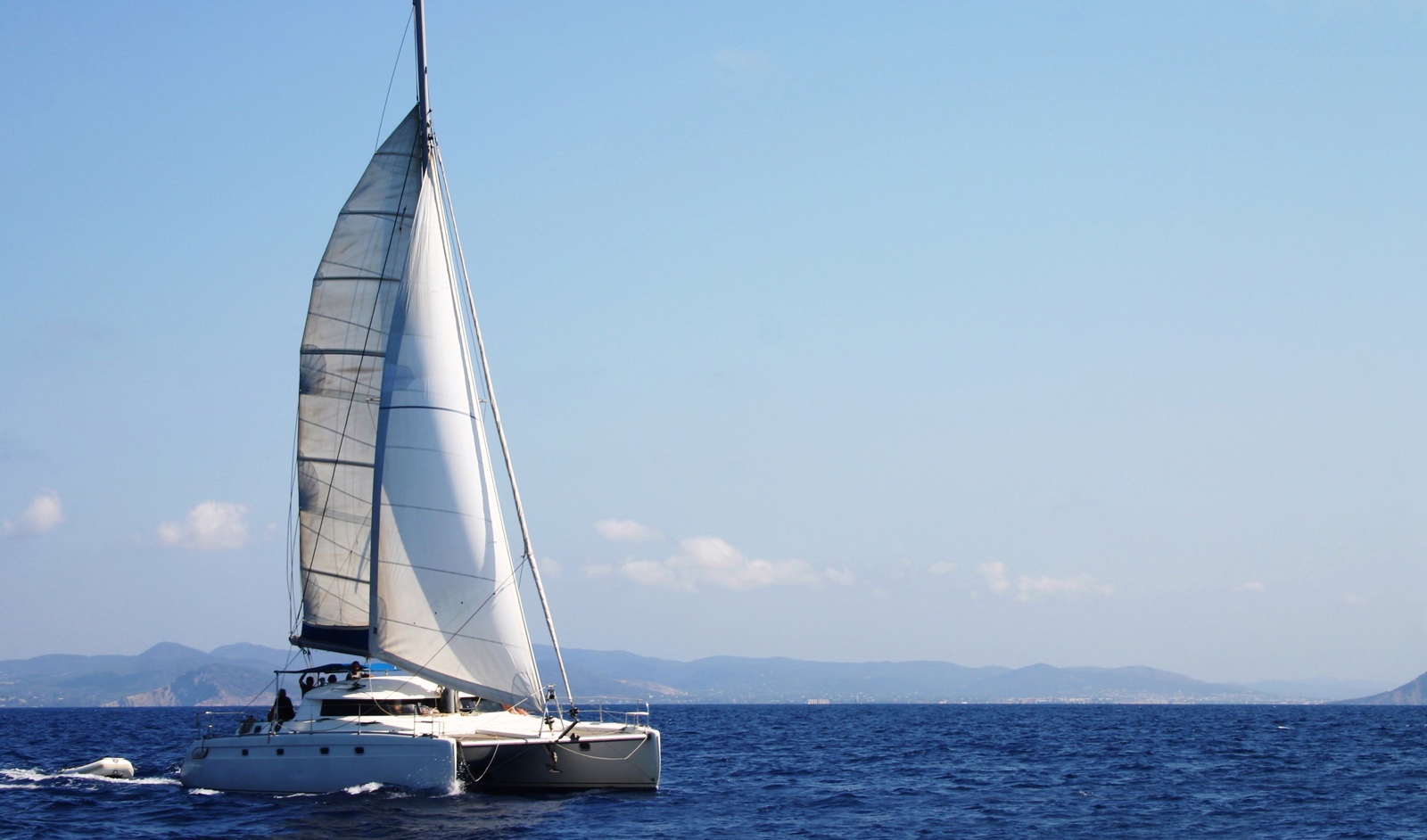
The Tartan 345 is the American answer to the European performance cruiser. Tartan Yachts has been building cruising sailboats in Ohio since 1961, and the 345 sits in the company's recent production as the boat that says what Tartan is about in the modern era. Tim Jackett-designed hull, optional carbon mast, epoxy hull laminate, and a price that asks the buyer to know why the build is different from a mainstream production cruiser at the same length.
What is the Tartan 345?
The 345 is a 34-foot 6-inch fiberglass cruiser-racer with an 11-foot 2-inch beam, a fin keel with a 6-foot 2-inch draft, and a displacement around 12,600 pounds. The hull is the work of Tim Jackett, Tartan's long-time designer, and the form is moderately fine forward, wide aft, and shaped to plane reach in a working breeze. The boat sails noticeably better than a typical 34-foot coastal cruiser. Pointing ability sits at tacking angles in the 80 to 85-degree range, which is performance-cruiser territory rather than coastal-cruiser territory.
The carbon mast option is the build feature that defines the boat. A carbon spar lowers the center of gravity, reduces pitching moment, and gives the boat a feel on a sea trial that owners describe as the reason they stepped up from a mainstream production cruiser. The standard aluminum spar is available, with the carbon option as the upgrade. Most buyers who reach the Tartan price point spec the carbon mast.
Power comes from a Yanmar 3JH5 diesel at around 40 horsepower, driving a three-blade folding prop. The diesel handles the displacement at six and a half knots in a head sea and burns less than a gallon per hour at cruise. Fuel capacity sits at around 35 gallons, which is modest, and is one of the spec lines that reminds you the 345 is built for sailing and coastal use, not for long motoring passages. Below decks is a two-cabin layout with a forward V-berth, an aft quarter cabin, a stand-up head with shower, and a galley sized for coastal cooking. We sat aboard a 345 at a slip in Sausalito on a chilly San Francisco Bay morning before the fog burned off, and the interior felt purposeful rather than expansive. Wood trim is real, joinery is clean, and the storage works for a long weekend.
Who is it good for?
Couples who sail more than they cruise are the core buyer. The 345 rewards sail trim, points well, and accelerates the way a fin-keel performance cruiser should. Owners who spend half their on-the-water time tuning the boat and the other half watching how it moves are the people who get value out of the Tartan premium.
Owners stepping up from a Catalina or Hunter who want a build that feels different on a sea trial are the second profile. The carbon mast, the epoxy hull, and the Jackett hull form all combine to give the boat a feel that a mainstream coastal cruiser at the same length does not have. Buyers who have sailed both and care about the difference are the ones who write the check.
The third buyer is the long-hold owner. The 345 holds its price on resale better than a Catalina or Hunter at the same length, and the build expects ownership measured in 15 to 20 years rather than five. Owners who buy at year five and sell at year fifteen do not give up as much as a comparable mainstream cruiser would.
Who is it not good for?
Buyers who want maximum interior volume for the length should walk past the 345. The Tartan is built for sailing, not for cabin space, and a Catalina 355 at slightly more length has materially more interior volume for two-thirds the money. People who spend most of their time at anchor with the family aboard get more for their dollar from the Catalina.
Buyers shopping a mainstream coastal-cruiser budget should also skip the 345. The Tartan premium is real and runs roughly 35 to 50 percent over a Catalina or Hunter at the same length. If the budget is fixed and the use case is coastal weekending with the family, the math points to the production cruiser.
The third anti-profile is the buyer who wants a boat with broad dealer coverage. Tartan's dealer network is thinner than Catalina's, and not every yard knows how to service a carbon mast or work on an epoxy hull. Buyers in major sailing markets are fine. Buyers in remote markets pay freight on parts and service.
Pricing
New 2026 Tartan 345 pricing in standard configurations sits between $415,000 and $485,000 depending on electronics, mast choice (aluminum versus carbon), rigging (wire versus rod), sail inventory, and option lines. A fully-equipped 345 with carbon mast, rod rigging, a current B&G electronics package, and an upgraded sail inventory can push past $510,000.
The used market on recent production hulls in clean condition sits in the $215,000 to $345,000 band. The Tartan 345 is a recent enough model that used-market depth is limited. Most listings come from owners who upgraded to a larger Tartan or stepped down to a smaller boat. Depreciation on the carbon-mast option holds up better than on the aluminum-mast build, and a clean hull with five years and 200 sailing days on it tends to hold 70 to 75 percent of original MSRP.
What works
- Tim Jackett-designed hull sails noticeably better than a typical 34-foot coastal cruiser
- Epoxy hull with carbon-reinforced laminates in high-stress areas
- Carbon mast option lowers center of gravity and reduces pitching in head sea
- Yanmar 3JH5 at around 40 horsepower handles the displacement in head sea
- Two enclosed cabins with a stand-up head and a working galley
- Holds its price on resale better than a mainstream production cruiser at the same length
- Built in the United States. Parts and dealer support are accessible to American buyers
What doesn't
- Entry price is materially higher than a Catalina or Hunter at the same length
- Interior volume is modest compared to a similarly-priced production cruiser
- Carbon mast service asks for a yard that knows the structure
- Standard sail inventory is sized for coastal work. Racers upgrade
- Used-market pool is thinner than for production builders
- Engine access through the companionway steps is tight for the back of the diesel
Year-by-year notes
The 345 is a recent-production model in the Tartan lineup. Standard electronics have shifted toward B&G across the production. The carbon mast and rod rigging options have been available throughout the run. Yanmar diesel options have stayed on the 3JH5 platform. The Jackett hull form has not changed meaningfully across the production. There is no defect cutover year worth screening on, but on any 345 over 8 years old, the chainplate seal, the rudder bearings, and the carbon mast step area are worth a careful look at survey.
Cost of ownership
A 345 lived in a slip on the West Coast at 90 sailing days a season costs roughly $10,000 to $15,000 a year all-in once you spread the recurring lines across an ownership year. The performance-cruiser brief asks for more attention to sail care, sailcloth choice, and bottom condition than a mainstream coastal cruiser would. Annual haul-out and bottom paint runs $800 to $1,600. The Yanmar 3JH5 wants oil and impeller service every 100 hours or annually, at $300 to $450 in parts.
Standing rigging replacement comes due every 10 to 15 years on wire rigging and 15 to 20 on rod, and costs $9,000 to $16,000 depending on which system the boat carries. Sail life on a serious racing inventory is 3 to 5 seasons, while a cruising inventory lasts 5 to 7 seasons. Replacement is $7,500 to $14,000 for main and headsail in good fabric. The carbon mast service is the line owners watch most closely. A proper inspection at year 10 and again at year 15 is worth budgeting for. Insurance on a $290,000 hull value is $2,400 to $4,200 a year depending on cruising area and named-storm exposure.
Best year and trim to buy
A recent-production Tartan 345 with the carbon mast option, rod rigging if it is available, the Yanmar 3JH5 diesel, a B&G plotter at the helm, and a cruising-spec sail inventory rather than a racing one is the right buy in 2026 for most coastal-cruising buyers. The carbon mast option is the one feature that justifies the entry premium for most owners, and a boat without it loses much of the Tartan sailing feel that the rest of the build supports.
Check five things before buying. First, the carbon mast step area and the bulkhead it bears on. Compression issues here are the most expensive failure a 345 can have. Second, the chainplate seal at the deck. Standard cruising-monohull failure mode. Third, the rudder bearings, which carry load on a fast hull. Fourth, the engine hour log and the heat-exchanger service. Fifth, the sail inventory and the date stamps on the main and headsail.
Alternatives
The mainstream cross-shop is the Catalina 355, which trades the Tartan's sailing pedigree and carbon mast for more cabin space at two-thirds the money. The classic Tartan owners step up from is the Tartan 30, the smaller boat from the company's older production. For a budget coastal-cruiser brief at materially less money, the Hunter 33 is a different boat for a different buyer and covers a different use case.