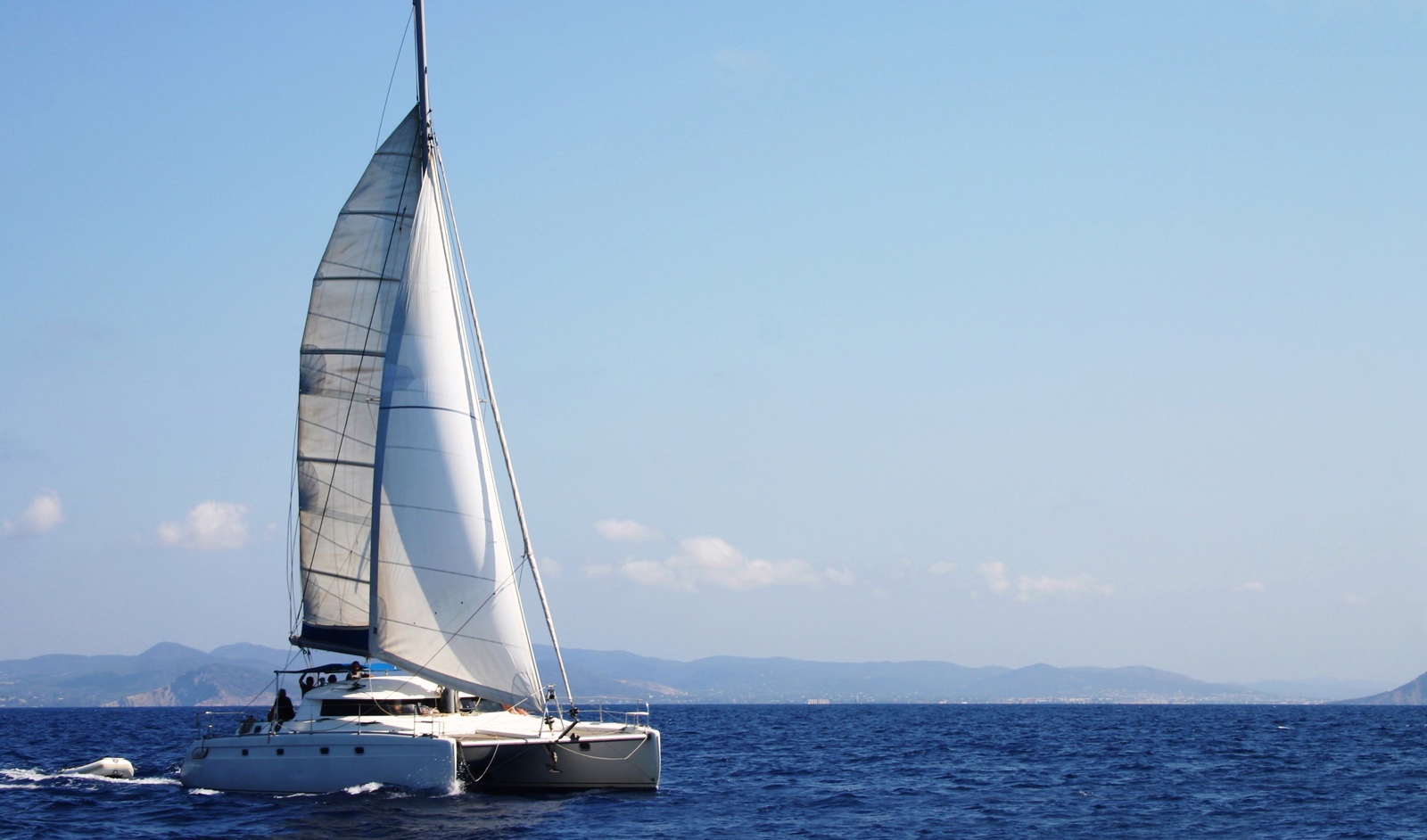
The Catalina 355 is one of those boats that gets dismissed by people who haven't sailed one and quietly bought by people who have. Catalina has been building production cruisers in California since 1969, and the 355 sat in the middle of the company's 5-Series line through the 2010s. It is the boat you buy when you want a 35-footer that sleeps four people for real, doesn't ask anything strange of the crew, and holds its price well enough on the used market that you can sell it in five years without writing a big check.
What is the Catalina 355?
The 355 is a 35-foot 5-inch fiberglass sloop with a 12-foot 4-inch beam, which is wide for the length. The wide beam is what makes the interior layout work. Dry weight is around 13,500 pounds. Two keel options across the production run: a 5-foot 10-inch wing keel that opens up shallow-draft cruising grounds, and a 6-foot 10-inch fin keel for owners who want a little more pointing ability. The wing keel is the more common build on used boats because it suits the boat's natural use.
Power comes from a Yanmar 3JH series diesel at around 30 horsepower, driving a three-blade folding prop on most builds. The earlier 355s used the 3JH4, with later production switching to the 3JH5. Both are well-known coastal-cruiser diesels with parts available everywhere. The standard rig is a fractional sloop with a slab-reefed mainsail, with in-mast furling as a common upgrade. Owners who care about sail shape on a beat keep the slab main. Owners who care about easy handling go with the furler and accept the loss.
Below decks is where the boat earns its place. Two enclosed cabins, a forward V-berth with a real island double and a quarter cabin aft with a proper double bunk. Head with a stand-up shower, a galley with a top-loading fridge and a two-burner stove, and a saloon with a U-shaped settee that converts to a third double if you really need it. We spent a couple of nights aboard a 2015 hull at a slip in Annapolis during a humid August week, and the headroom, the airflow through the deck hatches, and the actual workable galley were the three things that stood out. The boat is sized for living aboard for a weekend, not just sleeping.
Who is it good for?
Coastal-cruising couples running 30 to 60 days on the boat each season are the core buyer. The boat handles the Chesapeake, Long Island Sound, the Gulf coast, and the Pacific Northwest the way it was designed to. Wide beam, shallow wing keel, an autopilot that talks to a B&G or Raymarine plotter, and a cockpit you can sit in for hours. Most owners single-hand the boat for short hops and bring crew aboard for longer runs.
Families stepping up from a 28 to 32-foot cruiser fit the second profile. The 355 sleeps four adults plus a pair of kids in the saloon convertible, and the second enclosed cabin is the feature that turns a weekend with friends from possible into pleasant. The stand-up shower in the head is the single feature most owners cite as the reason they moved up to 35 feet from a smaller boat.
The third buyer is the practical one: anyone who wants a known-quantity used boat. Catalina has been building production sailboats for over fifty years, the dealer network still answers the phone, and parts are easy to source. Sails, rigging, cushions, hatch lenses, deck hardware, all of it is in the parts books. That is not the case for every brand at this length.
Who is it not good for?
Anyone planning an ocean crossing or extended bluewater work should walk past the 355. The build is coastal. The chainplates, the deck hardware, the rudder, the rig are all sized for coastal use and would need significant upgrades before a long passage. Better to buy a boat built for that job from the start.
Performance sailors who want to race the boat will be disappointed. The 355 is not fast. The hull form prioritizes interior volume and stability over speed, and on a light-air day you will be motoring while the racier boats around you are still sailing. People who care about pointing ability and boat speed should look at a Tartan or a J-Boat in the same length.
The third buyer to skip the 355 is anyone shopping at the premium tier. Build quality is solid coastal-cruiser quality, not premium hand-laid construction. The interior is teak veneer over plywood, the deck hardware is good but not Harken-top-tier, and the standing rigging is sized for cost as much as longevity. If you want a Hallberg-Rassy 40 level of build, you are looking at three times the money.
Pricing
The Catalina 355 is no longer in current production. The 5-Series in the modern catalog has different model numbers and slightly different layouts. On the used market, 2012 to 2017 hulls in clean condition sit in the $118,000 to $178,000 band depending on condition, electronics, and how recently the standing rigging was replaced. Broader market across the production runs from about $85,000 for older or higher-hour boats to $195,000 for low-hour, recently re-rigged examples with current electronics.
Depreciation has flattened. A 2014 boat that sold new for around $200,000 is now in the $140,000 range, which is close to where it has been sitting for several seasons. Catalina cruisers tend to lose value steadily for the first five years and then plateau. That plateau is part of why the 355 makes sense as a used buy: most of the depreciation has already happened.
What works
- Two enclosed cabins and a stand-up shower in the head. The boat sleeps four adults for real
- Wide 12-foot 4-inch beam translates to a saloon and galley that feel like a 38-footer
- Yanmar 3JH4 or 3JH5 diesel at around 30 horsepower is a known quantity. Parts are easy to source
- Twin-wheel cockpit and walk-through transom make the boat single-handable and easy to board
- Wing keel option at 5 feet 10 inches opens up the Chesapeake, the Gulf coast, and the Long Island Sound shallows
- Catalina dealer and parts network is wider than any direct competitor
- Holds its price on resale better than most production cruisers at this length
What doesn't
- Sailing performance is below average for the length. Light air means motoring
- Standard winches and traveler are sized for coastal work, not for hard-driving the boat
- In-mast furling main option trades sail shape for ease of handling
- Engine access through the companionway steps is tight for routine service
- Cabin sole is veneer over plywood. High-traffic spots wear through over a decade
- Anchor locker on early production drains slowly. Some owners modify it
Year-by-year notes
The 355 ran from roughly 2010 to 2018 as the company's 35-foot cruiser. The early production used the Yanmar 3JH4 diesel, with the 3JH5 coming in later in the run. Standard electronics shifted from Raymarine to B&G across the production as Catalina updated the helm package. The wing keel was the more common build throughout, with the deep fin keel available as an option from the start. There is no defect cutover year worth screening on, but the standing rigging on any 355 over 10 years old should be inspected closely or budgeted for replacement at purchase. Sail life on the original main and headsail is typically 5 to 7 seasons of regular use.
Cost of ownership
A 355 lived in a slip on the Chesapeake at 50 sailing days a season costs roughly $7,500 to $11,000 a year all-in once you spread the recurring lines across an ownership year. Annual haul-out and bottom paint is $700 to $1,400 in parts and yard time. The Yanmar diesel wants an oil change and impeller service every 100 hours or annually, which runs $250 to $400 in parts and a half day of your own time or about $500 at a yard. Standing rigging replacement comes due every 10 to 15 years and costs $7,000 to $12,000 depending on whether you keep the existing wire size or upgrade. Sail replacement at 5 to 7 seasons of regular use is another $4,500 to $8,000 for a main and a headsail in good cruising fabric.
Insurance on a $150,000 hull value is $1,200 to $2,200 a year depending on cruising area and named-storm coverage. Slip rental in a typical East Coast marina is $4,000 to $7,500 for the season. The annual numbers add up but they are predictable, which is part of why owners keep these boats for ten years and more.
Best year and trim to buy
A 2013 to 2017 Catalina 355 with the Yanmar 3JH5, the wing keel for coastal cruising or the fin keel if you prefer pointing ability, slab-reefed main rather than in-mast furling for sail shape, and a B&G or Raymarine chartplotter at the helm is the right buy in 2026. Look for a boat that has had the standing rigging replaced within the last five years, or budget for that work in the first season.
Check five things before buying. First, the chainplate seal at the deck. Water intrusion here is the most common Catalina issue and it is expensive if it has been ignored. Second, the rudder bearings. Slop in the steering at the wheel points to a service that has been deferred. Third, the engine log. Yanmars are durable but they want regular service and an owner who skipped it leaves a bill for you. Fourth, the sail condition. Mains and headsails fade and lose shape and a clean-looking sail can still be at the end of its useful life. Fifth, the deck hardware bedding. Stanchions, cleats, and the toe rail all want re-bedding every 10 years.
Alternatives
The most-compared cross-shop at this length is the Hunter 33, which offers more cockpit volume and a slightly different rig philosophy at a similar price. The smaller boat in the same family is the Catalina 30, which is the boat many 355 owners stepped up from. For a more European feel and a sportier cockpit, the Beneteau Oceanis 320 is the cross-shop, with less storage volume for the same length but a more contemporary interior.