The Yamaha SuperJet is the freestyle benchmark and the most-shopped used stand-up in 2026, six years after Yamaha pulled it from the North American new-bike market. The 2018-2020 four-stroke generation is the one to consider. The earlier two-stroke generations are still capable, but parts are genuinely hard to source for casual owners. The 1049cc TR-1 four-stroke produces a peak 70 hp on a 375-pound hull, 130 pounds lighter than the Kawasaki SX-R 160 and the entire structural reason the SuperJet stays the freestyle pick. What you give up is the systems gap and a parts pipeline that goes through specialty stand-up shops. We spent an April morning on a 2019 in the Florida Keys, and the hull held composure through backflips and rolls in a way no production four-stroke we have ridden has matched since. The honest take: if you can stomach the used-only reality, a clean 2019 at $7,500-9,000 is still the freestyle answer in 2026.
What the SuperJet is
The 2018-2020 SuperJet is the only four-stroke generation Yamaha produced for the North American market. The hull is fiberglass, 7 ft 2 in length overall, 2 ft 5 in beam, 375 pounds dry. The engine is the Yamaha TR-1 1049cc inline three-cylinder, naturally aspirated, peak 70 hp at 7,300 rpm. The pump is a 144 mm axial-flow with stainless impeller, mirroring the SX-R configuration at lower output. Fuel cell is 4.8 gallons. The dash is a two-line LCD with engine-temp warning and hours readout. There is no GPS, no Bluetooth, no electronic throttle. The handlebar pole is fixed, and the foot-tray geometry is the legacy SuperJet shape the freestyle community has built around for two decades. Production ran 2018-2020 in North America. The stated reason for the exit was emissions regulation the TR-1 could not meet without significant rework. The cross-shop in 2026 is the Kawasaki SX-R 160 (new), the boutique Krash Industries Predator, and the older two-stroke SuperJets. The four-stroke generation is the value pick because the engine is more reliable and easier to live with than the two-strokes.
On the water
The SuperJet's ride character is shaped by weight, not horsepower. Top end one rider on flat water sits at 53-55 mph by GPS. Our 2019 test boat hit 54.6 mph with a 175-pound rider on a half tank, 7 mph slower than a SX-R 160. Acceleration: 0-30 in 2.4 seconds, 0-50 in 5.8 seconds, both notably slower than the SX-R. The reason to ride a SuperJet has nothing to do with sprint numbers. Freestyle agility, hull-up recovery, and roll-and-recovery effort are where the 130-pound weight saving tells. At 375 pounds the SuperJet rolls with wrist input where the SX-R needs full-body commitment. Hull-up recovery after a fall is genuinely fast (15-20 seconds against 30-45 on a SX-R), and back-flips are accessible to riders with intermediate skill. The TR-1 four-stroke torque curve is the second story. It pulls cleanly from 4,500 rpm, a wider usable rev band than the older two-stroke SuperJets that needed 6,500-7,000 to feel awake. The wider torque band means the rider can hold partial throttle through tricks without the engine bogging. The pump is the standard 144 mm axial-flow, throttle is cable-driven, response is instant. Foot-tray feel is the SuperJet legacy: shorter and narrower than the SX-R, with a more aggressive forward rake. Chop ceiling is honestly the SuperJet's weakest spot. The light hull bucks in 2-foot chop where the SX-R settles. A long open-water ride is more demanding. For racing-class fitment, the SuperJet does not fit modern IJSBA Pro 4-stroke openings without restrictor work, and the older Pro-Lites class is the natural home.
What ownership looks like
Honest ownership math on a 2018-2020 SuperJet hinges on three lines: parts-pipeline reality, freestyle-mod economics, and the used-market price floor. Parts supply is the most-discussed item in owner circles. Mainstream Yamaha dealers in 2026 stock common service items (oil filters, plugs, impellers) but do not stock SuperJet-specific items like the foot-tray pad, the pump-shaft seal carbon, or the cluster gasket. Specialty stand-up shops carry the full inventory and ship nationally. The practical implication is that a typical service job becomes a 1-2 week mail-order pause. Owners who maintain their own boats and stock common spares do not feel this. Owners who rely on the dealer drop-off model do. The freestyle-mod scene is still active in 2026, with specialty shops producing higher-performance impellers, weight-reduction kits, and ride-plate replacements. A typical freestyle build adds $1,500-2,500. The used-market price floor is the most-debated piece. The question of whether a 2020 is genuinely worth $9,000 in 2026 is the central debate. Honest answer: only if the bike has under 50 hours, full service history, and no fall damage. Otherwise a 2019 at $7,500 is the smarter buy. Engine reliability is the strong story. The TR-1 1049cc is rated for 1,500-plus hours and most 2018-2020 examples are still under 300 hours. Saltwater protocol is the standard Yamaha flush, anode replacement annually, pump-shaft seal carbon at 200-300 hours.
Scoreboard
Build (4/5). Fiberglass hull on a foam core, the keel is reinforced for beach impact, and the bond rail is solid for a stand-up. The handlebar pole is fixed and rock-solid. The cluster gasket and the front bin seal are the weak points and recurring fix items.
Performance (4/5). 70 hp on a 375-pound hull is honest freestyle power, the lightest production four-stroke stand-up by a wide margin. Top end and acceleration both trail the SX-R 160, but the freestyle-and-roll character is the segment leader.
Accommodations (3/5). Foot-tray is the legacy SuperJet geometry, narrower and more aggressively raked than the SX-R, freestyle-optimized. Standing-position ergonomics over a 30-minute session are sustainable for fit riders. Hand-grip ergonomics are agreeable.
Systems (2/5). Two-line LCD, engine-temp warning, hours readout, no GPS, no Bluetooth, no electronics. This is below the SX-R systems baseline and well below sit-down expectations.
Value (5/5). Used $7,500-9,000 for a clean 2019 is $4,000 below a comparable new SX-R 160, and the freestyle character is genuinely unmatched in production. The value math is strong if you can stomach the parts pipeline.
Resale (5/5). Three-year used-market depreciation (2022-2024) is 22 percent, the segment leader. Used demand is steady and well-supplied, and the lack of a new-bike replacement keeps used prices firm.
Best for / Not ideal for
The SuperJet is the right ski for the freestyle rider who values the lightest possible four-stroke hull, the mechanically-confident owner who can run their own service, and the buyer who has been around the stand-up community long enough to know which specialty shops to call for parts. It is also the right boat for the rider stepping up from older two-stroke SuperJets to the four-stroke torque curve without losing the hull character.
It is the wrong boat for the new-to-stand-up buyer who wants dealer-network warranty, the racer in modern IJSBA Pro 4-stroke open who needs a class-legal hp number, the rider who wants integrated electronics, and the buyer who treats top-end as the primary metric. It is also wrong for the open-water touring use case. The SuperJet hull is not a chop boat. Buyers unsure about stand-up should rent first, and novices should probably start on the heavier SX-R for the easier learning curve.
What's included, what costs extra
A clean 2018-2020 SuperJet purchase typically includes the fiberglass hull, the TR-1 1049cc engine, the 144 mm axial-flow pump with stainless impeller, the basic two-line LCD dash, the fixed handlebar pole, and the 4.8-gallon fuel cell. The OEM cover is rarely included with used purchases, plan $150-250 aftermarket. Trailer is extra. A single-place stand-up trailer costs $700-1,200 used. Most owners replace the foot-tray pad with a higher-grip aftermarket pad at $80-150, upgrade the impeller for sharper acceleration at $200-300, and stock common service spares at $200-300. The freestyle-mod path adds $1,500-2,500 and typically includes a lighter fuel cell, a carbon-fiber tray pad, and a pump-tune.
Pros and cons
Pros
- 375 lb dry is 130 lb lighter than the SX-R 160. The freestyle and roll-and-recovery character is the entire reason.
- TR-1 1049cc four-stroke torque is more freestyle-friendly than the older two-strokes, wider usable rev band.
- Clean 2019 used at $7,500-9,000 is roughly $4,000 below a comparable new SX-R 160. Real value once the parts pipeline is accepted.
- Aftermarket support through specialty stand-up shops is the deepest available for a four-stroke platform.
- Three-year used-market depreciation is 22 percent. Used prices stay firm because the new-bike supply ended in 2020.
Cons
- Not available new in North America since 2020. Used market only, and the parts pipeline runs through specialty shops.
- 70 hp peak is below the SX-R 160 by 90 hp. Racing-class buyers in modern IJSBA Pro 4-stroke open should stick with Kawasaki.
- The two-line LCD dash and the absence of integrated electronics is genuinely a generation behind the SX-R and a long way behind sit-down PWCs.
Best year and trim to buy
The 2019 SuperJet is the consensus strongest year. The 2018 launch carried the new TR-1 engine, but the cluster gasket was prone to weeping at 100-150 hours, addressed via service-bulletin replacement that became standard on 2019 production. The 2019 incorporated the cluster fix and a slightly revised pump-shaft seal. The 2020 cars have the same mechanical updates plus a graphics-package update and the lowest fleet-average mileage today. The question of whether to pay 2020 prices for marginally lower hours is the central used-market debate, and the math usually favors the 2019 at $1,000-1,500 less. A clean 2019 with under 100 hours at $7,500-8,500 is the smart purchase. Verification points: confirm the cluster gasket has been replaced or is dry, check the front bin seal for moisture, pull the saddle and inspect the foot-tray pad mounting, confirm the impeller has been pulled annually, verify the pump-shaft seal carbon has been replaced if more than 200 hours, inspect the keel for beach-impact gouges. Engine compression check is the standard mechanical check.
Price options
The 2018-2020 SuperJet has not been available new in North America since 2020. The used market is the only path. Clean 2018 examples sit at $5,000-6,500 in 2026, 2019 cars at $7,500-9,000, 2020 cars at $8,000-9,500 with the lowest-hour examples at the upper end. Higher-mile or fall-damaged examples sit below these ranges, and the freestyle-mod premium can add $1,000-2,000 to a clean build. Private-party listings sit 5-8 percent below dealer asking. Financing on a used-only stand-up is difficult: most marine lenders will not finance pre-2020 stand-ups at all. The practical answer is cash purchase or a personal-secured loan at 9-12 percent APR. Year-one cost on an $8,000 cash 2019 (75 hours): $300 registration and insurance, $200 storage, $250 fuel, $400 first-year service, $300 accessories, $200 unexpected parts. Total: roughly $1,650 on top of the boat itself, the lowest year-one cost of any modern stand-up because there is no financing interest.
Alternatives
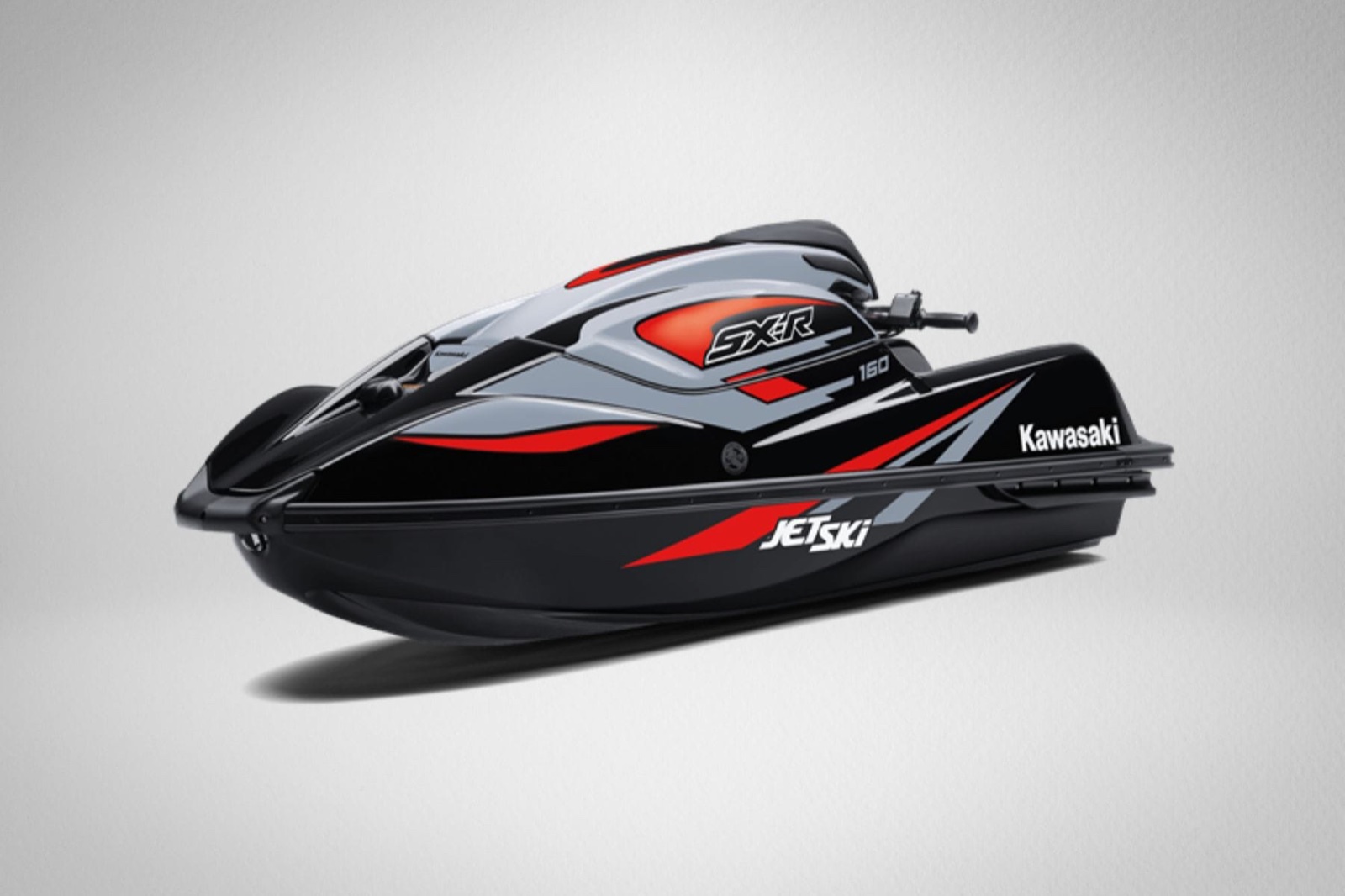
The Kawasaki SX-R 160 is the only direct new alternative, $11,499 new with new-bike warranty, 160 hp on a 503-pound hull, sprint and freeride strong but heavier for freestyle. The Krash Industries Predator is the boutique two-stroke alternative, sub-400-pound hull, freestyle-specialist, parts pipeline runs through specialty shops only and the new-bike supply is small-batch. The older two-stroke SuperJet generations (pre-2018) are the cheaper used pick. Parts are getting harder to source but the freestyle character is even more aggressive. The rare Free-Flow surf-style stand-up is the third option, surf-board-style hull with no foot-tray, freestyle-only with a steep learning curve. For the full comparison see our best stand-up jet skis in 2026 roundup.