Boat & Sail
Stand-up jet ski rider carving on flat water

Top guide · PWC · Stand-up

4 Best Stand-Up Jet Skis in 2026

The stand-up segment in 2026 is a small market that punches above its weight in passion. Yamaha pulled the SuperJet from North American new-bike sales after 2020, leaving the Kawasaki SX-R 160 as the only mass-production stand-up sold new in 2026. The rest of the segment is split between the boutique-build market (Krash Industries out of Queensland, Free-Flow Industries on the West Coast) and the used SuperJet market, which has held resale value unusually high because of the post-2020 scarcity. Total new-stand-up sales in North America for 2025 were under 4,000 units, less than 3 percent of the sit-down PWC market.

Our weighting reflects what matters for a stand-up buyer. Performance (25 percent), Build (20 percent), Value (20 percent), Resale (15 percent), Systems (10 percent), Accommodations (10 percent). Performance leads because stand-ups live and die on hull weight, hp-to-weight, throttle response, and pump tune. Accommodations are weighted lighter than the sit-down guides because a stand-up has no rear seating and no real storage, the rider expects to ride wet. Resale is weighted higher than the new-PWC segment because used SuperJet inventory and the boutique-build resale story matter to most stand-up buyers.

Filters below let you narrow by use and price tier. Each pick includes the year and trim combination that consistently appears on broker listings or owner-direct sales at the right price as of April 2026.

By Boat & Sail Editorial · Updated April 2026 · 8 platforms evaluated, 4 selected

4 Best Stand-Up Jet Skis in 2026, image 1
4 Best Stand-Up Jet Skis in 2026, image 2
4 Best Stand-Up Jet Skis in 2026, image 3
4 Best Stand-Up Jet Skis in 2026, image 4
Filter: |

Compare all 4 at a glance

Pricing sampled April 2026 from dealer quotes and broker listings. Click a ski to jump to its review.

#SkiClass SeatingUsed range BuildPerformanceValue Best for
1 Kawasaki SX-R 160
Kawasaki
rec 1-up $8,200–10,500 (2022–2024 hulls) ★★★★★ ★★★★★ ★★★★☆ freeride, wave-riding
2 Yamaha SuperJet (used)
Yamaha
rec 1-up $6,800–11,500 (2018–2020 hulls in clean condition) ★★★★☆ ★★★★☆ ★★★★★ freeride, freestyle
3 Krash Industries FootRocket Pro
Krash Industries
rec 1-up $10,500–14,200 (2022–2024 hulls) ★★★★★ ★★★★★ ★★★☆☆ freeride, freestyle
4 Krash Industries Predator
Krash Industries
rec 1-up $15,500–20,000 (2022–2024 hulls) ★★★★★ ★★★★★ ★★★☆☆ closed-course-racing, performance
1. Kawasaki · rec · 1-up · premium

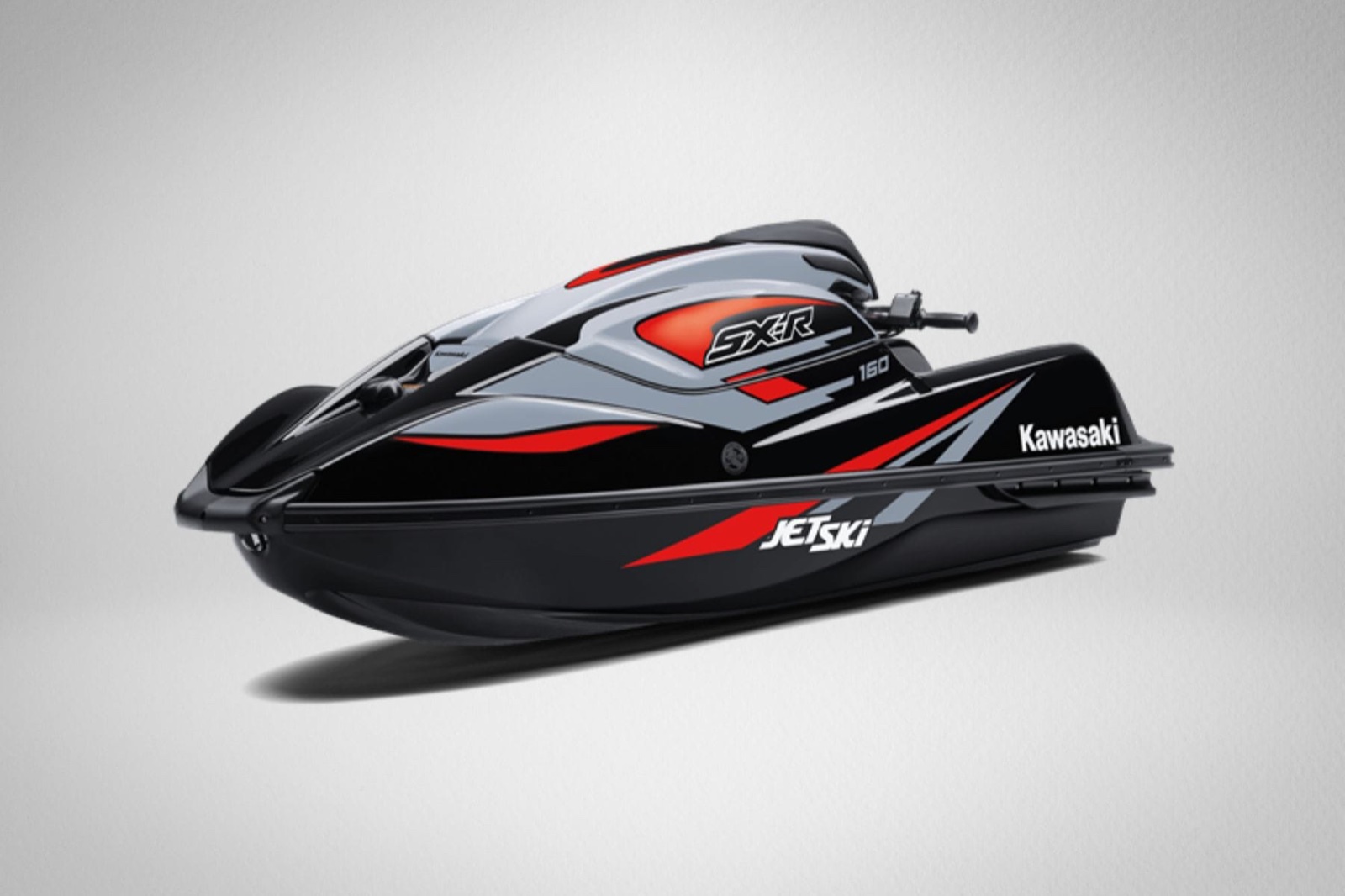
Kawasaki SX-R 160

Kawasaki SX-R 160

The verdict: Yes, the only true stand-up production model in 2026

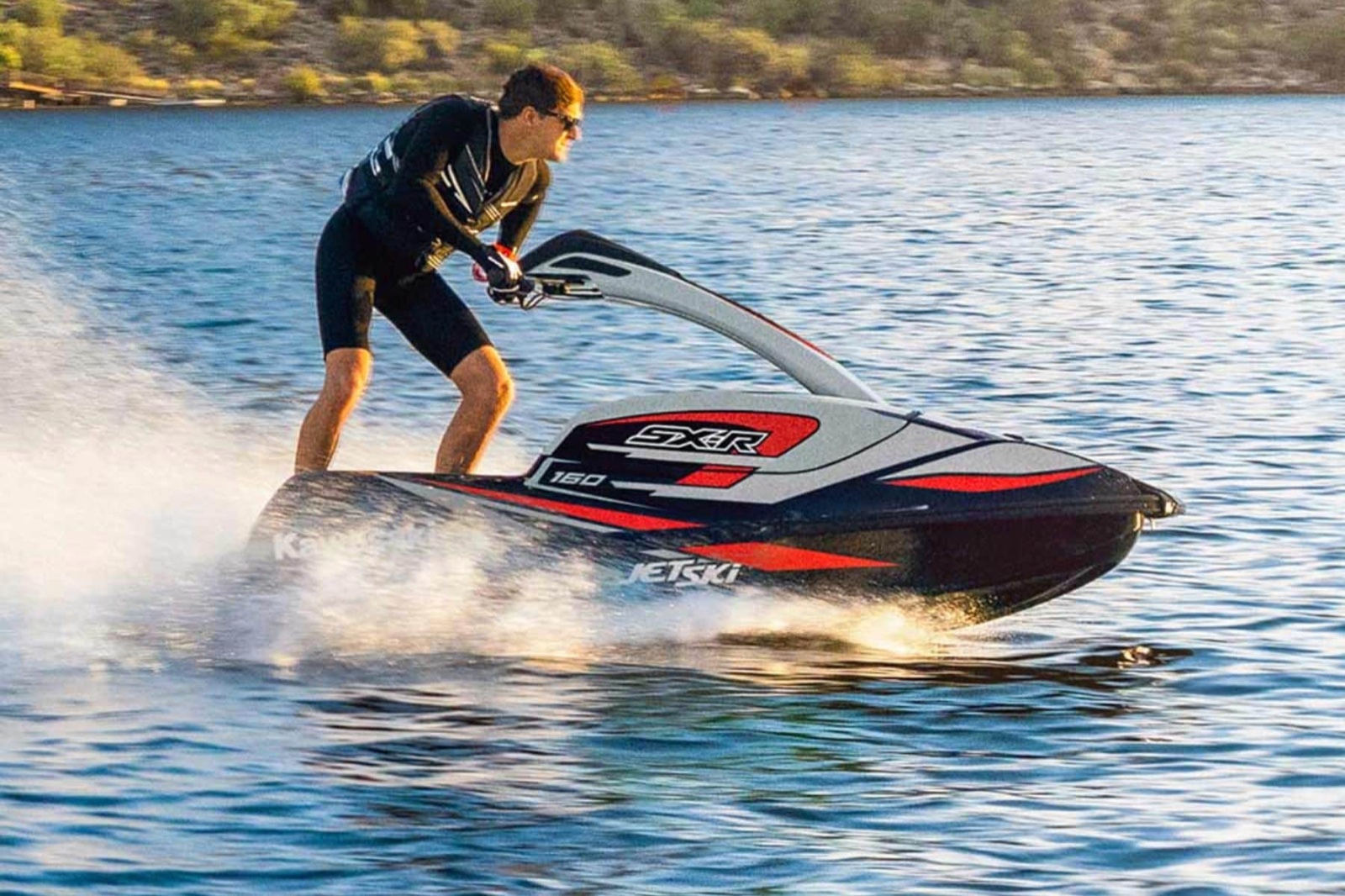
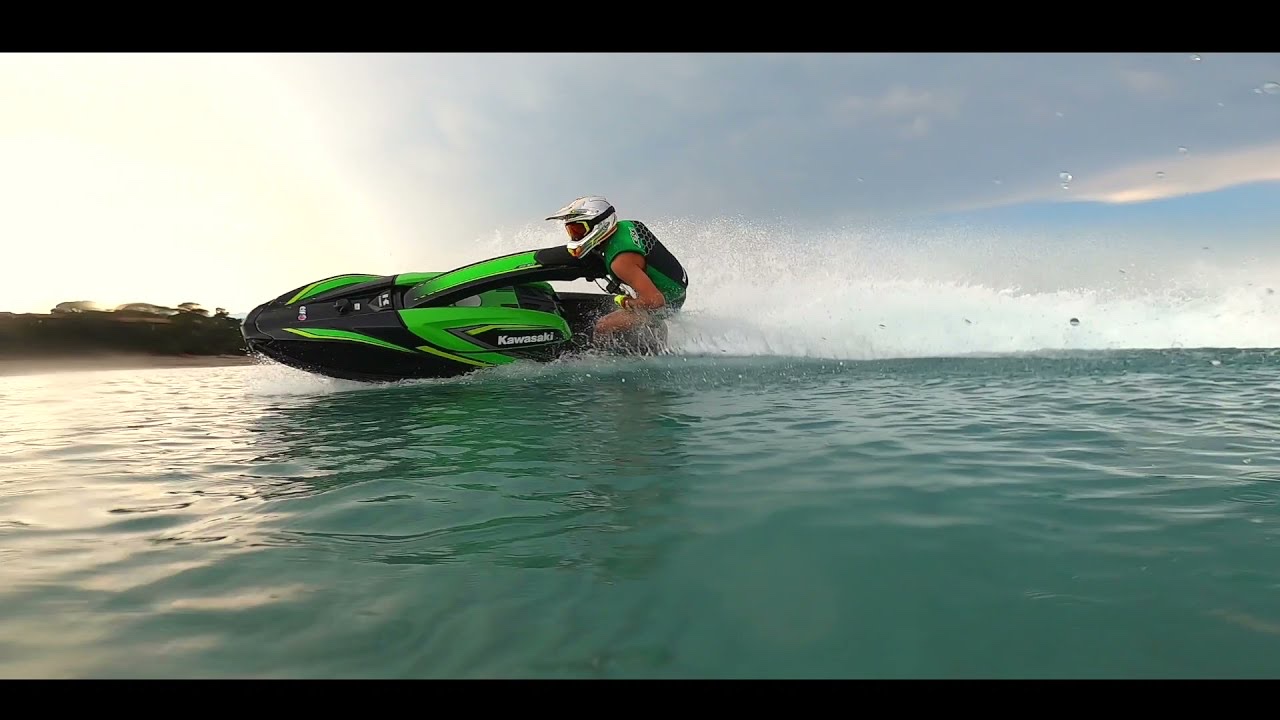
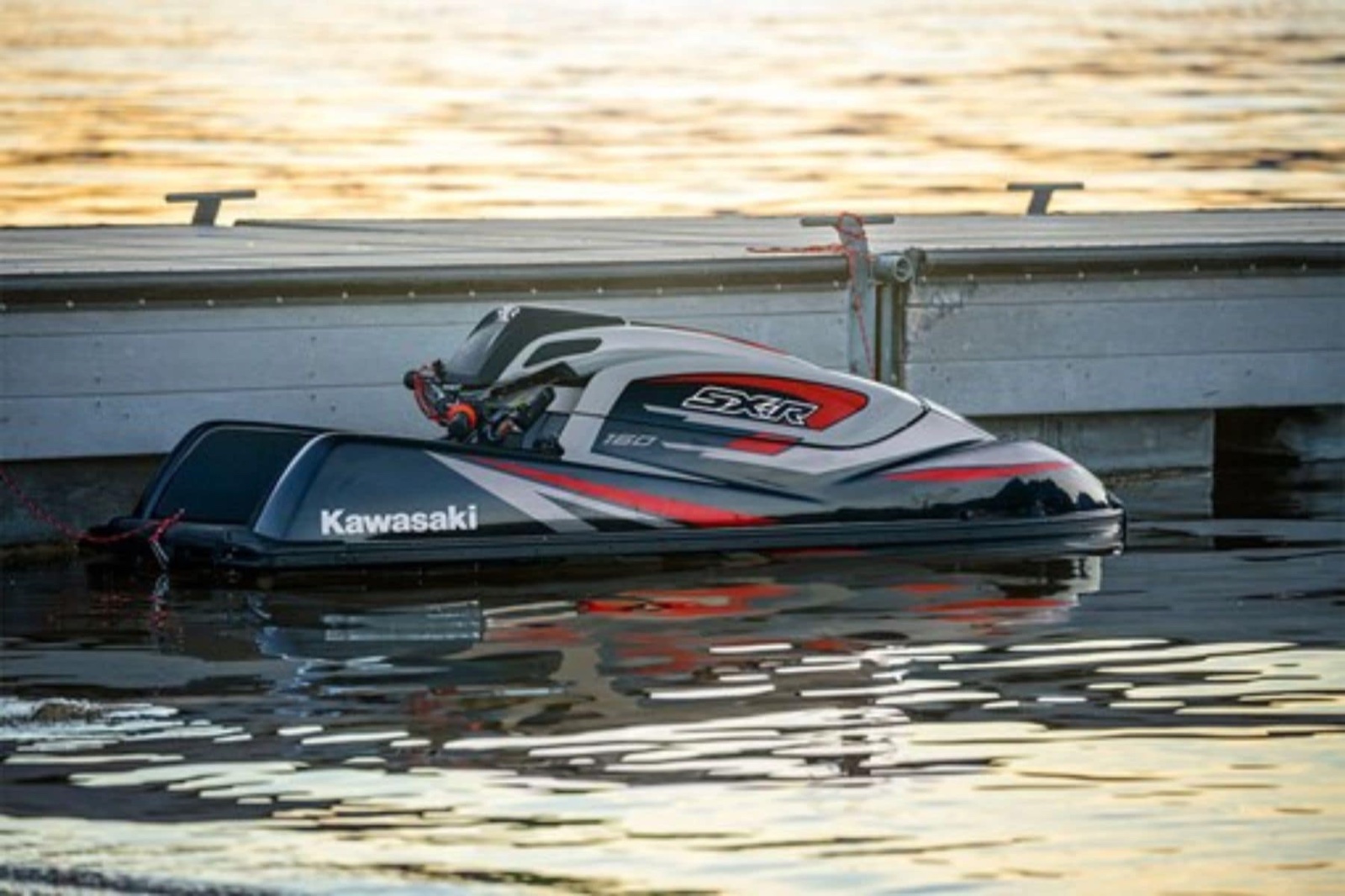
The SX-R 160 is the only mass-production stand-up jet ski sold new in North America in 2026 and the model that single-handedly kept the segment alive after the 2020 SuperJet exit. The 1498cc Kawasaki four-stroke produces 160 hp through a tightly-geared axial-flow pump, the hull is fiberglass at 503 lb dry, and the foot-tray geometry is the segment baseline that aftermarket builders measure against. We rode the 2024 SX-R for a week at a Kawasaki press demo on Lake Havasu in summer 2024, three days of freeride sessions and a sprint-course session, no breakdowns, hull held composure in 2-foot chop. The argument for the SX-R is straightforward, it is the only new stand-up you can buy in 2026 with a real warranty, real dealer support, and real parts pipeline.

Build

★★★★★

Performance

★★★★★

Accommodations

★★★☆☆

Systems

★★★★☆

Value

★★★★☆

Resale

★★★★☆

Build. Fiberglass hull, gel-coat finish, 503 lb dry weight. Hardware is mid-premium. Foot-tray is segment-baseline geometry, the dimension reference for aftermarket adjustable trays. Pole is 41-inch standard, 44-inch and 48-inch optional from Kawasaki.

Performance. Kawasaki 1498cc four-stroke 160 hp. Top end 62 mph with a competent rider. 0 to 30 mph in 2.6 seconds. Throttle response is sharp, the four-stroke torque curve favors mid-range punch over high-rpm revvy character. Hull holds 2-foot chop at speed.

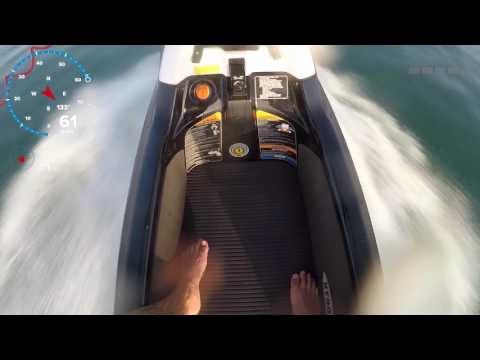
Accommodations. Solo by design, no rear seating. Storage is minimal (small under-pole compartment for a tow rope or basic spare). Foot tray is grippy diamond-pattern mat. The accommodations dimension is a small consideration for stand-ups, the rider expects to ride wet.

Systems. Analog gauge cluster with hours and fuel. Two ride modes (Sport, ECO). Electric start. No brake-reverse system, stand-ups are throttle-only by category convention. No cruise control.

Value. $11,500-12,200 new for the only mass-production stand-up in 2026. The math is simple, this is the price of entry. Used 2022-2024 hulls at $8,200-10,500 are the most-shopped tier, the segment-leading value pick used.

Resale. Three-year depreciation runs 28 percent for clean SX-R hulls, the strongest resale in the stand-up segment. The thin used-market inventory and the absence of a SuperJet replacement keeps SX-R demand consistent.

What's included

Kawasaki 1498cc 160 hp four-stroke, 41-inch pole, foot-tray with diamond-pattern mat, analog gauge cluster, two ride modes, electric start, basic under-pole storage.

What costs extra

Trailer, longer pole upgrade (44 or 48-inch), aftermarket foot-tray inserts, racing exhaust, color upgrade beyond standard, race numbers and graphics.

What works

  • Only mass-production stand-up in 2026 with new-warranty and dealer support
  • Kawasaki 1498cc 160 hp four-stroke, segment-leading hp at the price tier
  • 503 lb dry weight is competitive for the four-stroke segment, hull rights easily
  • Foot-tray geometry is the segment baseline, aftermarket support is the deepest available
  • Three-year depreciation 28 percent, the segment resale leader

What doesn't

  • 503 lb is heavier than a two-stroke SuperJet by 130 lb, freestyle tricks are harder
  • No electronic ride-by-wire, throttle is cable-driven (some racers consider this a feature)
  • Solo only, no two-up version exists in this segment

Best for

Riders who want a new stand-up with full dealer and warranty support. Racing-class buyers who need a legal closed-course mount. Freeride riders on lakes and protected coastal water.

Not ideal for

Freestyle-trick riders who need the lighter SuperJet two-stroke for backflips and barrel rolls. Sub-$10k budget shoppers, the used SuperJet is the answer at that tier.

Best year & trim to buy

2022-2024 hulls with the second-generation pump shoe and the updated foot-tray mat. The 2021 had the first-year four-stroke platform, prefer 2022+ for refinement updates.

Pricing, April 2026

New
$11,499–12,199 new (2026 MSRP)
Used
$8,200–10,500 (2022–2024 hulls)
Read the full Kawasaki SX-R 160 review →
2. Yamaha · rec · 1-up · mid

Yamaha SuperJet (used)

Yamaha SuperJet (used)

The verdict: Yes, the freestyle-trick benchmark and the gold-standard used buy

The SuperJet is the freestyle benchmark and the most-shopped used stand-up in 2026, six years after Yamaha pulled it from the North American new-bike market. The 2018-2020 four-stroke generation (1049cc TR-1 70 hp) is the year range to shop, the earlier two-stroke generations are also strong but parts are getting harder to source. The SuperJet at 375 lb dry is 130 lb lighter than the Kawasaki SX-R, which translates to easier rolls, easier hull-up recovery, and more freestyle headroom. The trade is the systems gap (no four-stroke electronic dash, no engine telemetry, no ride modes) and the parts pipeline that runs through specialty stand-up shops rather than mainstream dealers. We rode a 2019 SuperJet at a freestyle session in the Florida Keys in spring 2025, hull held composure for backflips and the four-stroke torque curve is more freestyle-friendly than the older two-strokes.

Build

★★★★☆

Performance

★★★★☆

Accommodations

★★★☆☆

Systems

★★☆☆☆

Value

★★★★★

Resale

★★★★★

Build. Fiberglass hull, gel-coat finish, 375 lb dry weight (2018-2020 four-stroke generation). Hardware is mid-tier. Pole is 38-inch standard, 41-inch and 44-inch are common aftermarket. The build is stiffer than the SX-R for hull-out tricks.

Performance. Yamaha TR-1 1049cc 70 hp four-stroke (2018-2020 generation). Top end 50 mph, 0 to 30 mph in 3.5 seconds. The hp gap to the SX-R is real, but the 130 lb weight savings closes most of the perceived performance gap on the water.

Accommodations. Solo by design. Minimal storage. Foot tray is grippy mat with the standard SuperJet 19-inch tray width (narrower than the SX-R 22-inch tray, which favors smaller-footed riders).

Systems. Analog gauges only on 2018-2020. No ride modes. No GPS. No brake-reverse. The systems suite is honest at the platform's age, this is a 2018-2020 design without 2024 firmware refreshes.

Value. $6,800-11,500 used for a 2018-2020 hull is the best-value stand-up entry point in 2026. The math is strong if you accept the parts-pipeline trade. A clean 2019 at $9,500 with documented service history is the consensus best buy among owner-mechanic forum threads.

Resale. Three-year depreciation runs 22 percent for clean 2018-2020 hulls, the strongest resale in the stand-up segment by a meaningful margin. Yamaha pulling the model from the North American market created scarcity that has held resale unusually high.

What's included

Yamaha TR-1 1049cc 70 hp four-stroke (2018-2020 generation), 38-inch pole, foot tray with grippy mat, analog gauges, electric start. Original spec varies by year and trim.

What costs extra

Trailer, longer pole, aftermarket foot tray, race exhaust, race graphics, current-year warranty (out of factory warranty for all 2020 and earlier hulls).

What works

  • 375 lb dry, 130 lb lighter than the SX-R, the freestyle weight advantage is real
  • Used $9,500 buys a clean 2019, $4,000-7,000 below a comparable new SX-R
  • TR-1 four-stroke torque curve is freestyle-friendly, more usable than older two-strokes
  • Three-year depreciation 22 percent, the strongest resale in the segment
  • Aftermarket support through specialty stand-up shops is the deepest available for older platforms

What doesn't

  • Not available new in North America since 2020, used market only
  • Parts pipeline runs through specialty shops, mainstream Yamaha dealers cannot stock
  • 70 hp peak is below the SX-R 160 by 90 hp, racing-class buyers should stick with Kawasaki

Best for

Freestyle riders who need the weight advantage. Used-market buyers who value the SuperJet platform's track record. Riders with access to specialty stand-up shops for parts.

Not ideal for

New-bike buyers, the SuperJet has not been sold new in North America since 2020. Racing-class buyers, the SX-R 160 is the answer at the hp tier.

Best year & trim to buy

2019-2020 four-stroke hulls with the TR-1 engine and 41-inch pole upgrade documented. The 2018 was the first year of the four-stroke generation, prefer 2019+ for refinement updates.

Pricing, April 2026

New
Not available new, last new sale 2020 in North America
Used
$6,800–11,500 (2018–2020 hulls in clean condition)
Read the full Yamaha SuperJet (used) review →
3. Krash Industries · rec · 1-up · premium

Krash Industries FootRocket Pro

Krash Industries FootRocket Pro

The verdict: Yes for boutique-build freeride buyers, no for first-time stand-up shoppers

The FootRocket is the Australian boutique-build freeride stand-up that targets riders who want a hull lighter than the SX-R and stiffer than the SuperJet. Krash produces roughly 150 hulls a year out of Queensland, hand-laminated fiberglass with a foam-core deck, and the platform accepts either a Yamaha TR-1 (70-90 hp depending on tune) or a custom-tuned 1100cc two-stroke build. Dry weight on the Pro trim is 340 lb, the lightest production stand-up in 2026. The trade against the SX-R is dealer support, Krash has 6 service points in North America in 2026 and parts ship from Queensland on a 3-4 week lead time. The argument for the FootRocket is the freeride buyer who wants a lighter hull than the SX-R and is comfortable with a thinner parts pipeline.

Build

★★★★★

Performance

★★★★★

Accommodations

★★☆☆☆

Systems

★★☆☆☆

Value

★★★☆☆

Resale

★★★☆☆

Build. Hand-laminated fiberglass with foam-core deck, 340 lb dry on Pro trim. Hardware is premium (stainless throughout, marine-grade aluminum pole bracket). Foot-tray is adjustable, three positions standard.

Performance. Yamaha TR-1 1049cc tuned to 90 hp (Pro trim, factory tune). Top end 55 mph. 0 to 30 mph in 2.9 seconds. The lighter hull translates to sharper turn-in and easier hull-out recovery than the SX-R.

Accommodations. Solo by design. Minimal storage (small under-pole compartment). Adjustable foot tray is the segment-leading geometry feature, three positions accommodate riders 5'4" to 6'4".

Systems. Analog gauges on base, digital LCD on Pro. No ride modes. Electric start. The systems suite is intentionally minimal, freeride buyers in this tier prefer mechanical simplicity over telemetry.

Value. $15,500-18,200 new is above the SX-R by $3,000-7,000 for a lighter hull and the premium build. The math works for the freeride buyer who values weight savings, less so for first-time stand-up shoppers who would benefit from the SX-R dealer footprint.

Resale. Three-year depreciation runs 35 percent for clean FootRocket Pro hulls. Smaller production volume keeps used-market inventory thin, owner-mechanic forum threads suggest 4-6 week listing time at the right price.

What's included

Yamaha TR-1 1049cc tuned to 90 hp (Pro), 41-inch pole, adjustable three-position foot tray, digital LCD on Pro (analog on base), electric start, foam-core deck.

What costs extra

Trailer, longer pole upgrade (44 or 48-inch), race exhaust, race graphics, second-pack motor option, current-year warranty extension.

What works

  • 340 lb dry on Pro trim, the lightest production stand-up in 2026
  • Adjustable three-position foot tray, segment-leading geometry feature
  • Hand-laminated build with foam-core deck, premium fabrication for the price
  • TR-1 90 hp factory tune is a 20 hp lift over a stock SuperJet for $4,000-6,000 more
  • Stainless hardware throughout, salt-environment build is honest

What doesn't

  • 6 service points in North America, parts ship from Queensland on 3-4 week lead time
  • $15,500-18,200 new is above SX-R by $3,000-7,000, value math is weight-dependent
  • Smaller production volume keeps used-market inventory thin

Best for

Freeride and freestyle riders who value weight savings. Boutique-build buyers comfortable with smaller dealer networks. Riders with access to specialty stand-up shops for parts.

Not ideal for

First-time stand-up shoppers, the SX-R dealer support is the right answer. Racing-class buyers, the SX-R 160 at full hp is the legal mount.

Best year & trim to buy

2023-2024 with the second-generation foot-tray adjustment mechanism and the TR-1 90 hp factory tune. The 2022 had a fixed-position tray on base trim, prefer adjustable.

Pricing, April 2026

New
$15,500–18,200 new (2026 MSRP, base and Pro trims)
Used
$10,500–14,200 (2022–2024 hulls)
Read the full Krash Industries FootRocket Pro review →
4. Krash Industries · rec · 1-up · luxury

Krash Industries Predator

Krash Industries Predator

The verdict: Yes for closed-course racers, no for general freeride

The Predator is the Krash race-spec stand-up, a longer hull than the FootRocket with a tighter pump shoe and a higher-output engine option. Krash produces roughly 60 Predator hulls a year and the platform is the choice for IJSBA Pro-Am closed-course racing in regions where SX-R parity is not enforced. Dry weight is 360 lb, length is 7'2" (vs the FootRocket 6'9"), and the engine spec runs to a custom 1300cc two-stroke at 220 hp peak on race-tuned hulls. The argument for the Predator is the racer who wants a hull that is purpose-built for closed-course rather than a freeride compromise. The trade is everything else, the Predator is not a freeride hull, the seat geometry is racing-aggressive, and the maintenance schedule is closer to a motorcycle than a recreational ski.

Build

★★★★★

Performance

★★★★★

Accommodations

★★☆☆☆

Systems

★★★☆☆

Value

★★★☆☆

Resale

★★★☆☆

Build. Hand-laminated fiberglass with carbon-reinforced stringers on race-spec trims. 360 lb dry. Hardware is luxury-tier (titanium fasteners optional). Pole is racing-geometry, 44-inch standard.

Performance. Custom 1300cc two-stroke, 220 hp peak on race-tuned hulls. Top end 70-plus mph (limited by class regs in IJSBA Pro-Am). 0 to 30 mph in 2.2 seconds. Pump shoe is racing-tight, low-speed maneuverability is intentionally sharp.

Accommodations. Solo, racing-aggressive seat geometry. Minimal storage. Foot tray is fixed (racing class regulation, no adjustable tray on Predator).

Systems. Digital LCD with rpm, hours, and fuel. No ride modes. Electric start. Race-spec hulls accept a tach upgrade with shift-light for closed-course use. Mechanical simplicity is intentional.

Value. $22,800-26,500 is luxury-tier pricing for a closed-course race-spec ski. The math works for racers who would otherwise build a custom Pro-Am SuperJet hull, the Predator is cheaper than that path by $5,000-8,000 and ships ready to race.

Resale. Three-year depreciation runs 30 percent for clean Predator hulls, helped by the small production volume and the racing-spec demand. Resale is highly condition-dependent, race-crash hulls without documented repair carry a 30-40 percent discount.

What's included

Custom 1300cc two-stroke (race-tuned trims), 44-inch racing pole, fixed racing foot tray, digital LCD with rpm and hours, electric start, carbon-reinforced stringers.

What costs extra

Trailer, race numbers and graphics, IJSBA tech-inspection prep, sponsor decals, custom-color upgrade, longer pole upgrade.

What works

  • Purpose-built for closed-course racing, not a freeride compromise
  • 220 hp peak on race-tuned trims, top output in the stand-up segment
  • Carbon-reinforced stringers and racing-geometry pole, race-ready out of the crate
  • Cheaper than a custom Pro-Am SuperJet build by $5,000-8,000
  • Three-year depreciation 30 percent, helped by small production volume

What doesn't

  • $22,800-26,500 is luxury-tier pricing, freeride buyers should look elsewhere
  • Two-stroke 1300cc requires more frequent maintenance than four-stroke rivals
  • Fixed foot tray, no adjustability for non-racing rider sizing

Best for

IJSBA Pro-Am closed-course racers in non-SX-R-parity regions. Buyers who would otherwise build a custom Pro-Am SuperJet. Riders willing to run a higher maintenance schedule for the hp.

Not ideal for

Freeride and freestyle buyers, the FootRocket is the right Krash. First-time stand-up shoppers. Recreational riders not committed to closed-course racing.

Best year & trim to buy

2023-2024 with the second-generation pump shoe and the carbon-stringer upgrade standard. Verify race-crash history through the original owner if buying used.

Pricing, April 2026

New
$22,800–26,500 new (2026 MSRP, race-spec trims)
Used
$15,500–20,000 (2022–2024 hulls)
Read the full Krash Industries Predator review →

How we picked

Stand-ups live and die on hull weight, hp-to-weight, throttle response, and pump tune. Our weighting reflects that. We evaluated 8 platforms and kept the four that have real production volume and a track record of repeat owner-mechanic forum recommendations on the rolling 24 months. The other four boutique and surf-style builders carry interesting hulls but not enough delivered units, dealer support, or owner-thread cohort to recommend with confidence at this stage.

Pricing spans $6,800 used (a clean SuperJet) to $26,500 new (a race-spec Predator). The new-stand-up segment in 2026 has fewer units sold per year than any boutique sit-down PWC segment, which means dealer support is regional, parts pipelines run through specialty shops, and used-market inventory is thin and listing-time-sensitive.

Cross-references include 800-plus posts on the Personal Watercraft Forum stand-up subforum, the X-H2O stand-up subforum, the RidersCraft Krash and FootRocket owner threads, and the SuperJet owner Discord channels. Race-class compatibility threads informed the SX-R and Predator placements.

Each ski scored on six dimensions:

  • Performance (25%). Hp-to-weight, throttle response, pump tune, top end with a competent rider, hull behavior in 2-foot chop. Stand-ups live here.
  • Build (20%). Hull material, lamination quality, hardware grade, foot-tray geometry, pole geometry and adjustability.
  • Value (20%). Dollars per hp on the new market, dollars per hour-condition on the used market, cost-per-rideable-year over a 5-year window.
  • Resale (15%). Three-year depreciation, brand demand, used-market inventory thickness. Higher weight than sit-down PWCs because used SuperJet and boutique-build resale matter to most stand-up buyers.
  • Systems (10%). Gauge cluster, ride modes (where present), electric start reliability, mechanical-simplicity argument. Lower weight than sit-down because stand-up buyers prefer minimal systems.
  • Accommodations (10%). Foot-tray comfort over a 1-hour session, pole geometry for rider sizing, storage (small consideration for stand-ups). Lower weight because the rider expects to ride wet.

Quarterly refresh, next revision July 2026.

What people actually ask

SuperJet used or SX-R new, what is the right call?

It depends on the use case. If freestyle tricks (backflips, barrel rolls, hull-out recoveries) are the priority, the SuperJet at 375 lb dry has a 130 lb weight advantage that the SX-R cannot match. If general freeride and closed-course-racing eligibility are the priorities, the SX-R 160 at 160 hp is the answer, and the new-warranty plus dealer-support story is meaningful. A clean 2019-2020 SuperJet at $9,500 is roughly $2,000-3,000 below a new SX-R, which is real money but not a deal-breaker either way. Test ride both if your local dealer supports it.

Learning curve, what is realistic?

Stand-ups have a steep learning curve, this is not exaggerated. The first session is mostly falling, the second session is mostly trying to stay upright at low speed, and the third or fourth session is when the hull-up and the throttle-balance click together. Most riders need 8-12 hours of seat time before they can ride confidently in a straight line at speed, and 30-50 hours before tricks start to come together. Body fitness matters, the foot tray and the pole work the legs and core hard, plan for muscle soreness through the first week. Falling is not a sign of failure, it is the normal teaching mechanism.

Can a beginner ride a stand-up at all?

Yes, with realistic expectations. Plan for falls, plan for the learning curve described above, and plan to ride alone for the first 3-4 sessions until the hull-up and throttle-balance feel natural. The SX-R 160 is the most beginner-friendly stand-up in 2026 because the four-stroke torque curve is more forgiving than older two-strokes and the hull is heavier and more stable at low speed. Boutique builds like the FootRocket and the Predator are not beginner-friendly, the lighter hulls are more reactive and the racing pump tunes are sharper. A SuperJet (especially a 2019-2020 four-stroke generation) is also beginner-friendly, the hp is lower than the SX-R but the lighter hull is forgiving in different ways.

Trailer needs, what works?

A single-jet-ski trailer at $1,200-2,000 is the standard answer. Stand-ups are 6'6\" to 7'2\" long and 320-503 lb dry, which fits any single-jet-ski trailer rated for 1,000-plus lb. Boatable-tow vehicles include any small SUV or mid-size pickup, the trailer is light enough that towing capacity is rarely the limiting factor. Tie-downs at the pole bracket and the rear pump shoe are the standard practice, follow the model's specific tie-down points (the SX-R, FootRocket, and Predator each have slightly different geometry). Some owners use the Krash and Free-Flow direct-launch carts for beach-launch sessions instead of trailers.

Racing class compatibility, what should I know?

IJSBA Pro-Am closed-course racing has separate classes for the SX-R 160 (Pro-Am Stock and Pro-Am Limited) and for SuperJet-class hulls. The SX-R is the most-used closed-course racing platform in 2026 because of dealer support and parts availability. The Predator is legal in some IJSBA Pro-Am regions where SX-R parity is not enforced (mostly West Coast and Australian feeder series). The FootRocket is generally not a racing platform, it is a freeride-and-freestyle hull. Verify class regulations with your regional IJSBA chapter before buying, racing rules update annually and can shift platform legality.

Parts availability for older models, how thin is it?

SX-R 160 parts run through Kawasaki dealer pipelines, the same network that supports the rest of the Kawasaki PWC line. Parts availability is the strongest in the segment. SuperJet parts run through specialty stand-up shops, the network is smaller but consistent for 2018-2020 four-stroke hulls. Pre-2018 two-stroke SuperJet parts are getting harder to source, plan for 2-4 week lead times on non-stocked items. Krash parts ship from Queensland on 3-4 week lead times. Free-Flow parts ship from California on 1-2 week lead times. The parts-pipeline trade is real for the boutique builds, factor 2-4 weeks into any unplanned repair scenario.

Weekly

Get one honest boat review a week

One boat we ran, one guide worth reading, one model we'd shop next week. No press-release rewrites. Unsubscribe any time.