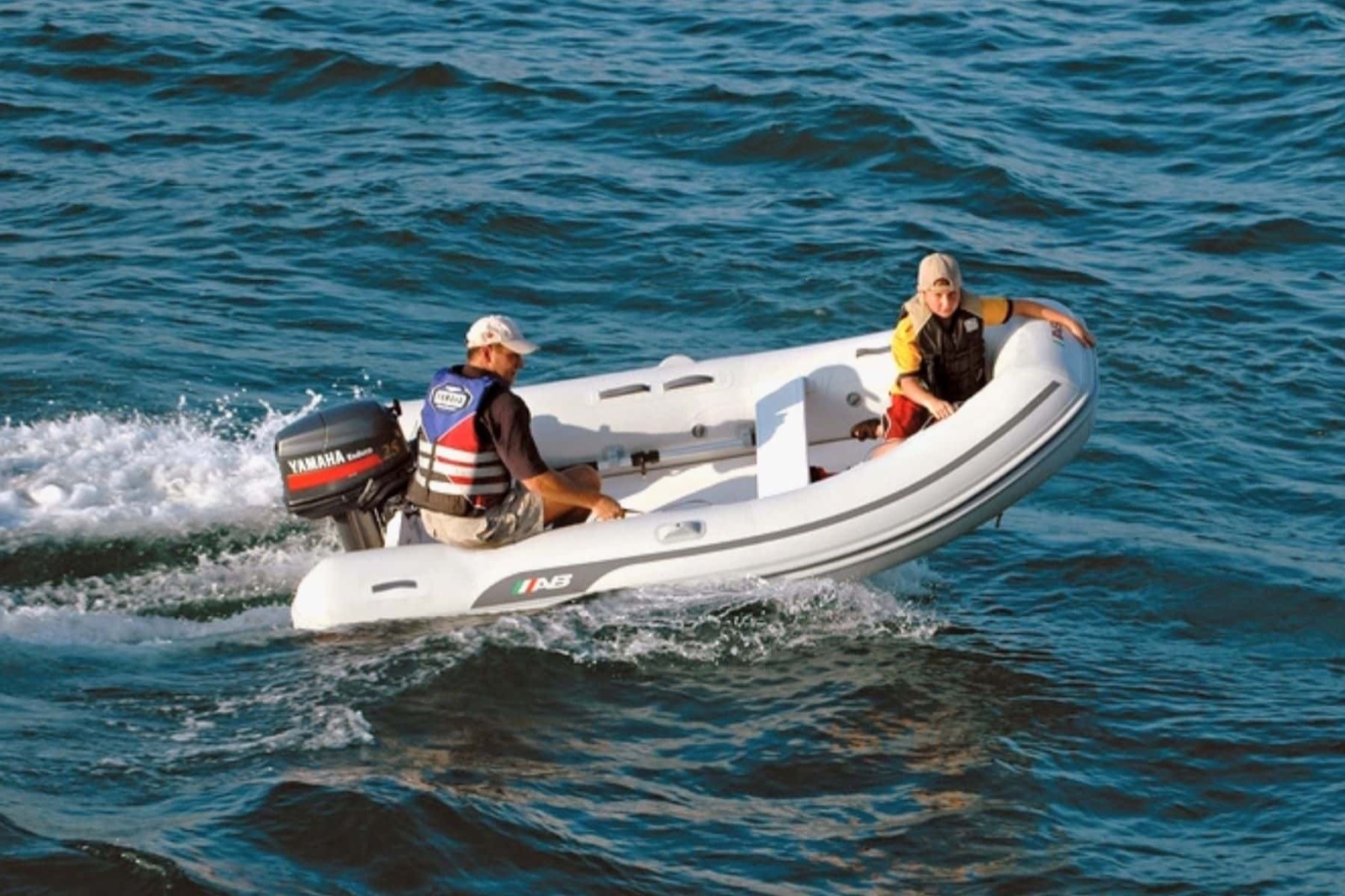
What is the Zodiac Classic Mk II?
The Zodiac Classic Mk II is the modernized version of the soft-hull inflatable that built the Zodiac brand over the last 70 years. The line spans five sizes: the C260 at 8 feet 6 inches, the C310 at 10 feet 2 inches, the C340 at 11 feet 2 inches, the C380 at 12 feet 5 inches, and the C420 (also sold as the HD) at 13 feet 9 inches. Tube fabric is Zodiac's proprietary Strongan Duotex, a thermo-bonded multi-layer composite that sits between basic PVC and high-grade CSM (Hypalon-equivalent) in durability and price. The boats are built in France in the same factory that produces Zodiac's Bombard Commando and military inflatables.
The 10 foot 2 inch C310 is the size most cruising-yacht and tender households consider, with a 5-foot 5-inch beam, a dry weight of roughly 77 pounds, a 4-person capacity, and a maximum 15 hp outboard rating. Floor options across the line include the standard slatted aluminum rollup, a high-pressure air-floor Fastroller variant, and a full-aluminum floor at the larger sizes. The transom is a marine-grade plywood plate set into the tubes, designed for an outboard mount up to 35 hp on the larger C380 and C420.
Who is it good for?
The right buyer is the cruising-yacht owner who needs a tender that rolls up small, stows under a quarter-berth or in a cockpit locker, and inflates in 5 to 10 minutes for a beach run. Owners running a 35 to 45 foot sailboat with a tender requirement land here routinely, and the brand recognition supports a clean resale at the end of the ownership window. We watched a Pacific Northwest cruising couple deploy a C310 off a 38-foot sailboat in a Desolation Sound anchorage on an August morning. Five minutes from duffel-bag to inflated boat, paddle to the beach for a hike, back aboard before lunch.
First-time inflatable-boat buyers are the second profile. The Classic Mk II is the volume entry point into the Zodiac line, with a price band that lets the buyer add a 6 to 15 hp outboard, a basic anchor and rode, and a swim ladder for under $5,500 used. That is the cheapest entry to a real portable tender that holds up over five-plus seasons of light use.
Portable-tender owners who need rollup-and-stow capability for trailer cruising, fly-in fishing, or RV use are the third profile. The boat fits in the bed of a half-ton truck, in a 4x4 trailer, or in a checked-bag-sized duffel for travel. Owners running fly-in fishing trips to remote lakes consistently rate the Classic Mk II as the right shape for that use case.
Who is it not good for?
Heavy-chop households running 2-foot-plus seas regularly are wrong-targeted. The soft hull and the slatted floor flex under load and slap hard at speed. Owners who want a true 2-foot chop ride should step up to a fiberglass or aluminum-hull RIB, where the hard hull holds the chop the inflatable cannot.
Owners running 100-plus hours a season in tropical UV are at the limit of the Strongan Duotex fabric's design life. PVC-based fabrics including Strongan do degrade faster than CSM (Hypalon) at the 10-plus year mark, with seam wicking and tube delamination as the documented failure modes. Tropical owners running heavy hours should specify the Achilles HB or another CSM-tube competitor.
Buyers who want a fiberglass-RIB ride should look elsewhere. The Classic Mk II is a soft-hull rollup, not a RIB. The Highfield CL-340 and similar aluminum-hull RIBs are the right tool for that use case, with the trade of weight and trailer requirement.
Pricing
A 2026 Classic Mk II hull-only price runs $3,800 to $4,800 for the smaller C260 and C310 sizes, $5,200 to $6,400 for the C340 and C380, and $6,800 to $8,200 for the C420 (HD) at 13 feet 9 inches. Floor upgrades (Fastroller air floor or full-aluminum floor) add $300 to $800. The boat is hull-only at these prices. Outboard, oars, hand-pump, anchor, and accessories are extra.
A complete tender package (Classic Mk II C310 hull, Mercury or Yamaha 9.8 hp outboard, fuel tank, oars, and basic accessories) runs $7,000 to $9,500 new and $4,200 to $6,500 used in the 2020 to 2024 model-year band.
Used pricing has held up. A 2020 to 2022 C310 hull with no documented seam wicking and original tubes runs $2,200 to $3,400 hull-only, or $3,800 to $5,400 with a 6 to 9.8 hp outboard included. The C340 and C380 sizes used run $3,200 to $5,800 hull-only depending on age and condition.
The value buy is a 2021 to 2023 C310 or C340 hull with the slatted aluminum floor, a documented tube-air retention test (less than 0.5 psi loss in 24 hours), and the original transom plate in good condition. Asking prices in the $2,800 to $4,200 hull-only band are the right zone.
What works
- Strongan Duotex thermo-bonded fabric is genuinely a step up from basic PVC. Tube life and UV resistance are competitive with CSM (Hypalon) at a lower price entry.
- Rollup-and-stow capability lets the boat live in a duffel or a cockpit locker, which is the line that makes it the right tender for a cruising sailboat or motor yacht under 50 feet.
- Five-size line (C260 to C420) lets the buyer match the boat to the use case rather than over- or under-specifying.
- Built in France by the same factory that produces Zodiac's military and rescue inflatables. Construction quality is consistent across the line.
- Brand recognition supports the resale market. A clean Classic Mk II hull holds value better than the no-name competitors at the same price band.
What doesn't
- Soft hull is calm-water-first by design. Honest 1-foot chop is fine, 2-foot chop slaps the bottom hard, and 3-foot chop is past the design envelope.
- Slatted aluminum floor flexes under heavy load on the smaller sizes (C260 and C310). Owners who load the boat regularly often upgrade to the Fastroller air floor or the full-aluminum floor.
- Tube glue and seams age slowly but the 10-plus year mark is the line where seam wicking and small foamy air leaks start to show. Older hulls need re-glue work that needs a specialty shop or a careful DIY job.
- Larger sizes (C380, C420) need a real 25 to 35 hp outboard and a stout transom mount. The hull cost is only part of the package math.
- Specialty repair material and Zodiac-trained shops are not available everywhere. Plan ahead for parts and service if the boat lives in a remote location.
Year-by-year notes
2018 to 2020 hulls came with the standard slatted aluminum floor and the Strongan Duotex tube fabric. Some 2018 hulls had glue-batch issues that owners flagged for early seam aging.
2021 added the Fastroller high-pressure air floor as an option across the line and refined the transom-plate construction. The Strongan Duotex fabric saw a minor formulation update with documented improvement in UV resistance.
2022 to 2023 hulls have the refined fabric, the standard Fastroller option, and a slightly improved valve hardware spec on the tube inflation ports.
2024 to 2026 hulls add minor cosmetic refinement (color-coded tubes, updated rub-strake design) and an updated repair-kit. Construction is otherwise unchanged.
Cost of ownership
Operating cost on a Classic Mk II is the lowest in the Zodiac lineup. Annual outboard service for a 6 to 15 hp engine costs $150 to $400. Tube-air retention check, valve service, and seam inspection take an afternoon and can be DIY'd with the included repair kit.
UV protection is the recurring small line. A boat cover or a stowed location indoors extends tube life by 3 to 5 years over a hull left in the sun. Owners in Florida and the tropics should plan a tube cover or indoor stow as part of the routine. A Boca Grande snowbird couple who kept their C340 inflated in a covered slip for two years opened the tubes one March to find the seams looking fine on the underside and the topside coated in a chalky UV film. They added a canvas tube cover that fall, and the next inspection two seasons later showed no measurable difference.
Plan a $200 to $500 a year reserve for repair and maintenance. Tube patches, valve replacement, and small seam repairs are the recurring lines. Major re-glue work at the 10-plus year mark runs $400 to $1,200 at a Zodiac-trained shop.
Resale runs roughly 28 to 32 percent five-year depreciation on a clean Classic Mk II, which is firm for an inflatable. The brand recognition holds the price better than the no-name PVC competitors.
Best year and trim to buy
A 2021 to 2023 C310 or C340 hull with the slatted aluminum floor or the Fastroller air floor, original tube fabric in good condition, a documented tube-air retention test, and the original transom plate is the value buy. Asking prices in the $2,800 to $4,500 hull-only band are the right zone for most cruising-yacht and tender households.
Verify three things before close. First, run a 24-hour air-retention test at full inflation and confirm pressure loss is below 0.5 psi. Second, walk the seams with a flashlight looking for visible wicking, foamy small leaks, or fabric separation along the rub-strake. Third, check the transom-plate plywood for any softening or moisture intrusion at the corners.
For 2026-new buyers, the C340 with the Fastroller air floor and a Yamaha or Mercury 9.8 hp outboard is the spec that resells best at year 5 and supports the use case for most cruising tenders.
Alternatives
The Highfield CL-340 is the aluminum-hull RIB step-up for buyers who want a hard hull and a true 1- to 2-foot chop ride, with the trade of weight and the loss of rollup-and-stow capability. The Achilles HB-310 DX is the direct inflatable competitor at a similar price entry, built with a CSM (Hypalon-equivalent) tube fabric that holds up better in tropical UV at the 10-plus year mark. The Veer V13 by Lund is the small hard-hull utility boat for buyers who do not need rollup capability and prefer aluminum over fabric, with the trade of trailer requirement and a different ride profile.