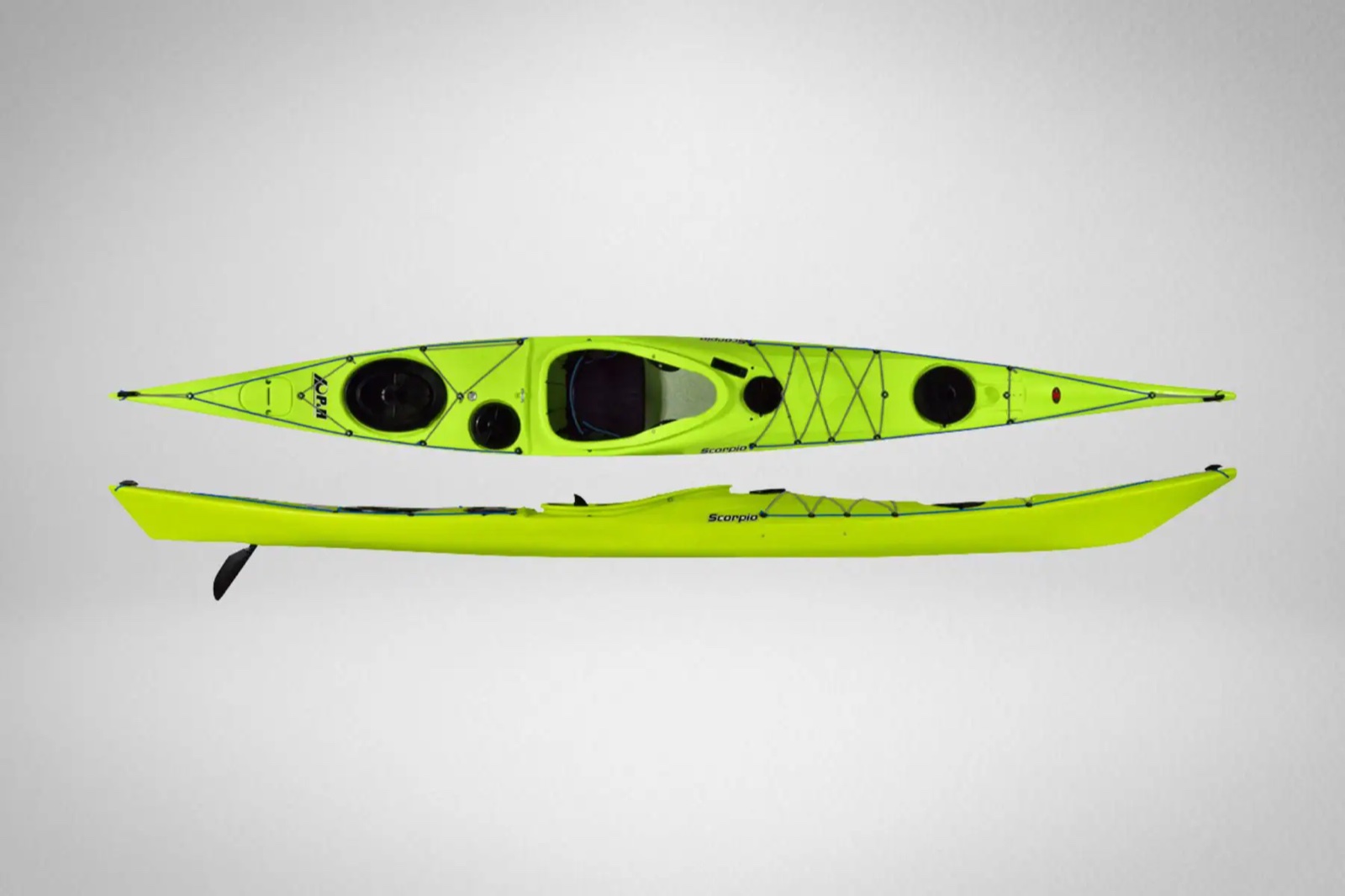
The PH Scorpio MV 173 is a 17-foot multi-hull inshore fishing boat with a stable casting deck and shallow draft. PH Marine is a smaller builder in the inshore-fishing segment, and the Scorpio MV 173 is the company's flagship platform for anglers who fish flats, backwater, and shallow tidal water. The boat targets a buyer who wants stability at rest and shallow-draft access more than top-end speed or chop performance.
Why the Scorpio MV 173 exists
The mainstream 17-foot inshore market is full of deep-V skiffs that ride well in chop and offer a competent casting deck. The Scorpio MV 173 takes a different bet. The multi-hull form trades chop ride for casting-deck stability at rest. For fly anglers, sight casters, and shallow-water specialists, that trade pays back every time. The platform doesn't rock when one angler steps from the bow to the cockpit and the other shifts position. The hull form catches less of the surface tension at idle, which lets the boat run shallower than a deep-V at the same length.
The cost shows up when you push the boat through 2-to-3-foot wind chop. The M-hull behaves differently from a deep-V. Spray patterns are wider and the ride is firmer. Anglers who fish open water learn the boat's chop limits quickly.
What is the Scorpio MV 173?
The Scorpio MV 173 is a 17-foot 3-inch fiberglass inshore skiff on an M-hull (multi-hull) platform. Beam is 7 feet 6 inches. The hull form combines a central V-hull with sponsons that run partway aft along the chines, which is the source of the stability character. At rest, the sponsons spread the buoyancy across a wider footprint than a single V-hull would. Underway, the central V handles the cutting work while the sponsons add lift.
Construction is hand-laid fiberglass with a composite stringer grid bonded to the hull. The deck is foam-cored in structural areas. The casting deck forward is a single piece with hatches for tackle and battery storage. The aft cockpit is uncluttered. The console is functional rather than premium. Steel-tube grab rail. Garmin or Lowrance chartplotter on the better builds. Stainless on the visible hardware.
Engine choices are typically a single Mercury or Yamaha 60-90 hp outboard. The platform is light, so the small engine is right-sized. Fuel capacity is modest at around 25 to 30 gallons. The boat trailers behind a mid-size SUV without drama and floats on a single-axle trailer. Draft at rest is around 7 to 9 inches depending on engine and load, which is the spec that opens up the boat's use case.
The forward casting deck is the working surface. Stable at rest, large enough for two anglers without crowding, with rod storage in the lockers and a trolling-motor mount at the bow. The aft cockpit is small but workable. Two anglers fish, plus a non-fishing passenger in the leaning-post area. Three is the working capacity.
Who is it good for?
Inshore anglers who fish flats and backwater are the core buyer. Mosquito Lagoon. Charlotte Harbor backwater. Pine Island Sound. Apalachicola Bay. The water that holds redfish, trout, snook, and tarpon in the shallow zones. The Scorpio's draft lets the boat get into water other 17-footers can't fish, and the casting-deck stability lets fly anglers and sight casters do their work without the platform shifting under them.
Fly anglers in particular notice the stability difference. We poled a Scorpio MV 173 on a flat near Pine Island Sound one March morning with an angler standing on the bow with a fly rod, and the casting platform didn't move when the angler shifted weight to make a long cast. That stillness is the boat's main feature, and it's the reason fly anglers cross-shop the multi-hull form against more conventional skiffs.
Owners running small ramps and tight backwater are the third profile. The light weight, the single-axle trailer, the shallow draft, and the modest engine all add up to a boat that launches and recovers from ramps the bigger inshore boats won't fit. For a Florida backwater angler or a Carolina marsh fisherman, that accessibility matters more than the few extra mph a deep-V would offer.
Who is it not good for?
Anyone fishing exposed water where chop is part of the trip should pass. The Scorpio MV 173 handles 2-foot chop without drama, but pushing through bigger water becomes a wet, firm-ride experience. A deep-V at the same length will ride softer. If your fishing trips involve crossing open water to get to a productive spot, the multi-hull's stillness-at-rest advantage doesn't pay for the chop trade.
Buyers who value resale data depth and easy cross-shopping should also reconsider. PH Marine is a smaller builder. The used market for the Scorpio MV 173 is thin compared to mainstream brands at the same length. Pricing comparisons are harder and the resale buyer pool is smaller. For a buyer who plans a long hold, that's not an issue. For a buyer who flips boats every three to five years, the thin market is a real concern.
Owners who want refined console hardware and finish are the third anti-profile. The Scorpio is built honestly but not luxuriously. The console, the leaning post, and the helm hardware are functional pieces. Buyers used to a Robalo R230 interior finish will notice the step down. The boat doesn't pretend to be premium, and the price reflects that.
Pricing
New 2026 pricing on the Scorpio MV 173 runs roughly $42,000 to $58,000 depending on engine choice, electronics, and option lines. A complete trailer-and-engine package with a Mercury or Yamaha 90 hp, a Garmin chartplotter, and a Power-Pole shallow-water anchor sits near the middle of that range. The used market in 2026 spans about $24,000 at the bottom up to $48,000 at the top. The sweet spot is the $32,000 to $42,000 band on 2022-2024 hulls with current electronics.
Depreciation has been moderate. A clean Scorpio MV 173 loses about 30 to 35 percent over five years. That's typical for a smaller-builder inshore boat. Demand is stable in the markets where the boat sells (Florida, Carolina, Gulf Coast) and thin everywhere else.
What works
- Multi-hull form gives a stable casting deck at rest. Real fly-angler advantage
- Shallow draft opens up backwater other 17-footers can't reach
- Build is honest. Hand-laid fiberglass, bonded stringer grid, foam-cored deck
- Light weight means a small outboard handles the platform well
- Simple systems, easy maintenance
- Trailers behind a mid-size SUV. Single-axle trailer at this length
What doesn't
- Hull form rides differently in chop than a deep-V
- Resale data is thin compared with mainstream inshore boats
- Console hardware is functional, not refined
- Bow eye routing collects line. Add a fairlead
- Single outboard, no redundancy. Kicker not standard
- Smaller builder means longer parts logistics
Year-by-year notes
The Scorpio MV 173 launched in 2021. The 2022 and 2023 hulls brought small refinements to the console layout and the casting-deck hatch design. The 2024 model added an upgraded helm electronics package as standard. The 2025 and 2026 builds carry minor cosmetic updates and current electronics packages. No defect cutover year worth screening for. The platform has been stable since launch.
Cost of ownership
Annual costs on a Scorpio MV 173 are modest. The Mercury or Yamaha 60-90 hp outboard service every 100 hours runs $200 to $400 in parts and similar in labor. Trailer maintenance is the second line. Bearings, brakes, lights, and the bunk carpet every two to three years. Insurance on a $40,000 hull value is $400 to $800 in coastal markets.
A five-year hold on a 2023 used Scorpio MV 173 bought at $36,000 with the 90 hp Yamaha and 200 hours, run 80 hours a season fishing Florida backwater with trailer storage, lands at roughly $2,800 to $4,500 a year all-in including amortized capital cost.
Best year and trim to buy
A 2022-2024 PH Scorpio MV 173 with a Mercury or Yamaha 90 hp outboard, current electronics, a Power-Pole shallow-water anchor, and a clean trailer is the right buy in 2026. Verify the strake condition along the running surface, the transom integrity around the engine mount, and the trailer bearings if it's included.
Verify four things before signing. First, the hull condition along the strakes. Gel cracks or impact damage are reasons to walk. Second, the transom integrity. A foam-cored transom that's seen water intrusion is a major project. Third, the outboard service file and the hour count. Fourth, the trailer condition. Single-axle trailers at this size take real wear.
Alternatives
The aluminum value cross-shop is the Tracker Grizzly 1648 SC. Tracker trades the multi-hull stability for aluminum-jon simplicity at materially less money. A boat for the same skinny-water work at a different price point.
The smaller-platform cross-shop is the Alumacraft 1448 Jon. Fits the same skinny-water brief at a smaller length and lower price. Right answer for a single-angler or two-angler setup on tight water.
The roto-molded alternative for skinny water is the Veer V13 by Lund. Tougher hull material at a different price point and length. Different boat for different priorities.