Boat & Sail

Top guide · Deck boats · 2026

3 Best Deck Boats in 2026

Deck boats are the segment that argues forward seating volume is the differentiator. The category covers 18-to-26-foot hulls with wide bows, U-stern lounges, walk-through transoms, and either single outboard or twin-jet drive packages. This guide ranks three hulls that cleared our 2026 review across entry, mid, and premium tiers.

We sampled 9 candidates across broker-listing data and owner-forum reads through April 2026. Filters below let you narrow by length, drivetrain, primary use, and price tier. Build, performance, accommodations, systems, value, and resale carry equal weight unless the cockpit-volume framing pushes accommodations up.
By Boat & Sail Editorial · Updated May 2026 · 9 hulls evaluated, 3 selected

Filter: | |

Compare all 3 at a glance

Used-market pricing sampled April 2026. Click a boat to jump to its review.

#BoatLength DriveUsed range BuildPerformanceValue Best for
1 Hurricane SunDeck 2400
Hurricane
22-24ft outboard-single $38,000–58,000 (2020–2023 hulls) ★★★★☆ ★★★★☆ ★★★★★ family, day-cruising
2 Starcraft SVX 211
Starcraft
20-22ft outboard-single $22,000–38,000 (2019–2023 hulls) ★★★☆☆ ★★★☆☆ ★★★★★ family, day-cruising
3 Yamaha 252SD
Yamaha
24-26ft twin-jet $58,000–82,000 (2020–2023 hulls) ★★★★☆ ★★★★★ ★★★★☆ family, watersports
1. Hurricane · 22-24ft · outboard-single · mid

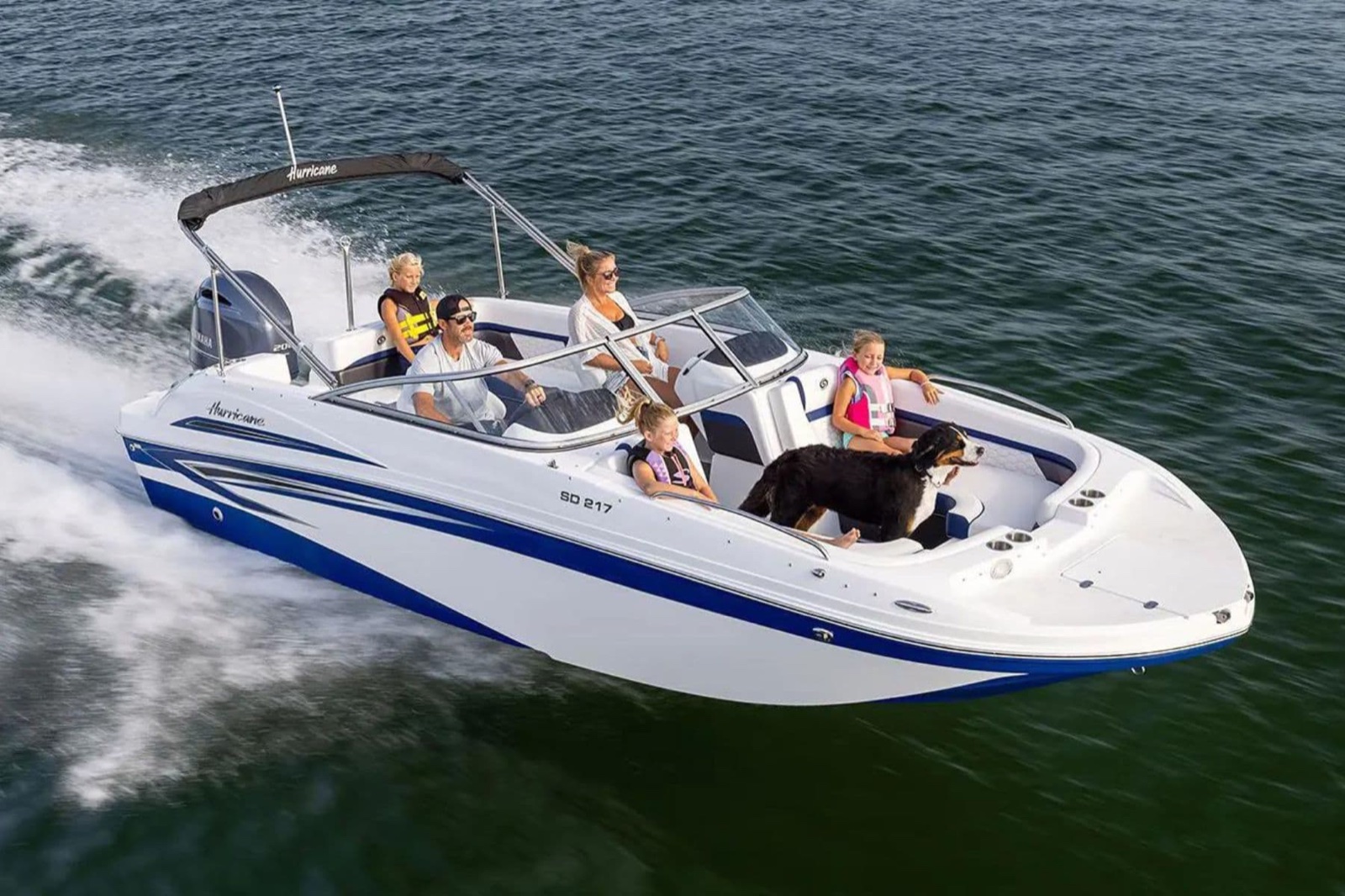
Hurricane SunDeck 2400

Hurricane SunDeck 2400

The verdict: Yes, the segment standout for cockpit volume per dollar

The SunDeck 2400 is the deck boat that argues cockpit volume is the most important spec in the segment. A 24-foot hull with a wide-beam layout, forward seating that fits four adults, U-stern lounge that fits five more, and a Yamaha F250 outboard that pushes the boat to 46 mph top end. The trade is the deadrise, deck boats are calm-water-first by design, and 2-foot chop will start slapping the bow if you push past 25 knots.

Build

★★★★☆

Performance

★★★★☆

Accommodations

★★★★★

Systems

★★★★☆

Value

★★★★★

Resale

★★★★☆

Read the full breakdown

Build. Foam-cored fiberglass hull with composite stringer grid. Stainless on visible mounts. Vinyl quality is mid-tier and holds up better than entry tier in storage. T-top is fiberglass with stainless tubes.

Performance. Yamaha F250 gives the SunDeck 2400 a 46 mph top end. Cruise at 28 knots holds 3.4 mpg. Hull is 14 degrees of deadrise, calm-water-first by design.

Accommodations. Forward seating fits four adults. U-stern lounge fits five more. Walk-through to swim platform. Head compartment under console takes a portable. Storage is segment-leading for the LOA.

Systems. Garmin chartplotter standard. JL Audio. Trim tabs. Single battery with switch standard. Bilge pumps with manual override.

Value. The strongest pure-value pick in the segment. Used 2021 hulls at $42,000-50,000 give a family the same forward-seating volume as a 26-foot bowrider for half the money.

Resale. Hurricane holds resale within 30-34 percent of new at five years. Brand demand on the freshwater-lake market supports turnover. Three-year depreciation runs slightly under Bayliner.

What's included

Yamaha F250 outboard, Garmin chartplotter, JL Audio, trim tabs, bow seating, U-stern lounge, walk-through to swim platform, head compartment under console, snap-in carpet.

What costs extra

Trailer, dual-battery switch upgrade, premium audio with subwoofer, depth finder upgrade, T-top with electronics box, surf shaper, tower with bimini.

What works

  • Cockpit volume is segment-leading at 24 feet, fits nine adults
  • Yamaha F250 cruise at 28 knots holds 3.4 mpg
  • Used 2021 hulls at $42,000-50,000 are the value buy in the segment
  • Wide-beam layout supports entertaining as a primary use case
  • Storage is honest, deeper than equivalent Bayliner Element

What doesn't

  • 14-degree deadrise is calm-water-first, 2-foot chop will slap
  • Single battery standard, dual-battery upgrade is worth ordering for the audio system
  • T-top is fiberglass, requires inspection at 5-year mark for hairline cracks

Best for

Lake families. Entertaining-first households. Buyers cross-shopping bowriders who want more cockpit volume per foot of LOA.

Not ideal for

Saltwater coastal owners running 2-plus foot chop regularly. Build-first buyers who want flagship-tier hardware throughout.

Best year & trim to buy

2020-2023 with the F250 and Garmin standard. Verify trim-tab condition pre-purchase, the auto-adjust is the recurring service line.

Pricing, April 2026

New
$72,000–88,000 new
Used
$38,000–58,000 (2020–2023 hulls)
Read the full Hurricane SunDeck 2400 review →
2. Starcraft · 20-22ft · outboard-single · entry

Starcraft SVX 211

Starcraft SVX 211

The verdict: Yes, the entry-tier deck boat that still does the job

The SVX 211 is the entry-tier deck boat that proves the segment still has a useful answer below $40,000 used. A 21-foot hull with a Mercury 200 outboard, forward seating that fits three adults, and a stern lounge that fits four. The build is honest about what it is, hardware is mid-grade, vinyl is acceptable. The hull rides flat in 1-foot chop and starts working in 2 feet. For lake-and-river families, the SVX 211 lets the budget breathe.

Build

★★★☆☆

Performance

★★★☆☆

Accommodations

★★★★☆

Systems

★★★☆☆

Value

★★★★★

Resale

★★★☆☆

Read the full breakdown

Build. Foam-cored fiberglass hull with composite transom. Hardware is entry-tier. Gelcoat quality is acceptable, not flagship. Vinyl runs basic with snap-in carpet floor.

Performance. Mercury 200 outboard gives the SVX 211 a 42 mph top end. Cruise at 26 knots holds 3.6 mpg. Hull is 13 degrees of deadrise, calm-water-first by design.

Accommodations. Forward seating fits three adults. Stern lounge fits four. Walk-through to swim platform. No head compartment standard, portable head goes under the bow filler cushion.

Systems. Single battery standard. Base Bluetooth stereo. Bilge pump auto-on. Snap-in carpet floor. Trim tabs optional.

Value. The strongest pure-value pick at entry tier. Used 2020-2021 hulls at $26,000-32,000 give a first-time buyer the deck-boat volume at less than a used wake-tower SUV.

Resale. Starcraft holds resale within 34-38 percent of new at five years on entry-tier deck boats. Buy for ownership, not for exit.

What's included

Mercury 200 outboard, single battery, base Bluetooth stereo, bow seating, stern lounge, walk-through to swim platform, snap-in carpet, portable head provision.

What costs extra

Trailer, trim tabs, dual-battery switch, depth finder, premium audio, T-top, surf shaper, tower.

What works

  • Used 2020-2021 hulls at $26,000-32,000 are the cheapest entry to a real deck boat
  • Mercury 200 outboard is the simplest single in the segment to service
  • Forward seating fits three adults plus four in stern lounge
  • Walk-through to swim platform, family-trip ready
  • Resale floor is firm in the entry tier

What doesn't

  • 13-degree deadrise is calm-water-first, 2-foot chop will slap hard
  • Trim tabs are optional, recommended for the segment
  • Single battery standard, dual-battery upgrade adds cost

Best for

First-time deck-boat buyers. Lake-and-river families. Entry-budget households prioritizing dollars-aboard.

Not ideal for

Saltwater coastal owners. Build-first households planning 10-plus year holds. Watersports-priority buyers needing tower or surf shaper.

Best year & trim to buy

2020-2023 with the Mercury 200 and composite transom. Order trim tabs if not pre-installed.

Pricing, April 2026

New
$48,000–62,000 new
Used
$22,000–38,000 (2019–2023 hulls)
Read the full Starcraft SVX 211 review →
3. Yamaha · 24-26ft · twin-jet · premium

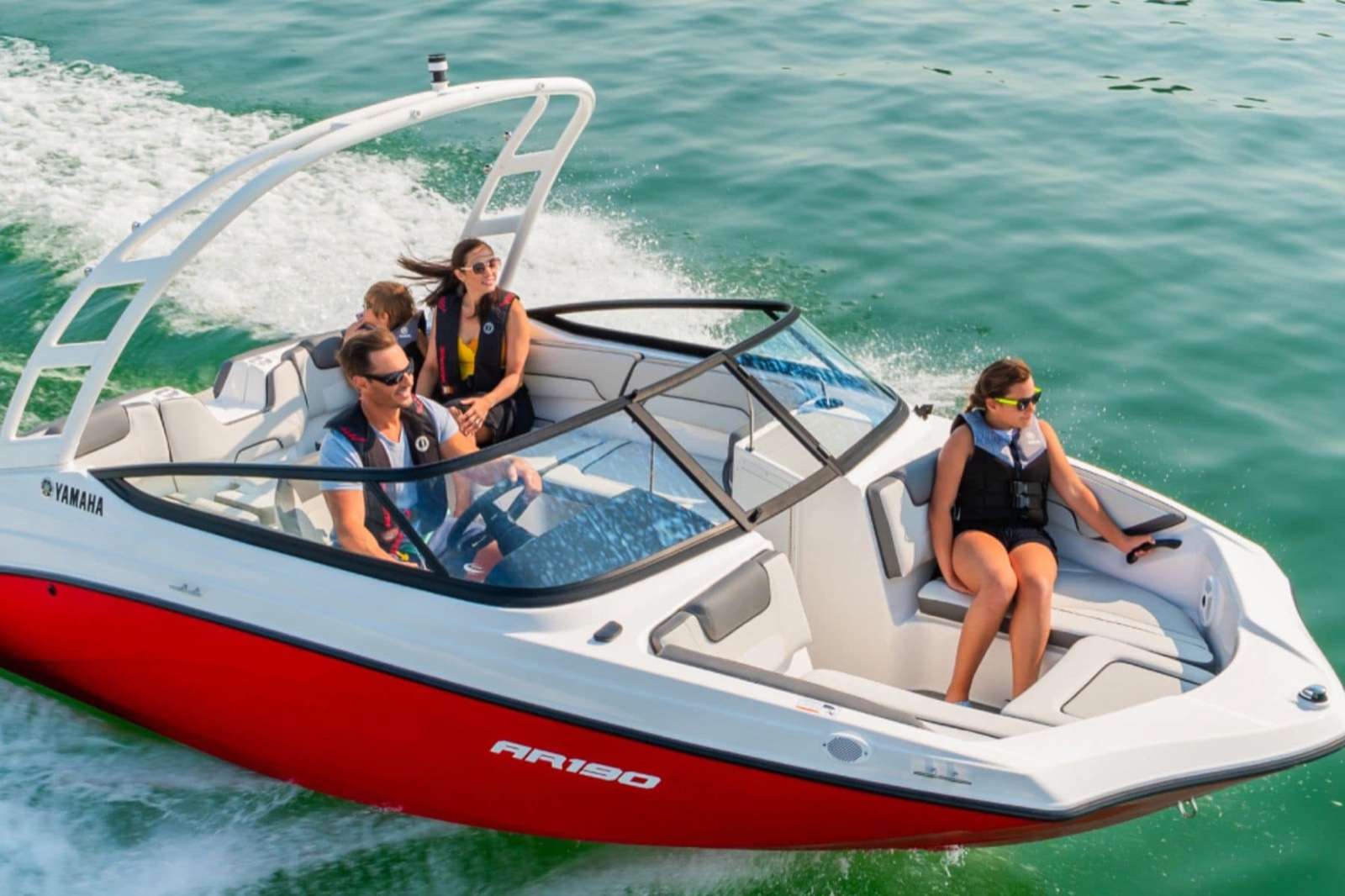
Yamaha 252SD

Yamaha 252SD

The verdict: Yes, the twin-jet deck boat is the segment-standout for tow households

The 252SD is the deck boat that argues twin-jet drive is the right answer at 25 feet. Twin Yamaha 1.8L SVHO jets push the SD to 53 mph top end, the wake at surf speed legitimately works for households who want to surf, and the cockpit volume runs with the 24-foot Hurricane while adding the towsports surf-system upgrade. Used at $66,000-76,000 for a 2021 hull is the buy.

Build

★★★★☆

Performance

★★★★★

Accommodations

★★★★★

Systems

★★★★★

Value

★★★★☆

Resale

★★★★☆

Read the full breakdown

Build. Hand-laid fiberglass with foam coring under the deck. Yamaha hardware standard is mid-tier. Vinyl quality holds up better than Hurricane, slightly under Cobalt. Wiring at the helm is segment-cleanest.

Performance. Twin Yamaha 1.8L SVHO jets give 53 mph top end. Cruise at 32 knots holds 3.4 mpg combined. Plane in 3.0 seconds. Wake at surf speed is shaped well for non-dedicated surf households.

Accommodations. Forward seating fits four adults. U-stern lounge fits five with surf bench. Walk-through to swim platform. Head compartment under console takes a portable.

Systems. Connext touchscreen at helm with Garmin chartplotter integration. JL Audio standard. Surf-system control through Connext. Water tanks for freshwater shower and head fill.

Value. Premium-tier money for a twin-jet deck boat. The argument is value through eliminating sterndrive maintenance entirely. Used at $66,000-76,000 for a 2021 hull is the buy.

Resale. Yamaha jet boats hold resale within 28-32 percent of new at five years. Three-year depreciation tracks Sea Ray on bowriders, slightly tighter on deck boats.

What's included

Twin Yamaha 1.8L SVHO jets, Connext touchscreen, JL Audio, surf system, freshwater shower, portable head provision, swim platform with telescoping ladder, snap-in carpet.

What costs extra

Trailer, dual-axle trailer, tower with bimini, surf shaper bracket upgrades, premium audio with subwoofer, depth finder upgrade.

What works

  • Twin-jet drivetrain, no propellors to repair on shallow water
  • Surf wake at 11 mph holds clean shape with surf-system on
  • Connext touchscreen and JL Audio standard from 2021
  • Cockpit volume runs with 24-foot Hurricane plus surf-system upgrade
  • Cruise at 32 knots holds 3.4 mpg combined, honest for two engines

What doesn't

  • Jet impellers eat ropes and lake weed, learn to clear them
  • Top-end vibration above 45 mph is louder than a single sterndrive
  • Service network for jets is thinner than MerCruiser dealer coverage

Best for

Lake families with watersports priorities. Cross-shoppers from Hurricane who want twin-jet simplicity. Shallow-water households where sterndrive props are a recurring repair line.

Not ideal for

Saltwater cruisers, jet impellers and salt are a maintenance commitment. Buyers running 45-plus mph regularly, vibration is real.

Best year & trim to buy

2021-2023 with the Connext upgrade and the SVHO jets. Verify impeller condition pre-purchase. Replacement runs $1,500-1,900 per side.

Pricing, April 2026

New
$98,000–118,000 new
Used
$58,000–82,000 (2020–2023 hulls)
Read the full Yamaha 252SD review →

How we picked

9 hulls in the 18-to-26-foot deck-boat window cleared our first-pass screen. We kept the three that show up consistently with clean service records, fair pricing on the secondary market, and known issues either solved or transparently priced into the listing. Cross-references included 400-plus owner posts on Yamaha Jet Boat Forum, deck-boat-specific threads on iboats.com, and Boating Magazine reviews from the rolling 12 months.

Each boat scored on six dimensions: build (15%), performance (15%), accommodations (25%), systems (10%), value (20%), and resale (15%). Accommodations carry the heaviest weight because cockpit volume and forward-seating fit-and-finish are what define the segment. Value runs second because the deck-boat buyer base is calm-water-first and watching the dollar-per-feature ratio.

Trim-tab condition (auto-adjust on Hurricane is the recurring service line), Yamaha 1.8L SVHO impeller wear (1,500-hour cycle), and Mercury 200 outboard service intervals are documented hot spots that affected our year-range guidance. Quarterly refresh, next revision due August 2026.

What people actually ask

Deck boat or bowrider?

Deck boats give you 12-15 percent more cockpit volume per foot of LOA, wider bow seating, and a flatter sole that supports more seating. Bowriders give you better deadrise, drier ride at cruise in chop, and more sport-oriented hull behavior. For families running calm freshwater lakes who entertain as much as they cruise, the deck boat wins. For households running coastal water or 2-plus-foot chop regularly, the bowrider wins.

What does ownership cost per year?

Outboard deck boats: 100-hour service per engine $400-700. Twin-jet deck boats: 100-hour service per impeller $200-400, plus impeller replacement every 1,500 hours at $1,400-1,900 per side. Storage $1,500-3,500 depending on indoor/outdoor and region. Insurance $400-1,200 for hull values $30,000-90,000. Fuel at 4-7 gph cruise depending on rig, figure 50-80 hours per season.

Twin-jet or single outboard?

Twin-jet wins on shallow-water access (under 2 feet draft), surf wake quality, and zero prop-strike risk. Single outboard wins on top-end vibration (jet vibration above 45 mph is real), service network density (Mercury and Yamaha outboard dealers everywhere, jet specialists thinner), and saltwater longevity. For freshwater lake families, the twin-jet Yamaha 252SD is the simplest ownership story. For mixed-water households, the outboard Hurricane wins.

Best resale on this list?

Yamaha 252SD first, holds within 28-32 percent of new at five years. Hurricane SunDeck 2400 second, mid-tier price keeps inventory moving. Starcraft trails by 8-10 percent on three-year depreciation but offers the entry-tier value floor.

Should I get a survey?

Yes on anything with over 400 hours, anything pre-2018 with wood-cored stringers, and any twin-jet boat for impeller-condition verification. Survey runs $400-700 depending on length and catches transom moisture, soft stringers, drive corrosion, impeller wear, and fuel-system issues. On a $40,000-60,000 hull a survey is 1 percent of purchase and prevents $4,000-8,000 surprises.

Weekly

Get one honest boat review a week

One boat we ran, one guide worth reading, one model we'd shop next week. No press-release rewrites. Unsubscribe any time.