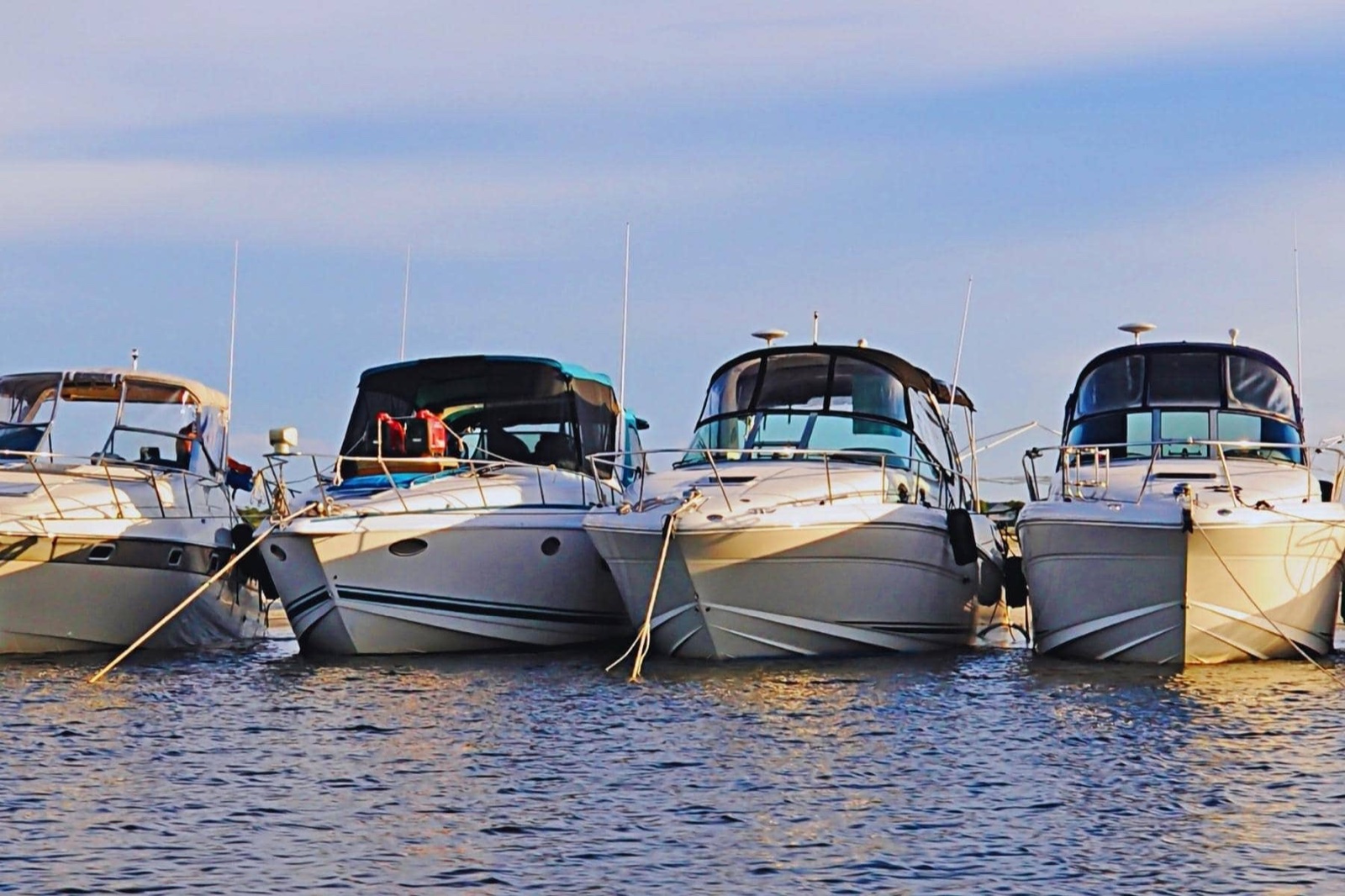
What is the Bayliner Ciera 8?
The Bayliner Ciera 8 is a 26-foot 9-inch (8.15-meter) entry-tier cabin cruiser launched in 2015. Bayliner did not design the Ciera 8 from scratch. The boat shares the proven hull of the existing 255 platform with a substantial swim-platform extension that adds length, low-profile boarding access, and improved sun-deck geometry at the stern. Power is sterndrive, with MerCruiser V8 engine options up to 350 hp on the spec sheet. Fuel capacity is 70 gallons (265 L), the boat dries at roughly 6,500 pounds with the standard engine, and the rated capacity is 8 occupants.
The cabin sleeps four. A forward V-berth fits two adults, the convertible dinette converts to a backup berth for two more, and the cabin is entered through a solid sliding door with integrated steps to access the foredeck. Four long, raked windows above and below the rubbing strake make the cabin brighter than predecessor Bayliner cabins. The galley carries a refrigerator and a single-burner stove. An enclosed head sits opposite the galley and includes an electric marine toilet.
Standard equipment from 2018 forward includes a Garmin chartplotter, AC shore-power inlet, a single battery with switch, the Bayliner standard upholstery, and the bimini top. Genset, reverse-cycle AC, watermaker, bow thruster, and second battery sit on the option list across most model years.
Who is it good for?
The right buyer is the first-time cabin-cruiser household running freshwater lakes or protected bays for 30 to 60 hours a season. The boat is happy on Lake of the Ozarks, the Tennessee Valley reservoirs, the upper Great Lakes inside a reasonable forecast, and the Chesapeake Bay protected runs. The 27-foot length plus a single-axle trailer fits most large family vehicles, the sterndrive layout keeps service familiar to first-time owners, and the price entry is honestly the cheapest way into a real overnight cabin.
Entry-budget weekending households are the second core profile. Owners who want a cabin cruiser but cannot stretch budget for a Sea Ray Sundancer 320 or a Regal 33 XO find the Ciera 8 the right shape. The cabin amenities are lighter than the premium-tier equivalent, but the math works out for households running short two-night to three-night cruises rather than week-long passages. We tied up next to a 2020 Ciera 8 at a Lake of the Ozarks transient slip last summer, a family of four aboard for a long weekend. The kids had the dinette berth, the parents had the V-berth, and the cockpit absorbed the rest of the day. That is the brief.
Cross-shoppers from larger bowriders who want to add an overnight cabin are the third profile. Owners stepping up from a Bayliner VR6 or a Sea Ray SLX 230 find the Ciera 8 the natural next step, with the same brand familiarity and a similar service network.
Who is it not good for?
Liveaboard households needing genset and reverse-cycle AC as standard should weigh the trade. The Ciera 8 is engineered for short-stay cruising. Longer stays in hot or cold weather are uncomfortable without shore power. Add the genset and AC options if liveaboard use is the plan, or look at the Sea Ray Sundancer 320 instead.
Saltwater coastal owners running heavy hours should think hard. The single MerCruiser sterndrive bellows are a 2 to 3 year service line in saltwater at roughly $1,200 to $1,500 a side, and the Bayliner build is calibrated for freshwater service intervals. Florida intracoastal and Gulf coastal use is possible with religious flush-and-service routine, but the depreciation compounds against more salt-rugged platforms.
Buyers who want the firmer resale price of a Sea Ray or Regal should look at those brands. Bayliner three-year depreciation is roughly 32 to 36 percent for clean Ciera 8 hulls, which is steeper than the segment median. Buy for ownership, not for exit.
Pricing
A 2026 Ciera 8 with the standard MerCruiser V8 sterndrive and a base option list is $95,000 to $115,000 dealer pricing in the US market (UK pricing is roughly £70,000 to £85,000 for similar configurations). The genset, reverse-cycle AC, watermaker, bow thruster, the upgraded helm electronics, and a covered storage upgrade pushes the build to $130,000 to $140,000.
Used pricing has settled into a wide band reflecting the 2015 to 2024 production window. A 2015 to 2017 hull with 300 to 600 hours is $48,000 to $68,000 depending on engine spec and condition. A 2018 to 2020 hull with the upgraded helm electronics and lower hours sits in the $60,000 to $85,000 band. A 2021 to 2023 hull with the loaded option list and a clean service log clears $85,000 and sometimes $110,000.
The value buy is a 2018 to 2022 hull with the MerCruiser V8 sterndrive, the upgraded Garmin helm electronics, the bimini top, the optional reverse-cycle AC, and a documented annual bellows-and-drive service log. Asking prices in the $60,000 to $85,000 band match the use case for most entry-tier weekending households.
What works
- 27-foot overnight cabin cruiser at a price that beats Sea Ray and Regal at the same length by 30 to 50 percent.
- Forward V-berth plus convertible dinette sleeps four legitimately for short-stay cruising.
- Five-person cockpit dining area converts to a triangular sunbathing platform with a hinged backrest, which is a thoughtful design feature for entertaining.
- MerCruiser V8 sterndrive is the simplest engine in the segment to service. Dealer service-network footprint is deep across the US and Europe.
- Long, raked windows above and below the rubbing strake make the cabin notably brighter than the predecessor 255 cabin and most entry-tier competitors.
What doesn't
- Lightweight construction makes the boat catch wind during close-quarters berthing. First-time owners need practice in crosswind dock approaches. A 2019 owner we spoke to at a Tennessee reservoir said the first two summers were learning to walk it sideways onto a slip in any kind of breeze.
- No genset and no reverse-cycle AC standard. Shore power is mandatory for overnight stays in hot or cold weather, which limits the cruising envelope on the boat.
- Bayliner three-year depreciation is 32 to 36 percent, faster than the Sea Ray or Regal equivalent. Exit value at year 5 is lower than the cross-shop competitors.
- Single MerCruiser sterndrive limits get-home redundancy. A drive failure on a longer cruise leaves the household without a second engine.
- Older Bayliner Ciera platforms documented chine cracking on early hulls. The Ciera 8 is the newer platform but pre-purchase hull inspection is still recommended.
Year-by-year notes
2015 to 2017 hulls are the original Ciera 8 launch with the swim-platform extension on the 255 hull, the original Garmin helm electronics, and the standard MerCruiser V8 sterndrive option list.
2018 to 2020 hulls refined the helm electronics package, added the upgraded Garmin chartplotter as a more-common factory order, and updated the cockpit upholstery palette.
2021 to 2023 hulls have the most refined trim, with updated cabin headliner, an optional lithium house bank on later builds, and refined bow-cabin geometry.
2024 to 2026 hulls add minor cosmetic refinement, an updated cockpit dining table, and incremental electronics updates. The construction process and the hull design have been carried over largely unchanged from the 2015 launch.
Cost of ownership
Single-sterndrive operation costs a manageable amount. Annual MerCruiser outdrive service, oil change, anode replacement, and basic engine inspection costs $500 to $900 in freshwater. Bellows replacement at year 2 to 3 costs roughly $1,200 to $1,500 a side.
Fuel burn at 22-knot cruise sits near 14 to 18 gph for the V8 sterndrive. A typical 50-mile day uses 30 to 35 gallons of fuel.
Insurance on a $70,000 hull is $1,200 to $2,400 a year depending on storage and use case. Marina dockage in the Great Lakes, Chesapeake, and Pacific Northwest markets costs $3,000 to $7,000 annually for a covered or in-water 27-foot slip.
Plan a $1,800 to $3,000 a year reserve for routine maintenance plus a bellows-and-gimbal job at year 2 to 3 of ownership. Reverse-cycle AC service (if equipped), holding-tank service, and bimini hardware are the recurring small lines.
Depreciation is 32 to 36 percent over five years, which is steeper than the Sea Ray or Regal equivalent. Plan accordingly.
Best year and trim to buy
A 2018 to 2022 hull with the MerCruiser V8 sterndrive, the upgraded Garmin helm electronics, the bimini top, the optional reverse-cycle AC, the bow thruster, and a documented annual bellows-and-drive service log is the value buy. Asking prices in the $60,000 to $85,000 band match the use case for most entry-tier weekending households.
Verify three things before close. First, confirm the bellows-service interval and pull the latest MerCruiser service report. Second, walk the chines for any visible cracking. The older Bayliner Ciera platforms have a documented history. Third, run the cabin AC, the head, the galley appliances, and the helm electronics through full power-on cycles on shore power and on battery to confirm no electrical or plumbing issues.
For 2026-new buyers, the MerCruiser V8 sterndrive with the genset, the reverse-cycle AC, the upgraded Garmin electronics, and the bow thruster is the spec that supports the use case best and resells well at year 5.
Alternatives
The Sea Ray Sundancer 320 is the step up to a 32-foot premium express cruiser with full genset, reverse-cycle AC, and a firmer resale price for buyers who want a longer cruising envelope and a higher build profile. The Regal 33 XO is the outboard alternative for buyers who want to leave the sterndrive bellows service line behind, with twin Yamaha outboards on a bracketed transom. The Cobalt 336 is the premium discontinued 33-foot crossover for buyers who want a higher build profile on the secondary market and accept the discontinued production status.