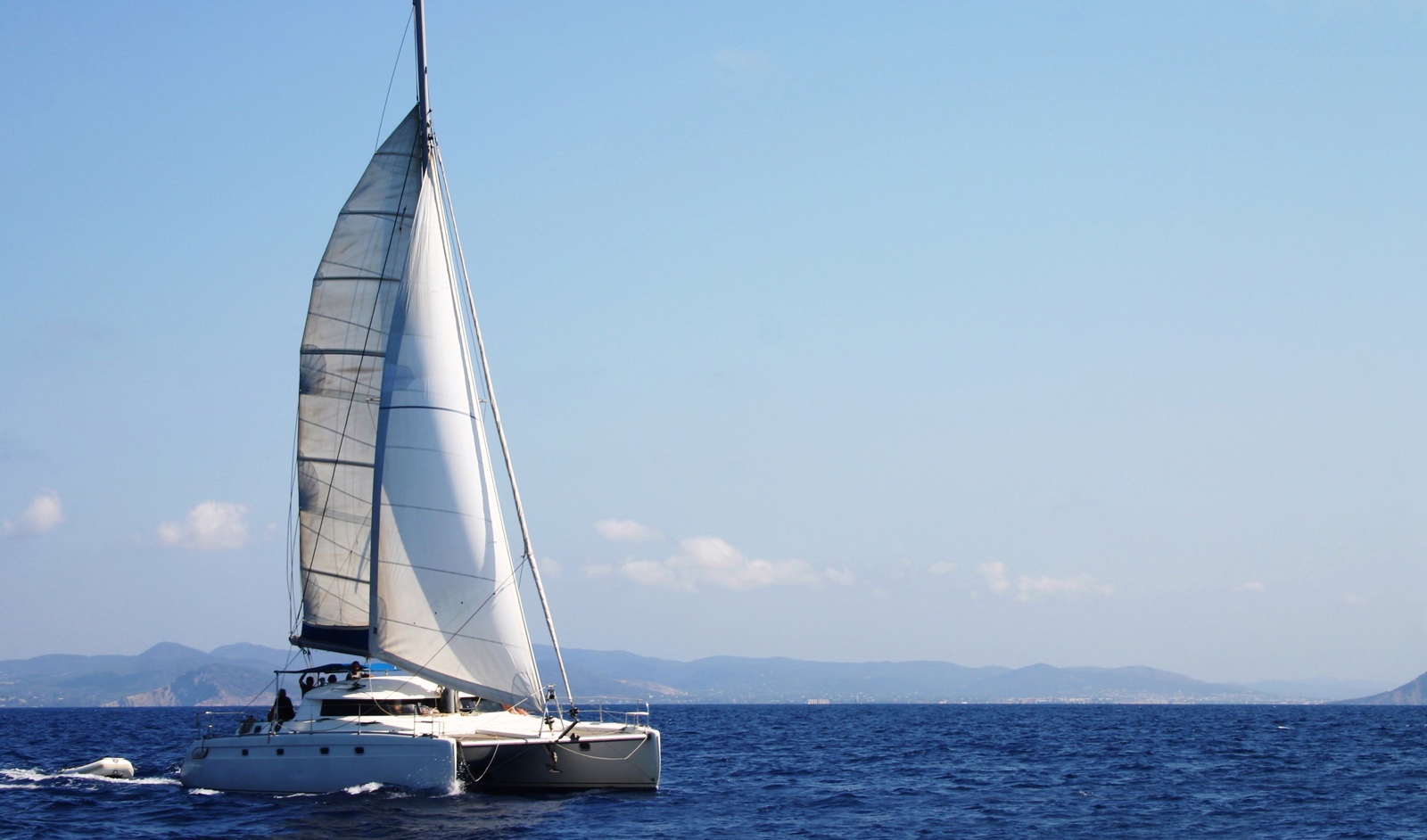
What is the Catalina 30?
The Catalina 30 is a 29-foot 11-inch fiberglass sloop with a beam of 10 feet 10 inches, a displacement of 10,200 pounds, and a fin keel drawing 5 feet 3 inches. A shoal-draft wing keel option at 3 feet 10 inches was offered later in the production for owners in shoal water. The mast is a deck-stepped aluminum spar on a compression post, with a masthead rig. Two rig options were offered through most of the run: the standard rig with a 39-foot 6-inch mast, and the tall rig with an extra 4 feet of height for light-air sailing. The standard auxiliary on early boats was the Atomic 4 gasoline engine at 30 horsepower. From 1984 onward Catalina switched to the Universal M-25XP diesel at 21 horsepower, the same engine that powers most contemporary Hunters and Pearsons.
The production breaks into three revisions. The MkI was built from 1972 to 1986 and is the largest cohort, around 5,000 hulls. The MkII from 1986 to 1988 reworked the deck mold, added a walk-through transom, and updated the interior joinery. The MkIII from 1987 to 1991 added a more open saloon layout with a stand-up nav station and updated rig hardware. The hull mold did not change in any meaningful way across the three generations, only the deck, the interior, and the systems.
The cabin sleeps six. A V-berth forward, port and starboard settees in the saloon, a quarter-berth on the starboard side under the cockpit. The galley is to port with a two-burner stove, a sink, and an icebox. The head is enclosed with a marine toilet and a basin. Standing headroom is 6 feet 2 inches in the saloon. The boat was drawn for a family of four to weekend on, and the layout works for that job.
What's it like on the water?
Under sail in 12 knots of true wind, the 30 cruises at around 5 knots on a close reach with the 110 percent genoa and the full main. The boat points around 40 degrees off the wind, average for the era. The helm is balanced through about 18 knots of true wind. Above that the weather helm builds, and most owners reef the main early. The standard-rig hull rates PHRF around 174, the tall rig around 168, so on club starting lines the boat is a mid-fleet performer in a mixed cruiser class.
We took a 1986 tall-rig hull out on Chesapeake Bay last fall in 15 knots from the northwest. With one reef in the main and the 110 percent genoa, the boat held a close reach at 5.8 knots, tacked through 90 degrees without losing the bow, and tracked the groove with two fingers on the wheel. The cockpit fits four for sailing and six at anchor. The wheel pedestal is in the right place, the genoa winches are in reach, and the companionway is sized so the helmsman can hand a drink up from the galley without leaving the helm.
Under power the Universal M-25XP at 21 horsepower drives the hull at 6 knots at 2,400 rpm, burning around half a gallon an hour. The 20-gallon fuel tank gives a motoring range of about 240 miles, short for the boat and the most common complaint owners raise. The Atomic 4 gasoline boats motor at the same speed but burn closer to three quarters of a gallon an hour and ask for carburetor and ignition care that fewer mechanics know in 2026. Docking is single-screw. The prop walk to port in reverse is firm, and most owners learn to drop the stern into a slip on the prop walk rather than fight it.
Who is the Catalina 30 for?
The 30 is for the buyer who wants a first cruiser under $30,000 and wants the easiest possible boat to own once they have it. The owners network is wider than for any other 30-foot sailboat. Parts are stocked at Catalina Direct, the boat has a PHRF rating in every region, and the technical knowledge on every system is documented. For a first-time owner who is going to make first-time mistakes, the 30 is the cheapest place to make them.
It is also for the club racer who wants a one-design or near-one-design class in a region that has a Catalina 30 fleet. The Chesapeake, Long Island Sound, San Francisco Bay, and the Great Lakes all have active fleets in 2026, and a clean boat with a good sail inventory finishes mid-fleet without a heroic crew.
It is not for the buyer who wants the boat that sails best for the money. The Tartan 30 and the Ericson 32-3 point higher and accelerate faster. The Catalina 30 trades sailing performance for volume, parts, and a fleet. It is also not for the owner planning offshore work. The rig, the chainplate spec, and the deck hardware were drawn for coastal use, and the upgrade math for offshore prep does not justify itself on a $20,000 boat.
Pricing
There is no MSRP. The Catalina 30 has not been built since 1991. The used market is wide and active. Prices across the 1972-1991 production range from about $6,500 for a rough Atomic 4 boat with original sails and a survey list to about $42,000 for a fully sorted late MkIII with a recent repower, new rigging, and a refit cabin. The working sweet spot in 2026 is a 1984-1988 hull with the Universal M-25XP diesel, clean condition, recent standing rigging, sails under 10 years old. That boat is between $12,000 and $28,000 depending on region.
Asking prices on the East Coast and Great Lakes are firmer than on the West Coast because the buyer pool is wider relative to inventory. Tall-rig boats in the Pacific Northwest ask a little extra. Shoal-wing boats in the Chesapeake and Florida ask $1,500 to $3,000 more than fin-keel equivalents.
Year-by-year notes
A few inflection years stand out. The first is 1984. Catalina switched the standard auxiliary from the Atomic 4 gasoline engine to the Universal M-25XP diesel that year. Pre-1984 boats are cheaper, but the repower budget for a Universal swap is $12,000 to $18,000 installed, often more than the boat itself. Stick with a 1984-or-later hull unless you specifically want an Atomic 4 project.
The next year is 1986. The MkII came out with the walk-through transom, the updated deck mold, and the reworked interior joinery. The walk-through transom changes how you board from a dinghy or a swim ladder, more than most buyers realize.
The third year is 1987. The MkIII added the open saloon layout with a stand-up nav station and updated the rig hardware. MkIII boats with the original rig hardware are the easiest to keep modern. The tall-rig option was offered across all three generations and is worth seeking out if you sail light air. The shoal-wing keel was offered from 1984 and is the right choice for the Chesapeake and Florida.
Cost of ownership
Annual operating costs are lower than for almost any other 30-foot cruiser, because the boat is simple and the parts are cheap. Routine engine service for the Universal M-25XP is about $200 to $350 a year for oil, filters, impeller, and zinc. The 1,500-hour valve check is $600 to $900 at a yard.
Slip rental and bottom paint depend on region. On the East Coast and Great Lakes, slip fees are $2,500 to $5,500 a year, bottom paint materials $300 to $500. On the West Coast and Florida, slip fees are $3,500 to $8,000 a year. Insurance on a $20,000 hull is $400 to $700 a year.
Standing rigging on most 2026-market boats is 30-plus years old. A full re-rig with stainless wire, new turnbuckles, and a swage inspection at the masthead is $3,500 to $5,500 at a yard. Most surveyors flag the standing rigging as a five-year line item, and the budget is not optional.
If you buy a 1986 MkII for $18,000, sail it 30 days a year on the Chesapeake, and re-rig in year two, your total yearly cost over five years is about $4,500 to $7,000. That is the lowest cost of ownership for a 30-foot fiberglass cruiser on the 2026 used market.
Best year and spec to buy
The pick for 2026 is a 1986 to 1988 MkI or early MkII hull with the Universal M-25XP diesel, the tall rig if you sail light air in the Pacific Northwest or the Great Lakes, the standard rig if you sail the Atlantic or the Gulf. Bring a survey list and check three things: the chainplate knees at the main bulkhead for cracks or weep, the rudder bearing for play at the post, and the engine pan for diesel residue from the lift pump and injectors. If the deck core feels soft at the chainplates or the genoa tracks, walk away or price it as a deck recore project.
We talked to a 1987 MkII owner at a dock on the Magothy River last fall. He had owned the boat for nine years. He had re-rigged it in year three, replaced the sails in year five, and rebuilt the head in year seven. Nothing else. He said he would buy the same boat again, and the only thing he would change is to get the tall rig instead of the standard. That kind of story comes up over and over when you talk to people who own these boats.
Alternatives
The Tartan 30 is the closest performance cross-shop. S&S drew the Tartan with a deeper hull and a higher-aspect rig. It points higher and sails faster, the build is a step above the Catalina, and the used market is thinner. Expect to pay $4,000 to $8,000 more for a comparable year and condition. The Ericson 32-3 is two feet longer and sails materially better, with a Bruce King hull and a price band that overlaps the high end of the Catalina range. The Hunter 33 is the direct volume-builder cross-shop, beamier hull, bigger cockpit, similar used-market price. The Pearson 323 is the middle-ground pick, build a step above the Catalina and a sailing character between the Catalina and the Tartan.