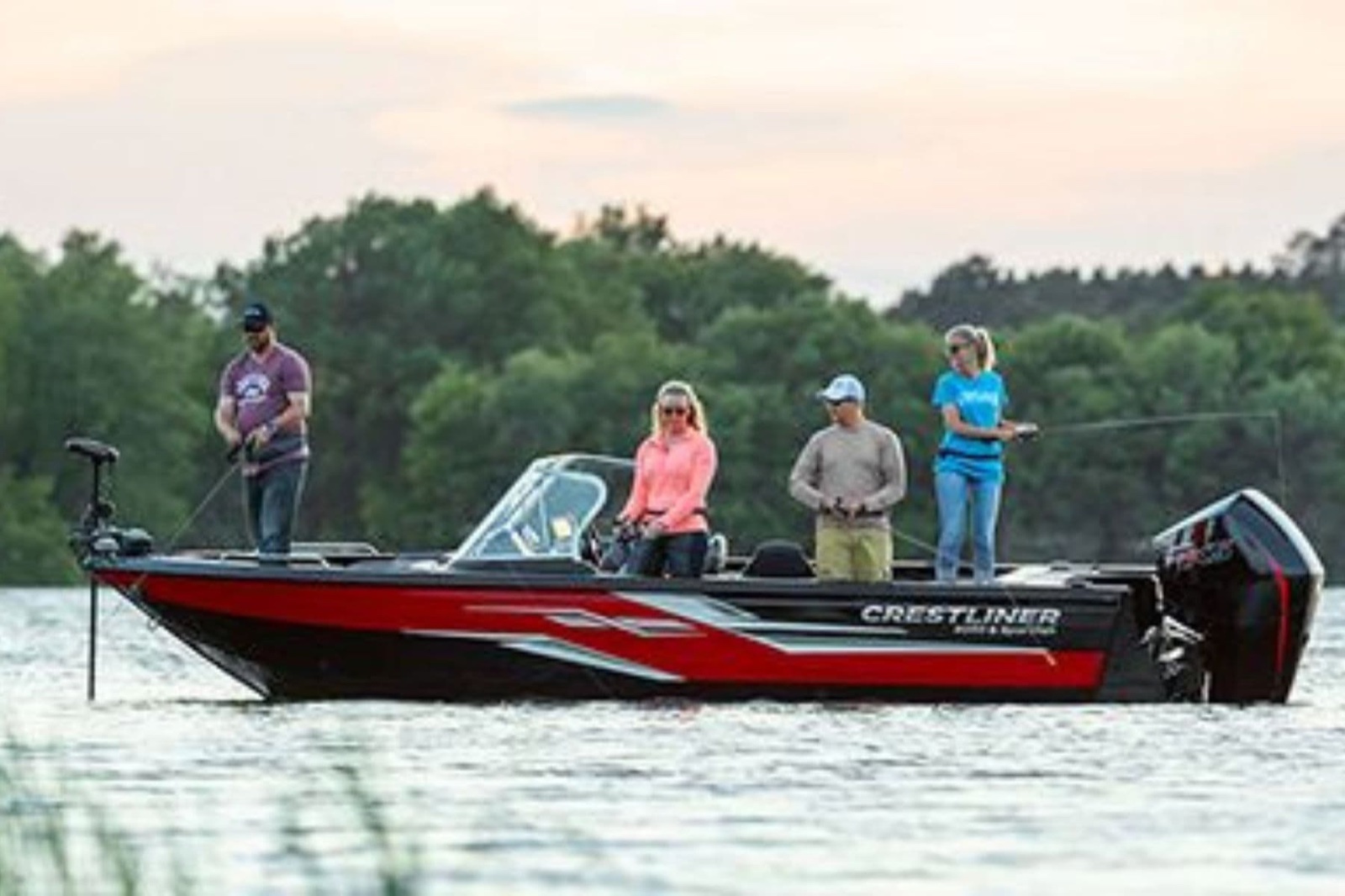
The Sea Hunt Gamefish 25 is the boat Sea Hunt builds to close the gap on Grady-White without asking Grady's price. Sea Hunt has been building fiberglass center consoles in Columbia, South Carolina since 1995, and the Gamefish 25 has been in production since 2018 on the current hull. It sits at #7 in our 2026 center-consoles-under-30 guide because the boat is genuinely close to a Grady-White 236 Fisherman on water, and the price gap is the kind of money that keeps a family weekend at the lake house every year for a decade.
What is the Sea Hunt Gamefish 25?
The Gamefish 25 is a 25-foot 4-inch fiberglass center console with an 8-foot 6-inch beam, a 22-degree transom deadrise on a modified-V hull, and standard rigging for a single Yamaha F300 four-stroke outboard. Dry weight without engine is published around 4,300 pounds, fuel capacity is 130 gallons, and the boat is rated for ten people on protected water at the manufacturer's spec.
Construction is hand-laid fiberglass with composite coring through the deck and the stringer system, vinylester resin in the outer skin, and a stringer grid bonded to the hull at the factory. Hardware is mid-tier, stainless throughout the visible fittings, with hatch hinges and latches at a step below the Grady spec. The forward seating package is the part owners point at first. Three adults fit on the forward seats without anyone perching on a cushion edge, the backrest is sized for adults rather than kids, and the seats convert to a casting platform with the cushions removed in roughly 30 seconds.
Standard features on a 2026 build include a 30-gallon livewell with a high-flow pump, rod storage along both gunwales for eight rods at full length, raw and freshwater washdown, hydraulic steering, a T-top with rod holders and an electronics box, a Garmin or Simrad base electronics package depending on dealer, and dual batteries with a switch. The hardtop upgrade, the head enclosure in the console, the trolling motor, the trailer, electronics above base, and outriggers are common option-line additions.
Who is it good for?
Family-and-fishing buyers who cross-shop a Grady-White 236 Fisherman and would rather not pay the Grady premium are the core buyer. The Gamefish 25 does what the Grady does on the same fishing grounds at 15 to 20 percent less money, and for an owner whose use case is two weekends a month of nearshore fishing plus the occasional family beach day, the difference funds a decade of slip rental. I spent a Saturday at a Wrightsville Beach ramp last spring watching a Sea Hunt owner and a Grady owner pull their boats out of the same conditions, both running back from the same king-mackerel grounds. The conversation at the ramp was about the catch, not the boats. That is the position the Gamefish 25 has earned.
Used-market buyers in the $70,000 to $85,000 range are the second profile. A 2019 to 2021 Gamefish 25 with a Yamaha F300 at 300 to 600 hours, the forward seating package, the T-top, and current electronics consistently lands $15,000 to $20,000 under an equivalent Grady 236 of the same year and trim. The used-market discount is more durable than the new-boat discount because Grady's resale strength holds the higher end of the segment up while Sea Hunt's resale floor has come up over the last five years.
Southeast US buyers with strong dealer coverage are the third buyer. Sea Hunt's dealer footprint is dense from Maryland through Florida and across the Gulf to Texas, and warranty and service work in that footprint is straightforward. For an owner planning to keep the boat in that region long term, the dealer math works the same as Grady's.
Who is it not good for?
Buyers who care about marina-dock brand recognition should walk to the Grady-White or the Boston Whaler 230 Outrage. The Sea Hunt name carries less weight at the dock and at the broker's office, and for an owner whose enjoyment of the boat depends on what other owners think when they walk by, the extra cost of the Grady is the right cost to pay.
Owners who expect Grady-level storage volume at the same length are the second exclusion. The Gamefish 25 has good storage, not segment-best storage, and the cabin under the console and the under-gunwale volume are both a step below the Grady 236. For a buyer who plans to live aboard for a long weekend or who carries a full canyon-fishing tackle load, the Grady is the boat with the right cubic feet.
West Coast and Northeast buyers far from a Sea Hunt dealer are the third exclusion. The brand's dealer coverage thins out west of Texas and north of New Jersey, and for an owner buying new the dealer-relationship math is part of the value. Without a strong nearby dealer, warranty work means freight on parts and longer service queues. In those regions a Robalo R242 or a Grady is often the simpler buy.
Pricing
New 2026 pricing on the Gamefish 25 in standard configurations is roughly $120,000 to $148,000 depending on dealer, electronics package, and option lines. A typical build, Yamaha F300, forward seating package, T-top, base Garmin or Simrad electronics, and the head enclosure in the console, lands near $135,000 at most southeast dealers. Adding the hardtop, the trolling motor, the upgraded electronics package, and the matching aluminum trailer can push the build past $158,000.
The used market in 2026 spans roughly $58,000 at the bottom (2018 and 2019 hulls with 800-plus hours, deferred service, and tired electronics) to $95,000 at the top (2022 and 2023 hulls with full options, low hours, and a clean dealer service file). The 2019 to 2021 sweet spot lands between $70,000 and $85,000 for a clean hull with 300 to 600 hours, the forward seating package, and the T-top. At those prices, the Sea Hunt math against a comparable Grady 236 holds at a consistent $15,000 to $20,000 saving.
Five-year depreciation on a clean Gamefish 25 sits at roughly 25 to 30 percent off new MSRP, slightly steeper than the Grady curve but materially flatter than it was five years ago. The trajectory is what matters to a used-market buyer. Sea Hunt's resale floor has come up across the last five years as the brand has built dealer relationships in markets that previously did not carry it.
What works
- 22-degree transom deadrise handles 2-to-3-foot conditions at 25 knots with a dry helm
- Forward seating package seats three adults legitimately and converts to a casting platform in about 30 seconds
- Livewell and rod storage read as planned-for-fishing, not added after the layout was set
- 15 to 20 percent under a Grady-White 236 Fisherman similarly equipped on both new and used markets
- Compartment finish is tidier than Robalo at nearly the same price tier
- Yamaha F300 rigging is a known long-life propulsion choice with broad service support
- Resale has improved over the last five years, the trajectory is the right direction
- T-top, washdowns, dual batteries, and the livewell pump are spec'd as standard rather than option-line
What doesn't
- Storage is good but not at Grady-White level for the cabin under the console or under-gunwale volume
- Dealer coverage is southeast-strong, thinner on the West Coast and Northeast
- Brand recognition at the marina lags Grady, a real factor for some buyers
- Sea Hunt service quality varies more by dealer than Grady's does, the dealer relationship matters more
- Hardware grade is mid-tier, hatch hinges and latches sit a step below the Grady spec
- Electronics package depth at base is thinner than what Grady ships standard at the same trim
- The cabin under the console is more storage than shelter, the head enclosure is a useful option
Year-by-year notes
The Gamefish 25 has been in production since 2018 on the current hull. The forward seating package has been on the build since launch, and the layout has been refined twice during the production run with minor changes to cushion and backrest sizing. The T-top design was updated in 2021 with revised rod-holder spacing and a slightly larger electronics box. The standard electronics package shifted from base Garmin to a dealer-configurable Garmin or Simrad option in 2022. Yamaha F300 rigging has been standard across the run.
There is no defect cutover year on the Gamefish 25 worth screening for. The recurring items in what owners report are occasional livewell pump replacement at high hours (a routine service line), the dealer-installed electronics package wiring being neater on post-2021 boats, and the hatch latch hardware showing wear on heavily used hulls. None of these change the underlying buy.
Cost of ownership
Annual recurring costs on a Sea Hunt Gamefish 25 used 60 to 100 hours a year are in line with the segment. Yamaha F300 service every 100 hours is $300 to $500 in parts and $250 to $400 in dealer labor. The 300-hour valve clearance check is the big one, $700 to $1,100 in combined parts and labor. Bottom paint is $300 to $600 in materials annually for slip-stored boats, less for trailer-stored hulls. Insurance on a $75,000 hull value is $900 to $1,600 a year in southeast US coastal markets. Slip rental and storage drive the larger variable.
A five-year hold on a 2026 used Gamefish 25 bought at $78,000 with 400 hours, used 80 hours a season nearshore, trailer storage and a saltwater rinse-down after each trip, lands at roughly $5,500 to $8,500 a year all-in including insurance, fuel, service, and amortized capital cost. The amortized cost is reasonable because the resale at year five sits in the same band as comparable Grady-White depreciation, with the lower entry price doing the work.
Best year and trim to buy
A 2019 to 2022 Gamefish 25 with the Yamaha F300, the forward seating package, the T-top, the head enclosure in the console, and a documented dealer service file is the right buy in 2026. The 2021 and 2022 hulls carry the post-update electronics layout and the slightly cleaner wiring runs. The 2019 and 2020 boats are the better price for buyers willing to do a one-time electronics refresh.
Five things to check pre-purchase. First, the Yamaha F300 has current 100-hour service and the 300-hour valve clearance check in the file. Second, the livewell pump cycles correctly and the rod storage tubes are intact. Third, the hatch latches and hinges show no excessive wear. Fourth, the wiring runs under the gunwales are dry and undamaged. Fifth, the dealer service file is current, the dealer relationship is part of what the boat is worth.
Alternatives
The closest brand cross-shop is the Grady-White 236 Fisherman, with 15 to 20 percent more money for deeper storage volume, stronger brand recognition at the dock, and tighter dealer service across the country. The structural value cross-shop is the Robalo R242, which sits a tier below on hardware grade and finish at materially similar money to the Sea Hunt, with a deeper deadrise than most price-segment competitors. The unsinkable-foam alternative is the Boston Whaler 230 Outrage, at roughly the same money as a Grady 236, trading a foot of length for closed-cell-foam unsinkability and a different brand network.