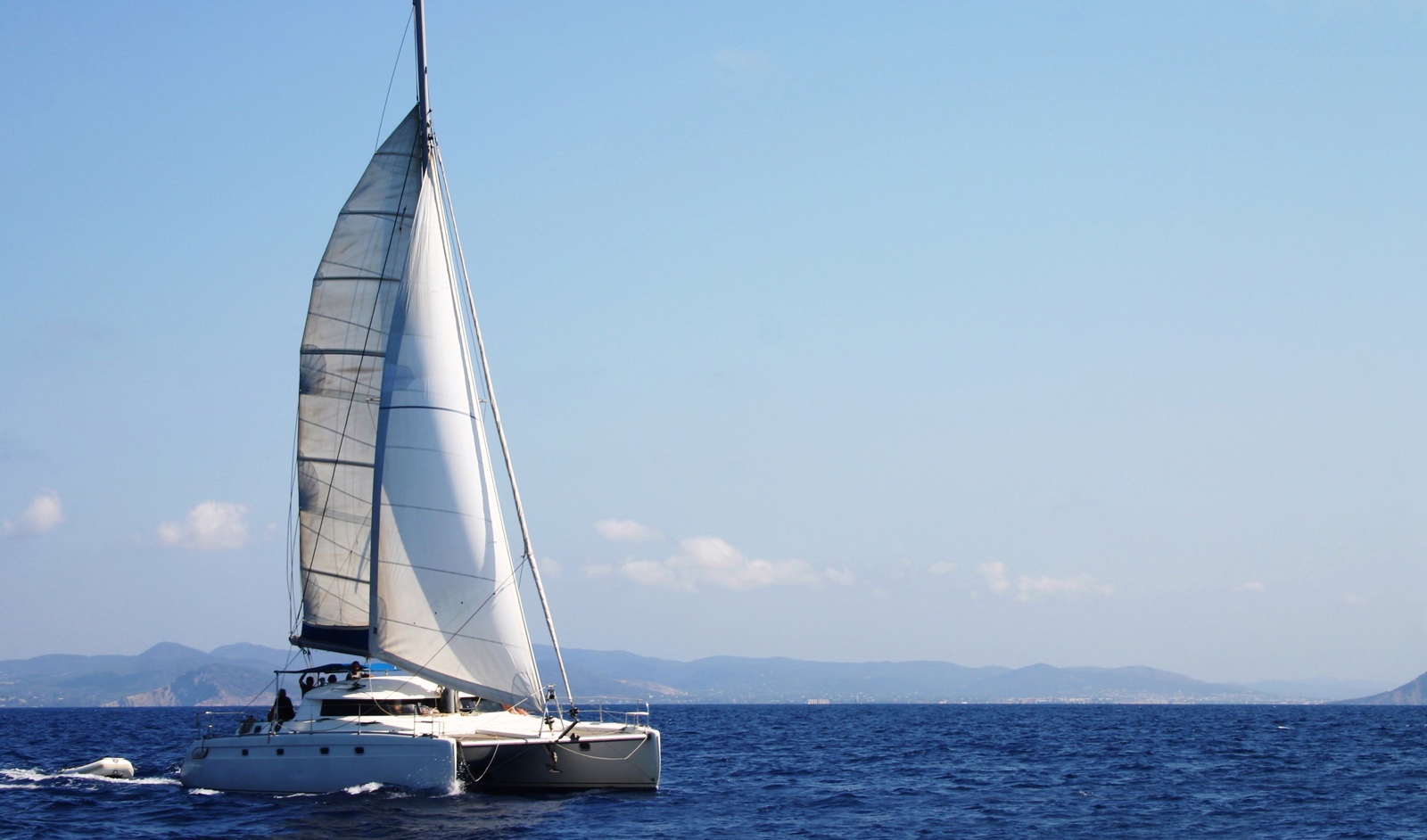
The Twin Vee 280 GFX is a 28-foot power catamaran built in Fort Pierce, Florida. Twin Vee has been building power cats since the late 1990s and the company sits at the value tier of the power-cat shelf, below World Cat and well below Freeman in build and price. The 280 GFX is the mid-line in the lineup, between the 240 GF and the 320 GF and 360 GFX.
What is the Twin Vee 280 GFX?
The 280 GFX is a 28-foot fiberglass power catamaran. Beam is 9 feet 6 inches, dry weight is 7,400 pounds, fuel is 220 gallons. The hull is two asymmetric sponsons with a bridge deck spanning the gap. Standard rigging is twin Yamaha F250 or F300 outboards. Mercury and Suzuki rigging is available through some dealers.
The hull behaves like a power cat. At cruise speed the bridge deck rises out of the water, the boat tracks on the two sponsons, and the helm stays dry in head sea where a single-hull at the same length would spray. The cockpit width carries the 9-foot 6-inch beam through the working deck. The helm has a hardtop with electronics box and a Garmin or Simrad setup standard from 2021 onward.
Fishing features cover the working brief. Two pressurized livewells, in-deck fish boxes, gunwale-mounted rod holders, raw-water washdown, and a forward console seat. Console interior fits a head compartment with a small sit-down enclosure, which is one of the advantages of the cat's beam at this length. The boat is a day-fishing boat that does occasional overnight in a pinch.
Who is it good for?
Florida and Gulf coast offshore anglers running 20 to 40 miles offshore are the core buyer. Stuart and Jupiter sailfish drifters, Tampa Bay grouper anglers, Florida Keys reef-fishing households. The hull holds 25 mph in a 2-to-3-foot head sea without pounding and the 220-gallon fuel tank handles the round trip with reserve. On a Charleston spring offshore run a couple of seasons ago I watched a 280 GFX owner head out at 6 a.m. into a 3-foot chop, run 28 miles offshore at a 26-mph cruise, work a wahoo bite through the morning, and come back at 3 p.m. with the helm still dry and about 70 gallons of fuel in reserve. That is the use case the 280 was built around.
Value-tier buyers stepping into a power cat for the first time are the second profile. The 280 sits 20 to 25 percent under a World Cat 280 CC-X at the dealer, and the build is honest enough that the value math works for a five-to-seven-year hold. Families who want a wide cockpit and a stable platform are the third. The cat's at-rest stability is real and kids and dogs aboard notice the difference from a single-hull right away.
Who is it not good for?
Northeast canyon-running households who weight the long-hold resale curve should look at World Cat or Freeman instead. The 280 GFX holds its price decently but not as well as those names, and over a ten-year hold the math flips back toward the premium boats.
Slip-restricted owners with a 9-foot or 9-foot-3 maximum beam should walk past. The 9-foot 6-inch Twin Vee beam is past the threshold at some marinas.
Buyers chasing premium-tier finish should also pause. The 280 GFX is a value-tier power cat. The materials, the upholstery, the hardware, and the gel-coat detail are a step below World Cat at the same length. The boat fishes well and rides well, but the finish does not match the price gap up to World Cat or the gap up further to Freeman.
Pricing
New 2026 Twin Vee 280 GFX builds at the dealer land between roughly $185,000 and $235,000 depending on engine choice, hardtop and electronics package, and option lines. A standard build with twin F300s, a Garmin or Simrad helm, and a usable fishing-feature package lands near $210,000.
The used market spans roughly $115,000 at the bottom (2019 hulls with high hours and basic electronics) to $185,000 at the top (clean 2023 boats with low hours and a loaded spec). The sweet spot is the 2021-2023 build with twin Yamaha F300 outboards, the current Garmin or Simrad helm, 150 to 400 hours, and a clean service file. Those land in the $145,000 to $175,000 band.
Five-year depreciation on a clean 280 GFX lands somewhere near 38 to 45 percent off MSRP. That is a step behind World Cat at the same length and well behind Freeman. The math works for buyers who shop value at entry and plan a moderate-length hold.
What works
- Two-hull ride gives a dry helm in 3-to-4-foot head sea where single-hull boats spray.
- 220-gallon fuel tank holds the boat to a real all-day offshore range.
- Twin Yamaha F250 or F300 standard rigging gives long-day redundancy and current outboard tech.
- Entry price sits 20 to 25 percent under World Cat 280 at similar length and spec.
- Cockpit fits four anglers and the wide beam contributes real deck space.
- Console interior fits a head compartment with a small sit-down enclosure.
What doesn't
- Build materials and finish are a tier below World Cat at the same length.
- Resale curve runs steeper than World Cat by 5 to 10 points over five years.
- 9-foot 6-inch beam restricts slip choice at some marinas.
- Bridge-deck slap in confused short-period seas is real.
- Hatch sealing has been flagged on some hulls. Confirm on the sea trial that the lockers stay dry on a long-day soak.
- Dealer network is smaller than World Cat. Service-writer experience varies by region.
Year-by-year notes
The Twin Vee 280 GFX launched for 2019 on the current asymmetric platform. The 2021 model year brought refinements to the helm electronics and standardized the Garmin and Simrad options at the helm. 2023 and 2024 carry the current upholstery and rigging options. There is no defect cutover year. Buyers should screen on engine hours, bridge-deck condition, bilge separation, and hatch sealing rather than year-chasing.
Cost of ownership
Annual service on twin F300s lands at the manufacturer's 100-hour intervals, $600 to $1,000 in parts per engine plus $300 to $450 in dealer labor per engine. Bottom paint costs $500 to $900 in materials annually for slip-stored boats. Insurance on a $155,000 hull is $1,800 to $3,000 a year in Atlantic and Gulf coastal markets.
A five-year hold on a 2022 used 280 GFX bought at $165,000 with 220 hours, used 100 hours a season offshore on the Florida east coast with marina-slip storage and a saltwater rinse-down after each trip, lands at roughly $14,000 to $20,000 a year all-in. The capital line is the biggest variable, and the math works for buyers who plan a moderate hold.
Best year and trim to buy
The 2021-2023 Twin Vee 280 GFX with twin Yamaha F300 outboards, the current Garmin or Simrad helm, the hardtop with electronics box, and 150 to 400 hours is the right buy in 2026.
Verify five things pre-purchase. First, engine service file shows current 100-hour Yamaha intervals plus the 300-hour valve-clearance check at the appropriate mark. Second, the bridge-deck underside shows no impact damage or stress cracks. Third, both bilges drain cleanly and the separation between hulls is intact. Fourth, the hatches seal on a hose test and the lockers stay dry on a long-day sea trial. Fifth, the T-top and rod-holder welds show no corrosion at the through-bolts and no stress cracks at the deck mounts.
Alternatives
The premium cross-shop at the same length is the World Cat 280 CC-X, which trades the Twin Vee value tier for stronger build and a wider dealer network. The hull design philosophy is the same family (two asymmetric sponsons, bridge deck, twin outboards), but the materials, the finish, the service-network depth, and the resale curve are a tier above.
The same-builder step-up is the Twin Vee 360 GFX at 36 feet for owners who want more cockpit and more range. Triple outboards on the standard build, a fuel tank that handles longer offshore runs, and the same value-tier entry pricing scaled up.
The single-hull value cross-shop is the Cobia 262 CC at a step-down length with a monohull deep-V ride and the same value-tier entry price. The Cobia is the alternative for buyers who do not want the cat's beam at the slip, who prefer the planing feel of a single-hull, and who do not need the dry-helm advantage in big head sea.
The honest summary on the 280 GFX is this. The boat fishes well, rides well, and sits at the value tier of the power-cat shelf. For buyers shopping value at entry and planning a moderate-length hold, the math works. For buyers planning a long hold or who weight the segment-leading resale curve, World Cat or Freeman is the better long-run number. For buyers who fish mostly inside, a single-hull at similar length is the simpler choice. Match the boat to the calendar before you sign.