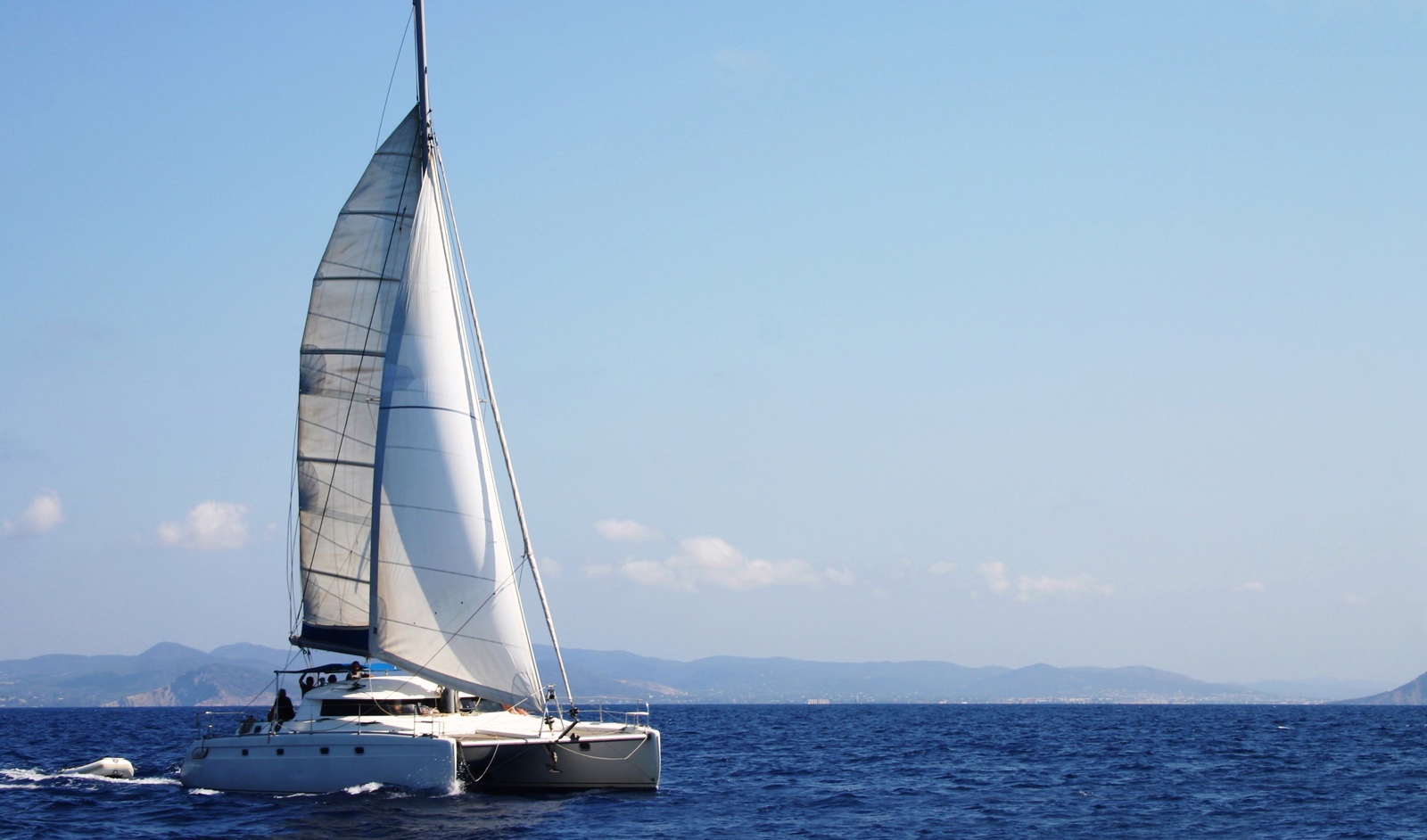
The World Cat 280 CC-X is a 28-foot power catamaran built by World Cat in Tarboro, North Carolina. World Cat has been building power cats since the mid-1990s and the 280 CC-X is the company's mid-line offshore center console, sitting between the smaller 230 and the larger 320 and 400 platforms. The boat launched in current form for 2020 and runs through the 2026 catalog as one of the standard answers to the question of how to fish offshore in head sea without pounding.
What is the World Cat 280 CC-X?
The 280 CC-X is a 28-foot fiberglass power catamaran with two asymmetric VectorFlow hulls. Beam is 9 feet 6 inches, dry weight is 8,400 pounds, fuel capacity is 242 gallons. The hull design is the headline. Two narrow asymmetric hulls span the beam, each carrying half the boat's displacement, with a bridge deck spanning the gap between them. Coming on plane, the bridge deck rises out of the water and the boat tracks on the two hulls like a fast catamaran. The result is a dry, level ride in head sea that a single-hull boat at the same length cannot match without 24-degree-plus deadrise.
Standard rigging is twin Yamaha F300 or Suzuki DF300 outboards. Mercury options exist through some dealers. The 242-gallon fuel tank holds the boat to a real 40-to-60-mile offshore round trip with reserve at most cruise speeds. The cockpit is wide because both hulls contribute to the deck. The helm has a hardtop with electronics box, and from 2022 onward the standard helm runs a Garmin GPSMap setup with radar an available option.
Fishing features cover the offshore brief. Two pressurized livewells (one in each transom corner), in-deck fish boxes, a tackle station, and a forward console seat. The console interior is large enough for a real head compartment with a sit-down enclosure rather than a pop-up, which is one of the practical advantages of the cat's beam at this length. A small cabin door opens into the port hull on some builds, with a V-berth that sleeps two in a pinch.
Who is it good for?
Hatteras canyon runners are the core buyer. The 280 holds 25 mph in a 3-to-4-foot head sea with the helm dry, which is the use case that justifies the cat premium over a single-hull deep-V. North Carolina inlet anglers who deal with the Oregon Inlet and Hatteras Inlet bar regularly are the second profile. The two-hull tracking helps in confused short-period seas where a single-hull crab-walks.
Gulf coast snapper anglers running 30 to 50 miles offshore are the third. The fuel tank handles the round trip with reserve, and the wide cockpit fits four anglers and two coolers without crowding. On a Hatteras canyon run a couple of summers ago I watched a 280 owner head out at 5 a.m. into a 3-foot head sea, run 45 miles offshore at a 28-mph cruise without slowing, and come back at 6 p.m. with a yellowfin in the box and the dry helm intact. That run on a single-hull at the same length would have been a wetter, slower trip.
Who is it not good for?
Anglers who fish mostly inside or in protected water should walk past the 280 toward a single-hull. The cat's advantage shows up in offshore head sea. Inside, the ride is fine but the beam restricts slip choice and the bridge-deck slap in confused short-period seas is real.
Slip-restricted owners with a 9-foot or 9-foot-3 maximum beam should also look elsewhere. The 280's 9-foot 6-inch beam is past the threshold at some marinas, and freight on routine slip turnover gets harder.
Buyers who want the planing feel of a single-hull deep-V should also pause. The cat feels different coming on plane and tracking through turns. It is not worse, but it is different, and a sea trial is non-negotiable before signing.
Pricing
New 2026 World Cat 280 CC-X builds at the dealer land between roughly $245,000 and $310,000 depending on engine choice (Yamaha F300 versus Suzuki DF300), hardtop and electronics package, and option lines. A standard build with twin F300s, the Garmin helm, and a usable fishing-feature package lands near $275,000.
The used market spans roughly $165,000 at the bottom (2020 hulls with high hours and basic electronics) to $255,000 at the top (clean 2024 boats with the current helm and low hours). The sweet spot is the 2022-2024 build with twin Yamaha F300 or Suzuki DF300 outboards, the current Garmin helm, 150 to 400 hours, and a clean service file. Those land in the $200,000 to $240,000 band.
Depreciation on a clean 280 CC-X lands somewhere near 28 to 33 percent off MSRP over five years. That is in the same band as a premium single-hull center console at the same length. The buyer pool is smaller than for a single-hull, which keeps brokers working slightly harder on the sell.
What works
- Two asymmetric hulls give a dry, level helm in 3-to-5-foot head sea where single-hull boats spray and pound.
- 242-gallon fuel tank handles a 40-to-60-mile offshore round trip with reserve.
- Wide 9-foot 6-inch beam contributes deck space from both hulls, the cockpit is genuinely roomy.
- Twin Yamaha F300 or Suzuki DF300 standard rigging gives long-day redundancy and current outboard tech.
- Tracks straight in following seas that crab-walk a single-hull center console.
- Console-interior head compartment with a sit-down enclosure, not a pop-up.
What doesn't
- 9-foot 6-inch beam restricts slip choice at some marinas.
- Coming on plane and tracking through turns feels different from a single-hull. Sea trial is non-negotiable.
- Bridge-deck slap in confused short-period seas is real. Not loud, but noticeable.
- Entry price is in the same band as a premium 28-foot single-hull center console.
- Resale curve is fine but the buyer pool is smaller than for a single-hull at the same length.
- Two hulls mean two bilges and twice the through-hull count to monitor.
Year-by-year notes
The 280 CC-X launched for 2020 on the current asymmetric VectorFlow platform. The 2022 model year brought refinements to the hardtop electronics box and standardized the Garmin GPSMap helm setup. 2023 and 2024 carry the current upholstery patterns and the latest Yamaha and Suzuki rigging options. There is no defect cutover year. Buyers should screen on engine hours, bilge separation, hatch sealing, and bridge-deck condition rather than year-chasing.
Cost of ownership
Annual service on twin F300s lands at the manufacturer's 100-hour intervals, $600 to $1,000 in parts per engine plus $300 to $450 in dealer labor per engine. The 300-hour valve-clearance check at the three-year mark steps the labor budget up. Bottom paint costs $500 to $900 in materials annually for slip-stored boats (two hulls to paint), less for trailer-stored hulls. Insurance on a $215,000 hull is $2,200 to $3,600 a year in Atlantic and Gulf coastal markets.
A five-year hold on a 2022 used 280 CC-X bought at $215,000 with 200 hours, used 100 hours a season offshore on the North Carolina coast with marina-slip storage and saltwater rinse-down, lands at roughly $18,000 to $26,000 a year all-in including insurance, fuel, service, slip, and amortized capital. The boat earns its keep in days fished offshore where a single-hull would stay at the dock.
Best year and trim to buy
The 2022-2024 World Cat 280 CC-X with twin Yamaha F300 or Suzuki DF300 outboards, the current Garmin helm, the hardtop with electronics box, and 150 to 400 hours is the right buy in 2026.
Verify five things pre-purchase. First, engine service file shows current 100-hour intervals plus the 300-hour valve-clearance check at the appropriate mark. Second, the bridge-deck underside shows no impact damage or stress cracks. Third, both bilges drain cleanly and the separation between hulls is intact. Fourth, the hatches seal on a hose test and the lockers stay dry on a long-day sea trial. Fifth, the through-hulls in both hulls (livewell intakes, raw-water washdown, baitwell drain) show no corrosion at the bonding.
Alternatives
The bigger power-cat cross-shop is the Twin Vee 360 GFX at 36 feet for buyers who want more cockpit and more range. Same two-hull ride philosophy, a step up in fuel capacity, and a longer offshore reach.
The single-hull cross-shop at a step-down length is the Grady-White 236 Fisherman, the SeaV2 monohull alternative with a narrower beam and a different big-sea ride. Grady's SeaV2 hull is the volume-builder reference for deep-V offshore work and the dealer network on the Atlantic and Gulf is the broadest in the segment.
For a premium single-hull at the same length, the Boston Whaler 280 Outrage trades the cat ride for unsinkable foam-cored construction and segment-leading resale. Whaler's foam-cored construction is the philosophical opposite of the World Cat two-hull approach. Both work, both have dedicated owner pools, and the choice between them comes down to what the buyer values in big sea: the cat's dry helm versus the single-hull's familiar planing feel.
The honest summary is this: a power cat at 28 feet earns its premium on the days a single-hull would stay at the dock or have to slow down. If the buyer's fishing calendar has fewer of those days, a single-hull at the same length is the simpler choice. If the calendar has more of them, the World Cat 280 CC-X is the right boat in this length, and the World Cat dealer-network strength on the East Coast makes the long-hold ownership math reasonable.