Origin and ownership
Bayliner was founded in 1955 in Washington state by Orin Edson. The brand grew through the 1960s and 1970s into the volume entry-tier sport-boat builder in the US.
Brunswick Corporation acquired Bayliner in 1986. Production consolidated at the Knoxville, Tennessee facility, shared with Sea Ray. The 2014 Element platform launch reset the brand's modern lineup.
Brunswick has owned the brand since 1986. The Bayliner lineup sits below Sea Ray (mid-tier) and Boston Whaler (premium center-console) in the Brunswick sport-boat portfolio.
Design philosophy
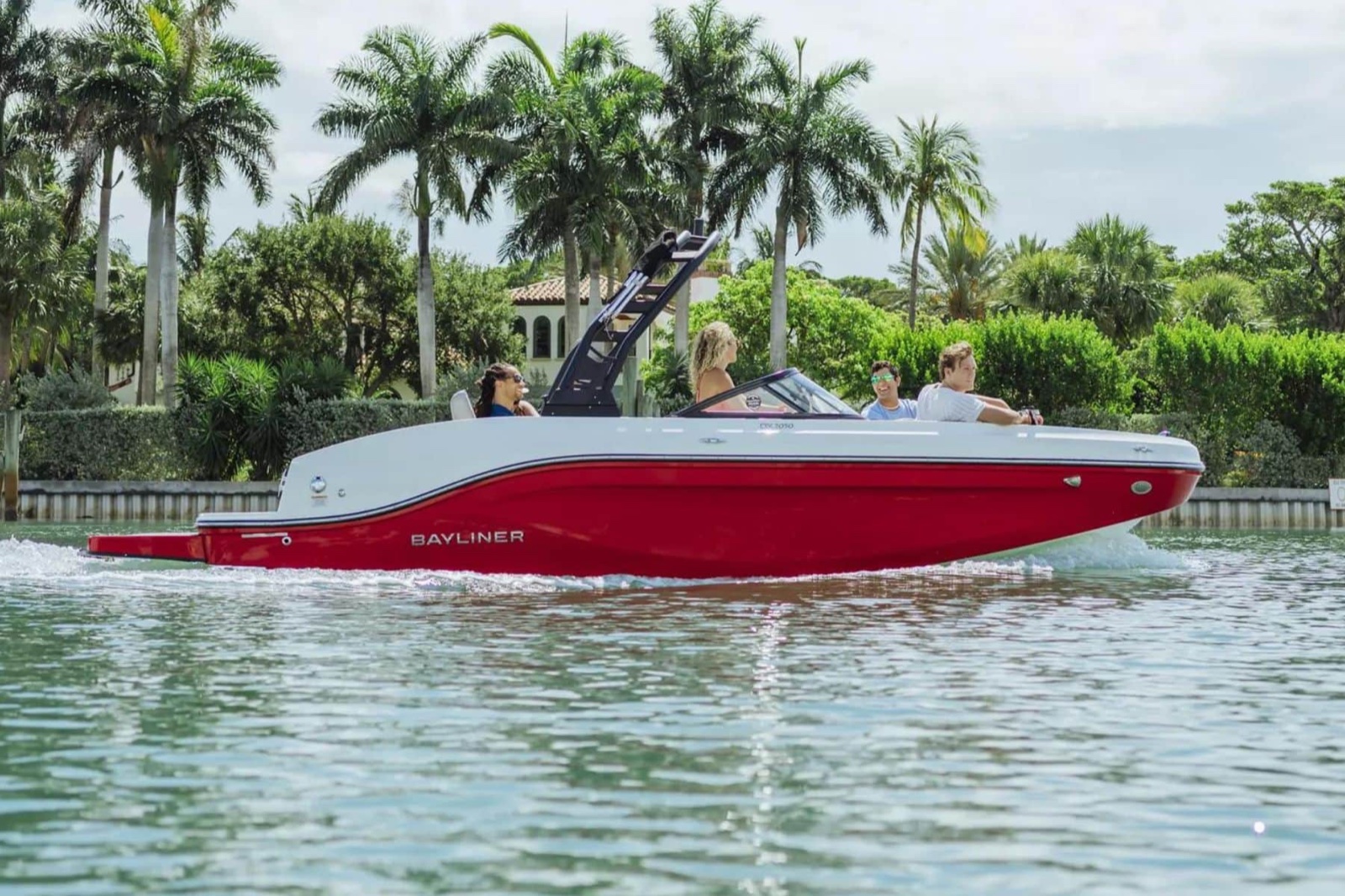
Bayliner hulls run flat-V to moderate-V (typically 16 to 19 degrees at the transom). Designed for inland and protected coastal use rather than offshore. The Element M-hull line uses a flatter form (12 to 14 degrees) for stability at slow speeds.
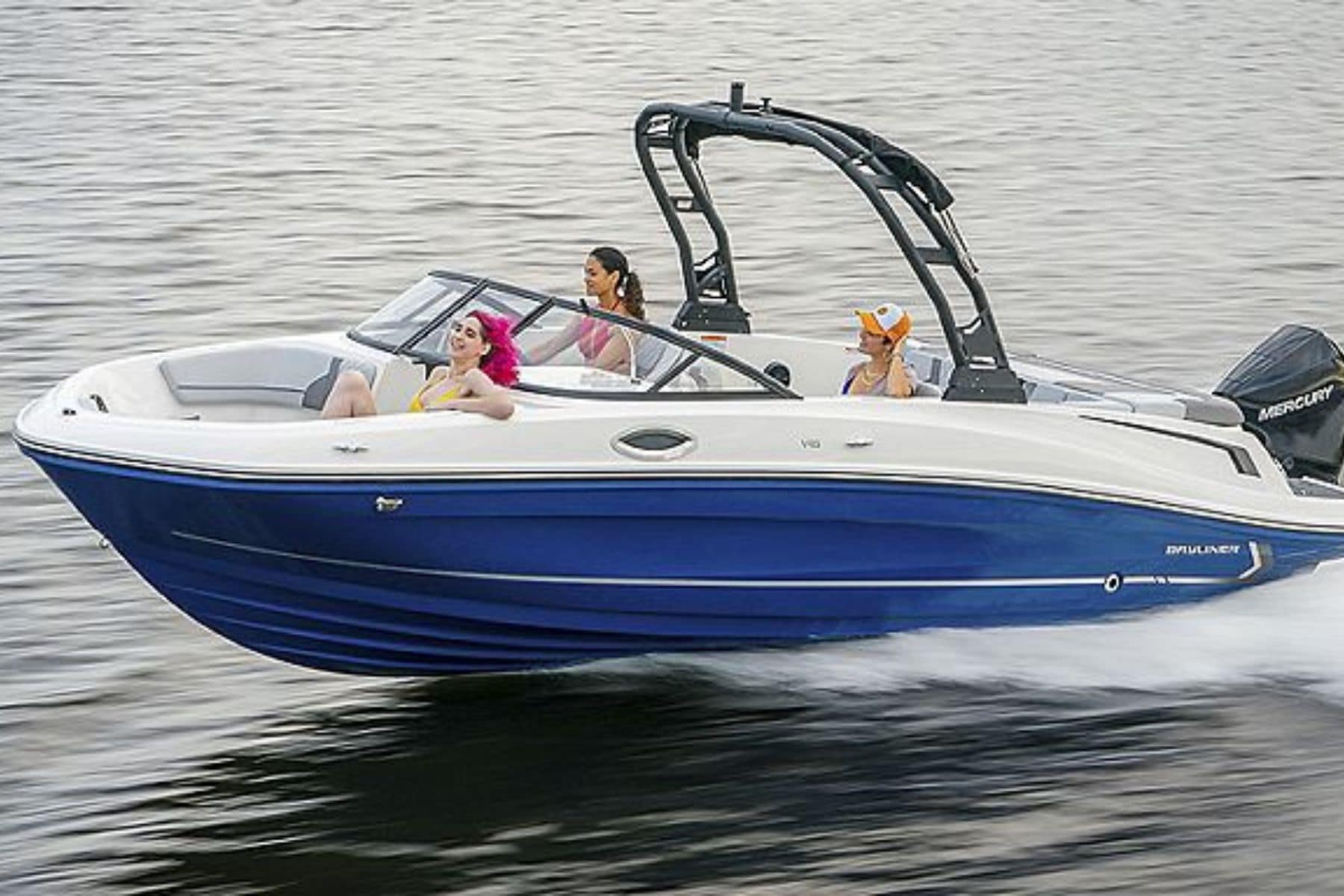
Mercruiser sterndrive and Mercury outboard are the standard rigging options through the Brunswick-Mercury parent relationship. Yamaha is not a factory option.
Terminology you should know
- Element / M-hull
- The 2014 platform launch with the M-hull deck-boat form. Defines the modern Bayliner lineup.
- VR series
- The volume bowrider line. VR4 through VR6 covering 16 to 22 feet.
- DX series
- Inland-fishing center-console layout, single Mercury outboard with livewell.
- Capri / Discovery
- Pre-2014 bowrider lines. Pre-Element bowriders that trade in a separate used market.
Used-market notes and known issues
Pre-2014 transom and stringer cores used a wood substrate that absorbs water. Any Bayliner pre-2014 needs a moisture meter on the transom before purchase.
Vinyl seam adhesion on 2017 to 2020 VR-series cushions delaminates in sun-heavy markets. Replacement cushion sets run $1,800 to $2,400 from Bayliner parts.
Mercruiser 4.5L sterndrive bellows tear is common on 2015 and later hulls past five years if the boat lives on a lift. Inspect annually.
Largest dealer footprint of any sport-boat brand in the US, by count. Service quality is dealer-dependent and ranges widely. Brunswick parts supply is fast and cheap, which is the practical advantage of buying into the largest dealer network in the segment.
Resale
Bayliner depreciation is the steepest in the entry-tier segment. Five-year depreciation runs 40 to 50 percent on clean hulls. The brand is bought new for the price, not for resale, and the used market reflects that across all model years. The 2014 Element cutover is the most important screen for any used Bayliner shopping decision: pre-Element hulls trade at deep discounts.
Where Bayliner fits
Buyers cross-shop Bayliner against Tahoe, Stingray, and lower trim of Chaparral and Four Winns on the entry-tier sport-boat segment. The argument is the lowest entry pricing combined with the Brunswick dealer footprint and parts pipeline. Buyers who prioritize resale should pay up for Cobalt or Regal. Buyers who prioritize premium build should look at Cobalt or Formula. Buyers who want to get on the water at the lowest possible new price stay with Bayliner.