Origin and ownership
Boston Whaler was founded in 1958 by Richard T. Fisher in Massachusetts. Fisher partnered with naval architect C. Raymond Hunt to develop the original 13-foot hull, which used a unique foam-core construction sandwiched between two fiberglass skins. The 1961 cut-in-half demonstration, where Fisher publicly cut a 13 in half and both halves continued to float, became the brand's most enduring marketing asset.
The brand changed hands multiple times through the 1970s and 1980s, including ownership by CML Group and Reebok. In 1996, Brunswick Corporation acquired the brand and consolidated production at the Edgewater, Florida facility. Brunswick's parts and service network gave the brand global reach without compromising the construction philosophy.
Production has stayed in Edgewater since the Brunswick acquisition. The unsinkable hull design has been refined across multiple generations of fiberglass technology, but the foam-core sandwich remains the structural argument the brand built itself on.
Design philosophy
The foam-core construction is the brand. A closed-cell polyurethane foam core is bonded between an outer and inner fiberglass laminate, then cured under pressure. The result is a hull that is structurally rigid, thermally insulated, and (the demonstration line) unsinkable even when cut in half. The construction adds 15 to 25 percent to dry weight versus a standard cored hull, which is the trade against speed-per-horsepower.
The hull form across the modern lineup is a moderate-deadrise deep-V (typically 17 to 21 degrees at the transom). It rides drier than a flatter-bottomed comparable in chop, gives up 1 to 2 knots on top end against a sharper-V offshore boat, and holds attitude well at slow trolling speed.
Mercury Verado is the dominant outboard rigging, factory-tuned across the lineup. The Brunswick-Mercury relationship runs deeper than at most builders because both sit under the same parent. Yamaha rigging is occasionally available as a dealer option, though factory orders default to Mercury.
Terminology you should know
- Unibond construction
- The closed-cell foam core sandwiched between fiberglass laminates. Marketed as 'unsinkable' because the foam itself provides positive flotation even with the hull breached.
- Smirk
- Dealer slang for the chine-flare detail at the bow that gives the brand its visual signature, distinguishes a Whaler at distance on the water.
- Outrage / Montauk / Conquest
- Three distinct hull families. Montauk is shallower-V inshore, Outrage is deeper-V offshore, Conquest is walkaround cabin.
- Super Sport
- Entry-level open-deck line at 13 to 15 feet, carries the heritage of the original 1961 hull.
Used-market notes and known issues
Pre-2018 Mercury 150 four-stroke rigging on saltwater hulls warrants a powerhead corrosion inspection at five years. The pre-2017 castings showed a documented oxidation pattern in salt-heavy markets without annual fresh-water flush.
Hardtop powder-coat on 2018 to 2020 hulls in salt-heavy markets shows pitting at the rear stanchion mounts. Cosmetic only, structural integrity unaffected. Refinish runs $1,800 to $2,800 at a marine fabrication shop.
Forward cabin condensation on 320 and larger Outrage hulls in cold-climate use shows on the hull liner above the V-berth. Owner mod (closed-cell foam backing) is documented across owner-mechanic forum threads, runs $300 in materials and four hours of work.
Tower hardware on 250 and 280 Outrage hulls (2017 to 2019) had a recurring stainless-steel work-loosening pattern at the rear T-Top mounts. Brunswick parts has a service kit, factory-honored under warranty for in-service hulls.
Brunswick parts supply is fast and global. Service network density is highest in Florida, the Gulf, and the Northeast. Pacific Northwest and West Coast coverage is mid-density and warranty-claim turnaround can run two to three weeks longer.
Resale
Boston Whaler holds resale better than any other production center-console brand. Three-year depreciation runs 8 to 15 percent on clean Outrage and Montauk hulls, exceptionally tight. Five-year depreciation runs 20 to 28 percent. The unsinkable construction story and the Brunswick parts pipeline both support the floor. The 130 Super Sport in particular trades within a few percent of new at five years on clean hulls, which is unique in the entry-tier segment.
Where Boston Whaler fits
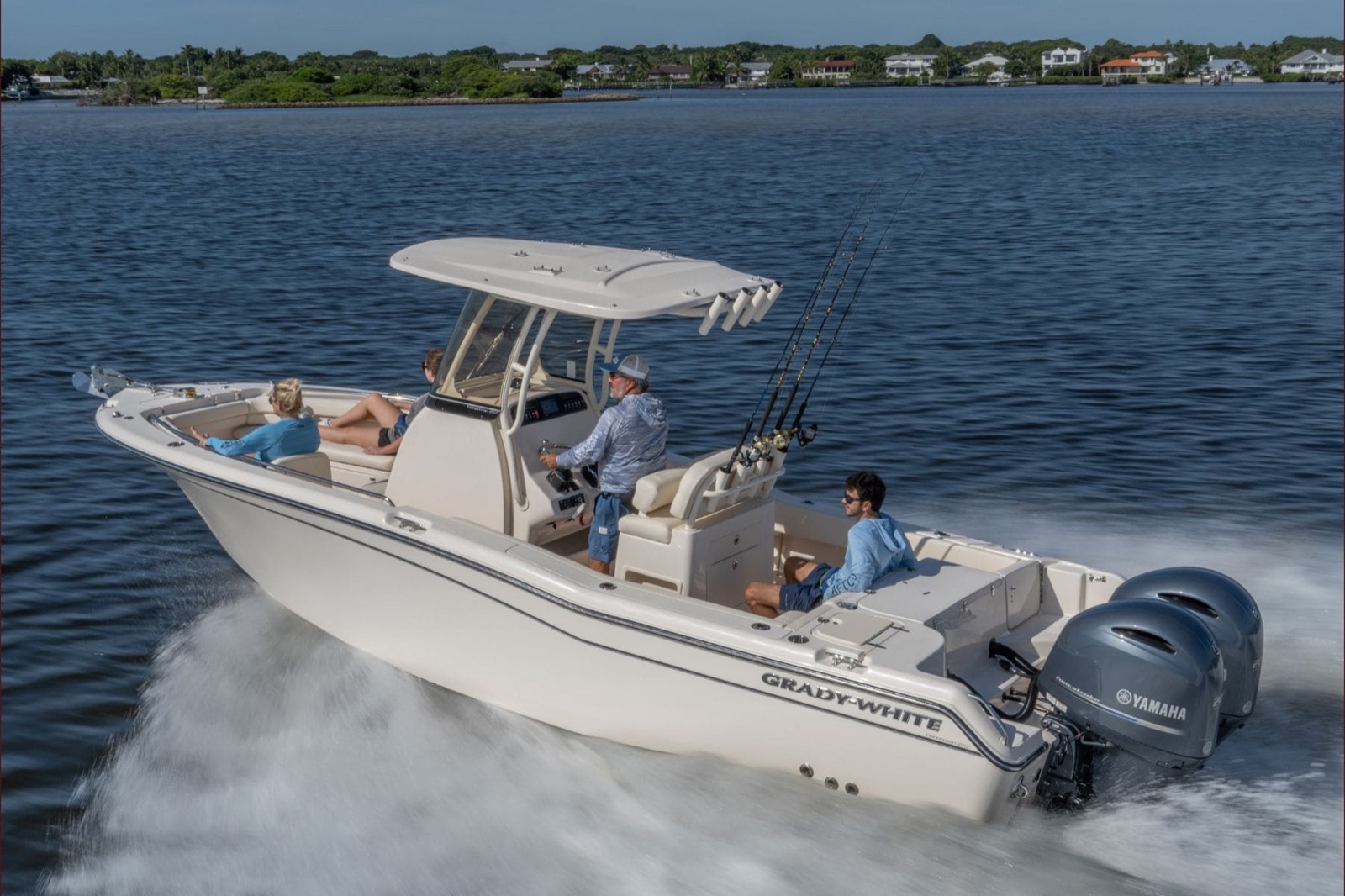
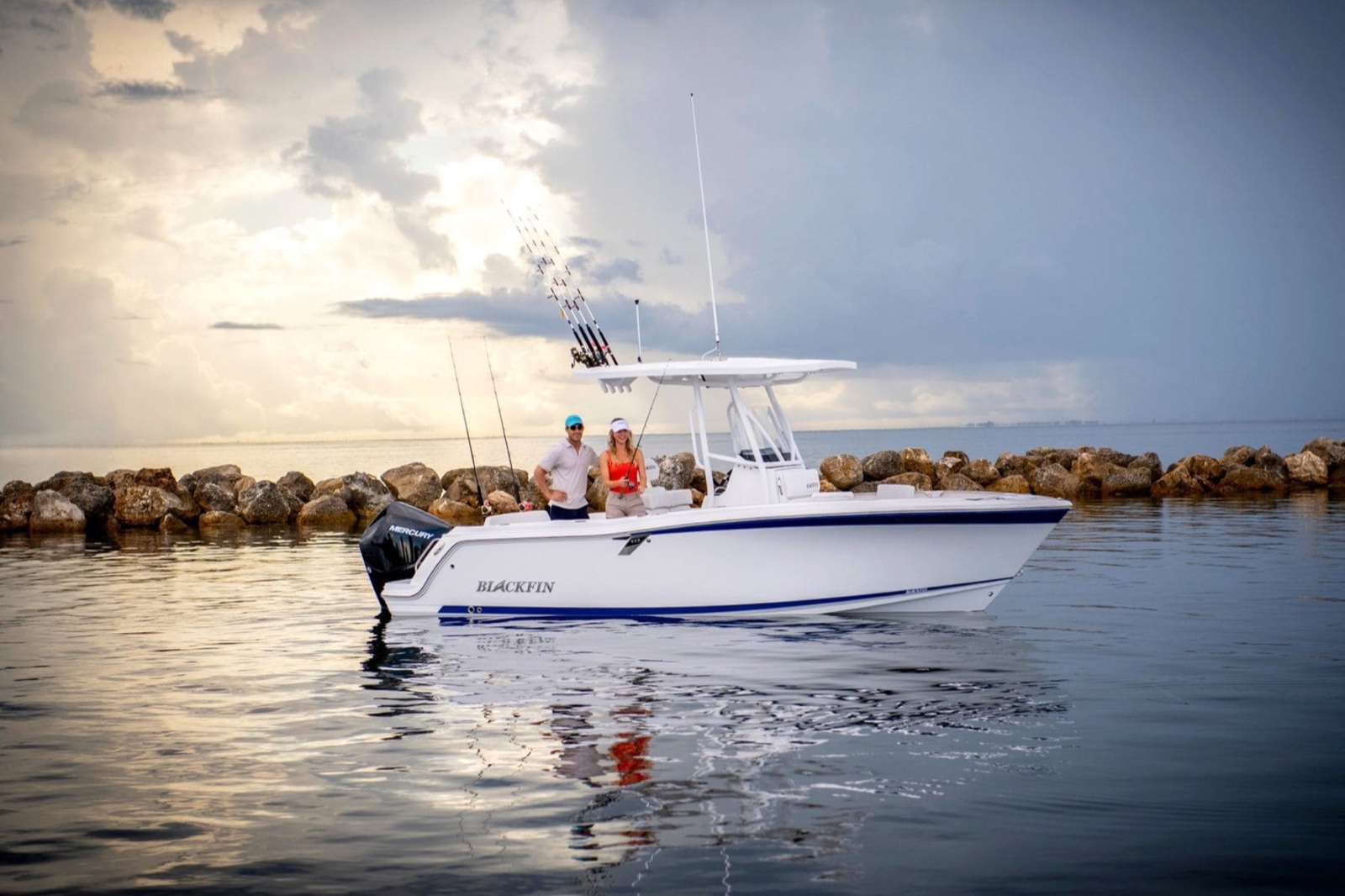
Buyers cross-shop Boston Whaler against Grady-White and Pursuit on the offshore center-console segment. The argument for Whaler is the unsinkable construction, the resale floor, and the Brunswick-Mercury parts pipeline. The argument against is the price premium and the slightly heavier hull. Buyers who prioritize speed-per-dollar should look at Robalo or Sea Hunt. Buyers who prioritize tournament fishing should look at Yellowfin or Contender. Buyers who want the best resale floor in the segment buy Whaler.