Boat & Sail

Builder · Premium · Greenville, North Carolina

Grady-White

North Carolina builder, 1959-founded, family-held. The SeaV² hull is the brand's argument. 2016 marked the cutover from plywood to all-composite transoms, the line that defines the used market for their hulls.

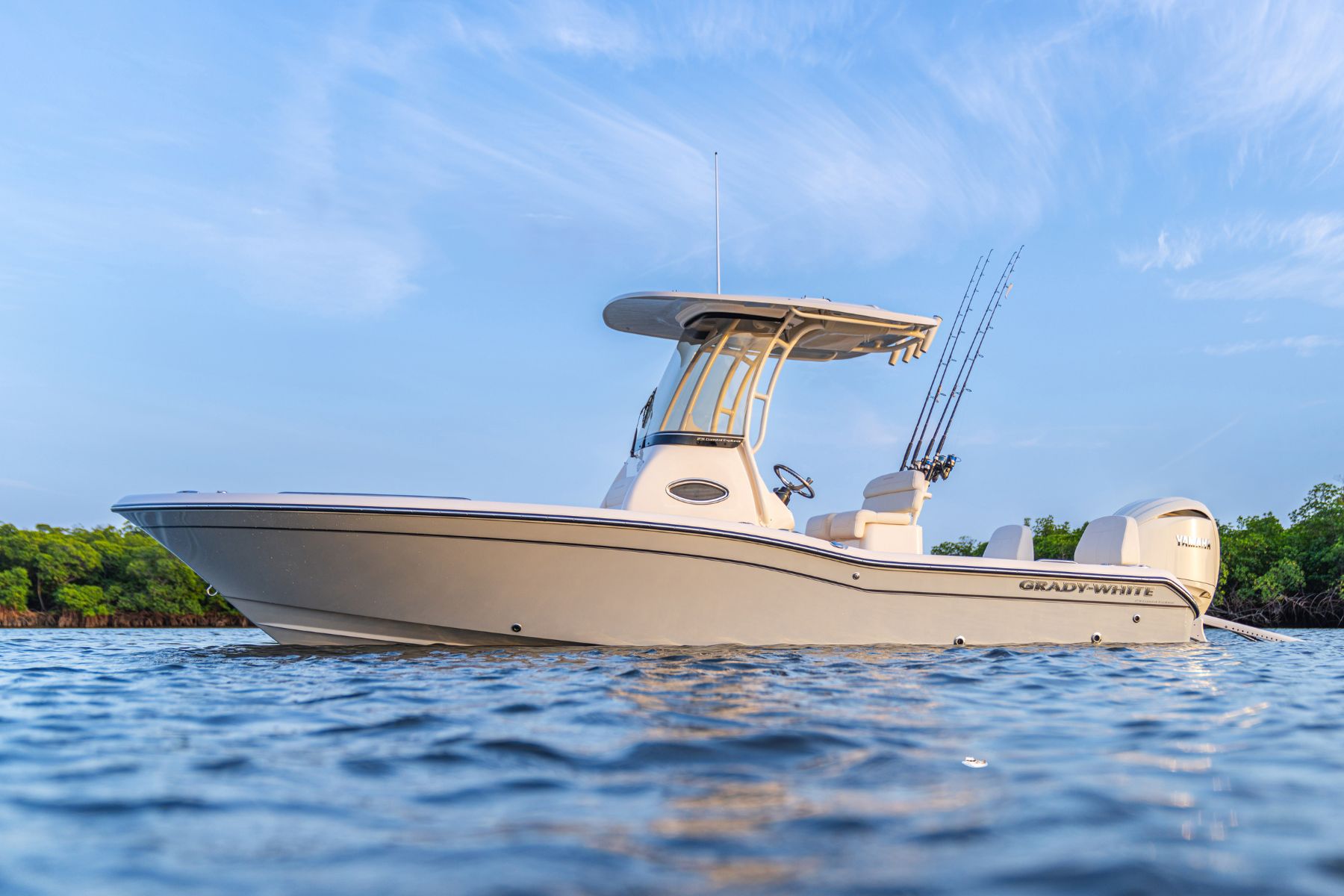
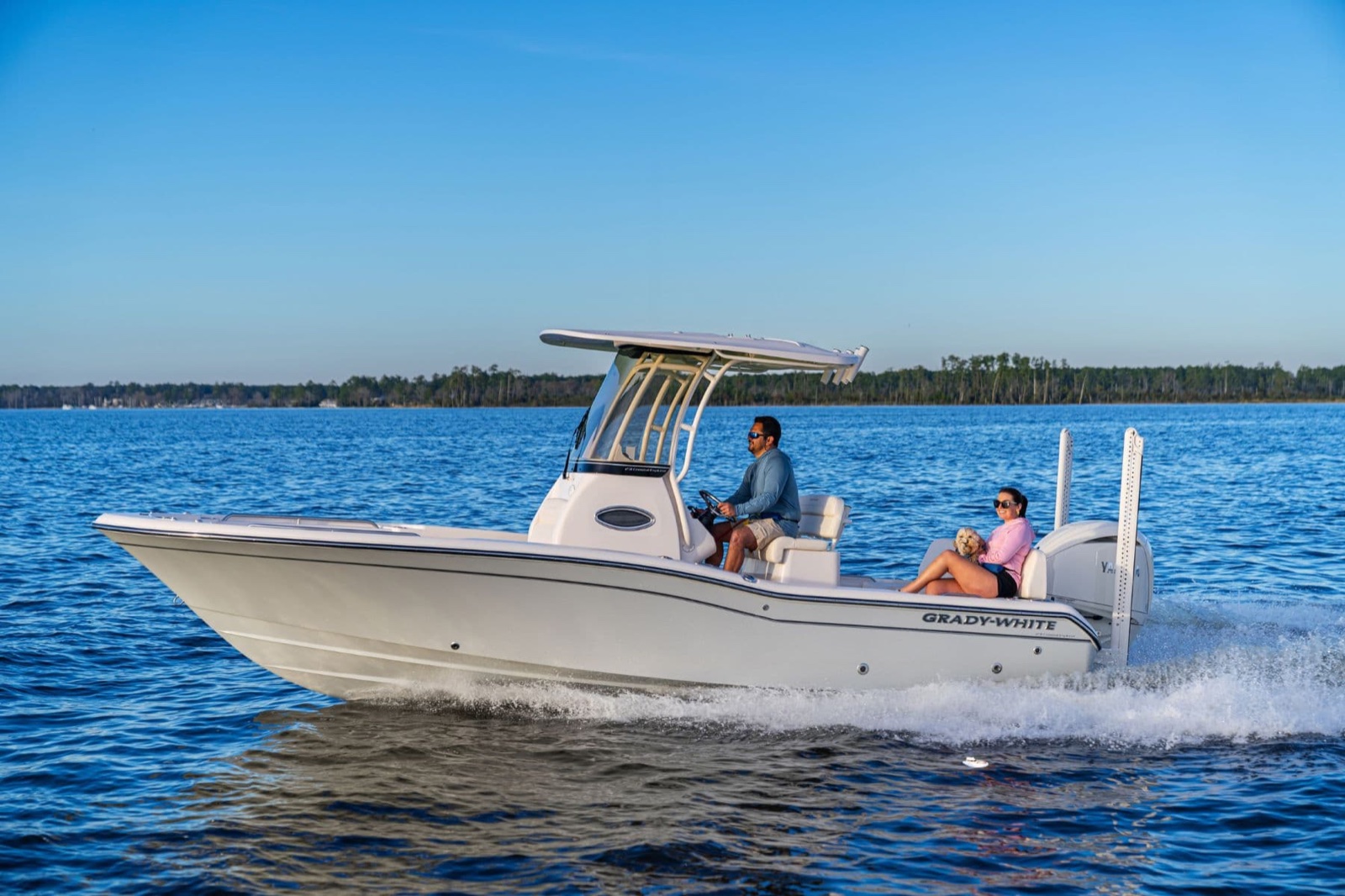
Grady-White running on the Pamlico Sound
Founded
1959
Headquarters
Greenville, North Carolina
Ownership
Private, family-held
Tier
Premium
Website
gradywhite.com

Grady-White is the family-held North Carolina builder that has produced offshore fishing boats from Greenville since 1959. The lineup runs from the 18-foot Fisherman through the 456 Canyon flagship, all built around the SeaV² hull form, a continuously variable deadrise that tightens from a flat midsection to a sharp 24-degree transom angle. The brand argument is the ride quality in head seas and the resale floor that has held across six decades of production.

The brand has stayed family-held throughout, which is unusual at this scale. Eddie Smith Jr. led the company from 1968 to 2018, and his son Kris Carroll runs the business today. The Greenville plant is single-site, no licensed manufacturing outside North Carolina. Production volume is moderate by builder standards, which keeps the build queue tight and supports the resale floor.

Lineup

Current platforms.

Model breakdown

Each platform, what it does and where it falls short.

Grady-White 180 / 191 / 211 Fisherman

The Fisherman line is the entry to the brand. Single Yamaha outboard rigging, open fishing-first layout, livewell standard. The 211 is the crossover into light-offshore use; the 180 and 191 are inshore and bay primary.

Things we like

  • · Single-engine simplicity holds insurance and service costs below the twin-rigged hulls
  • · SeaV² hull form even at 18 feet rides drier in 2-foot chop than flatter-bottomed entry-tier comparables

Things we don't

  • · Premium pricing puts the 180 in territory where buyers can shop a 22-foot Robalo or Sea Hunt for similar dollars
  • · Limited freeboard on the 180 limits use to protected and inshore water

Grady-White 236 / 251 Coastal Explorer

Coastal Explorer is the bay-to-coastal crossover line. Single or twin Yamaha rigging, hardtop with electronics box, livewell with recirculation. The 251 is the volume seller and the cleanest mid-segment Grady.

Things we like

  • · Twin-Yamaha 251 holds 30-knot cruise at 1.6 mpg with the F300 V6 outboards
  • · Hardtop with electronics box and dual-Garmin GPSMap displays standard from 2020 forward
  • · Resale on the 251 runs 12 to 18 percent below new at three years on clean hulls

Things we don't

  • · Premium pricing limits cross-shop to other premium brands (Whaler, Pursuit), no entry-tier comparable at the same hull form
  • · Pre-2016 transom moisture on saltwater hulls warrants a moisture-meter check at survey
Read the full review →

Grady-White 275 / 295 Freedom

Freedom is the walkaround line. Forward cabin with V-berth and head, walk-around side decks, helm with hardtop. Bridges the offshore Express line and a more comfortable cruiser layout.

Things we like

  • · Walk-around side decks make line-handling easier than a true center console at the same LOA
  • · Forward cabin with head gives weekend cruising capability the Coastal Explorer line cannot match

Things we don't

  • · Cabin volume trades against same-LOA cabin cruiser, head room is limited
  • · Smaller used pool than the Express and Canyon lines, resale slightly softer

Grady-White 306 / 336 / 376 Canyon

Canyon is the offshore center-console flagship line. Triple Yamaha F300 V6 (or F350 V8 on the 376) outboards, helm pod with twin 16-inch displays, optional joystick docking. The 306 is the volume seller; the 376 is the canyon-fishing flagship.

Things we like

  • · Triple-Yamaha rigging on the 336 holds 32-knot cruise at 1.4 mpg with usable canyon-run range
  • · SeaV² hull at 33 feet rides drier in 4-foot quartering seas than competing offshore center consoles
  • · Resale on Canyon hulls runs 10 to 15 percent below new at three years

Things we don't

  • · Triple-engine maintenance runs three service intervals per season
  • · Pricing pushes into territory where Yellowfin and Contender give a sharper-V tournament hull at similar dollars

Grady-White 406 / 456 Canyon

The 406 and 456 Canyon are the brand's largest center-console flagships. Quad Yamaha XTO 425 V8 outboards, full standing-headroom forward cabin, generator, A/C, mezzanine seating.

Things we like

  • · Quad-XTO rigging on the 456 holds 35-knot cruise on a 45-foot hull, with 400-mile fuel range
  • · Forward cabin gives genuine multi-night cruising capability with separate shower stall and full galley

Things we don't

  • · Quad-outboard maintenance runs four service intervals per season
  • · Pricing overlaps Tiara LX and Pursuit S 408 on similar deck plans, no objective price advantage

Grady-White Express line (305 / 330)

The Express line gives a forward cabin with full convertible dinette, walk-through windshield, and aft sunpad. Built for buyers who want overnight capability without the full walkaround layout.

Things we like

  • · Walk-through windshield gives easy bow access without the cabin-roof obstruction of the Freedom line
  • · Convertible dinette gives genuine four-person overnight on a 30-foot hull

Things we don't

  • · Express layout is no longer the volume seller, used inventory is thin
  • · Production has slowed across the Express line as the Canyon and Coastal Explorer captured share

Buyer's guide

The Grady-White story and what to know on the used market.

Origin and ownership

Grady-White was founded in 1959 in Greenville, North Carolina, by a group of local fishermen who wanted a better small offshore boat than what was being built at the time. The original 18-foot hull was the foundation of what became the SeaV² hull form. Eddie Smith Jr. acquired the brand in 1968 and led the company for 50 years, growing production from a small shop to one of the largest premium center-console builders in the US.

Production has stayed in Greenville throughout. The plant is single-site, family-controlled, and has not pursued export licensing or contract manufacturing. Kris Carroll, Eddie's son, took over the leadership role in 2018. The ownership transition was internal and the build philosophy carried through unchanged.

The brand has not been acquired and has not gone public, which is unusual at this scale and decades. The single-site, family-held structure is part of the brand argument and shows up in the resale floor.

Design philosophy

The SeaV² hull is the brand argument. The hull form starts with a flat-bottomed midsection and continuously varies the deadrise to a sharp 24-degree V at the transom. The result is a hull that planes early and stable, holds attitude well at slow troll, and runs dry in 3-to-4-foot head seas. The trade is 1 to 2 knots of top end against a sharper full-V hull, which Grady accepts in favor of the comfort and stability.

Yamaha is the dominant outboard rigging across the lineup. The factory tunes around the Yamaha torque curve and parts-and-service is set up around Yamaha. Mercury is occasionally available as a dealer-special order, though factory orders default to Yamaha. The Yamaha relationship runs deep and the dealer overlap is high.

The construction is hand-laid fiberglass with composite stringers across all current production. The 2016 transom cutover moved the entire lineup off plywood-cored transoms to all-composite. Pre-2016 transoms in saltwater service warrant a moisture-meter check at survey because the plywood substrate can absorb water through stress fractures.

Terminology you should know

SeaV²
The continuously variable deadrise hull form. Flat-bottomed midsection that varies to a 24-degree deadrise at the transom. The brand's hydrodynamic argument.
Coastal Explorer
The 23 to 25-foot bay-to-coastal crossover line. Hardtop center-console layout, designed for inshore fishing and light-offshore use.
Canyon
The offshore center-console flagship line, 30 to 45 feet. Triple or quad outboard rigging, built for canyon and tournament fishing.
Freedom
Walkaround cabin line. Forward cabin with side-deck access, hardtop helm, alternative to the Coastal Explorer for buyers wanting overnight.
Adventure
Older walkaround naming, now consolidated under the Freedom line. Used pre-2018 hulls still trade under the Adventure name on the secondary market.

Used-market notes and known issues

The 2016 transom cutover is the most important screen for any used Grady-White shopping decision. Pre-2016 hulls used a plywood-cored transom; post-2016 hulls are all composite. Used market trades pre-2016 saltwater hulls at five-to-eight percent below post-2016 hulls of the same age, and the moisture-meter check at survey is non-negotiable on any pre-2016 hull.

Yamaha F300 V6 cylinder-wall corrosion pattern surfaces on 2017 to 2020 rigs without documented annual fresh-water flush history. Inspect on any used hull before purchase. The XTO 425 V8 (used on the 406 and 456 Canyon) does not show the same pattern, the casting is different.

Hardtop powder-coat on 2018 to 2020 hulls in salt-heavy markets shows pitting at the rear stanchion mounts. Cosmetic, not structural. Refinish runs $1,500 to $2,500 at a marine fabrication shop.

Forward cabin liner condensation on 306 and larger Canyon hulls in cold-climate use shows on the hull liner above the V-berth. Owner mod (closed-cell foam backing) is documented across owner-mechanic forum threads, runs $250 in materials and three hours of work.

Dealer network is concentrated in the East Coast, Florida, and the Gulf. West Coast and Pacific Northwest coverage is mid-density. Yamaha service is independent of the dealer in most markets, which softens the dealer-density gap on engine maintenance.

Resale

Grady-White holds resale better than any other production center-console brand outside Boston Whaler. Three-year depreciation runs 10 to 15 percent on clean Coastal Explorer and Canyon hulls. Five-year depreciation runs 22 to 28 percent. The family-held structure, the single-site production, and the SeaV² hull-form story all support the floor. The 251 Coastal Explorer specifically holds inside 12 percent below new at three years on clean hulls in saltwater service.

Where Grady-White fits

Buyers cross-shop Grady-White against Boston Whaler and Pursuit on the offshore center-console segment. The argument for Grady is the SeaV² hull form (best ride in 3-to-4-foot quartering seas), the Yamaha rigging (the buyer's outboard preference if they have one), and the family-held single-site production story. Buyers who prioritize the lightest, fastest tournament hull should look at Yellowfin or Contender. Buyers who prioritize the unsinkable construction should look at Whaler. Buyers who want comfort and resale in equal measure stay with Grady.

FAQ

Frequently asked.

What is the SeaV² hull?
A continuously variable deadrise hull form. The hull starts with a flat-bottomed midsection and varies the deadrise smoothly to a 24-degree V at the transom. The result is a hull that planes early, runs stable at slow troll, and holds attitude in chop. The form was designed by Grady-White's in-house engineering team and is unique to the brand.
Are pre-2016 Grady-Whites worth buying?
Yes, with a moisture-meter check on the transom. Pre-2016 hulls used a plywood-cored transom that can absorb water if the gel coat is compromised. A clean hull with documented service history is a reliable buy at 5 to 10 percent below post-2016 prices. A hull with unclear service history warrants a full survey including transom moisture testing before commitment.
How does Grady compare to Boston Whaler?
Grady-White uses the SeaV² hull (24-degree transom deadrise) against Whaler's deeper-V or moderate-V Outrage form (18 to 21 degrees). Grady runs slightly drier in 3-to-4-foot head seas; Whaler runs more stable at slow troll and gives the unsinkable foam-core argument. Grady holds tighter on resale; Whaler has the wider dealer footprint. Cross-shop on intended use, not on objective build differences.
Are Grady-Whites good for offshore fishing?
The Coastal Explorer line yes for light-offshore use, the Canyon line yes for sustained offshore and canyon fishing. The 336 and 376 Canyon are the brand's offshore-fishing flagships and compete with Yellowfin, Contender, and Jupiter on the same canyon-run use case. The Fisherman 180 and 191 are inshore primary, not offshore.
Where are Grady-Whites built?
Greenville, North Carolina. The plant is single-site, family-owned, and has not been licensed or franchised outside Greenville. The entire lineup, from the 18-foot Fisherman through the 456 Canyon flagship, is built at the same facility.

Weekly

Get one honest boat review a week

One boat we ran, one guide worth reading, one model we'd shop next week. No press-release rewrites. Unsubscribe any time.