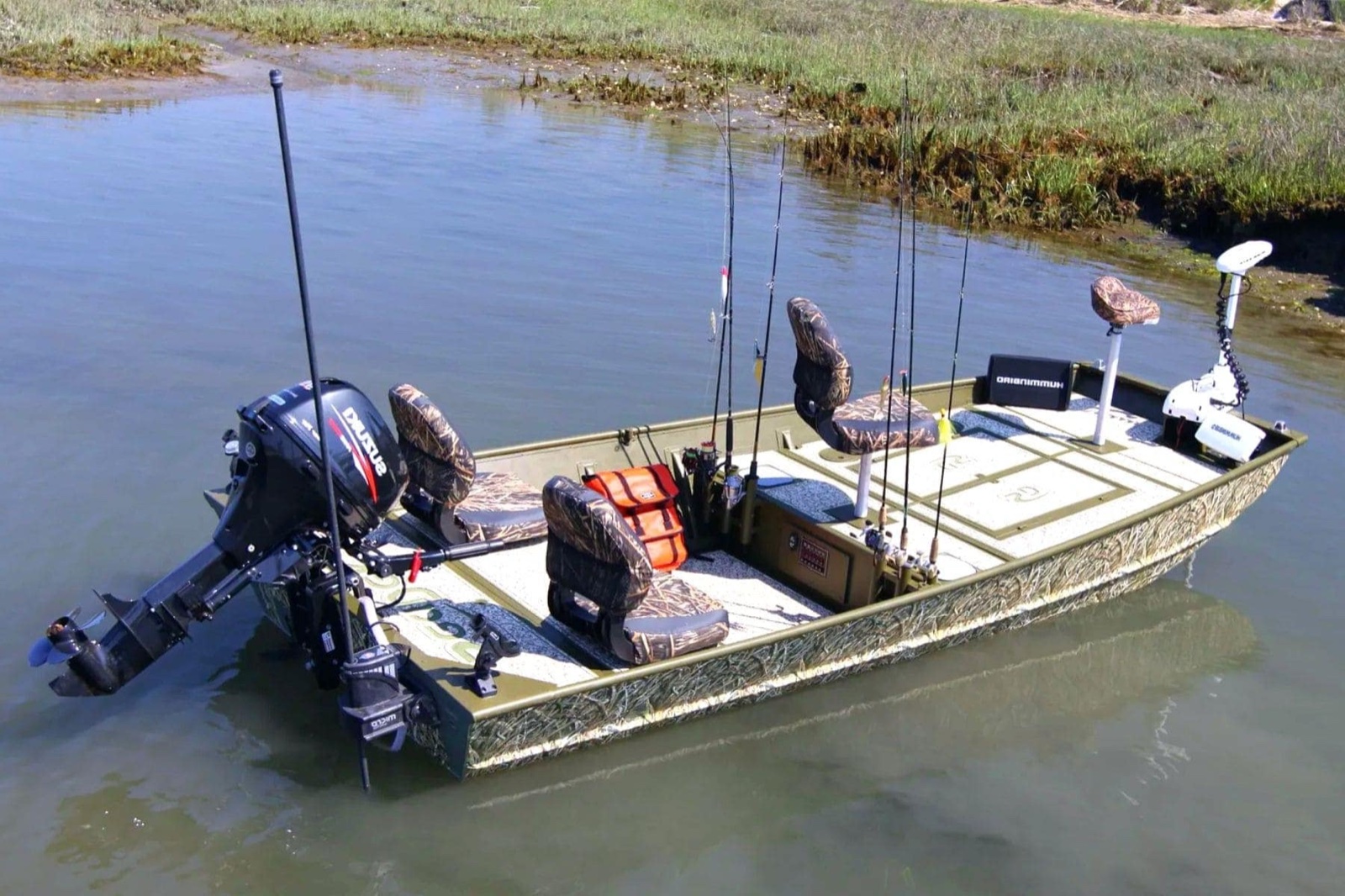
What defines a jon boat
A jon boat is a flat-bottom aluminum utility boat, 10 to 20 feet, with a square bow and a transom rated for a small outboard. Hull thickness runs from 0.072 inches on entry boats up to 0.125 inches on heavy-gauge welded river models. Construction splits two ways: riveted boats are lighter and cheaper but eventually weep, while welded boats are heavier and dimensionally stiffer but cost 50 to 80 percent more. Most buyers run 9.9 to 25 horsepower outboards on 14-to-16-foot boats and 40 to 60 horsepower on 18-foot tunnel-hull variants used in shallow rivers.
Buyers self-sort by four filters before they read a single review: length, riveted versus welded construction, transom shaft length, and price tier including the used market.
What buyers actually pay
Jon boat depreciation is the gentlest of any boat segment because the construction is simple and the secondary market is huge. Year-one depreciation runs 8 to 12 percent. Ten-year depreciation on a riveted Tracker or Alumacraft typically lands at 25 to 35 percent because the underlying aluminum still has decades of useful life if the rivets stayed tight. Welded War Eagle and G3 boats hold 80 to 90 percent of new at five years. The used sweet spot is wide: anything under 15 years from a brand-name builder with documented dry storage is a fair buy.
Model-year defects worth screening
Pre-2017 Tracker Grizzly transoms used a wood core that rotted in saltwater or wet-storage conditions; the post-2017 cutover to composite is the screen for any Tracker buyer. Riveted Alumacraft hulls 2010 to 2014 had a documented rivet-loosening pattern around the chine on heavy-load duck-boat use, surfaced across owner-mechanic forum threads. War Eagle's stick-steer console mounts on pre-2018 boats had a flex point that telegraphed cracks; the 2018 reinforcement plate fixed it. On any used jon boat, the screen is simple: a bilge pump test for 30 minutes, then check the floor for moisture under the foam.